Controlling AI Agent: A practical starting point for small and medium-sized enterprises to transform into intelligent and powerful ones
Originally published in “Economic Daily
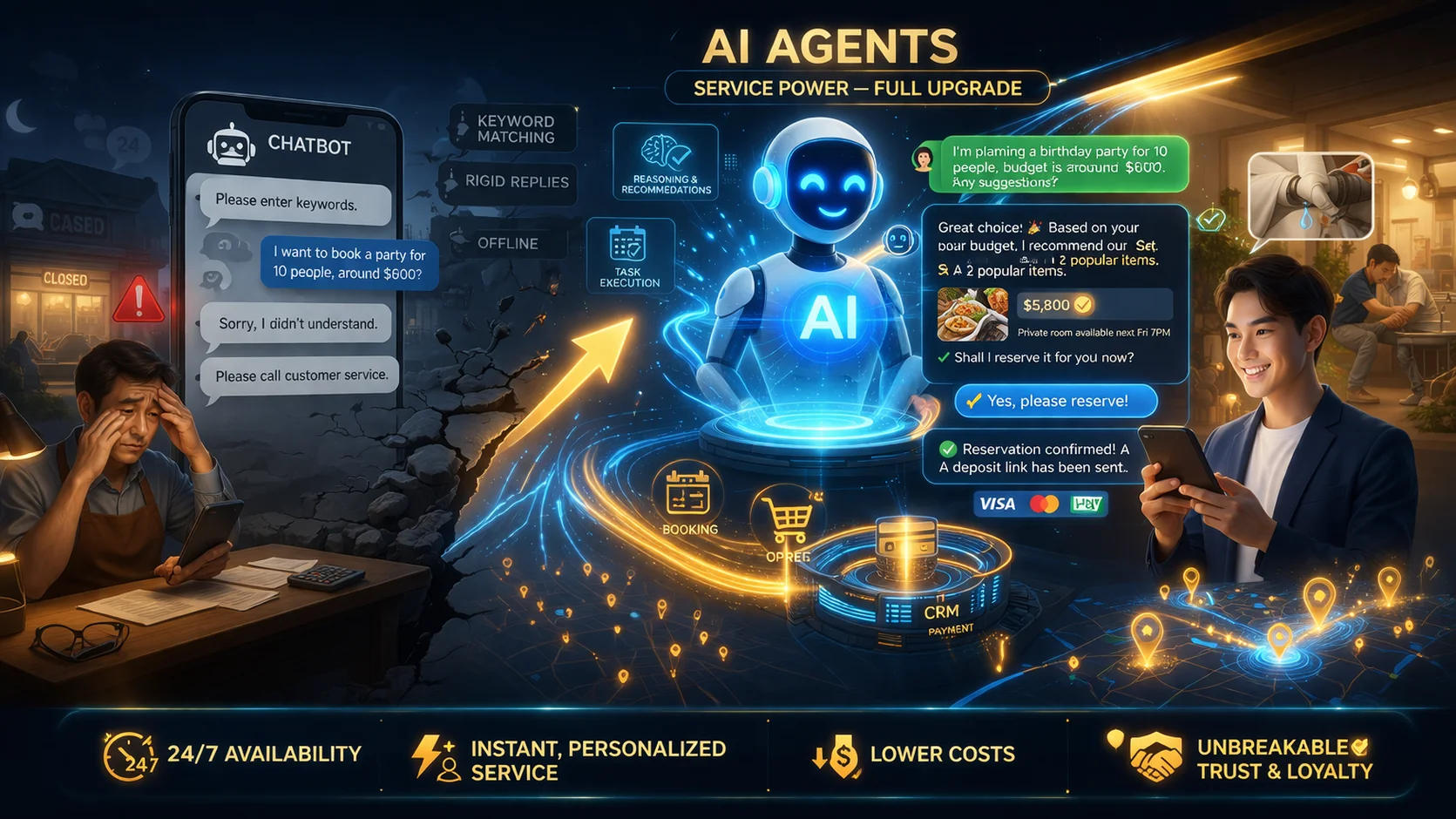
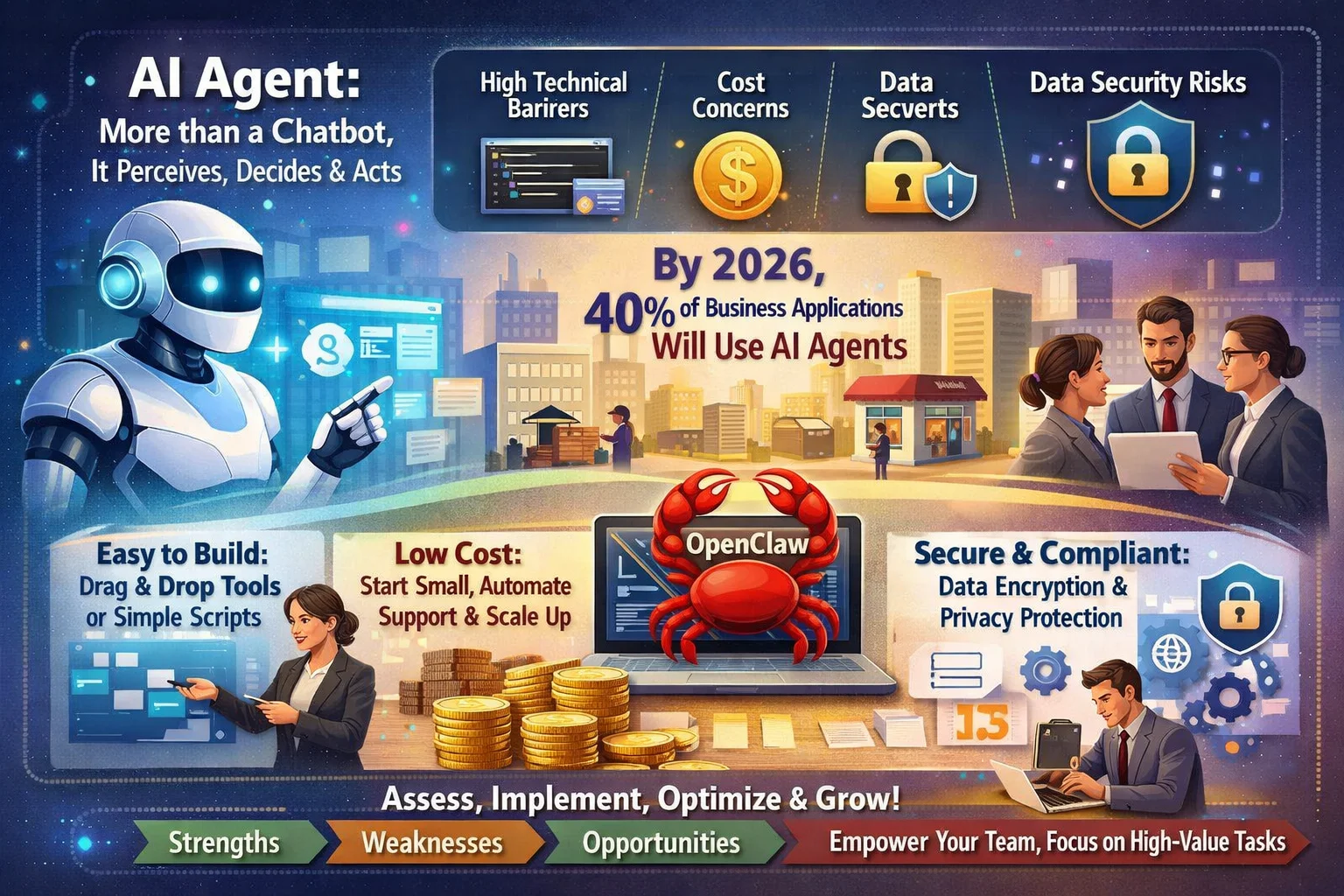
You may have heard of AI Agent. It is not a simple chatbot or automation tool, but more like an autonomous agent that can perceive the environment, make decisions and perform tasks, and learn from experience. According to Gartner, up to 40% of enterprise applications will embed this type of task-based AI Agent in 2026. If small and medium-sized enterprises do not introduce it, they will miss out on their competitive advantages. But don’t be afraid, importing AI Agent does not require a large investment. Start with a tool like OpenClaw (Crayfish) and you will see results.
If you are not familiar with the concept of AI Agent, it is recommended to read this article first: How can professionals make good use of AI Agent? The key shift from asking AI to letting AI do it for you, understand the fundamental differences between AI Agents and traditional AI tools.
Three major pain points for small and medium-sized enterprises to introduce AI Agent
Small and medium-sized enterprises often face three major pain points when introducing AI agents: high technical threshold, high cost pressure and data security concerns. But in fact, these challenges can be overcome step by step.
Technical threshold: No need to be a programmer
Small and medium-sized enterprises often lack IT teams, what should they do? You don’t need to be a programming expert to build an Agent through a drag-and-drop interface or simple scripts. Many platforms now provide low-code or even no-code solutions, allowing people with non-technical backgrounds to get started quickly.
Cost pressure: start with small-scale testing
Traditional AI solutions such as IBM Watson or Azure AI can easily cost tens of thousands of yuan per month. However, small and medium-sized enterprises can start with small-scale testing, such as using Agent to automate customer service, and gradually expand to supply chain management.
Data Security: Compliance with regulations is the bottom line
AI Agent handles sensitive information, such as customer data, and the risk of leakage cannot be ignored. At the same time, comply with GDPR or Taiwan Personal Information Law and use encryption modules. Many companies are worried that AI will replace employees. In fact, AI Agent can free up manpower and allow employees to focus on high-value work. I also discussed this in depth in this article Instead of worrying about being replaced by AI, why not “AI” yourself and your company.
Assessing enterprise pain points: the first step of introduction
The first step in introducing AI Agent is to assess the enterprise’s pain points. You should start by asking: Which processes are the most time-consuming? For example, inventory management in retail, quality inspection in manufacturing, or customer interaction in services.
It is recommended to start with SWOT analysis:
- Strengths: such as flexible decision-making
- Weaknesses (weaknesses): such as insufficient manpower
- Opportunities (opportunities): such as market expansion
- Threats (threats): such as competitors’ AI
Then, choose a suitable AI Agent and conduct a simple test. For example, write a script to let the Agent monitor emails and automatically classify orders.
Once assessed, start with simple single tasks, such as automatically responding to customer inquiries, and gradually upgrade to a multi-agent system where multiple agents collaborate. If you want to know more about business trends in the AI era, you can refer to Command Economy is Coming! AI is rewriting the rules of the business game in the next decade.
Integrate existing tools and start small
Integration is key. Common tools used by small and medium-sized enterprises, such as Excel, ERP systems or social media, can be seamlessly connected. For example, use API to connect Agent to Facebook Messenger to automatically handle return requests. During the process, remember to test and iterate: go online on a small scale first, collect feedback, and then optimize.
In terms of cost control, you can first use free cloud services such as Google Colab for testing to avoid initial hardware investment.
Training and Optimization: AI Agent is not just installed and then everything is fine
AI Agent is not just installed, it needs to be trained. It supports supervised learning, allowing you to feed historical data, such as past sales records, to train the Agent to predict trends. The focus of optimization is the feedback loop: monitoring Agent performance and adjusting parameters.
A common mistake is to ignore employee training. When importing AI, the team needs to understand how the Agent will assist in the work. This not only reduces resistance but also stimulates innovation. In Stop Chasing Tools! Build your “unbeatable system” in the AI era In this article, I share how to establish systematic thinking instead of blindly chasing new tools.
Of course, data ethics are also important. Ensure that Agent decisions are fair and avoid biases such as gender or geographical discrimination.
Scaling and continuous monitoring
After importing, please gradually apply AI Agent to more areas, such as: from customer service to marketing, finance and even HR. For example, use Agent to analyze social public opinion and adjust advertising strategies.
Additionally, monitoring is key to sustainability. Set KPIs such as improved response times and reduced error rates. Regularly review Agent logs to prevent abnormalities.
In the risk management part, if the Agent makes an error, there is a backup plan, such as manual intervention. The government provides several AI subsidies or incentives, and small and medium-sized enterprises can also apply to reduce their financial burden.
The future is here, please seize the opportunity
It is recommended that all small and medium-sized enterprises should not be afraid of technology, grasp the characteristics of starting small and iterating quickly, and transform into smart powerhouses. The future is here, please seize this opportunity.
If you want to learn more about how to gain a foothold in the AI era, it is recommended to read AI Action Guide to Learning and Application: A Practical Manual for Professionals, which contains a more complete learning path plan.
Extended reading:
- How can professionals make good use of AI Agent? The key shift from asking AI to letting AI do it for you
- The command economy is coming! AI is rewriting the rules of the business game in the next decade
- Stop chasing tools! Build your own “unbeatable system” in the AI era
External Resources:
📖 深入探索相關主題