In addition to being fast, AI note-taking is also a secret weapon that helps you build long-term advantages.
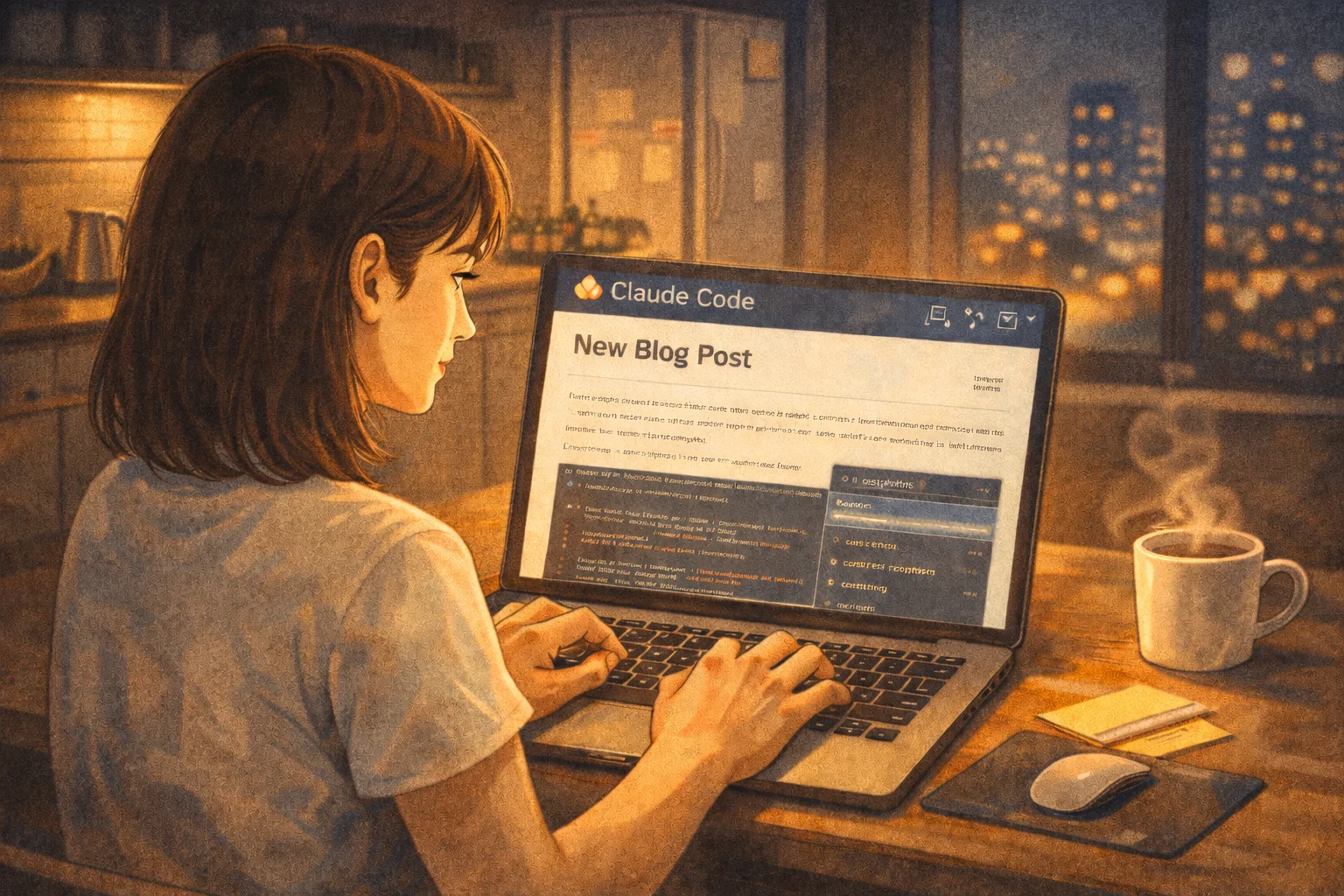
[ ](https://substackcdn.com/image/fetch/$s_!9pW4!,f_auto,q_auto:good,fl_progressive:steep/https%3A%2F%2Fsub stack-post-media.s3.amazonaws.com%2Fpublic%2Fimages%2F3a9b0bf3-cdd6-4fde-809e-fc6f0a35109a_1536x1024.png) I have liked writing notes since I was a child, and I guess it was influenced by my father’s subtle influence. To me, notes are not just a loose-leaf notebook and a few colored pens, but also a mark of life. Many of my friends may be like me. They will carefully note down the key points of meetings, copy down the wise words of teachers or supervisors, and then flip through these notes at the weekend, trying to find inspiration from them.
Do you believe that as long as you are diligent in recording, you can master knowledge? Unfortunately, reality is often cruel. I found that although many of my friends have the habit of writing notes, when they really need a piece of information, they often can’t remember which page they wrote on? Even when I want to organize my thoughts, those notes scattered everywhere make it difficult to start. Even worse, when we try to share knowledge, handwritten notes are rarely delivered effectively. And with the explosive growth in the amount of information, the more you remember, the easier it is to get lost.
Until the advent of the AI era, this situation changed. Today, I would like to share with you a practical and proven “AI empowered note-taking system” to help you not only gain a firm foothold in the flood of information, but also ride the waves!
Reunderstand the essence of notes
Three levels of notes
Many people think that writing notes is very simple, just copy down what you hear or see… Well, this is actually the biggest misunderstanding. Really valuable notes are often a complete cycle from recording, thinking, connecting to creating.
I want to tell you the story of Amy. She is a product manager at a technology company in Taipei. She has many meetings from morning to night every day. She is serious and always takes a lot of notes, but she always feels that it is not very helpful to her work. Once, she came to my AI application course and mentioned this problem to me after class. So, I asked her to show me what the notes said? At this time, I was surprised to find that the notebook was filled with densely written words. It was not difficult to see that Amy was indeed serious. But upon closer inspection, these notes were almost verbatim records of the meeting, lacking her own thinking, judgment and some important connections. It is conceivable that when Amy needs to make a decision, she rarely looks through these notes because the information above is too messy and it is not easy to find the key points.
Well, that’s the problem. If we only take notes passively, it will be just a pile of dead information. But if we can add our own thinking, ask questions and make connections while recording, notes may become a powerful knowledge base for us.
To put it simply, there are at least three levels of note-taking: the first level is the recording level, which simply records the information content; the second level is the thinking level, where you must add your own understanding, questions, and insights; the third level is the connection level, which connects new knowledge with existing knowledge. In the AI era, what we have to do is break through the first layer and enter the second and third layers. Because if it’s just recording, there are already many AI tools that can do it better and faster than us! If you think about it carefully, our value actually lies in thinking and connecting.
[ ](https://substackcdn.com/image/fetch/$s_!f33i!,f_auto,q_auto:good,fl_progressive:steep/https%3A%2F%2Fsub stack-post-media.s3.amazonaws.com%2Fpublic%2Fimages%2F45a4a6f8-45bc-4d85-b719-9915bb43b3b1_5759x4319.png)
From notes to second brain
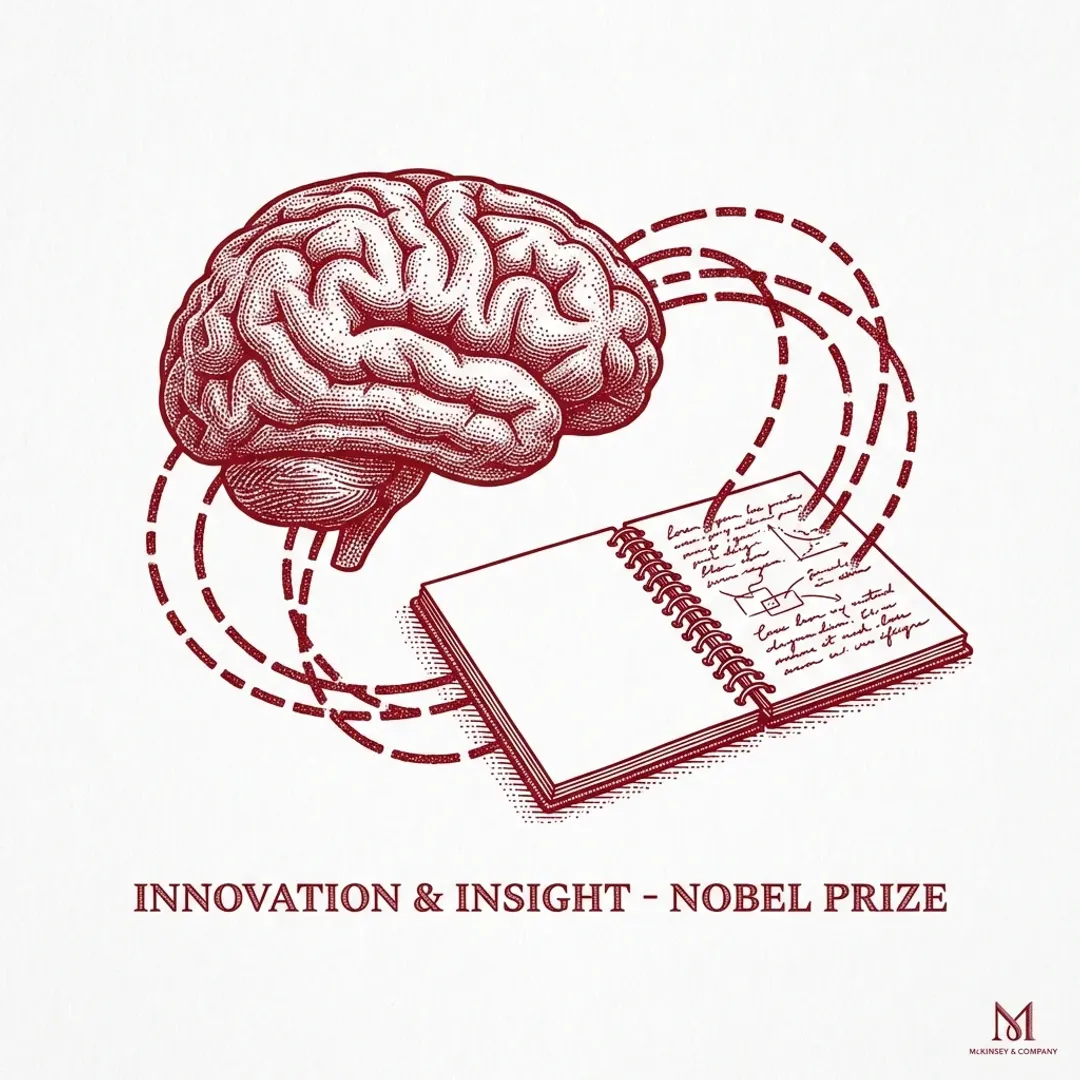
Speaking of “[Second Brain](https://www.books.com.tw/exep/assp.php/vista/products/0010948656?utm_source=vista&utm_medium=ap- books&utm_content=recommend&utm_campaign=ap-202510)” This concept was first proposed by the American productivity expert [Tiago Forte] (https://fortelabs.com/) (Tiago Forte) proposed. To put it simply, “Building a Second Brain” he promoted is a concept that frees the brain from storing information and uses it to think and create. He believes that the human brain is not designed to store large amounts of information, but it is very good at thinking and creating. Therefore, we need an external system to store and organize information and free up the brain’s cognitive resources to do more valuable work.
In the past traditional era, it was very difficult to build a second brain. We needed to spend a lot of time organizing notes, building indexes, and making card boxes. But in the age of AI, this has become easier! A variety of AI tools can help you automatically organize notes, intelligently search for content and discover knowledge links, and even generate new content and insights based on your notes.
So, my current workflow has also changed! I am only responsible for recording core ideas and key insights, and all other organizing, classifying and linking tasks are left to AI. The advantage of this is that I can spend 80% of my time thinking and creating instead of tedious organizing work.
AI Note-taking Tools and Combination Strategies
Choose the tool that suits you
As we all know, there are many AI note-taking tools on the market, I won’t tell you which set of tools is the best? Because the best tool depends on your needs, budget, and usage habits. Now, let me introduce a few tools that I commonly use.
Notion AI is best suited for knowledge managers. It is a powerful note-taking platform in itself, and it becomes even more powerful when adding AI functions. I use it to automatically generate meeting summaries, organize cluttered thoughts, translate rewritten content, and extract to-do items from notes. The biggest advantage is its deep integration with Notion, which allows you to call AI on any page.
The Obsidian + AI plugin is best for deep thinkers. This is a popular note-taking software that uses Markdown format and is very suitable for people who like to control their own data. I use it to build my knowledge network. Each note is a node, forming a knowledge map through two-way connections. The AI plug-in can help me automatically suggest links to related notes, generate visual relationship diagrams, and generate new thinking perspectives based on the content of the notes.
Claude and ChatGPT are arguably the most flexible AI assistants. I use them as instant knowledge advisors, note-taking assistants, content generators, and study partners. Claude, in particular, is good at long text processing and in-depth conversations, and is very suitable for complex knowledge organization and thinking.
Reflect Notes is best for daily shorthand. It focuses on reflective features, emphasizing that AI will automatically generate summaries for daily notes, find key ideas, suggest related past notes, and generate weekly review reports…and so on. Sometimes I use it to make daily shorthand notes and capture some interesting ideas. Maybe you’ve noticed that I choose to use different tools depending on the scene and situation.
My tool portfolio strategy
Seeing this, you may ask: Oh my god, there are so many tools, which one should I choose? My answer is: don’t pick just one, but try to build a toolkit. Just like we tend not to use only one specific kitchen utensil for cooking, we should not limit ourselves to using only one tool for writing notes.
Perhaps, you can refer to this tool combination: for the shorthand layer, use Reflect Notes and mobile phone voice memos to capture inspiration anytime, anywhere, quickly and without burden; for the organization layer, use Notion AI to organize shorthand into structured notes, which are visual and easy to organize; for the thinking layer, use Claude and Obsidian for in-depth thinking and establishing knowledge connections. This is a combination of conversational thinking and knowledge networks; for the output layer, you can try to use various AI writing tools to convert notes into articles, presentations or courses, providing a variety of output formats.
The core concept of this combination mainly lies in using different tools at different cognitive stages. Use the simplest tool when capturing ideas, the most powerful tool when thinking deeply, and the most suitable tool when outputting content.
When choosing tools, I suggest you follow three principles: first, start simple and advance gradually, and don’t try to build a perfect system at the beginning; second, choose tools that can be integrated with each other to ensure that they can connect to each other and exchange data; third, pay attention to data ownership, choose tools that support export, and back up important notes regularly. Please remember that your notes are your most valuable intellectual asset, never be kidnapped by any single tool!
AI-powered note-taking methodology
Card Box Note-taking Method 2.0
Card box note-taking method is a German sociologist Nico Lars Luhmann(Niklas Luhmann, who used this method to publish 70 books and more than 400 papers in 30 years. The traditional card box note-taking method requires manual making of cards and indexing, which is very time-consuming. But in the AI era, we can upgrade this approach. My AI card box practice is very simple, and I only follow a few basic principles: first, each note only records one core idea and keeps it atomized; second, express it in your own words, not copy and paste, but re-express it with your own understanding; third, add tags such as “my thinking” or “to be explored” after each note; fourth, regularly let AI analyze my note library and suggest possible connections and future research directions.
For example, when I read an article about Flow Theory, I will not save the entire article, but write a note: record the core elements of flow and add my thoughts (this explains why I have different difficulty versions when designing courses, whether I can use AI to dynamically adjust the learning difficulty), mark the issues to be explored (the application of flow theory in work scenarios, how the team collectively enters the flow state), and then let AI help me find all flow-related notes in the note library, suggest possible extended readings, and generate a visual concept map. Feynman Learning Method + AI
The core of Feynman Learning Method is to explain complex concepts in the simplest language. When you have the ability to explain a knowledge point so that even a child can understand it, you truly understand it. The current AI tools on the market can make this method simpler and more effective!
[ ](https://substackcdn.com/image/fetch/$s_!lM_S!,f_auto,q_auto:good,fl_progressive:steep/https%3A%2F%2Fsub stack-post-media.s3.amazonaws.com%2Fpublic%2Fimages%2F2fad2926-bf83-4a35-bac9-11aacf58f777_8000x6080.png) If we want to use AI to enhance the process of Feynman learning method, we can do this:
First, learn a new concept and use AI voice-to-text to quickly record your understanding; second, try to explain the concept in the simplest language, let AI play the role of a curious primary school student and keep asking you questions, and find out where your understanding is not deep through the answers; third, go back and look up information for unclear parts, let AI help you find relevant information and cases, and reorganize your notes; fourth, let AI help you generate analogies and metaphors, think about the actual scenarios in which this concept can be applied, and record it to become your application case library.
Cornell Note-taking × AI
Cornell note-taking method divides the page into three areas: the note area records the main content, the prompt area writes keywords and questions, and the summary area writes a summary of the entire page. Through the arrangement of AI tools, the effect of this method can be greatly enhanced.
For example, we can use AI voice-to-text to quickly record content during the note-taking stage, allowing AI to automatically identify keywords to fill in the prompt area and provide relevant background knowledge in real time. During the review stage, you can let AI automatically generate a summary, generate test questions based on the keywords in the prompt area, and analyze your blind spots in understanding. In the application stage, AI can help you extract common themes from multiple notes, generate a knowledge map, and then suggest directions for extending learning.
[ ](https://substackcdn.com/image/fetch/$s_!ZcH-!,f_auto,q_auto:good,fl_progressive:steep/https%3A%2F%2Fsub stack-post-media.s3.amazonaws.com%2Fpublic%2Fimages%2F2cb64c5d-c416-46ba-ac02-f193642da09a_7200x8800.png) My current habit is that every time I finish writing an important note, I will let AI generate a visual chart for me. AI will smartly identify the steps and relationships in the notes and help me generate a clear flow chart or mental map. The advantage of this is that you can see it clearly during review and quickly grasp the key points; and it is easier to understand when sharing it with others. Different visual presentations can often inspire new insights.
Use AI to enhance memory
Spaced repetition and memory curve
German psychologist Ebbinghaus discovered the Forgetting Curve: After we learn new knowledge, we will forget it quickly in the first few days, and then the forgetting speed will gradually slow down. But through regular review, we can significantly improve memory retention. The traditional review method is not efficient because we often don’t know when to review. It wastes time to review content that we have already memorized, and we do not review in time the content that is about to be forgotten.
Simply put, this is the value of a spaced repetition system. AI can track your memory strength for each knowledge point, calculate the best review time, and automatically remind you what to review. My AI memory enhancement system works like this: Mark the knowledge points that need to be memorized in the notes, and NotebookLM will evaluate the difficulty and importance of the knowledge points, automatically generate question and answer cards or fill-in-the-blank questions, arrange review time according to the memory curve, record the effect of each review and dynamically adjust the schedule.
I used this system to memorize over 200 concepts and frameworks while learning about product management. AI will push review reminders at the most suitable time. After I click in, AI will use a question and answer method to test whether I really understand? This system allows me to not worry about forgetting important knowledge, because the AI is like a serious teaching assistant and will remind me to start reviewing at the best time. Active recall and multisensory memory
When it comes to reviewing the past and learning new things, many people review by re-reading their notes, but foreign studies show that this is not as efficient as expected. A more effective method should be active recall, that is, trying to recall what you have learned without looking at your notes. You know, the process of recall itself is strengthening the memory. Every time you try to recall a knowledge point, it is like doing a weight training for neural connections.
In addition, AI can also assist us in active recall: it automatically generates various types of test questions based on your notes, simulates teachers or interviewers asking questions for you to answer, helps you deepen your understanding through layers of questioning, and creates practical application scenarios for you to practice knowledge application. For example, I spend 30 minutes every Friday afternoon on AI active recall training, where the AI randomly selects topics from the week’s notes and asks me questions about each topic. After I dictate the answers, the AI provides feedback and supplements, marking unfamiliar content as needing reinforcement.
Research shows that the more senses are used in learning, the better the memory effect. In this part, AI can help us create a multi-sensory learning experience: in terms of vision, AI can help us generate information charts, mind maps, and concept maps; in terms of hearing, it can convert notes into audio formats, and the key content will be read aloud by AI voice; in terms of kinesthetics, AI can design interactive exercises and simulate real operating scenarios; in terms of situations, AI can also create application situations and role-play simulations.
[ ](https://substackcdn.com/image/fetch/$s_!KV—!,f_auto,q_auto:good,fl_progressive:steep/https%3A%2F%2Fsub stack-post-media.s3.amazonaws.com%2Fpublic%2Fimages%2Fab6c9989-62ee-4c95-ba6f-0304052f17ab_8000x7200.png)
Therefore, when I need to remember a complex conceptual framework, I will let AI generate an information diagram, use AI voice to play the key points while commuting, and then draw the framework by hand in Miro, and let AI create an application situation for me to actually use. Through such a multi-pronged approach, the memory effect is far better than simply reading notes. Create a personal knowledge management system
PARA Organization + AI
[PARA](https://medium.com/pm%E7%9A%84%E7%94%9F%E7%94%A2%E5%8A%9B%E5%B7%A5%E5%85% B7%E7%AE%B1/%E5%A6%82%E4%BD%95%E5%88%86%E9%A1%9E%E7%AD%86%E8%A8%98-e25c4cc39dba) It is an information organization method proposed by [Tiago Forte] (https://fortelabs.com/), which divides all information into four categories: Projects (current projects), Areas of responsibility (areas of continued concern), Resources (resources that may be used in the future), and Archives (completed or no longer active content). With the assistance of AI, we can further enhance the PARA system: when you create a new note, AI will analyze the content and suggest categories; AI will scan your notes every week and recommend which projects have completed the archiving, which resources have become no longer relevant and can be deleted, and which notes should be promoted from Resources to Projects; when you search for information, AI will search four categories at the same time, sort the results according to relevance, and suggest other notes that may be relevant; AI will automatically discover which Resources can support the current Projects, different Areas Are there any reusable content in Archives?
[ ](https://substackcdn.com/image/fetch/$s_!QM7u!,f_auto,q_auto:good,fl_progressive:steep/https%3A%2F%2Fsub stack-post-media.s3.amazonaws.com%2Fpublic%2Fimages%2F171cd43c-e12e-489b-bd74-abd81ff684dd_6479x5039.png)
Knowledge Flywheel and Knowledge Graph
What is a knowledge flywheel? Just like Amazon’s [Business Flywheel] (https://www.businessweekly.com.tw/management/blog/26187), knowledge can also form a positive cycle: input → processing → output → feedback → improvement → input. Each cycle will make the flywheel spin faster and accumulate more knowledge!
[ ](https://substackcdn.com/image/fetch/$s_!FXs9!,f_auto,q_auto:good,fl_progressive:steep/https%3A%2F%2Fsub stack-post-media.s3.amazonaws.com%2Fpublic%2Fimages%2F03f4552d-fc7c-47c4-ac42-746f392d8538_6400x6400.png) No matter how busy I am at work, I will execute a complete Knowledge Flywheel cycle every month: For example, in the first week, I will input a lot of information, read articles, listen to podcasts, and attend lectures. All the content will be quickly organized into notes using AI; in the second week, I will do in-depth processing and let AI Analyze the common themes of these notes, identify issues worthy of in-depth discussion, and establish new knowledge connections; in the third week, create output, select topics to create content, publish articles, make videos, or design courses, and AI assists in the generation of multi-version content; in the fourth week, analyze and improve, collect feedback from the audience, analyze which content is the most valuable, and plan the learning direction for the next month. This cycle has greatly increased the speed of my knowledge growth, and every output is a reinforcement of learning.
After understanding the concept of knowledge graph, each of us can build our own knowledge network. Now, please use your imagination: Assume that all your knowledge is a network, then each concept can be a node, and the relationship between nodes is like a connection, and the thickness of the connection represents the strength of the relationship. AI can easily extract key concepts from your notes, analyze the connections between concepts, and then generate interactive network diagrams and recommended learning paths.
[ ](https://substackcdn.com/image/fetch/$s_!t01a!,f_auto,q_auto:good,fl_progressive:steep/https%3A%2F%2Fsub stack-post-media.s3.amazonaws.com%2Fpublic%2Fimages%2Fe680a741-283a-4a26-8b0e-314d4279dbe2_8000x6400.png) So, I built my product management knowledge graph using AI. For example, when I enter the concept of “user research”, AI will display core relationships (user interviews, questionnaire design or data analysis, etc.), extended concepts (empathy map, user journey or pain point analysis, etc.), application scenarios (product discovery, feature prioritization or market verification, etc.), and actual cases (user research projects I have done in the past). This map is not just static, it will continue to evolve as I learn. Every time I add new notes, AI will automatically update the map.
Practical application scenarios
Deep learning for students
For students currently studying, the AI note taking system can greatly improve learning efficiency. With the teacher’s consent in advance, you can record and capture the teacher’s lectures during class, generate verbatim transcripts and key summaries in real time with the help of AI tools, and quickly mark questions and ideas on your mobile phone. After class, let AI automatically help us organize structured notes, generate the format of Cornell notes, and identify important concepts and keywords. During review, AI tools such as NotebookLM can also generate practice questions and tests, arrange review according to the forgetting curve, and simulate exam scenarios.
I once tutored a classmate from the law department. She had previously faced the danger of “Two-One” (the number of failing credits in a semester reaches one-half of the total credits of the semester, which may lead to dropping out of school) because she was unable to make sense in her studies. Since she learned to use AI to create her own note-taking system, I taught her that she only needs to concentrate on listening in class and does not have to immerse herself in copying notes. AI will automatically generate legal memory cards for her, and the key cases will be organized in a story-based way… As you can imagine, she naturally passed the final exam with high scores.
Efficiency improvement for professionals
For professionals, AI note-taking systems can significantly improve work efficiency. Every morning, AI can extract today’s highlights from our emails and calendars, automatically organize relevant project notes, and suggest materials that need to be prepared. When holding a meeting, you only need to record the meeting content, and AI can instantly generate meeting minutes, automatically extract action projects and responsible persons, and send meeting summaries to the team. When learning, you only need to read industry articles and let AI quickly summarize them and connect them with existing knowledge bases to generate insights and application ideas.
When creating, you only need to calmly select a topic from the note library and let AI help conceive of creative solutions to quickly generate a briefing or proposal. When night falls, letting AI generate a summary of today’s work can also help us analyze time usage and help plan tomorrow’s priorities.
Through such a workflow, the time for recording meetings can be quickly reduced from 30 minutes to 5 minutes, and the time for searching for information can also be reduced from 20 minutes to 2 minutes. Not to mention that the creative efficiency can be increased by 3 times, leaving more time for more important strategic thinking.
Monetizing knowledge for entrepreneurs
For entrepreneurs, the AI note-taking system can also accelerate the realization of knowledge. For example, in the process of developing a course, I will do this: in the first stage, I will first invest in topic research, collect common questions from students, and then let AI analyze market demand, organize personal experiences and cases, and build a course knowledge map; in the next stage 2, I will start designing the outline, first let AI extract relevant content from notes, generate multiple course structure plans for me, and then I will evaluate and select the best structure; in the third stage of content creation, AI will write course scripts based on notes. It can assist in rewriting and optimizing, and generate briefings and teaching materials; the fourth stage is continuous improvement, collecting feedback from students, analyzing learning effectiveness, and updating and optimizing the content.
[ ](https://substackcdn.com/image/fetch/$s_!W5Dh!,f_auto,q_auto:good,fl_progressive:steep/https%3A%2F%2Fsub stack-post-media.s3.amazonaws.com%2Fpublic%2Fimages%2F128561b4-68a3-4f4d-b5d6-d0abc0430f57_6479x5759.png)
Start your AI note taking journey
30 Day Challenge Plan
Thank you for reading this, but it’s not enough to just listen to the theory, now it’s time to practice! I’ve designed a 30-day challenge to help you build an AI note-taking habit.
Week 1: Building the foundation. Choose the tool and install it on the 1st day, record the first note on the 2nd day, let AI assist in organizing on the 3rd day, use the PARA method to establish a classification system on the 4th day, practice quickly capturing ideas on the 5th day, let AI generate charts for the notes on the 6th day, and do a weekly review on the 7th day.
Week 2: Deepen skills. Practice using the Feynman learning method on the 8th day, establish connections for the notes on the 9th day, practice active recall on the 10th day, record case studies on the 11th day, let AI analyze the notes from multiple angles on the 12th day, generate a knowledge map on the 13th day, and do the second weekly review on the 14th day. Week 3: Practical Applications. Use AI to take meeting minutes on the 15th day, take reading notes on the 16th day, record the learning process on the 17th day, carry out creative thinking on the 18th day, record the problem solving process on the 19th day, create content based on the notes on the 20th day, and evaluate the actual benefits on the 21st day.
Week 4: System Optimization. Integrate different tools on the 22nd day, create common templates on the 23rd day, back up and export notes on the 24th day, share notes with relatives, friends and colleagues on the 25th day, start thinking about the direction of knowledge realization on the 26th day, plan future learning routes on the 27th day, comprehensively review the system on the 28th day, celebrate your small achievements on the 29th day, and start making plans for the next 90 days on the 30th day!
[ ](https://substackcdn.com/image/fetch/$s_!8-SW!,f_auto,q_auto:good,fl_progressive:steep/https%3A%2F%2Fsub stack-post-media.s3.amazonaws.com%2Fpublic%2Fimages%2F75f86493-9481-41f8-a699-432617c37d29_9600x7200.png) If you can refer to this structure and follow the course, I believe that in just 30 days, you will have a complete AI note-taking system, at least 30 high-quality notes, 1-2 practical application works, lifelong habits, and more than 3 times improvement in efficiency. Even better, I believe your knowledge compounding system is already working!
Core Principles and Action Recommendations
Today, the core message I want to tell you is: writing notes is not a waste or a burden, but an investment. Every carefully taken note is an investment in your future. These investments will have a compound interest effect, making your knowledge and abilities grow exponentially.
I often tell many friends in the business world: “AI is an amplifier, not a substitute.” AI tools will not replace your thinking, but they can amplify your abilities. If you know how to make good use of AI tools, you can do things that were impossible before. System is better than talent. You don’t need a super memory. What you need is an effective system. With a system, ordinary people can achieve extraordinary things.
Action is better than perfection, I hope you don’t wait until you find the perfect way to take action. Start by doing it first, please remember the mentality of “seeking something first, then seeking something better”, and constantly optimize during the process of action. This is the fastest way to make progress. The value of knowledge lies in application. If you don’t take action, no matter how many notes you take, it will be in vain. Let’s work together to transform knowledge into practical abilities and results.
Start now and don’t delay! It is recommended that you choose an AI note-taking tool, write down the three most important concepts you learned today, and let the AI tool help you organize them into structured notes. I want to remind everyone that although change does not happen overnight, small improvements every day do add up to huge transformations.
In the AI era, each of us can build our own second brain. This second brain not only stores information, but also helps us think, create and grow. Let us use AI notes together to amplify our potential and create a more valuable life.
Dear friend, I would like to give you a final sentence: “The best time to plant a tree was ten years ago, and the second best time is now.” Whether you have the habit of writing notes before or not, let us start [writing notes] (https://www.facebook.com/groups/note.taking.club) from now on. Your second brain is waiting for you to build it!
I wish you happy learning and smooth growth!
🚀 Do you want to know more secrets of AI applications? Welcome to Vista Empowerment Academy!
🧭 If you like this view, maybe our story is just beginning. 👉 Let’s see how I went from writing and teaching to AI empowerment?
[