When AI Meets Briefing: A Practical Guide to Rethinking Your Workflow
As a lecturer and consultant who has long been focused on AI applications and content creation, I am no stranger to various AI tool books on the market. However, when I opened Liao Weiping’s Super interesting! The most practical AI presentation technique in the workplace: use the right tools to fully evolve your productivity! ”, but there was a long-lost sense of surprise. This book is not a simple tool operation manual, but a complete set of briefing thinking methodology, which just responds to the core question I am often asked at corporate training sites: There are so many AI tools, how to choose? How to connect them into an effective workflow?
The author directly points out a truth that many people are unwilling to face at the beginning: AI briefing tools do have limitations. I really appreciate this candid attitude. In this era where AI is overly deified, being able to calmly analyze the applicable scenarios and limitations of tools is a rare professional quality. Wei Ping did not claim that a perfect briefing can be produced by pressing a button like some marketing copywriters do; on the contrary, he started from the seemingly negative starting point of “why AI can’t do a good briefing” to guide readers to establish the correct expectations and cognitive framework.

Systematic construction from thinking to process
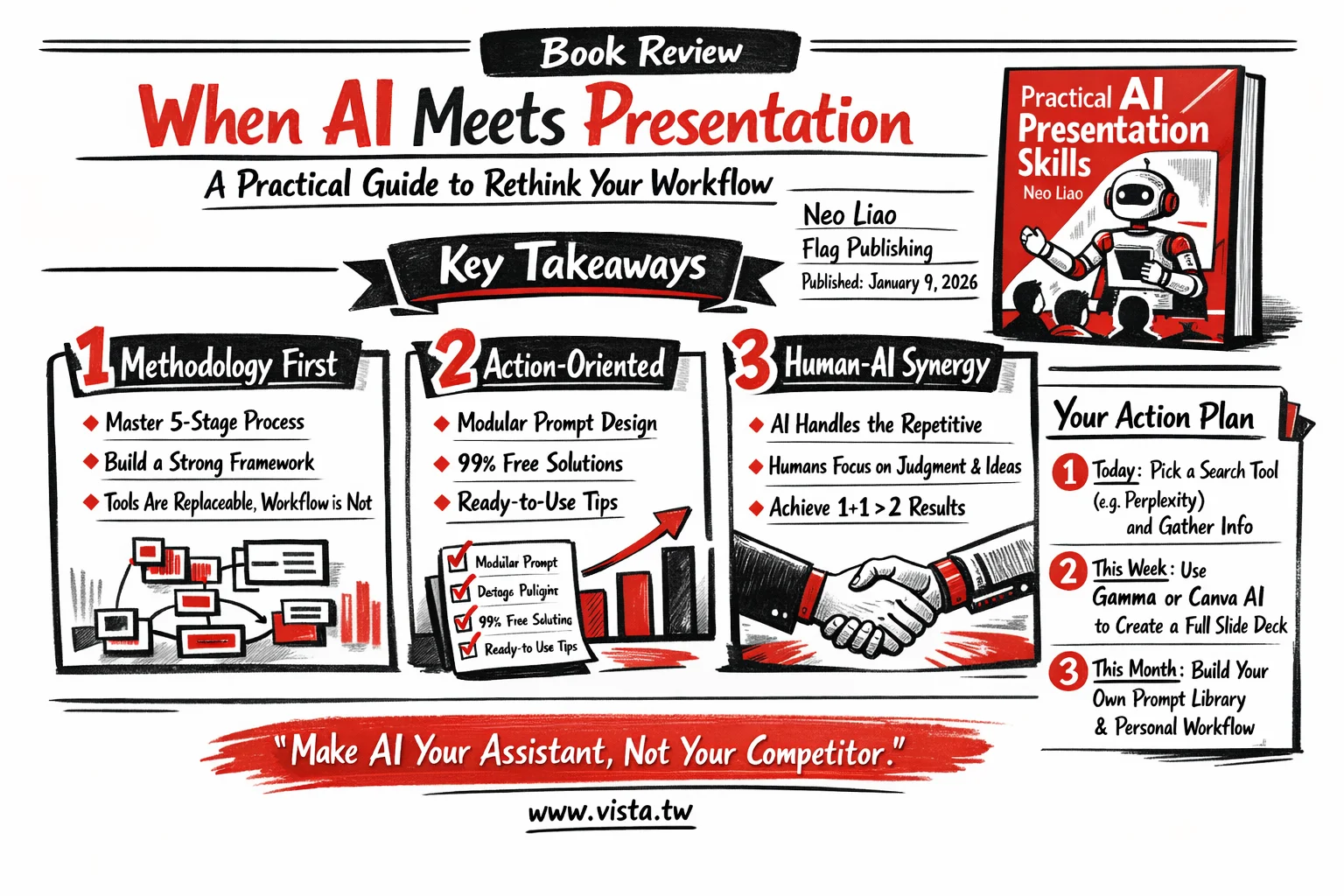
What impressed me most about this book was that the author broke down briefing production into five clear stages: ideation, collection, organization, production and practice. This systematic way of thinking coincides with the content creation methodology that I have long promoted. The biggest blind spot that many people have when using AI tools is that they expect to get it right in one step, but ignore that each stage has its own unique tasks and challenges. Through this staged structure, Wei Ping allows readers to clearly identify which stage they are currently in, and then choose the most suitable combination of tools.
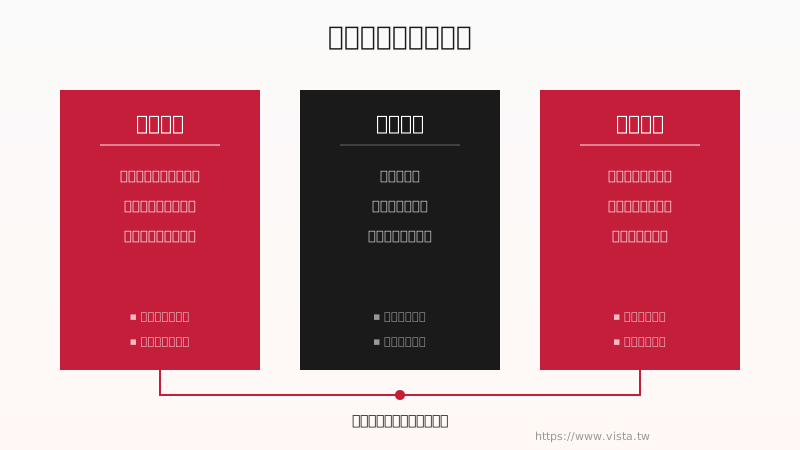
Taking the demand planning mentioned in Chapter 2 as an example, the author proposed three core modules: goal planning, object analysis and key content. This reminds me of the framework I use when writing copy - before writing, you must first clarify who is writing it, what action do you want the other party to take, and what is the most important message? Wei Ping skillfully transformed this set of thinking logic into a command module that can be directly input into AI, allowing even novice briefing staff to quickly master professional pre-planning methods.
In the future, if you have any thoughts about “hard work” or “having to burn the midnight oil again…”, please feel free to think about whether AI can be used to do it? The era of AI has arrived, don’t just jump in and do the hard work!
Search and organize: build a personal knowledge base
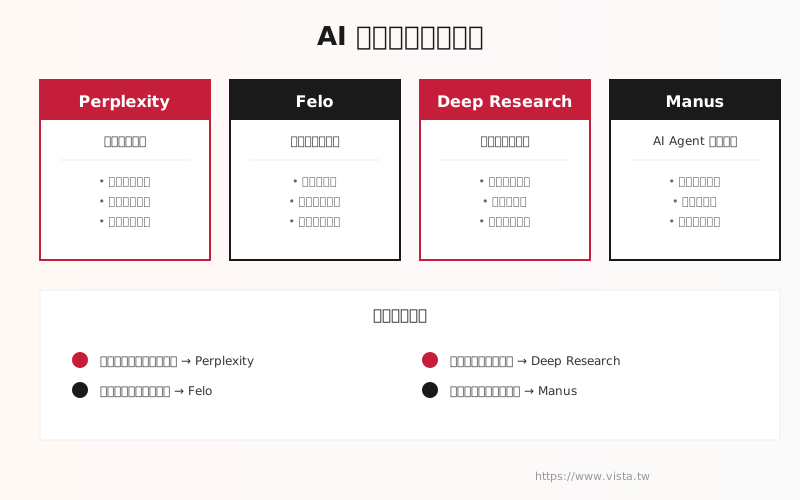
第三章关于 AI 搜寻工具的介绍,对我而言格外实用。 From Perplexity’s smart search engine, Felo’s cross-language research assistant, to Deep Research’s multi-step search execution, to the autonomous planning capabilities of AI agents like Manus, the author not only introduces the features of each tool, but more importantly, explains their positioning in the overall workflow. This kind of tool-oriented thinking is exactly what many AI teachings lack. It’s true that we don’t need to be proficient in all the functions of every tool, but we must know which tool to use in what situation.
The data management tools chapter in Chapter 4 fills in the key link from search to production. The application demonstration of NotebookLM and Notion AI allowed me to see how to transform scattered search results into a structured knowledge base. This concept of “second brain” is highly consistent with the personal knowledge management system that I have always advocated. The slide outline planning module that Wei Ping particularly emphasized concretizes the abstract knowledge organization process into executable steps.
The Art and Science of Visualization
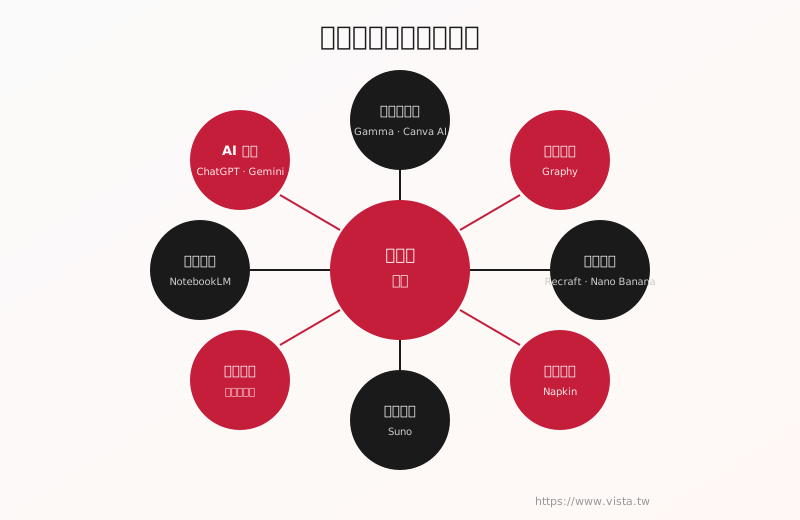
Coming to Chapters 5 and 6, the author finally enters the core topic that most readers are most looking forward to: slide production and visual material generation. The introduction of Gamma, Canva AI, Gemini Canvas and other tools is certainly wonderful, but I think the real value of this book lies in the author’s objective evaluation and usage suggestions of these tools. Wei Ping does not blindly promote a certain tool, but honestly analyzes the strengths and limitations of each tool, allowing readers to make wise choices based on their own needs.
Chapter 6’s introduction to the generation tools for charts, illustrations, ICONs and background music made my eyes light up even more. Graphy converts Excel data into visual charts, Napkin converts text into visual structures, Recraft and Nano Banana generate multi-style illustrations, and Suno creates background music - the combination of these tools can meet almost all visual and auditory needs in the briefing production process. As a lecturer who often needs to produce teaching materials, I have a deep understanding of the practicality of these tools.
Learn AI tools not to become a tool expert, but to solve real problems.
The overlooked key: preparation before going on stage
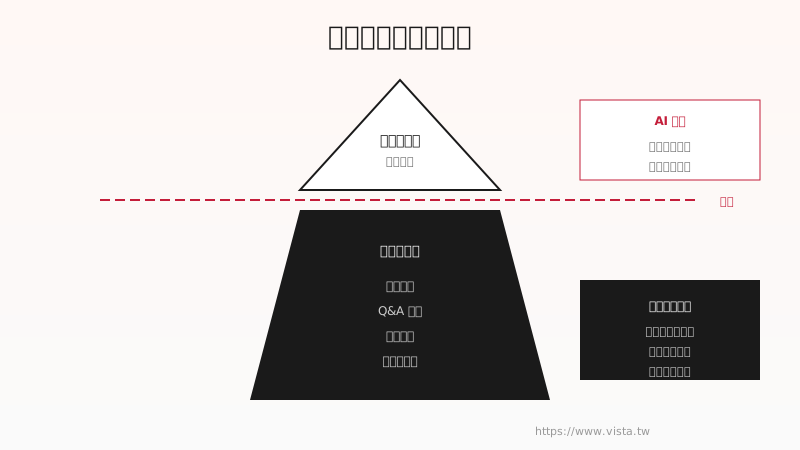
Chapter 7 is what I consider to be the most underrated yet valuable chapter in the entire book. The author discusses a question that many AI reference books deliberately avoid: after AI generates a beautiful briefing for you, can you really confidently go on stage to report it? Wei Ping proposed the concept of “briefing practice”, emphasizing that even AI-generated content requires repeated practice to truly internalize it into your own knowledge. This deep understanding of the nature of human-machine collaboration is the key to this book going beyond general tool teaching.
Especially the preparation suggestions for the Q&A stage have hit the pain points of many professionals. The author suggests that AI can be used to simulate possible questioning situations and prepare response strategies in advance. This kind of thinking of “using AI to practice AI” fully demonstrates the author’s mature thinking on the application of artificial intelligence. The success of a presentation often does not depend on how beautifully the slides are made, but on whether the speaker can calmly handle various emergencies at the scene.
The success of a presentation often does not depend on how beautifully the slides are made, but on whether the speaker can calmly handle various emergencies at the scene.
The Art of Prompt Words: From Task to Cognition
Another important theme throughout the book is the author’s systematic organization of prompt word techniques. Wei Ping divided prompt words into different cognitive levels, from basic task descriptions to advanced thinking framework guidance, and progressed step by step. This classification reminds me of Bloom’s taxonomy of educational goals - from memory and understanding to analysis, evaluation and creation, learning itself is a process of gradual improvement of cognitive abilities. Similarly, interaction with AI also needs to evolve from simple instructions to higher-level collaborative conversations.
The “command module” design provided in the book is quite practical. The author structured his thinking process into a reusable template. Readers only need to adjust the parameters according to the actual situation to quickly obtain high-quality AI responses. This modular thinking is not only suitable for briefing production, but can also be extended to various scenarios that require collaboration with AI. As a training instructor who often needs to design prompt words, I think the value of these modules far exceeds the introduction of the tool itself.
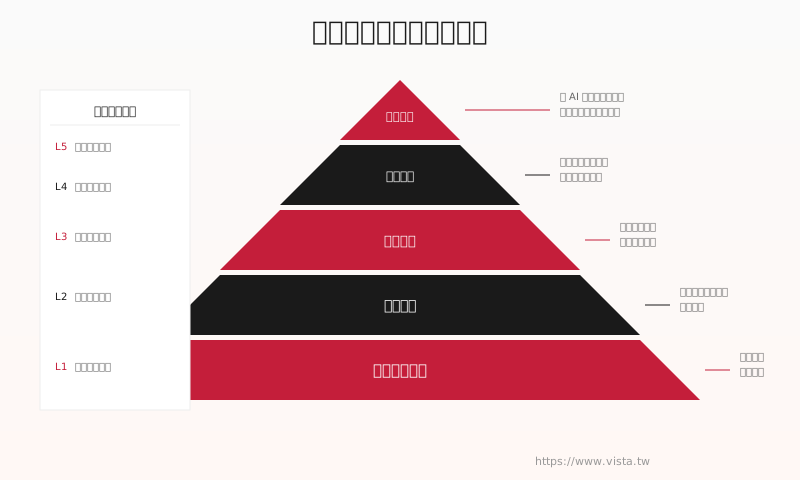
This also echoes my point of view - good prompt word design is the key to successful human-machine collaboration.
Alternative thinking of tools
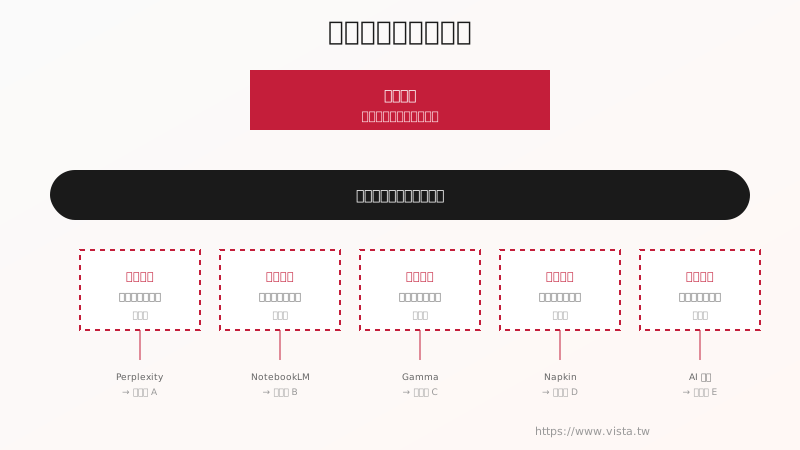
Another point of view in this book that I quite agree with is the “tool substitution thinking” emphasized by the author. AI tools iterate very quickly, and the best-used tools today may be replaced by stronger competitors tomorrow. Therefore, Wei Ping advises readers not to rely too much on a single tool, but to understand the positioning of each tool in the overall process. As long as you master this positioning thinking, when a new tool appears, you only need to evaluate whether it can better complete the task of the positioning, without having to learn the entire process from scratch.
The tools will change, but the thinking logic for solving problems will not.
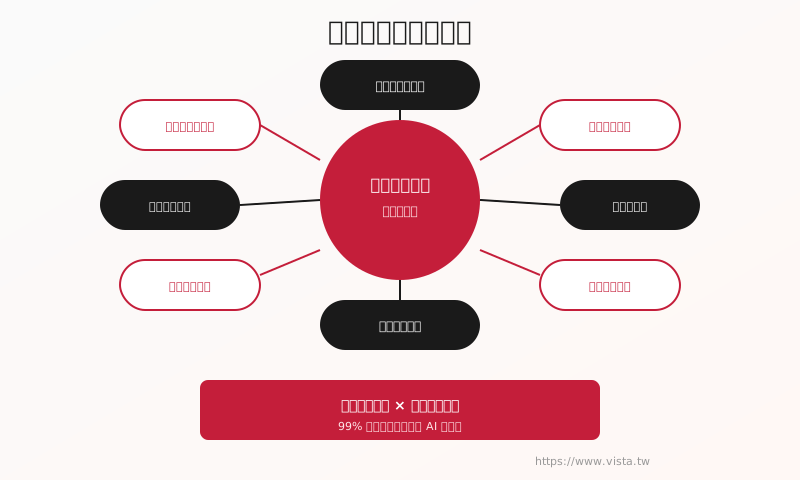
This pragmatic attitude reminds me of something I often said during corporate training: “Learning AI tools is not to become a tool expert, but to solve practical problems.” Wei Ping reminds many times in the book that 99% of tools can complete basic tasks through free solutions, which is an important confidence-building step for readers who are just starting to come into contact with AI tools. There is no need to invest a lot of money at the beginning. Use the free version to go through the entire process. After confirming that this methodology is indeed suitable for you, you can then consider whether to upgrade to the paid version.
How to avoid information anxiety
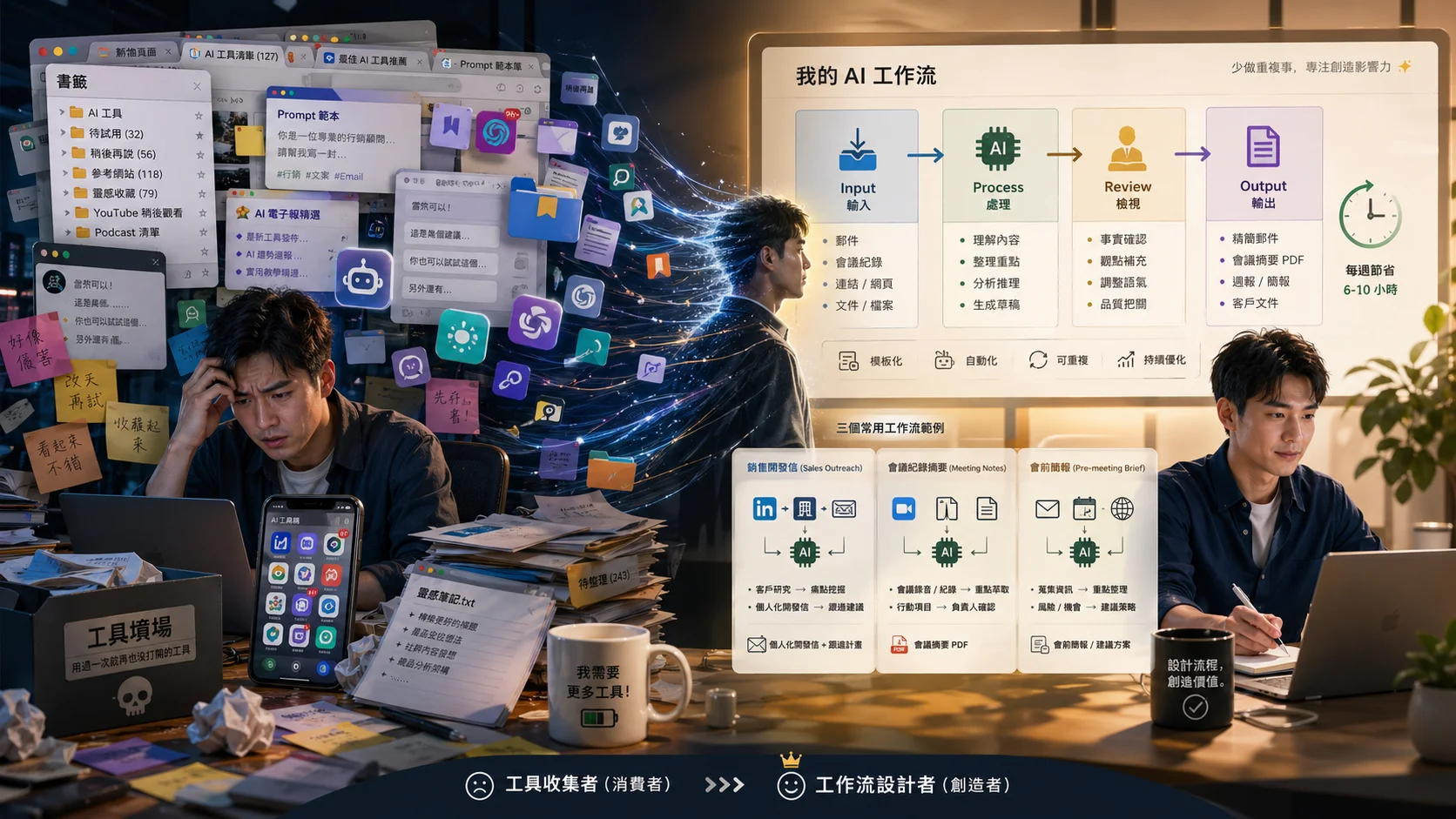
Chapter 8’s discussion on information anxiety in the AI era brings a warm and profound conclusion to the entire book. In this era of endless AI tools, many people suffer from “FOMO syndrome” - they are afraid of missing out on the latest tools and keep chasing and learning, only to find that they have learned everything and are not good at anything. Wei Ping reminds readers that instead of chasing tools, it is better to establish a solid methodological foundation first. The tools will change, but the thinking logic for solving problems will not.
The proposition “How to become a person who will not be replaced by AI in the next ten years” raised at the end of the book triggered my profound thinking. The author does not give a simple answer, but guides readers to think about the respective advantages and limitations of humans and AI. AI is good at processing large amounts of information quickly and generating standardized content; while the value of humans lies in judgment, creativity and empathy, as well as the ability to make appropriate decisions in complex situations. Only by truly understanding this can we truly achieve the best state of human-machine collaboration.
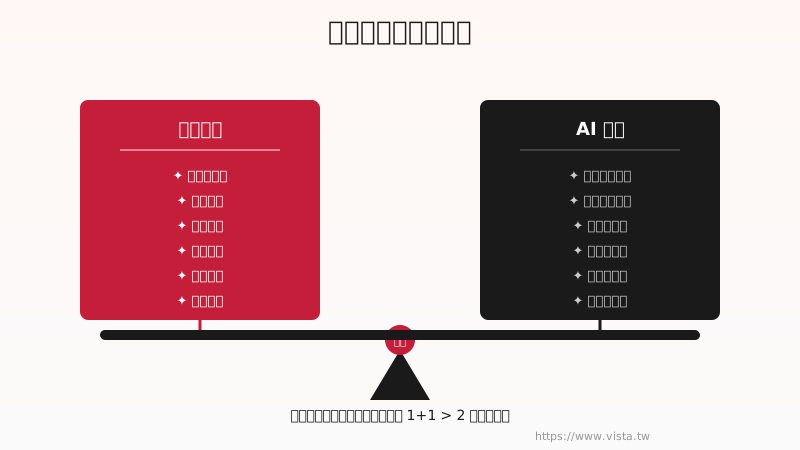
Instead of chasing tools, it is better to establish a solid methodological foundation first.
Practice-oriented design philosophy
Looking at the whole book, I think Wei Ping’s most successful aspect lies in his implementation of a practical-oriented spirit throughout. From Chapter 1 to Chapter 8, each concept has a specific application scenario, each tool has a clear time to use it, and each module can be directly copied and pasted for use. This “just grab it and use it” design philosophy greatly lowers the learning threshold for readers and makes this book truly a reference book for easy indexing rather than a theoretical textbook.
The exclusive website attached to the book is even more of a highlight. The author has organized all the long prompt words in the book online, and readers can copy them with just a click, without the need for laborious manual input. All the websites introduced also provide short URL links, saving readers the trouble of searching by themselves. This thoughtful design shows the author’s emphasis on user experience - not just teaching you how to do it, but also making it easier for you to do it.
Written at the end: Advice for workers in the workplace
After reading this book, what I want to say most is: In the future, please stop treating learning AI as something out of reach. Wei Ping used this book to prove that even professionals who are not very familiar with technology can quickly master the core skills of AI presentation production through a systematic learning path. The key is not whether you are proficient in every function of every tool, but whether you have established the correct thinking framework and workflow.
If you are a workplace worker who often needs to give presentations, I strongly recommend that you keep this book on your desk as a reference for your daily work. When you need to search for information, turn to Chapter 3; when you need to organize materials, refer to Chapter 4; when you want to start making slides, refer to Chapters 5 and 6. The value of this book lies not in reading it once, but in being able to provide solutions at any time when you need them.
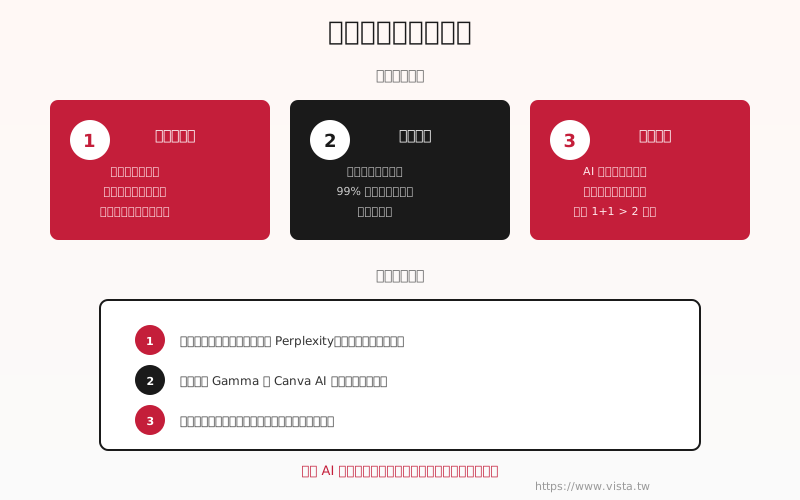
Let AI be your assistant, not your competitor.
Finally, I would like to end with a sentence from the book: “If you have any thoughts about hard work and burning the midnight oil, please always think about whether you can use AI to do it.” This is not laziness, but smart use of technology to improve productivity. In this era of AI, not everyone needs to be an AI expert, but everyone should learn how to make AI their right-hand assistant. This book “is super interesting! The No. 1 Practical AI Presentation Technique in the Workplace” is the best guide to take you on this step.
Book information:
- Book title: “Super interesting! The most practical AI presentation technique in the workplace: use the right tools to fully evolve your productivity! 》
- Author: Liao Weiping (NEO)
- Publisher: Banner Publishing
- Publication date: January 9, 2026
Extended reading:
- Say goodbye to tool anxiety: Why a writer chooses Ulysses to return to simple writing
- Podcast note-taking: 6 steps to build a content flywheel with Podwise + Anytype
- AI Board Method: A set of dialogue methods that will make your thinking more clear