Stop chasing tools! Create your own “invincible system” in the AI era
Think about it, the first thing you do when you wake up every day is to turn on your phone and check which AI model has been upgraded and which new plug-in has been launched? Many people turn learning AI into an endless chase: mastering Claude 3.5 today, and GPT-5 tomorrow; downloading apps, tracking technology news, and practicing new prompts, thinking that this will give them a sense of security. Unfortunately, the anxiety not only did not subside, but became more and more intense.
The reason is simple, because what you are chasing is not the tool itself, but the short-term comfort of “at least I am not behind”. The advantages brought by tools are always temporary, and the next iteration can bring you back to the original shape. What really allows you to move forward steadily and no longer be pushed by the tide is never the latest model, but a set of methods you have internalized, such as: how to define problems, break down tasks, make judgments, and produce value… This set of things is the foundation that supports you in the workplace.
Tools accelerate mediocrity, systems create value
Tools will continue to be replaced by new tools, but systems can make people stand out and even eliminate those who will only blindly chase tools. In this era of widespread AI, the amount of content output in organizations has increased dramatically. Everyone can easily generate professional-looking reports, proposals, and briefings, but the results that can truly drive decisions, create revenue, and save costs have not grown at the same time.
The reason is clear: most people only use AI to speed up “doing things” but do not upgrade “doing the right things”; they amplify output but ignore judgment and strategic depth. As a result, tools make mediocrity faster, but they cannot make mediocrity better or longer lasting.
Alex Hormozi: The ultimate practice of systems being better than tools
Look at those who are truly leading the way. They never waste time chasing every new feature. Instead, they use AI as an accelerated part and embed it into their already mature systems. Alex Hormozi is a classic case.
He started out running a gym, and when faced with fierce competition in the market, he didn’t chase the latest marketing tools or AI content generators. Instead, he established a replicable business framework: clearly defining ideal customers, profitability metrics, and customer acquisition and retention processes. This system allowed him to expand from a struggling gym to helping thousands of businesses grow, ultimately investing in and optimizing companies through Acquisition.com with a portfolio of over $250 million in annual revenue.
Even at the height of the AI wave in 2025-2026, Hormozi still emphasized that “systems are better than tools”: first use a mathematically precise framework to lock the target, and then let AI automate the execution details. He even talked about buildingNever-kill (unkillable) companies rely on these underlying logics that do not rely on specific tools to allow the company to stand firm in technological changes.
Dan Koe: Systematic Conquest of One-Man Enterprises
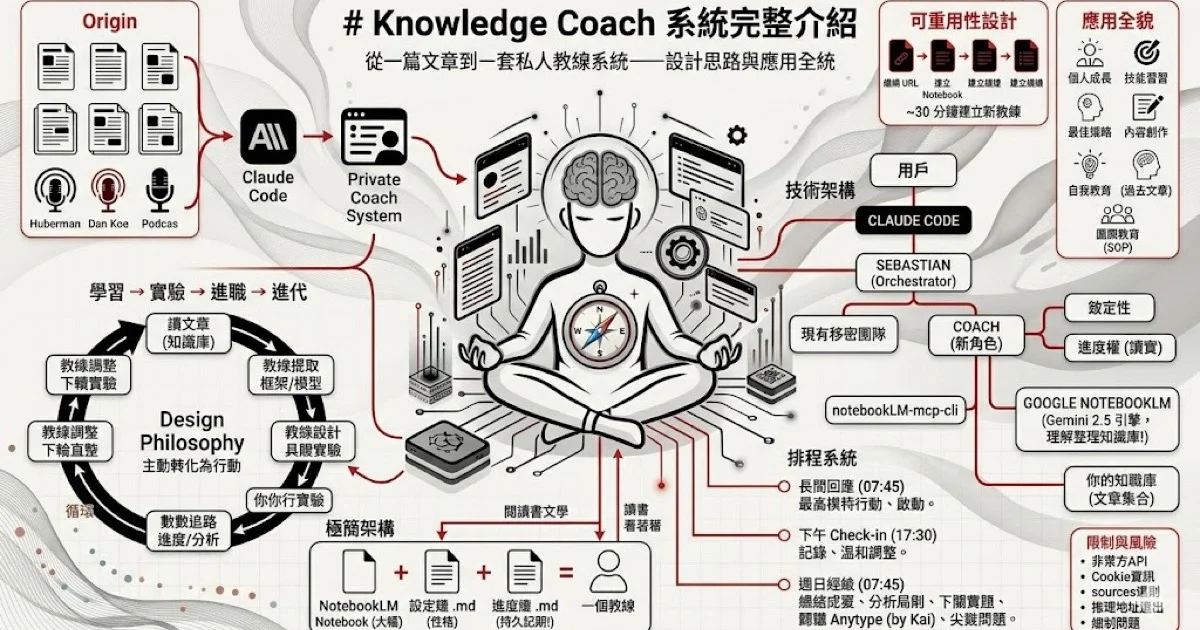
Likewise, Dan Koe has conquered the world of content creation with systems. This one-person business has millions of fans and an annual income of millions of dollars. He has developed a “minimized productivity system”: he only focuses on high-quality creation for 2 hours a day, and uses AI to assist brainstorming, research, and content compression, but never lets tools determine the direction.
He breaks down creation into modular processes—write, reuse, distribute—and builds second-brain tools like Eden to store knowledge assets and make past insights available for reuse at any time. From the end of 2025 to 2026, he more clearly pointed out that “AI counterattack is coming,” but those who can really take the lead are those who have unique processes and perspectives, rather than those who chase prompt skills. His system allows him to do in 6 months what it would take others 6 years to do, while maintaining depth and originality.
Ali Abdaal: Systematic path from doctor to millionaire YouTuber
Ali Abdaal’s story is more relevant to ordinary working people. He transformed from a doctor into a YouTuber, and his channel has exceeded one million subscribers. He relies on the “Building a Second Brain” system: instead of frantically trying out more than 50 AI writing tools, he builds a complete personal knowledge management and creation process.
He uses AI to save more than 10 hours a week, but the core is always LifeOS - a closed loop of defining goals, collection, organization, output, and iteration. From 2025 to 2026, he even experimented with AI as a “life coach” for 18 months, using it to challenge blind spots and sharpen judgments, rather than letting it replace decision-making. This allows him to maintain high-quality output and steady growth in an era of content explosion, rather than being overwhelmed by tools.
What successful people have in common: AI is an accelerator, not a steering wheel
What these winners have in common is this: They see AI as an accelerator in the process, not a steering wheel. When you have a clear system, tool updates are just a matter of replacing parts, and you no longer have to worry about having to learn it all over again.
The most common failure in the workplace is actually not not being able to use AI, but having no process at all. When you don’t know the definition of completion of a report, you will make endless revisions; if you lack decision-making logic, you will easily be led away by random opinions given by others; without the habit of version management, you have to start from scratch for every project; without output templates, delivery relies entirely on temporary inspiration and hard support. After AI comes in, these problems not only do not disappear, but are amplified - it accelerates the reproduction of your confusion, allows unfocused answers to be produced faster, and makes things that are gorgeous but cannot be implemented more beautiful.
Build your four-tier work system
Therefore, the real thing to invest in is not whether to buy software or subscription services, but to fix the core work process and turn it into a replicable, optimizeable and deliverable system.
When many people hear about the system, they may immediately think of “Notion templates”, “note-taking methods” and “flow charts”, but that is just the surface or appearance. What you really want is a working system that can improve your winning rate, which contains at least four levels:
The first level: problem definition system
You need to be able to quickly answer: What is the goal of this thing? What are the criteria for success? Who is the audience? What are the constraints?
Without this layer, no matter how powerful your AI tool is, it can only keep generating and cannot converge. Alex Hormozi Every time you flip a business, start here and avoid flying blindly.
Second layer: output process system
You need to be able to break the task into fixed steps: first gather information → make judgments → establish a framework → produce a first draft → check → deliver.
Without this layer, you will always be stuck in an infinite loop of “I’ll check a little more” and “I’ll ask the AI a little more.” Dan Koe uses AI to assist specific paragraphs, but strictly adheres to this order to avoid infinite loops.
The third level: quality standard system
Make your own checklist: What are at least three key arguments that a proposal should have? What five principles should a brief adhere to?
Without this layer, you will be crushed by the supervisor’s words of “make it more textured.” Ali Abdaal uses similar standards to ensure content quality.
Level 4: Knowledge and Asset System
The things you have made should be turned into reusable modules, such as: a common case library, an argument library, a paragraph template, a proposal skeleton, or a briefing narrative framework.
Without this layer, you have to start over every time, forever exchanging time for output. With these, you don’t have to start from scratch every time.
Tools can do many things for you, but systems can help you do many things right.
Three types of talents that are truly scarce in the AI era
When AI becomes popular, what is truly scarce in enterprises is no longer operational skills, but three abilities:
- People who can define problems: Convert fuzzy requirements into clear frameworks and control the entire battlefield
- People who can make judgments: Select the best from the ten AI solutions and assess the risks. This involves responsibility and is also the key to high salary.
- People who can establish processes: Not only are they efficient, they can also design team SOPs and upgrade from executors to system designers
Tools are just tickets, and the system is your moat.
From Anxiety to Mastery: The Power of Systems Thinking
Once you start looking at AI from a systems perspective, that anxiety suddenly disappears. No matter how fast the update is, it will just replace parts for you. You only need to ask: At which point can it save time, improve quality, and ensure stable delivery? If you can, integrate it; if you can’t, just let it go.
You can change from a person who chases tools to a person who chooses tools, from being pushed by the waves to standing on the shore and observing the direction. In the AI era in 2026, the real competition is not who has more tools, but who can deliver stably, continue to grow, and can be trusted? And trust comes from your ability to produce reliable results every time, and to be able to explain clearly and promote implementation. Learn from the paths of Alex Hormozi, Dan Koe, and Ali Abdaal: Chasing the latest tools is temporary, and only polishing your work system is the long-term strategy.
Starting from today
Well, let’s get started today! Pick a small task, document your process, define standards and create a checklist. You will find that true security never comes from external tools, but from within. As the system becomes more mature, you have methods for new tasks, frameworks for changes, processes for when pressure increases, and iteration of tools. You are just changing parts, not your life.
Further reading
- AI action guide to learning and application: A practical manual for professionals
- Let AI become a thinking partner, not just a machine that produces answers
- Embracing the AI era: importing dilemmas from 2025, looking forward to a new era of agents in 2026
- Stop “reading hard”, AI is rewriting your reading efficiency and knowledge absorption method
- Let ChatGPT be your writing coach! Five steps to start creative inspiration