Grow influence in relationships: Learn the secrets of creating loyal fans from "Reader" Zheng Junde
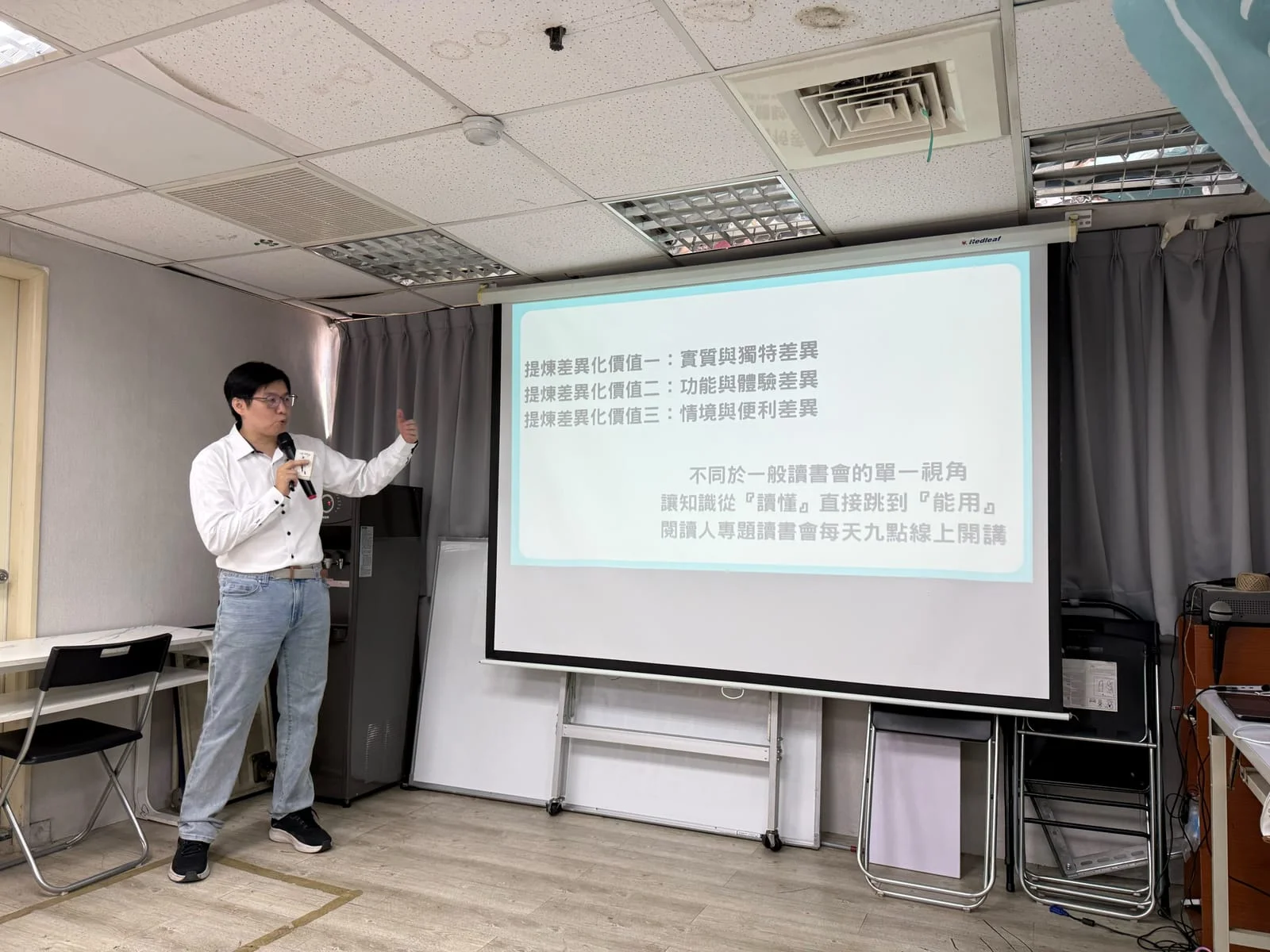
One afternoon in mid-October 2025, I walked into the classroom of Chinese Teachers and Friends Association located in Section 1 of Zhongxiao West Road. There was a subtle sense of expectation in the air. The theme of this lecture is “In the era of big communities, create your own dedicated fans.” The speaker is the founder of the “Reader” community Zheng Junde, who is also a good friend of mine.
He did not use a gorgeous opening, nor did he present a series of profound theories, but said in a tone that is close to people’s hearts: “The fans do not belong to you, but to the people who travel with you.” This sentence is like a light, shining softly but powerfully into the heart of everyone who wants to run a community.
The essence of community is “co-creation”, not “ownership”
In the past, when we talked about brands and operations, we always focused on “ownership”, such as my fans, my students, my customers…etc. But Zheng Junde reminds us:
The essence of community is not “ownership”, but “co-creation”. The reason why people come together is because they share values and emotions, not because they are controlled.
At that moment, I suddenly thought that when I participated in certain communities in the past, I could feel that the organizers actually wanted people to stay, not to get close to them.
He shared the story of “reader” like a slow love story. He didn’t start with business strategy, but with the original book lover. From a person writing about his reading experience, to a group of people starting to communicate, to thousands of readers looking forward to his words and live broadcasts every day, his success may seem accidental, but it is actually a long-term persistence. I have been posting every day for thirteen years and live broadcasting at 9pm every night for four years without interruption.
Someone asked him why he could continue for so long, and he replied calmly: “Because I believe this matter is meaningful.” That kind of certainty does not come from market analysis, but from the promotion of inner belief.
When you have been deeply involved in a field for a long time, you will be remembered; only by being remembered can you have the opportunity to be trusted.
Trust is the cornerstone of all communities
Trust is the cornerstone of all communities. If there is no trust, there will be no fans. This sentence made me unable to let it go for a long time. In this day and age, it’s too easy for us to be hypnotized by numbers such as number of followers, interaction rate, or conversion rate! Those numbers are important, but they often obscure what matters most: the true sense of trust between people. Zheng Junde has proved with his actions that community management does not rely on cold algorithms, but a kind of friendship connection.
He mentioned a concept: “Content is not just a post, but a way of life.” For him, “reading” is not just a static behavior, but a value that can be practiced. He once held a “Reading + Road Running” event, inviting everyone to go running with books and exchange a book after the run; he also held a “Corporate Reading Club” where supervisors and employees could have a knowledge conversation at the same table. Those activities may seem light, but they actually contain a profound understanding of people - the purpose of reading is not to accumulate knowledge, but to establish connections.
Hearing this reminds me of a sentence:
People follow you not because of how good you say it, but because they see what they want to be in you.
Zheng Junde has a rare kind of sincerity. He does not shout slogans or push products, but uses actions to prove his ideas. This is exactly why he can attract a group of loyal fans: because his existence itself is a manifestation of belief.
Golden Circle Theory: Start with Why
Talking about community management, he quoted Simon Sinek’s golden circle theory - from “What”, “How” to “Why”.
People don’t buy what you do, they buy why you do it.
I had heard this sentence countless times, but when it came from his mouth, it took on new meaning. Because he is not just a quoting theory, but a practical practitioner. His “Why” is clear: “I believe everyone should have control over time and be able to fight against social anxiety and involution.”
This sentence reminds me of many office workers, creators, and even teachers today - we are all being pushed away by time, but we have forgotten why we set out. And Zheng Junde uses reading to help people regain that dominance. He’s not just promoting books, he’s promoting a value: making reading a way to regain control of your life. When an idea has a soul, the community will naturally attract people of the same frequency to gather. That’s not an operation, it’s a magnetic field.
Story is the best carrier of value
At this point, he suddenly smiled and said: “Stories are the best carrier of value.” For example, he once introduced himself at a reading meeting: “I promote reading, but my target is not children, but adults. Because I believe that influencing an adult can turn a home around.” As a result, one participant said on the spot: “This is so meaningful, I will take you to give lectures in Zhuke.” From that moment on, his career path changed from organizing activities to entering the enterprise to engage in training, from promoting reading to promoting organizational learning.
Having said that, this is the power of stories - when your ideas can be resonated by others, they will automatically be transformed into actions. That’s not a business pitch, it’s a value contagion. This is also my understanding that has become more and more profound in recent years: In the era of AI and the explosion of self-media, what can really retain people is not the amount of information, but emotional resonance. People don’t lack content, but what they lack is the feeling of being understood.
Community design: interaction is more important than platform
In the second half of the lecture, Zheng Junde talked about community design. Many people think that the focus of community management is to choose the platform, but he said: “The core of the community is not the tool, but the interaction.” He shared the practice of the “Reader” community: allowing members to like, leave messages and give feedback to each other, and even set up rankings and encouragement mechanisms to promote mutual exposure and support. He emphasized that this interaction should be based on positive energy, not criticism, but affirmation.
He smiled and said:
Don’t let the community become a place to compete with others, but let everyone feel that it will get better here.
This sentence softened the atmosphere in the room. Indeed, we are too accustomed to using performance and traffic to measure the value of a community, but we have forgotten that the most important criterion is actually - are people willing to stay? This feeling that makes people want to stay often comes from interaction rather than function.
He also said that many community operators love to pursue new platforms, such as Discord, Circle, Slack or Skool, etc., but as a result no one can get in. He laughed and said, “Promoting a new platform is like asking everyone to travel to a strange country. You have to learn a new language first, so it is difficult to promote.” He suggested that everyone: “Start in a familiar field first, and then slowly move to a familiar place when the relationship is familiar.”
This sounds simple, but it is the golden rule of business. Because running a community is not about showing off skills, but about making people feel comfortable. Many people blindly pursue new ideas, which ends up tiring themselves and confusing their members. Zheng Junde reminds us:
Don’t forget, the main body of the community is people, not the system.
This sentence deeply touches my heart. In this era of rampant automation and AI, human touch has become the scarcest competitiveness.
Cultivating a loyal fan: trust leads to good sales
Next, he further talked about the strategies for cultivating loyal fans. Fans are not born, they are designed. He used “product line extension” to explain this concept. You start by attracting people with introductory content, then deepen the relationship with companionship courses, and finally build long-term connections through advanced solutions or co-creation projects. This set of ideas is very clear in his brand - from reading classes, note-taking classes to corporate learning, his product line is not to “sell more”, but to “help students grow.”
Zheng Junde said:
Fans don’t just buy your products, but are willing to continue learning in your ecosystem.
This sentence reminds me of the concept of “customer lifetime value” in marketing, but he said it more gently and more humanely. That is not cold data, but an extension of a relationship. He emphasized: “Only trust can lead to good sales.” This reminds me of the confusion of countless creators - why do they try hard to market but no one buys it? Without trust, any amount of advertising is just noise.
He said that the most difficult thing about running a community is not exposure, but companionship. This sentence reminds me of his insistence on broadcasting live at nine o’clock every night. It is a ritual of companionship that lets people know: “At this time, we will meet.” Over time, the fixedness of time becomes the rhythm of trust. This stability is the source of security for the community. The reason why people are willing to become die-hard fans is not because they are inspired, but because they are understood. Zheng Junde understands this very well, so what he manages is not fans, but friends.
Let ideas be acted upon
As the lecture came to an end, he left a few sobering reminders. He said: “Redefine your ‘Why’ every year. The original intention is not to find it once and then end it, but to constantly revise it.” This sentence made me silent for a long time. Indeed, too many people are pushed by success on the road to starting a business or running a business, but they forget to ask themselves why they set out?
There is another sentence that particularly impressed me: “Let ideas be acted upon.” He said that some people have great ideas but cannot implement them. If the idea cannot be implemented, trust cannot be accumulated. This sentence is like a nail, firmly nailed into my heart. You must know that a philosophy is not a slogan hanging on the wall, but must be lived in the details of every day. The tone of voice you respond to other people’s messages, your attitude towards your partners, and the way you handle problems are all silently building your personal brand. It is this consistency of personality that die-hard fans follow.
Finally he said one of my favorite words:
Fans don’t fall from the sky, but you take care of them in a sincere way every day. His tone at that time was gentle but firm, like a gardener describing how to grow flowers. I think this is the biggest difference between him and ordinary professional lecturers. He does not teach you how to be fast, but reminds you how to grow long. This “long” concept may be the most scarce wisdom in this era of large communities. We are so accustomed to short-term popularity and immediate returns that we forget that real influence comes from the accumulation of long-term trust. True fans don’t appear overnight, but slowly develop through countless responses, conversations, and actions.
Community management is actually about managing oneself
When we walked out of the venue, it was getting dark. The street lights slowly turned on, and the words of Zheng Junde still echoed in my mind: “The community is not a platform, but the continuation of a relationship.” As I walked, I thought, isn’t this what we need to be reminded of most in this era? We think we are running the community, but actually the community is running us.道理很简单,因为它正考验我们的耐心、诚意与价值观。
It is true that in the era of big communities, there is no shortage of tools, content, and exposure! What we really lack is the willingness to accompany others for a long time. The real relationship between iron fans is not based on algorithms, but on temperature. When we are willing to slow down, listen, understand and respond, true fans will appear unconsciously.
And at that time, you will find that “running a community” is ultimately about managing yourself.
Further reading:
- It’s not that you don’t work hard enough, it’s that the value proposition is not attractive enough
- Copywriting power is your “cashability”: before turning ChatGPT into a godly teammate, you must first make yourself stronger
- ERTA model of content marketing: Let your content have its own communication power
Further reading
- Life in a Foreign Country and Self-Media: Teacher Li Sixuan’s Experience Sharing Meeting on Social Media Strategies for Traveling to the Netherlands
- From book promotion to building an ecosystem of loyal fans: Pat Flynn’s all-round funnel marketing
- I watched “Dreams Come True!” Awakening your handicraft soul: 100 must-do things from interest to sales》: Use content to add value to your brand
📖 深入探索相關主題