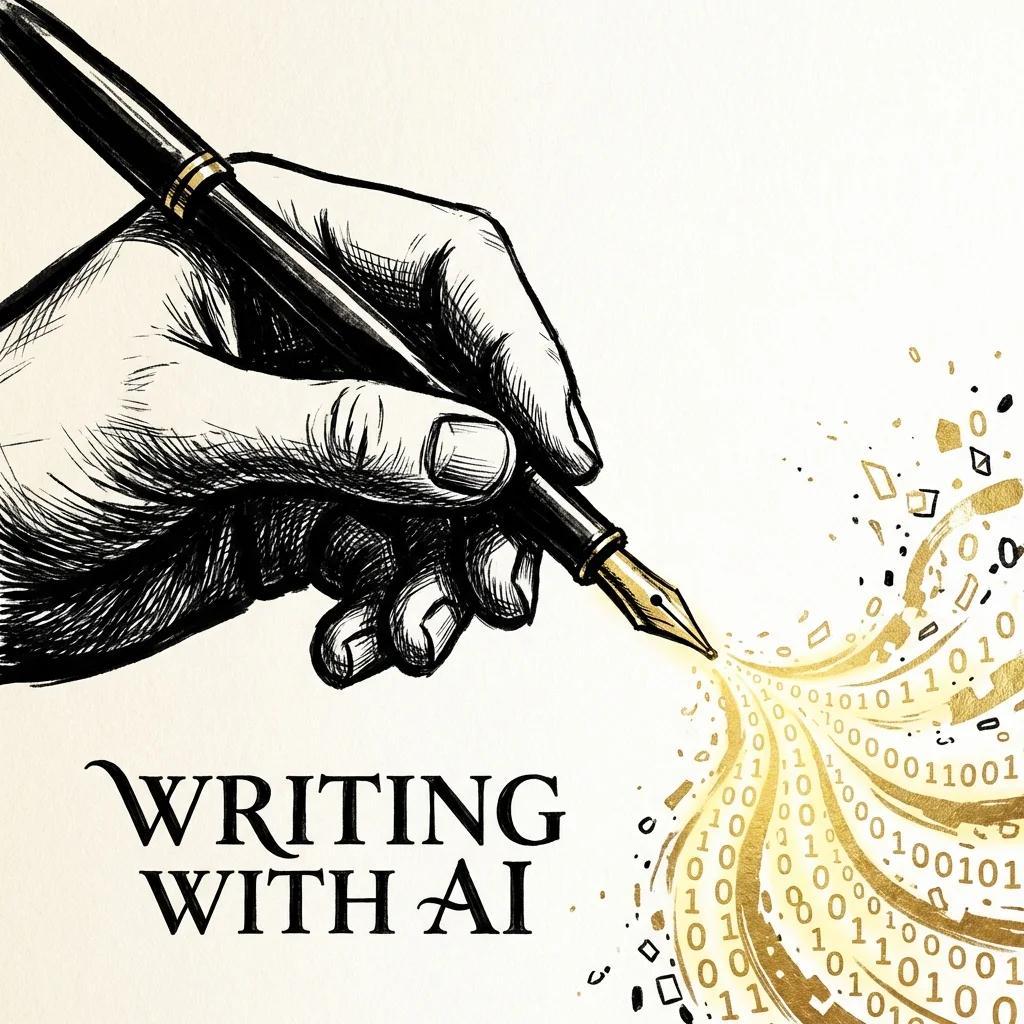
Can you write using AI?
In this era where AI is increasingly integrated into our lives and work, writing is no longer just a skill unique to humans, but a journey of exploration with AI. However, many people often fall into a blind spot when they come into contact with AI writing, thinking that it is just an evolved version of a search engine. As long as you enter keywords, AI can automatically generate satisfactory content. However, interacting with AI is not a traditional search, but a whole new way of having a conversation. If we don’t know how to ask questions and how to communicate effectively with AI, the answers we get will often be superficial and lack depth. This is why many people feel disappointed or confused when they first try AI writing.
In this AI revolution, what we are facing is not how to let AI replace us, but how to make AI become our “creative partner”, helping us expand the boundaries of thinking, improve writing efficiency, and even inspire more innovation. Dialogue with AI should never be a one-way request, but a step-by-step, mutually inspiring co-creation process. The core of this process lies in “how to ask questions accurately”, how to make AI produce content that meets our needs, and through continuous adjustment and optimization, we can finally form a work with a personal style.
AI writing is not about giving orders, but a strategic dialogue.
The traditional search model is based on keyword matching. As long as you enter a few related words, the search engine can filter out the most relevant results through algorithms. Although this method is simple and intuitive, it is very passive because the search engine cannot truly understand our needs and cannot deduce based on the context. It only mechanically provides a list of existing information. However, AI chatbots are a completely different story. It is not just a database, but an interactive assistant with “language understanding” and “content creation” capabilities. It can generate new texts based on our questions, and can even simulate different writing styles and narrative structures.
For example, if we enter “healthy eating advice”, the search engine may provide a long list of website links related to “healthy eating”, and AI will directly produce an article or paragraph telling you how to eat healthier. But if our question is too vague, such as “Write a healthy eating guide for me,” the AI may give a piece of content that is too general and cannot really meet our needs.
However, if we change the question to: “Please write a 1,000-word healthy eating guide from the perspective of a professional nutritionist, providing a simple one-week diet plan for office workers aged 30-40 years old, and including specific dietary suggestions and simple recipes.” Then the content produced by AI will be more in line with our expectations. This is the essential difference between AI and search engines - it is not a static information library, but a creative partner that can continuously adjust content through dialogue.
So, how to make AI your best writing assistant?
The key to learning to talk to AI lies in how you ask questions. Many people often overlook an important fact when interacting with AI - AI is not human. It cannot interpret our intentions through expressions, tone or body language. It can only reason and respond through the words we input. Therefore, when we cannot express our needs accurately, the content produced by AI will naturally appear disorganized or even deviate from the topic.
A good question should have the following elements:
- Role setting: Clarify the role played by AI, for example, “You are a senior copywriting expert, please help me write a brand promotion copy.”
- Background and goal: Provide sufficient context, such as “This copy will be used on social media, and the target audience is young women aged 25-35.”
- Output format: Tell AI the results you want, such as “Please organize three different styles of copywriting in Markdown tables.”
- Style and tone: Clearly specify the writing style, such as “Please use a relaxed and humorous tone to make the content more entertaining.”
- Repeated optimization: Don’t stop at the first answer given by AI, but make further adjustments based on needs. For example, “Please add 3 actual cases based on the content just now to make the article more convincing.”
By asking questions in this way, AI can more easily understand your needs and provide more valuable content.
In the world of AI writing, “how to ask questions” is a subject worthy of study. [Takayuki Fukatsu] (https://note.com/fladdict) of the Japanese content community Note.com proposed a “Fukatsu-style questioning framework”, emphasizing:
• Content should be kept concise, within about 300 words • The language should be easy to understand and even primary school students can understand it • Articles must be logically clear and avoid long, overly complex sentences.
Such a questioning framework helps AI grasp the key points faster and avoid lengthy or off-topic content. But this does not mean that we can only copy Shenjin’s model. Everyone can develop their own way of asking questions. For example, we can develop the “Vista Questioning Framework” and adjust the questioning strategy according to our own needs to make it more suitable for our industry and writing style.
In addition, AI can not only answer questions but also create more deeply. For example, we can ask the AI to:
• Generate visual information: Let AI generate tables, diagrams and mind maps to make the content more structured and readable. • Simulate different narrative styles: Ask AI to present the same topic in different forms such as news reports, storytelling, and product descriptions to stimulate more creativity. • Cross-language translation and optimization: AI has powerful language capabilities and can help us translate content into different languages and even optimize sentence structure to make the content more attractive.
AI can indeed make creation easier, but human thinking is the key.
The emergence of AI writing has undoubtedly made content creation more efficient and can even help us break through the inspiration bottleneck. However, the real value does not lie in “let AI replace us”, but in how to use AI to expand our thinking and take our creative capabilities to the next level.
AI can provide inspiration, but the final judgment remains in our hands. When we can effectively use AI to assist writing and filter and modify it through our own thinking, we can truly unleash the potential of AI and turn writing into a more interesting and creative exploration journey.
This AI revolution is irreversible. Instead of resisting it, embrace it, learn from it, and let AI become your creative superpower. Next, let’s start with precise questions!
Further reading
- A powerful tool for academic writing: UPDF allows me to breathe freely in the world of knowledge
- AI is not your master, but the deputy of inspiration: Mo Yan’s inspiration for using AI to write poetry
- When AI becomes a writing assistant: My real experience and future prospects