When marketing is no longer slow - how CDP allows brands to get ahead of consumers
🚀 This article was originally published in “Economic Daily
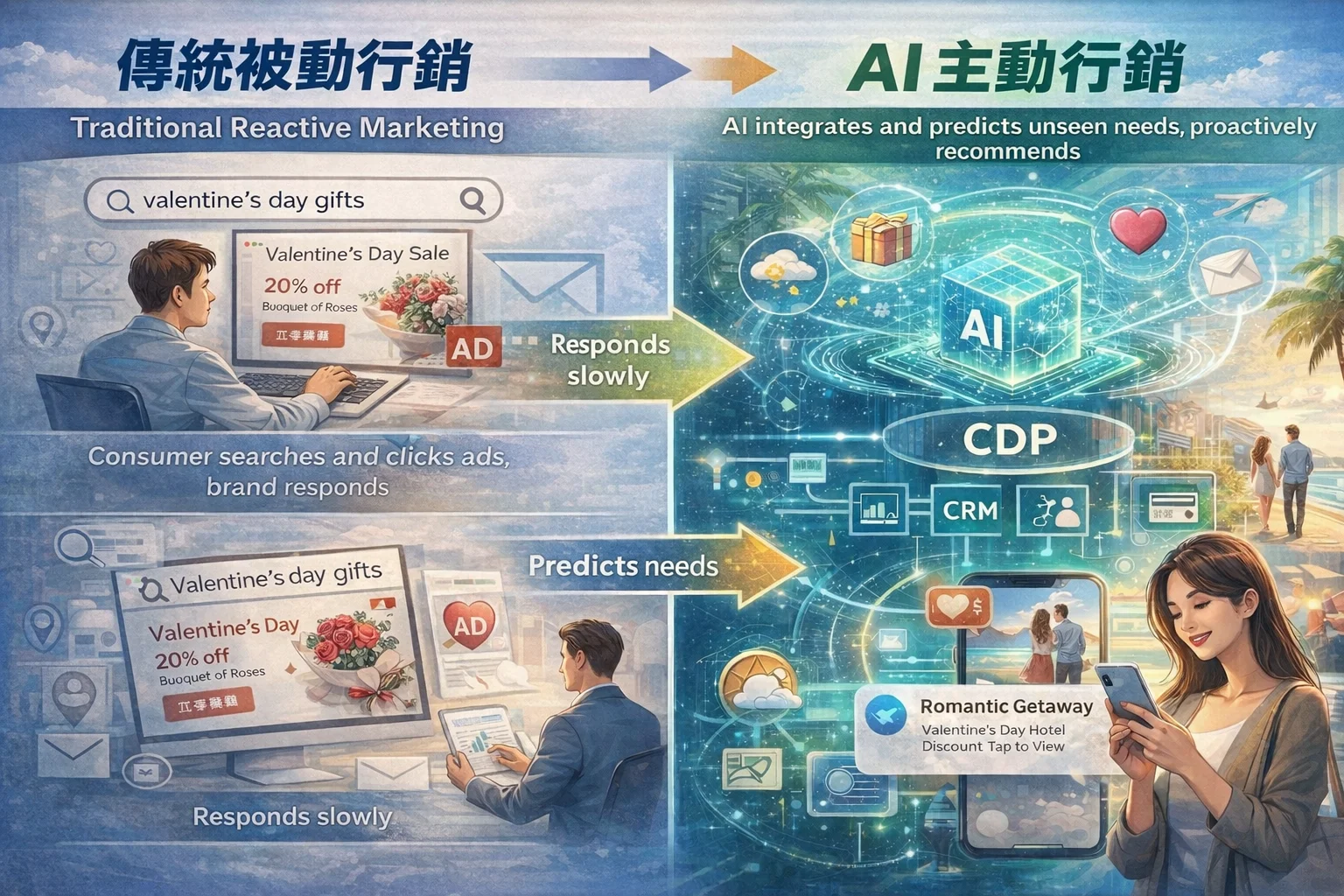
In traditional marketing, after consumers search for products, click on ads or leave footprints, brands begin to respond and provide relevant information or offers. Although this model is effective, it is always slow and fails to capture the potential intentions of consumers that have not yet been clearly expressed. However, with the rapid evolution of AI, marketing is shifting to a proactive model. That is, by integrating scattered data through the Customer Data Platform (CDP), AI can predict consumers’ needs and push dynamic content before they take the initiative. This not only improves the personalized experience but also gives brands an edge over the competition.
From passive response to proactive prediction
Imagine that when a consumer types “Valentine’s Day gift” into a search engine, the brand tracks them through keyword advertising or retargeting. While this captures explicit needs, it ignores hidden opportunities.
For example, consumers may inadvertently reveal their interest in romantic travel while browsing social media without actively searching for it. In this way, traditional marketing misses the opportunity to intervene. This model relies on consumers’ proactive behavior, resulting in low efficiency and unstable conversion rates.
Proactive marketing takes AI as its core and intervenes in advance through predictive analysis - allowing brands to become consumers’ predictors.
Proactive marketing takes AI as its core and intervenes in advance through predictive analysis. AI not only analyzes historical data, but also integrates real-time behavior and external signals (such as weather, holidays or economic indicators, etc.) to predict consumers’ next actions. For example, on the eve of Valentine’s Day, AI may detect that a user frequently browses chocolate-related content. Although he has not searched for it, the system has predicted his purchasing intention and proactively pushed customized offers. The key to this change is the shift from response to prediction, allowing brands to become consumers’ predictors.
CDP: Infrastructure for the Data Revolution
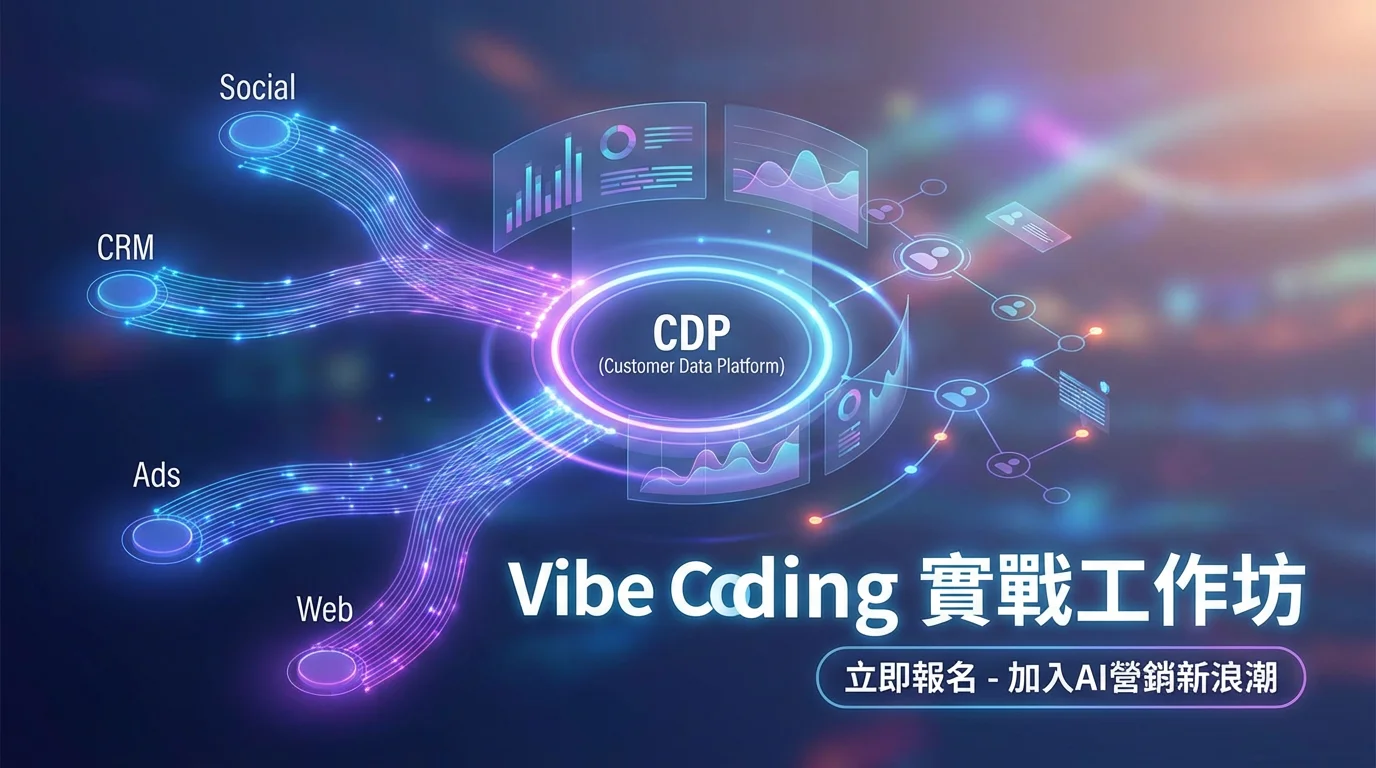
When it comes to proactive marketing, data is key, and CDPs are the foundation of this revolution. It’s a purpose-built system that aggregates data from multiple sources, including website browsing history, app interactions, CRM systems, social media, and even information from external partners.
Traditional marketing often faces the problem of data silos - the data of the marketing department is disconnected from the sales department, resulting in inaccurate analysis. CDP solves this problem.
Traditional marketing often faces the problem of data islands, that is, the data of the marketing department is disconnected from the sales department, resulting in inaccurate analysis. CDP solves this problem by not only integrating first-party data, but also processing second-party and third-party data to form a 360-degree customer understanding.
From data to action: CDP in action
For example, when an e-commerce platform uses CDP, AI can instantly track the user’s browsing path. If a user’s IP address in Taipei shows interest in technology products, the system will combine their past purchase records and current holiday situations (such as Valentine’s Day and Mother’s Day) to predict that they may purchase wireless headphones or far-infrared massagers as gifts. The strength of CDP is its scalability: it supports real-time data streaming, allowing AI to make decisions in just milliseconds.
These technologies rely on high-quality data, and CDP ensures that the data is clean and current. In practice, AI models, or neural networks, can process large amounts of data. By 2026, predictive analytics will be the standard, helping brands deliver solutions before consumers even realize they need them.
Overall, this personalization improves conversion rates and significantly reduces customer acquisition costs.
Overall, this personalization increases conversion rates and can significantly reduce customer acquisition costs.
🎯 **Want AI to be your marketing superpower? **
If you are interested in AI-driven data marketing, you might as well start with hands-on practice. In Vibe Coding Practical Workshop, you will learn how to use AI to quickly create your own digital tools - even if you can’t write programs, you can make a working product prototype within a day.
The future is bright, but challenges remain
Despite its bright future, proactive marketing also faces challenges.
First, we will encounter the issue of data privacy: GDPR and Taiwan’s personal information law require transparent use of data, and brands must ensure that AI does not invade privacy.
Secondly, there is the issue of bias: if the training data is biased, AI may reinforce stereotypes, such as over-promoting beauty products to female users. In addition, overprediction may make users feel monitored, leading to a crisis of trust.
First, now is the time to act
Looking forward to 2026, proactive marketing will become more mature, and these changes are the inevitable revolution brought about by AI. Integrating data through CDP, AI predicts intent and provides dynamic content, allowing personalization to penetrate every aspect of the website, advertising and pricing. This not only improves efficiency but also reshapes customer relationships. For businesses, there’s never been a better time to act: Assess your data foundation, import a CDP, and build your AI skills. Only in this way can we know the secret.
Integrating data through CDP, AI predicts intent and provides dynamic content, allowing personalization to permeate every link. This not only improves efficiency but also reshapes customer relationships.
Further reading
- AI agent revolution, creating a marketing cycle
- Focus Marketing: Lock in precise customer groups and spend marketing expenses where possible
- Five key points for small and medium-sized enterprises to adopt AI
- Vibe Coding drives marketing superpower: Let AI be your digital creative partner
External resources
- CDP Institute: Understanding Customer Data Platform
- Salesforce Data Cloud
- Segment: Data Integration Platform
- GDPR official website