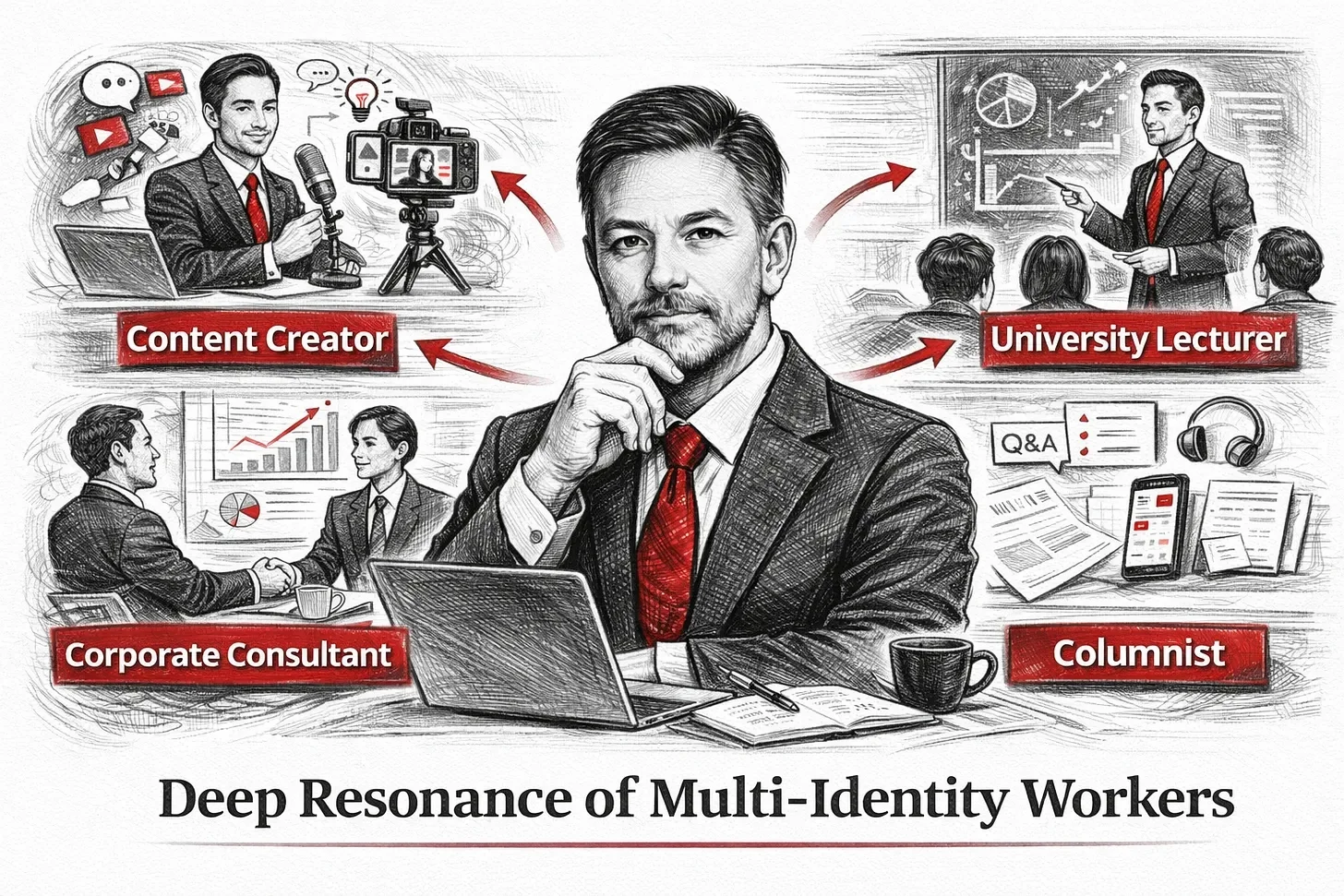
With multiple interests, how can you turn "wanting to learn everything" into a unique advantage?
Do you also have this problem: you are interested in many things, but you are always told that you are “not focused enough”?
Psychology, design, writing, marketing, philosophy, technology…each of them fascinates you, but the traditional career path tells you: “Choose one and go deep into it.” So you begin to wonder if you are too greedy and too uncertain.
But what if I tell you that in the AI era, this trait of “wanting to learn everything” is actually your most powerful moat?
The industrial age is over and the Renaissance is returning
Dan Koe makes an interesting point in his article: We are experiencing a transition from the Industrial Age back to the Renaissance.
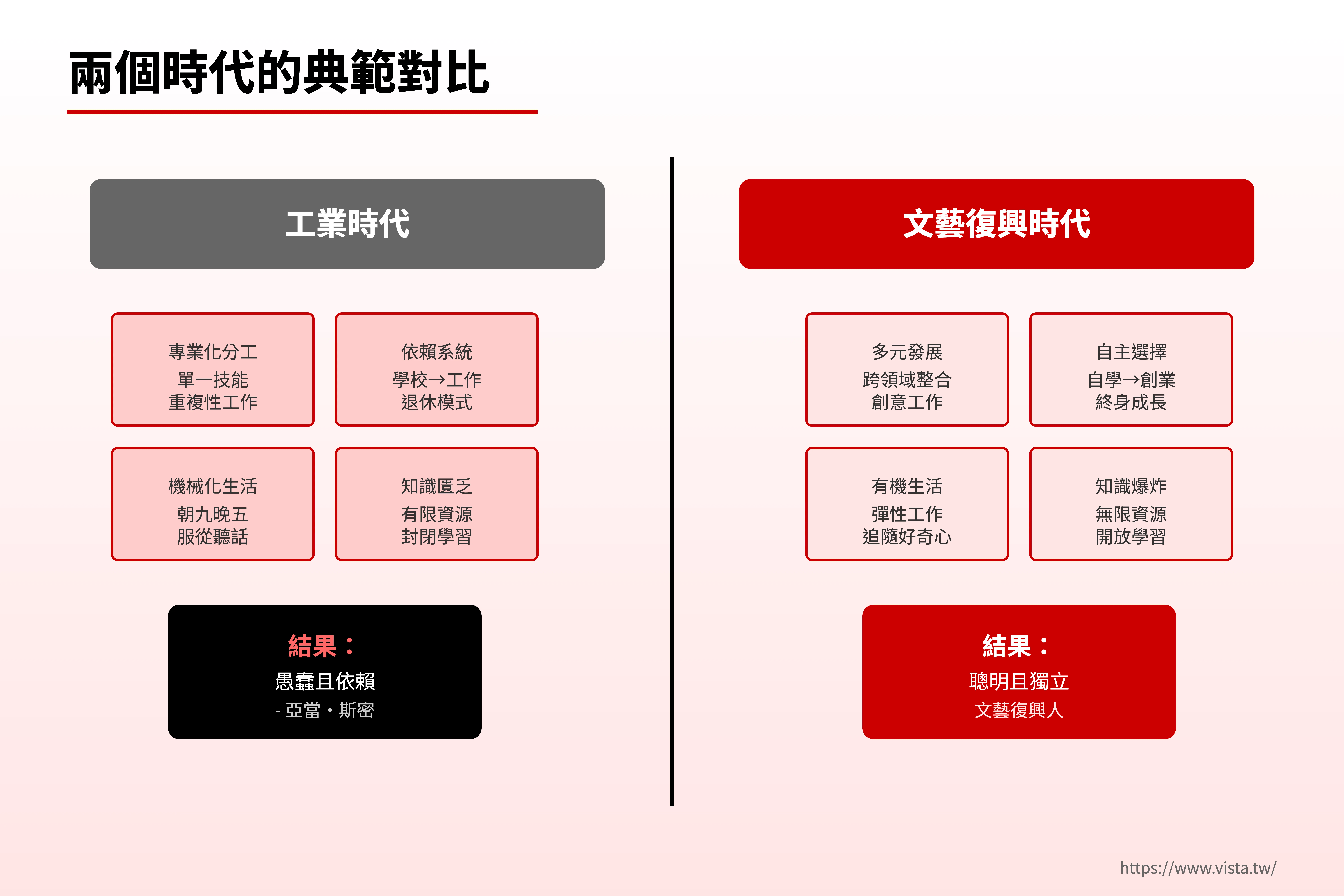
What the industrial age needs is standardized and replaceable screws; but when AI can handle most of the standardization work, what is really valuable is those unique perspectives that cannot be easily copied.
Three core competencies needed in this era:
- Self-study: Not passively receiving knowledge, but active exploration driven by interest
- Self-interest: Pursue true personal interests rather than the “right answer” expected by society
- Self-sufficiency: Cultivate diverse abilities and don’t put all your eggs in the same basket
Competitive advantages of generalist talents
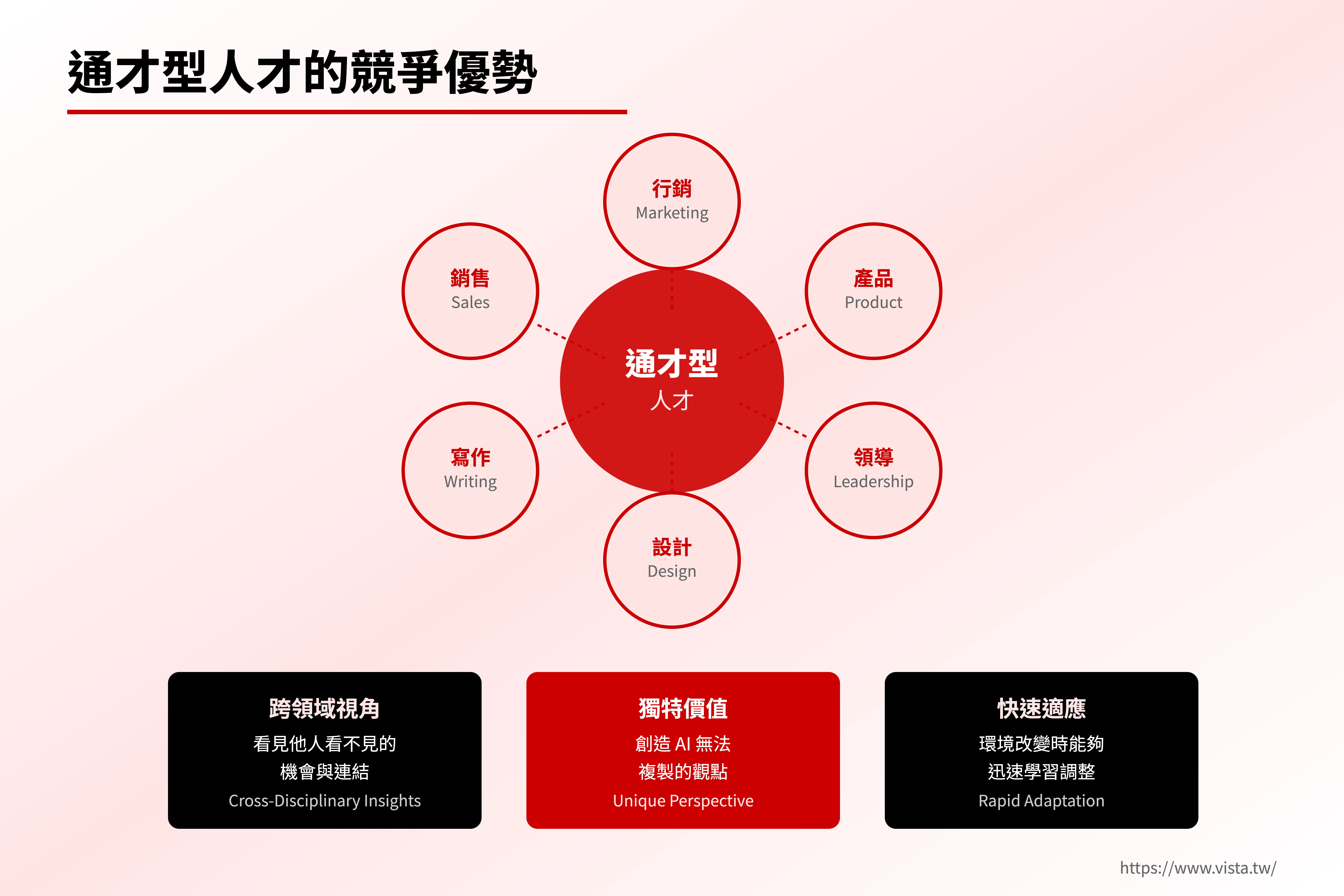
When everyone can quickly learn a skill using AI, the moat of a single profession is collapsing. But unique cross-field combinations—such as “engineers who understand psychology” or “writers who can program”—are increasingly scarce.
Your diverse interests are the ingredients for this unique combination.
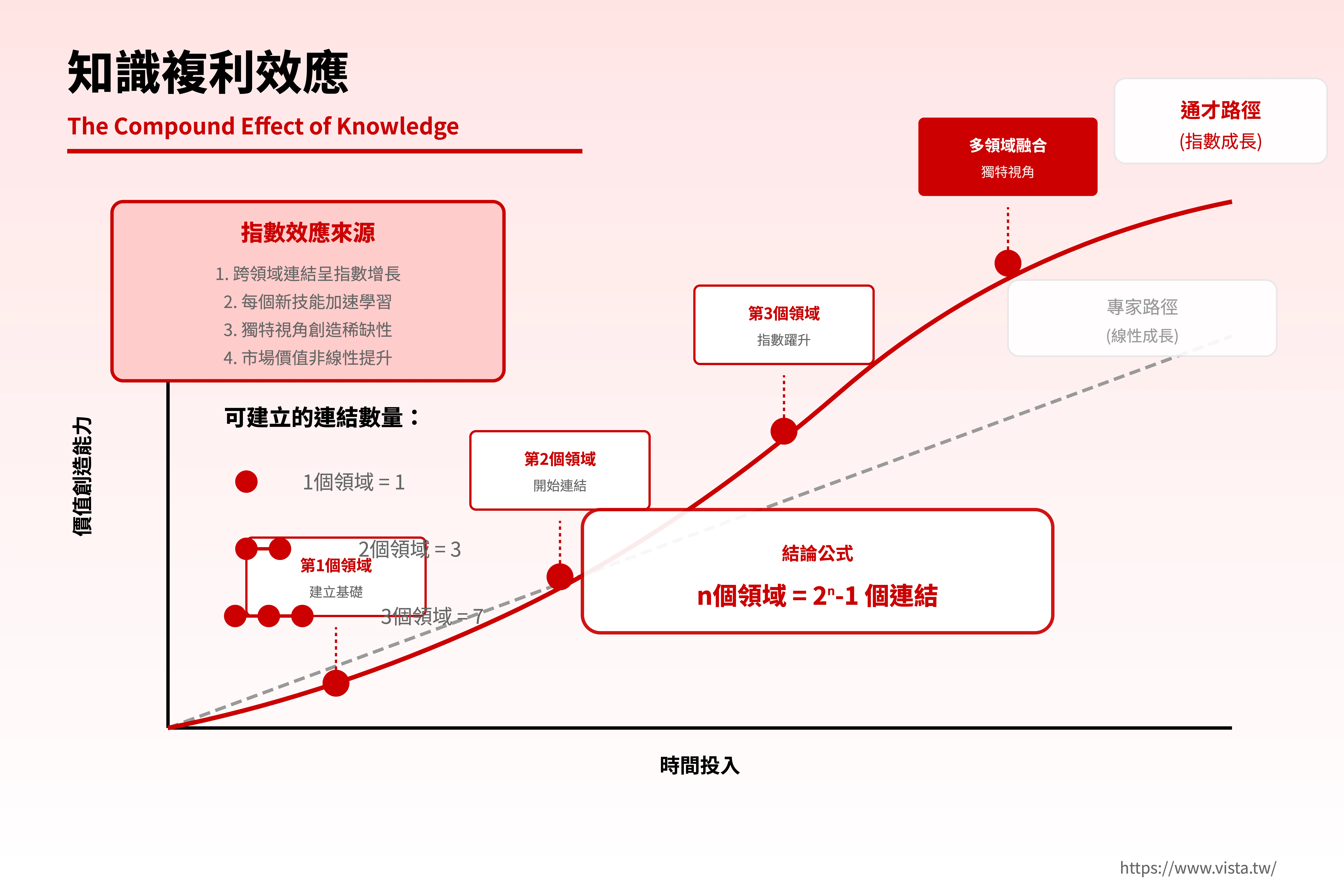
This is the power of the compound interest effect of knowledge. When you only specialize in one area, the number of possible links is 1; but when you master 3 areas, the number of possible links jumps to 7. Every time you learn another field, your value creation ability will not grow linearly, but will jump exponentially.
You are the niche market
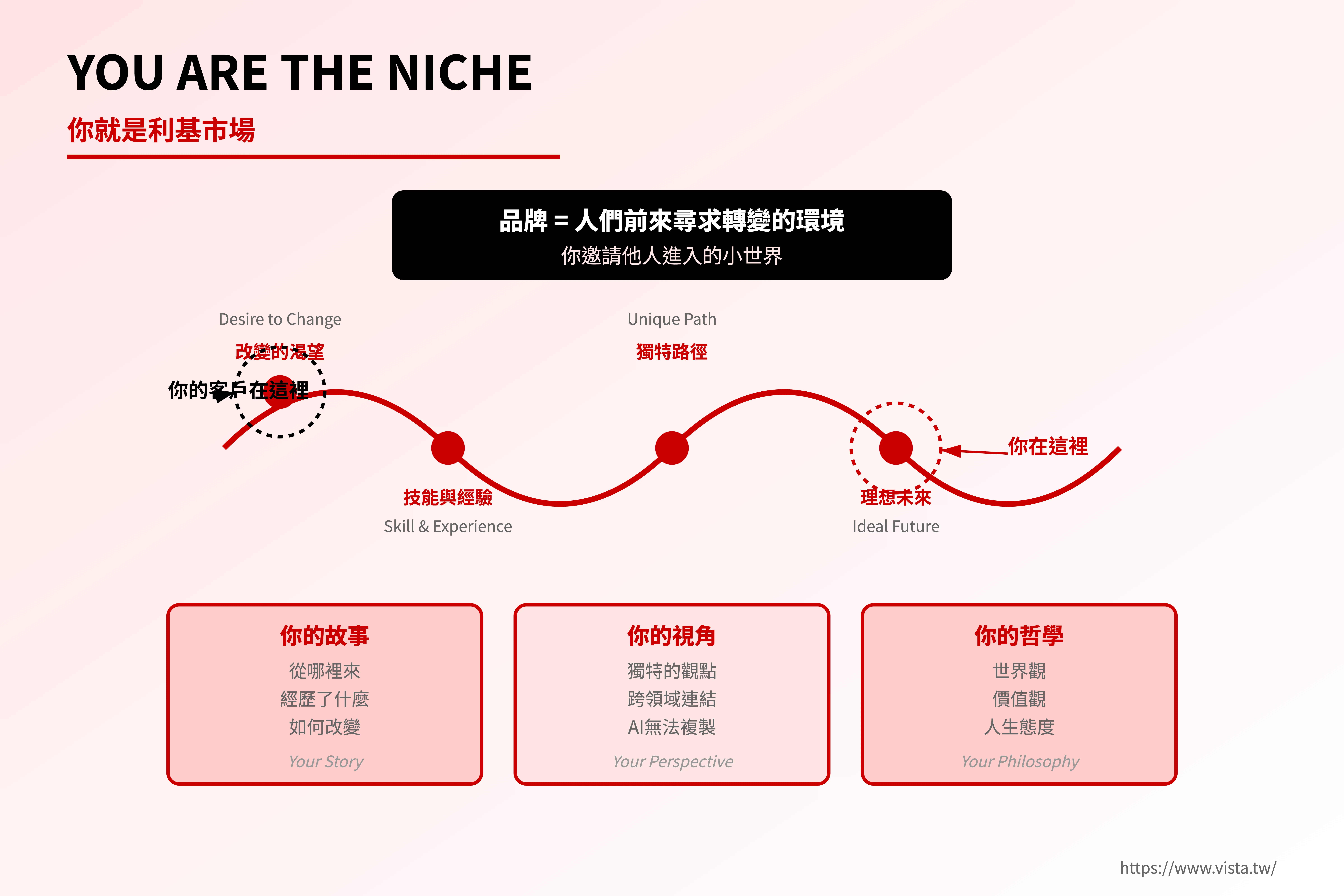
Traditional marketing thinking tells us to “find a niche market,” but Dan Koe’s view is more radical: **You don’t need to find a niche, because you are a niche. **
No one has exactly the same as you:
- life experience
- Interest combination
- Values and beliefs
- expression
When you authentically share your journey of growth, you will naturally attract people who resonate with you. This isn’t a marketing trick, it’s a real connection.
One-person business vs freelancer: Key differences
Many people confuse “one-person business” with “freelance worker”, but there are essential differences between the two:
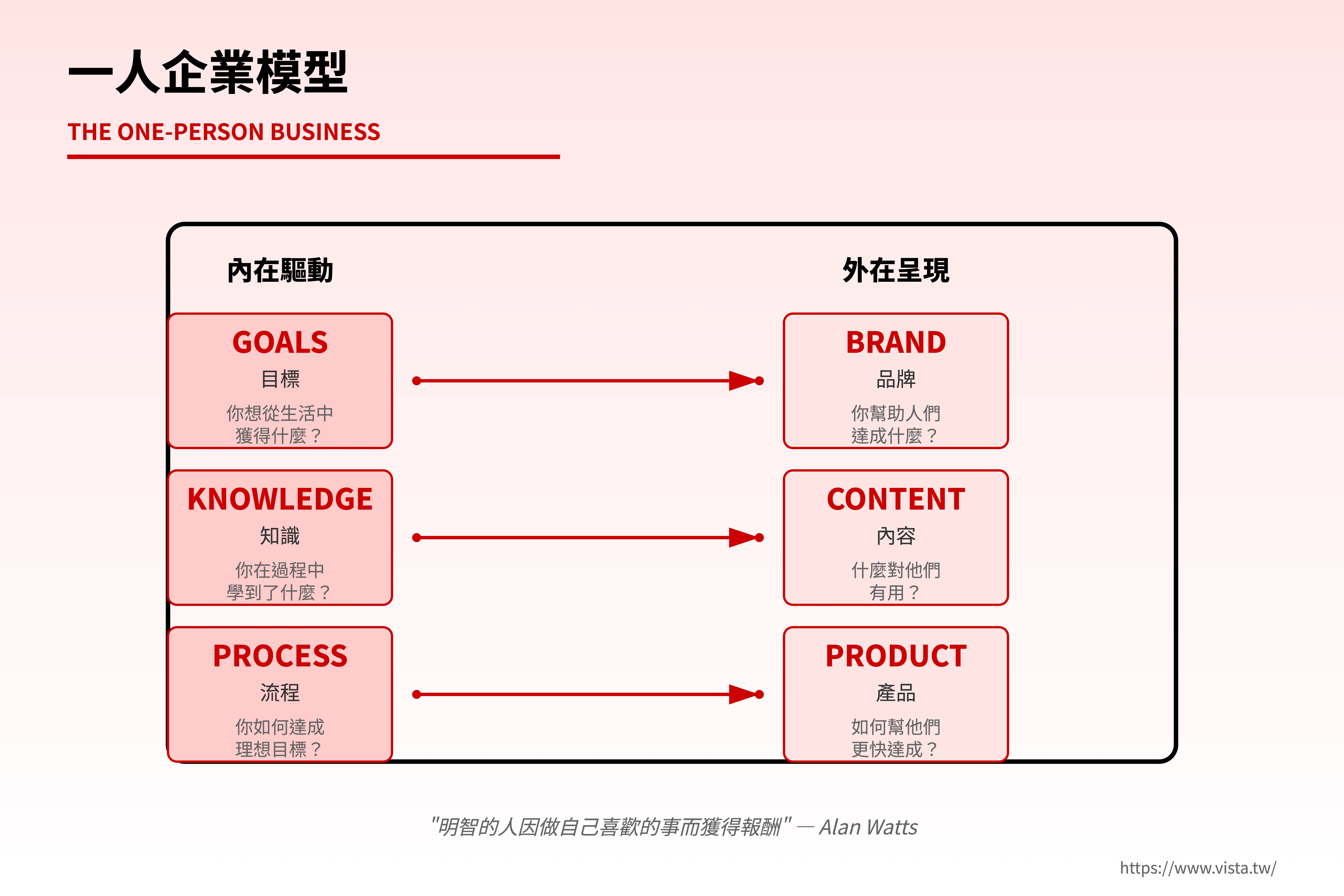
Freelance worker: Exchange time for money, and there is no income when you stop working. One-person enterprise: Establish systems and assets, and income is directly proportional to value creation.
Freelancers sell “my time”, while one-person businesses sell “the value I create”. The former has a ceiling, while the latter can be expanded infinitely.
Two entrepreneurial paths: Which one is suitable for you?
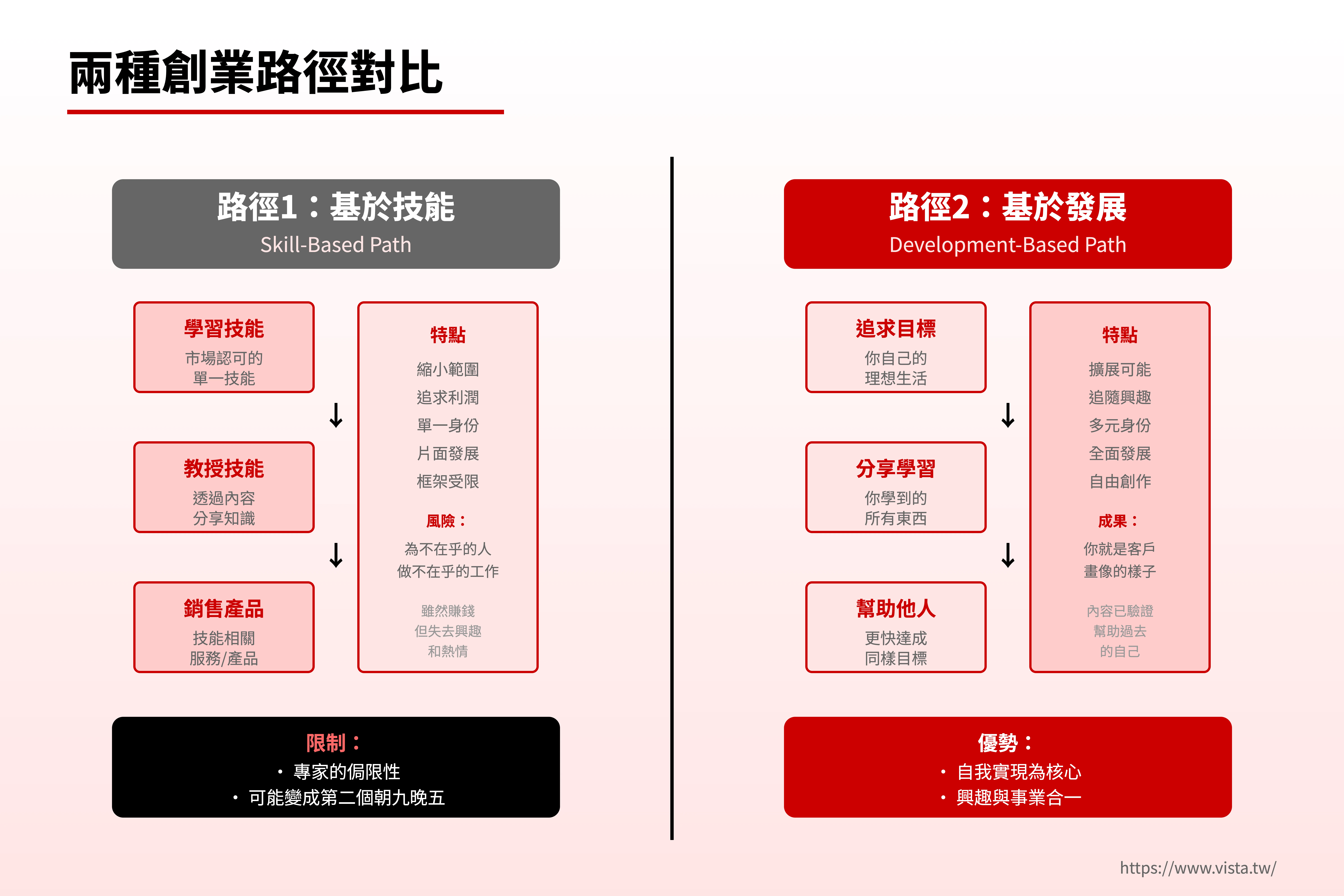
Path 1: Skill-oriented Learn skills → Teach skills → Sell related products
The path is clear and unambiguous, but the question is: -Easily hit the ceiling
- Many competitors
- May lose enthusiasm for what they are teaching
Path Two: Development Orientation Pursue personal goals → Share learning process → Help others
The advantages of this path are:
- Highly unique and difficult to copy
- Continuously evolve and never get tired of it
- Create real links
For those with multiple interests, path two is obviously more suitable. Because your growth itself is content, and your exploration process is value.
Value conversion paths for multiple interests
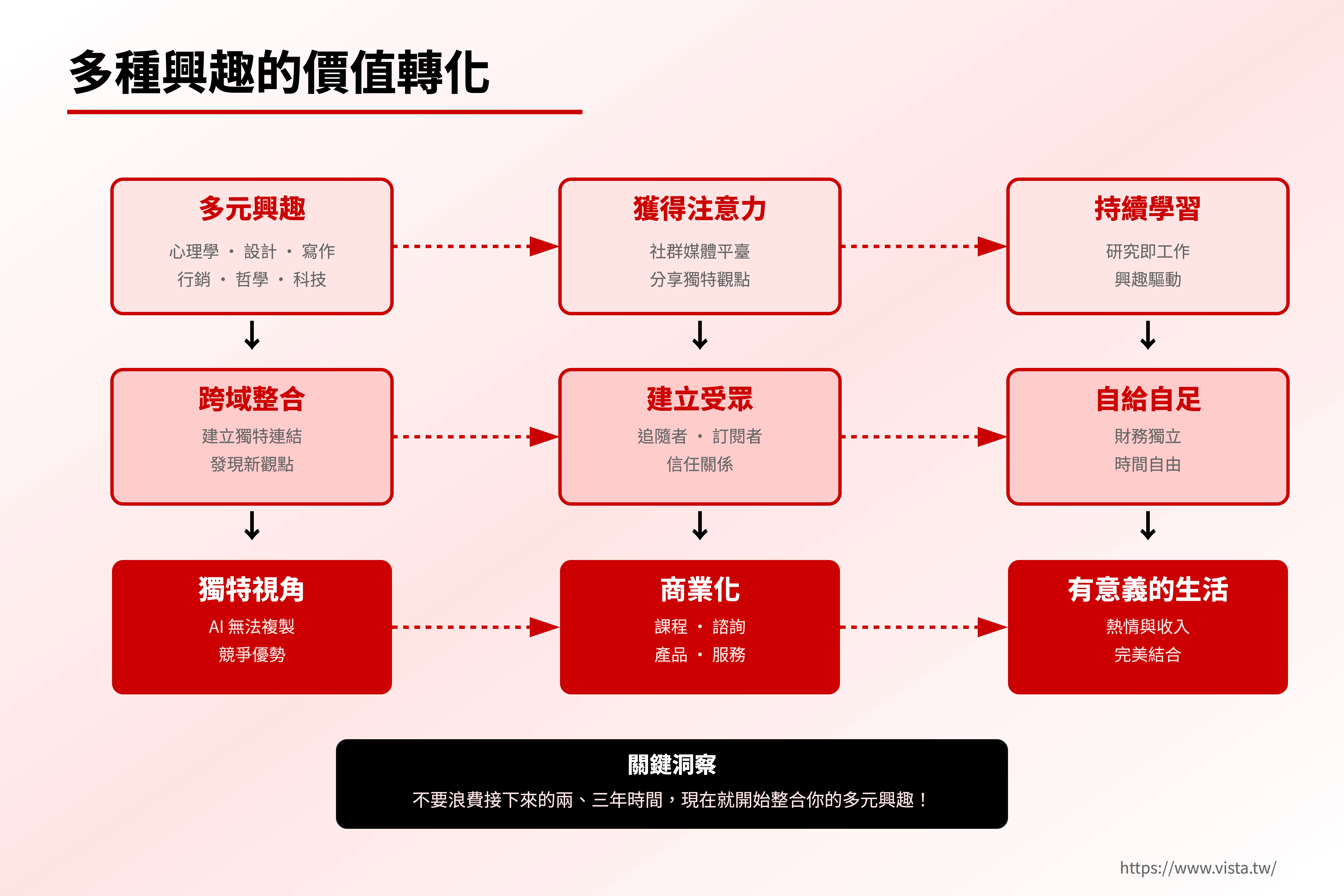
This picture clearly presents the complete path of conversion:
- Multiple interests → Cross-domain integration → Unique perspective
- Get Attention → Build Audience → Commercialize
- Continuous Learning → Self-sufficiency → Meaningful life
The key insight is: **Don’t waste the next two or three years, start integrating your diverse interests now! **
Creative Museum System: Build your content database
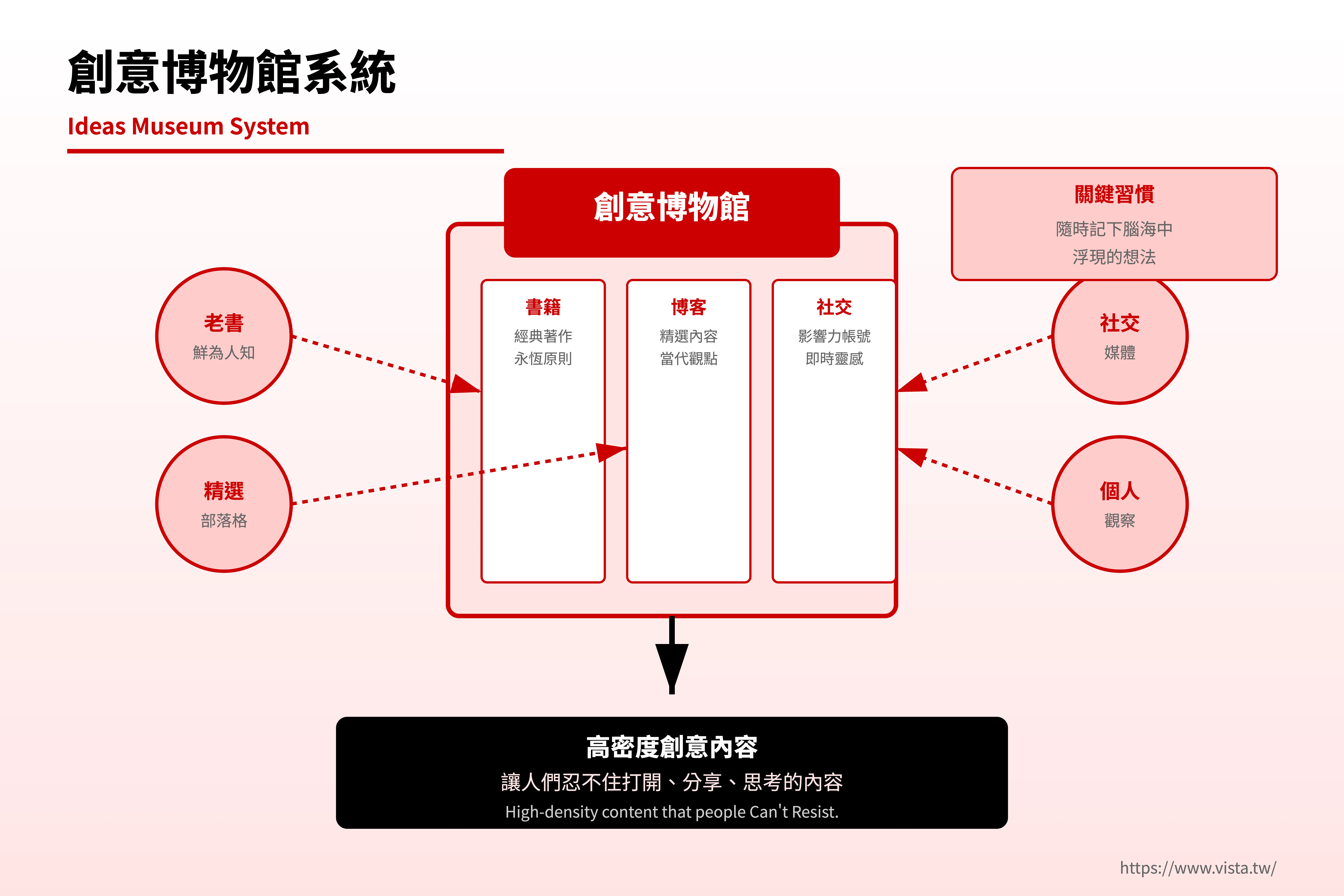
To continue to produce high-quality content, you need a “museum of creativity”—a place to systematically collect inspiration.
How to build:
- Find 3-5 high-density information sources
- Use filters to filter content worth saving
- Develop the habit of capturing inspiration at any time
Creative Density Screening Process
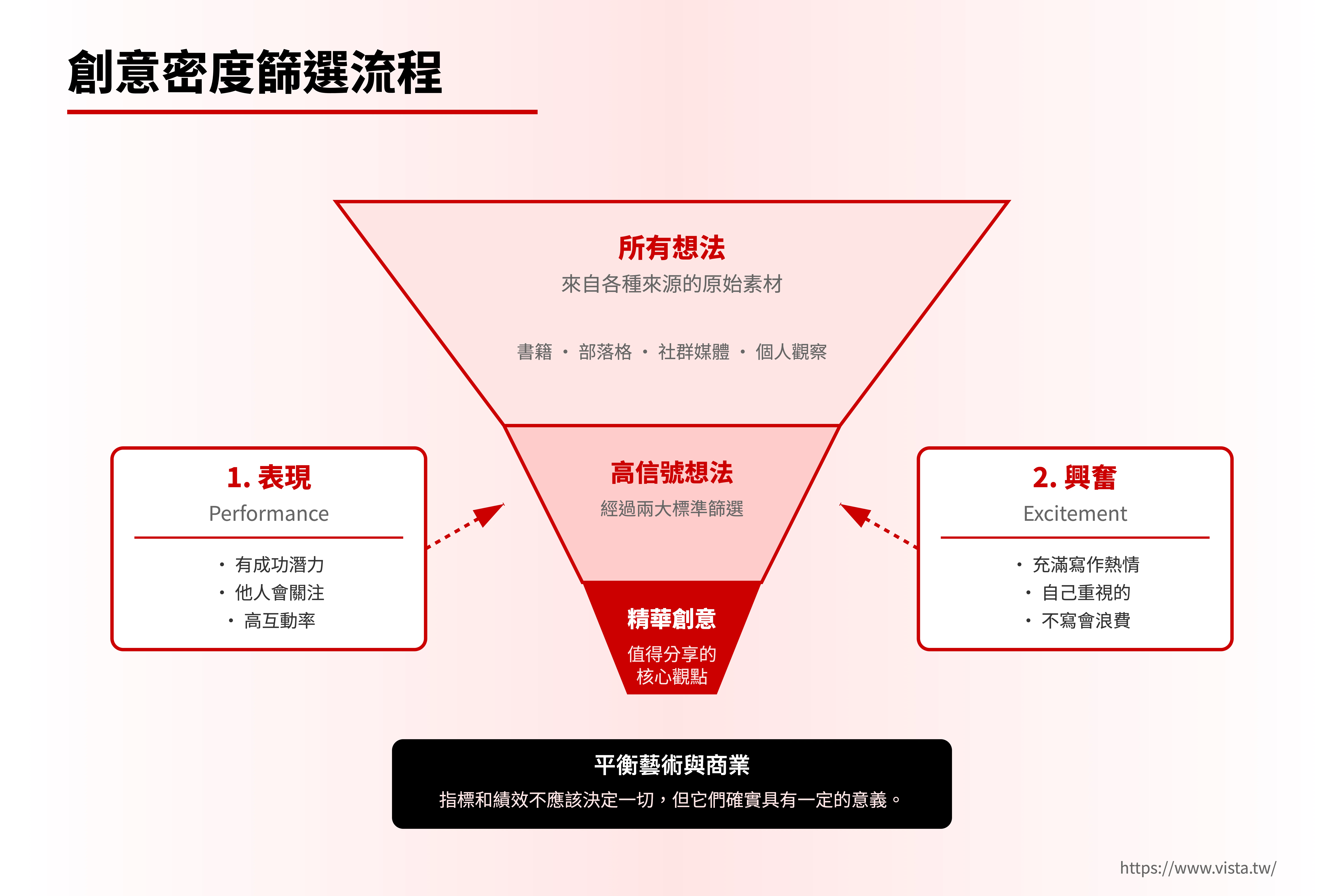
In the face of information explosion, screening is more important than collection. Ask yourself two questions:
- **How is this content performing? ** Has it been market proven?
- **Am I excited about this topic? ** Can it stimulate my creative desire?
Only content that meets both “high performance” and “high excitement” is worthy of being placed in your creativity museum.
Taiwan Version 2 Hour Writing System
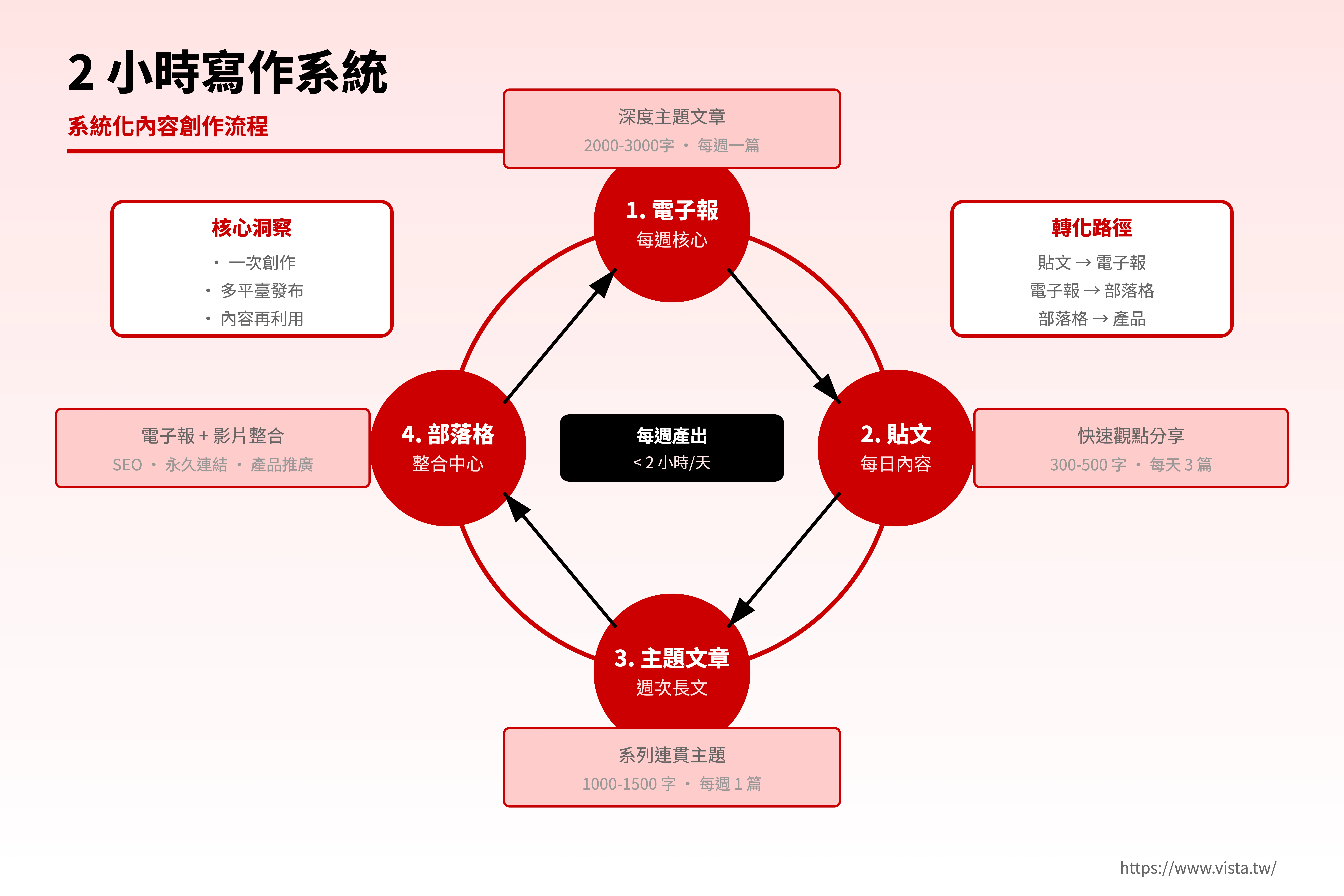
Many people say they don’t have time to create, but in fact, as long as a system is established, it takes 6-7 hours a week to maintain content output on multiple platforms:
- Monday: Research and Organization (30 minutes)
- Tuesday: Writing in-depth content (90 minutes)
- Wednesday: Optimization and Scheduling (60 minutes)
- Thursday: Social Content Production (60 minutes)
- Friday: Films and Short Videos (90 minutes)
- Weekend: Interactive Maintenance (30 minutes each)
The key is to take “in-depth content” as the core and then break it down into different forms and distribute it to various platforms. Create once, use many times.
Why is now the best time?
- AI tools lower the threshold for creation: Don’t know how to design? AI helps you. Don’t know how to edit? So does AI.
- Digital habits have been formed after the epidemic: online learning and paid subscriptions have become the norm
- Changes in Generation Z’s consumption concepts: They are more willing to pay for values
- Creator Economy Wave: Platforms and tools are supporting individual creators
Advice for those interested in Taiwan
The Taiwan market has unique opportunities:
- 88.75% Internet penetration rate, nearly 90% of the audience can be reached
- There is still a huge gap in high-quality Chinese content
- Consumers have a higher willingness to pay for professional content
But there are also challenges:
- The myth of “stable job” is deeply rooted
- Culture of humility and psychological barriers to self-promotion
- Short video and audio environment impact in-depth content
My advice is: **Don’t worry too much about visual presentation. High-quality content is better than perfect packaging. ** Start first, optimize later.
The purpose of systematization is not to turn you into a content machine, but to create more time to think deeply, interact with your audience, develop products, and—most importantly—enjoy life.
Your diverse interests are not problems, they are answers. Start integrating now.
Extended reading:
- Freelancer Survival Guide in the AI Era
- Lecturer’s Digital Asset Management Technique: Use AI to turn teaching experience into a compounding system
- Vista one-on-one consulting
This article was adapted from Vista Newsletter No.101, originally inspired by Dan Koe’s Creator Economic Theory.
Further reading
- A cruel watershed in the AI era: Why has the income of 95% of freelance workers been cut in half, while the income of 5% has doubled?
- The beauty and sorrow of PM: In the AI era, will product managers be replaced or forced to upgrade?
- Profit Awakening of Knowledge Workers: From Cash Flow Thinking to Survival Rules in the Micro-Organization Era