Knowledge Workers’ Profit Awakening: From Cash Flow Thinking to Survival Rules in the Micro-Organization Era
Written at the front: The origin of this article
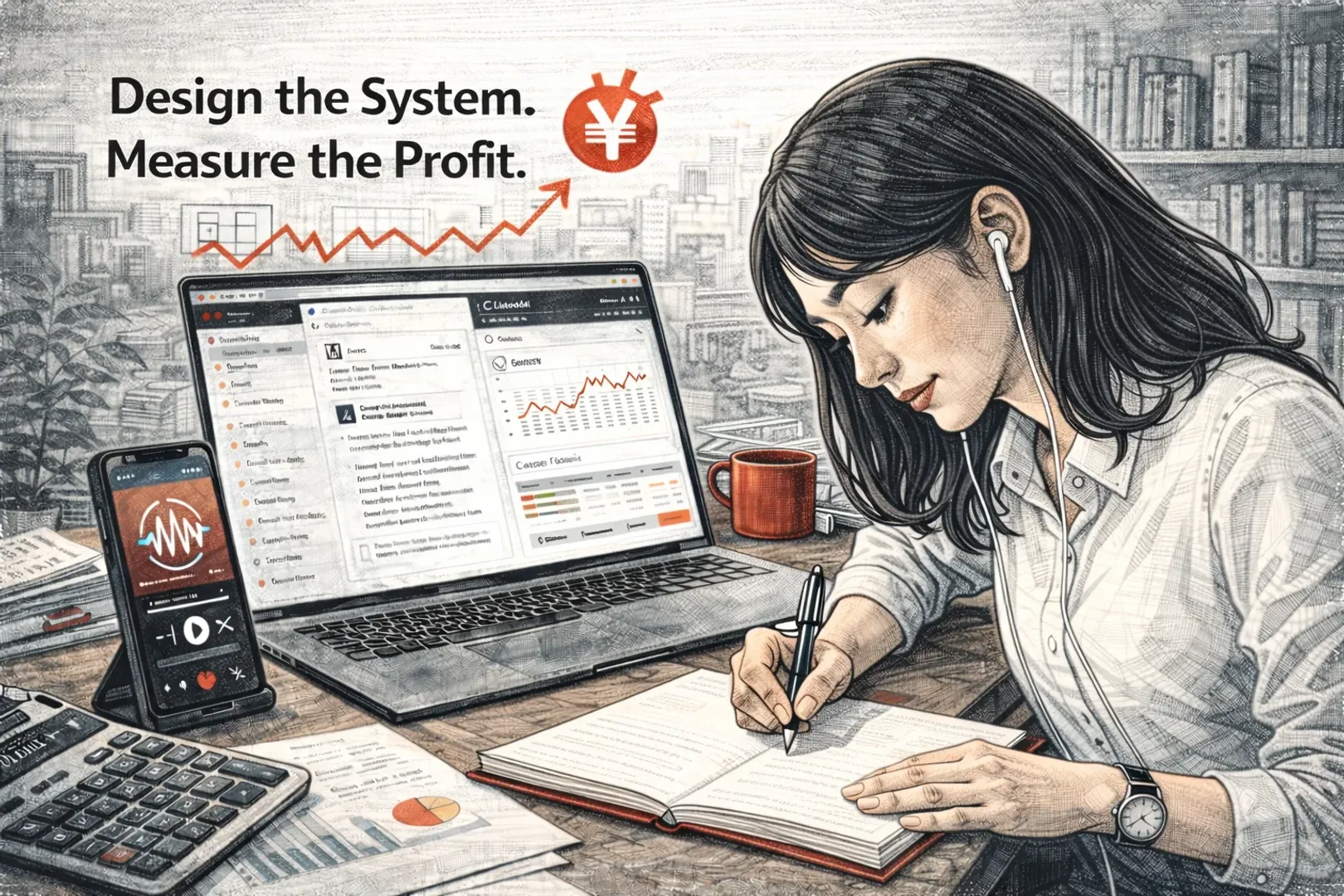
A while ago, I listened to the Podcast program “Charlie’s Entrepreneurial Compound”. The guest invited in that episode was Teacher Wu Danru (https://www.facebook.com/goodtimewu). While listening, I quickly jotted down a few keywords on my laptop, and one sentence particularly struck a chord in my heart: “Don’t comfort yourself if you don’t make money. Not making money is a loss in itself.”
Obviously, this is not some chicken soup for the soul kind of motivational quote. For someone like me who has been in the knowledge industry for more than fifteen years, the logic behind this sentence is both harsh and precise. It directly breaks through the veil that many knowledge workers are accustomed to using to comfort themselves: We can be temporarily disgraced, but we cannot be unprofitable for a long time; we can go slower temporarily, but we must not live by self-movation.
To put it bluntly, I have “known” Teacher Wu Danru for a long, long time. At that time, she was still a budding writer, but now she is like a business godmother.
Originally, I aspired to be a novelist. In fact, my first best-selling book was also a novel. However, life is always composed of many unexpected things, and I like to turn around very much, even if it is not gorgeous. Turning around has always been fascinating to me. By Wu Danru
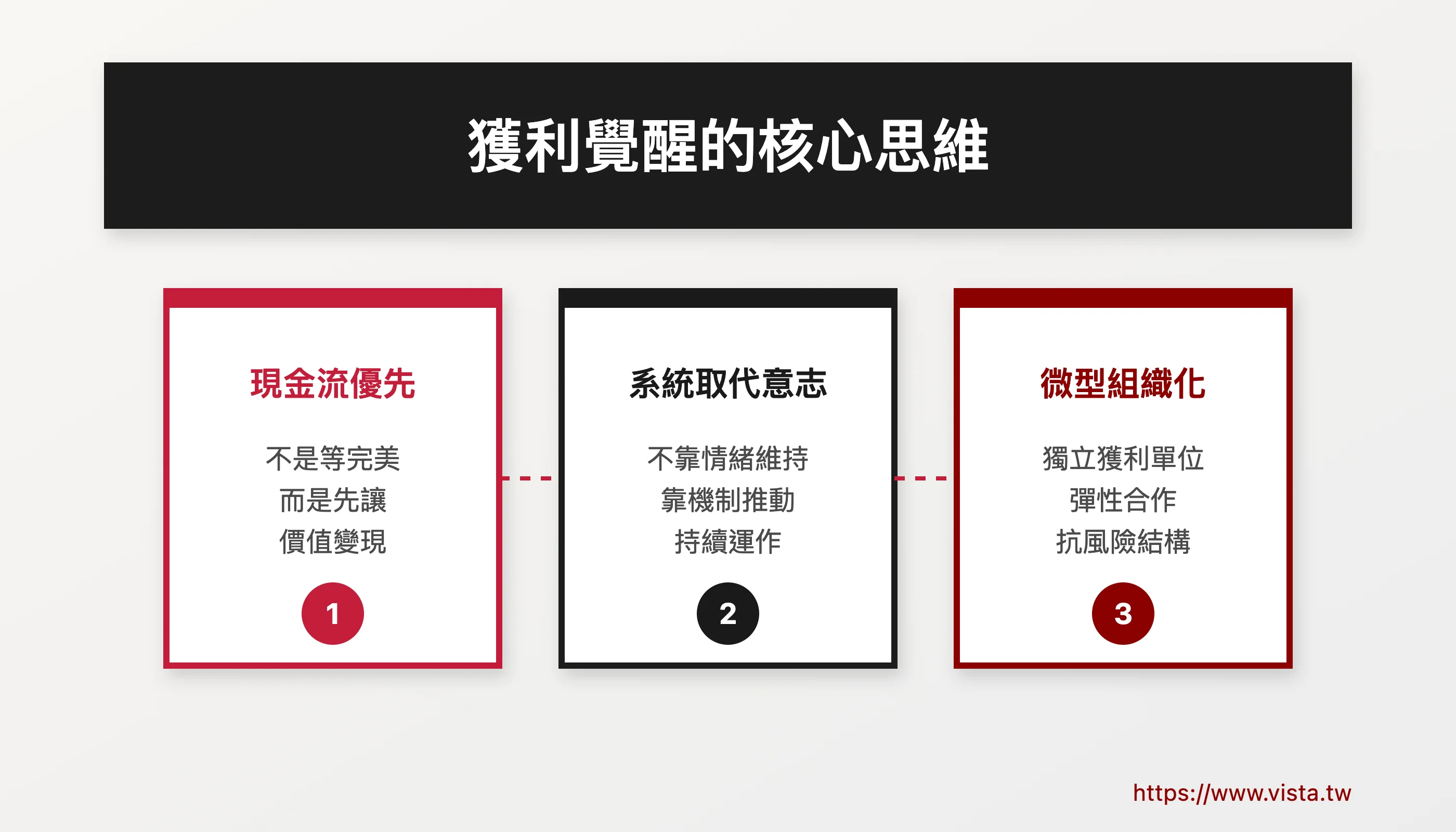
On the surface, this episode talks about making money and financial intelligence, but after listening to it, I found that it actually touches on three deeper issues. The first is how human cognition is recalibrated by money, the second is how small teams replace human governance with systems, and the third is how everyone turns themselves into profitable micro-organizations in the AI era.
As a long-term corporate consultant, lecturer training and content creator, and also teaching courses on AI application and digital content creation, I would like to use my professional perspective to reorganize the essence of this episode and add the phenomena and thoughts I have observed in industrial practice over the years. This article is not only an experience from listening to the lecture, but also an action guide for all knowledge workers, especially those like me who rely on content and expertise to make a living, but are often confused about how to truly convert knowledge into a stable income.
When effort no longer equals profit - the cognitive trap of knowledge workers
At the beginning of the program, teacher Wu Danru said something that impressed me deeply: “Don’t comfort yourself if you don’t make money. Not making money is a loss in itself.” This sentence is harsh because it mercilessly breaks the excuses that many people are accustomed to using, such as: I am accumulating, brewing, laying foundation, or I am doing long-term brand management.
Don’t get me wrong, I’m not arguing against long-termism. In fact, I myself am a beneficiary of long-termism. From starting a blog more than 20 years ago, to running the “Content Hacking” website, and then founding the “Vista Writing Companion Program”, none of these achievements can be achieved overnight. However, as I grow older and accumulate experience, I have become more and more aware of one thing: long-term is not a synonym for procrastination, and precipitation should not become a reason to avoid profit.
The true meaning of long-termism is to simultaneously establish a sustainable monetization mechanism in the process of continuous value creation. It does not allow you to hide in the comfort zone of “still preparing” and postpone indefinitely the moment when you face the market test.
In my more than ten years of consulting career, I have seen too many talented knowledge workers. Their content is really good, sometimes it can create very high traffic, and the applause is resounding from the sky, but in the end they fall into a state that I call “high-quality poverty.” They are professional, influential, and have followers, but they do not have a system that can stably realize value. It’s like owning a gold mine without the tools to mine it or the pipeline to transport it.
The cruel reality that good content does not mean making money
In particular, knowledge workers such as lecturers, consultants, writers or coaches are most likely to fall into a cognitive trap: equating having good content with making money. But the distance between the two is actually farther than most people imagine.
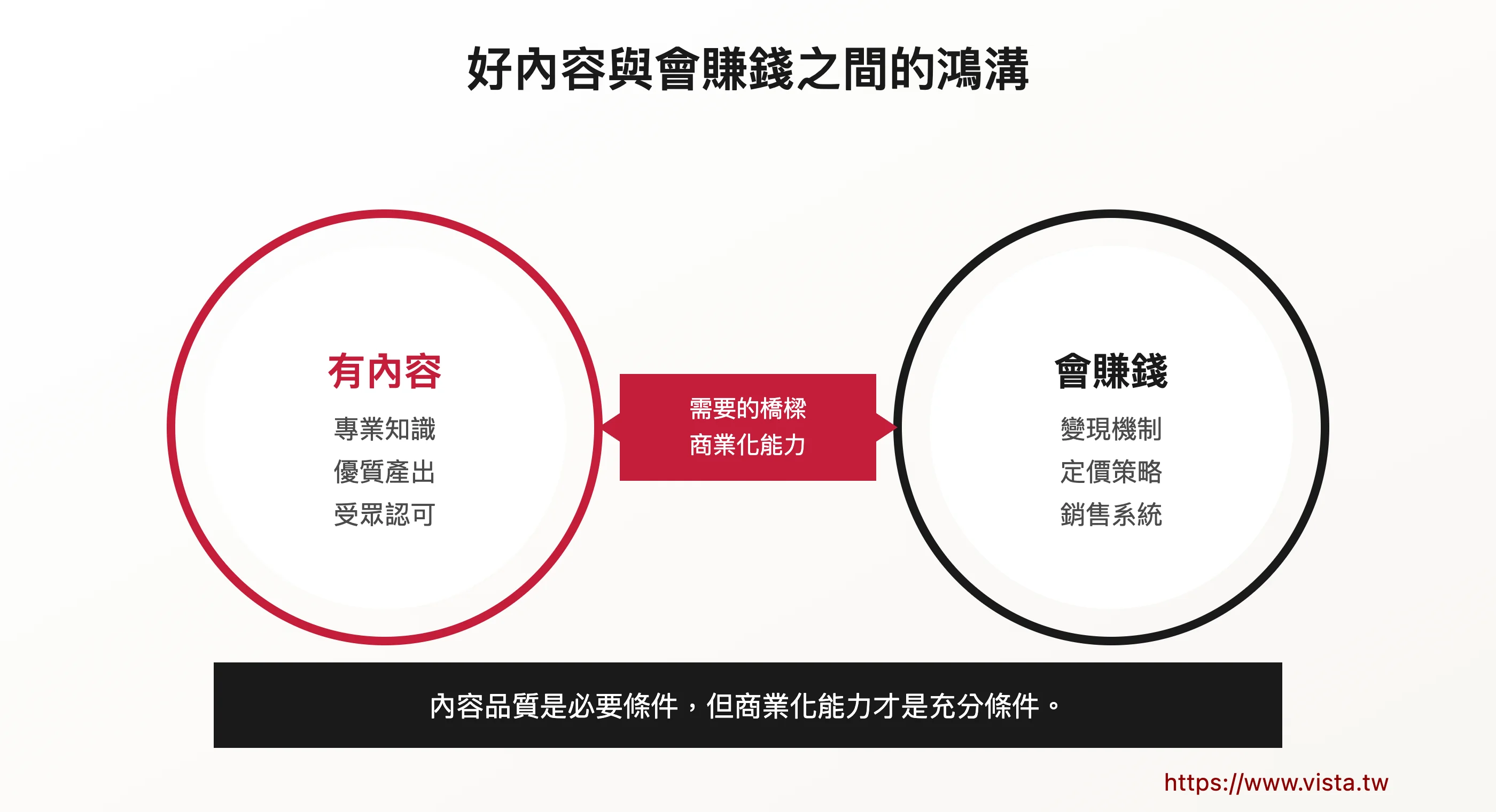
Well, let me illustrate with a simple metaphor. Suppose you open a bakery today. The bread you bake is really delicious, and the customers are full of praise after eating it. But if you only open the store for two hours a day, set the price lower than the cost, and do no publicity at all, then the delicious bread will not save the store. The principle of knowledge realization is actually the same: although the quality of the content is a necessary condition, it is definitely not a sufficient condition.
When I teach AI application courses in some universities, I often share a concept with students: in the AI era, the threshold for content production will become lower and lower, but the threshold for content monetization will become higher and higher. Why is this? Because when everyone can use AI tools to produce content that looks good, what is truly scarce is no longer the content itself, but the ability to convert content into commercial value.
The market won’t pay just because you work hard.
Teacher Wu Danru’s tone is not blaming anyone, she is reminding us of a cruel reality that we must face: Either you treat making money as a skill that must be learned seriously, or the market will treat you as a dispensable amateur. This sounds direct, but I think it’s exactly what many knowledge workers need to hear.
To be honest, I have been in this trap myself for a long time. When I was writing in the early years, all I could think about was how to write better articles and how to gain recognition from more readers, but I rarely thought seriously about how to make writing a sustainable career. It wasn’t until one day when I looked at the numbers in my bank account that I realized: I spent so much time and energy on creation, but these efforts did not translate into corresponding financial returns.
That moment of awakening was an important turning point for me. I started to learn business thinking, study product design, and understand marketing logic. This is not to deviate from the original intention of creation, but to allow creation to go longer and further. Because if even basic survival is a problem, those beautiful narratives about “adhering to ideals” and “pursuing quality” will ultimately be just castles in the air.
Key reminder: Effort is an input and profit is an output. Input is not equal to output, what is needed in the middle is a conversion mechanism. For knowledge workers, this conversion mechanism is your business model, your product design, and your sales system.
The true meaning of managing your own money - an adult declaration of sovereignty
In the program, teacher Wu Danru repeatedly emphasized a concept: “The first thing is to manage your own money.” This sentence may sound like a slogan for a financial management course, but while listening, I felt a deeper meaning, that is, the control of sovereignty.
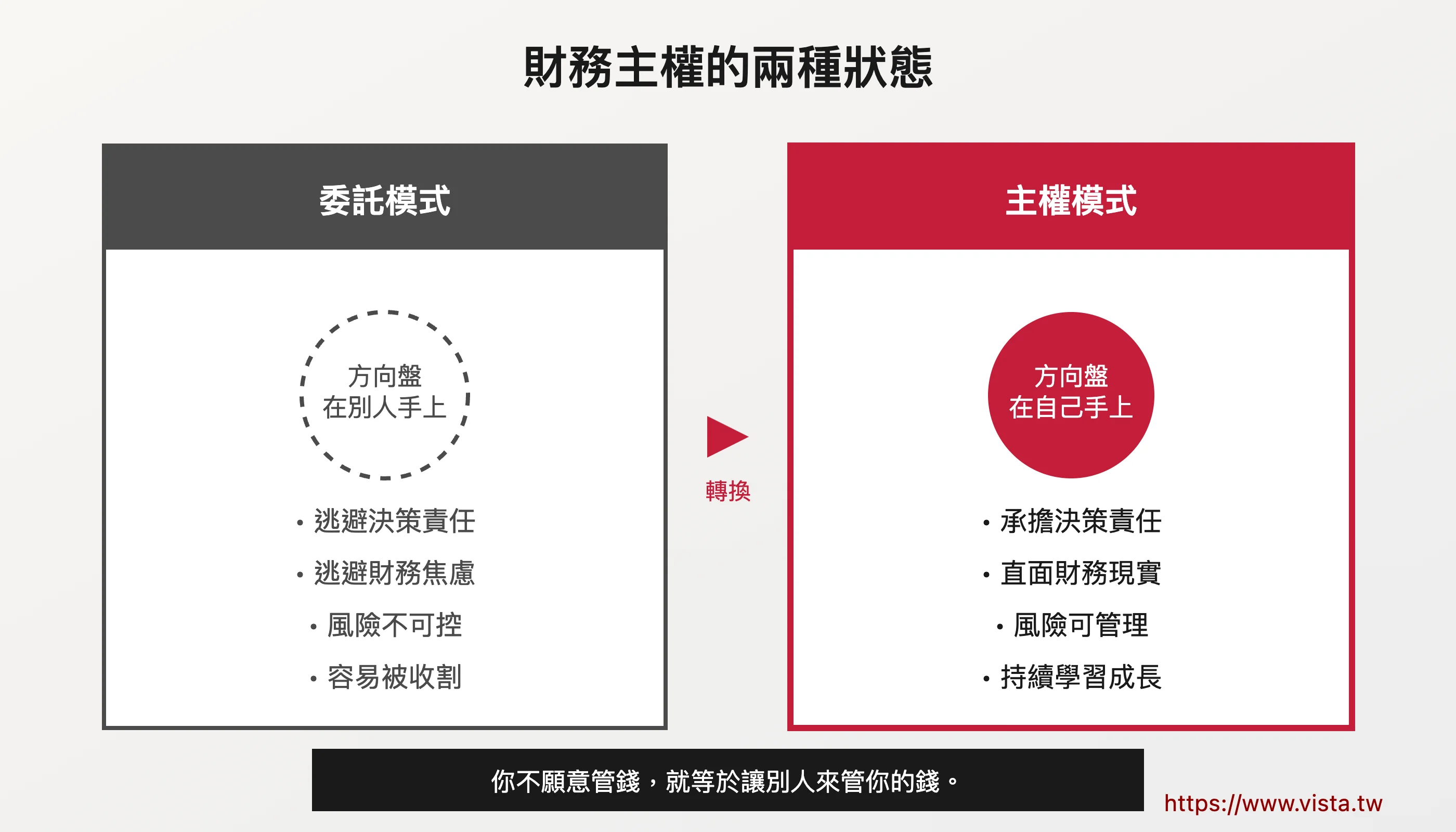
What is sovereignty? Simply put, it’s your control over the direction of your life. When you entrust someone else to manage your money, you often don’t really believe in the other person’s professionalism, but you want to avoid two things: one is to avoid responsibility, and the other is to avoid the anxiety of facing your own financial status.
When I work as a corporate consultant, I sometimes encounter clients who ask me: “Teacher Vista, what do you think I should invest in? Who can handle the investment?” My answer is usually: “You can ask experts to give you advice, but the final decision-making power must be in your own hands.” This is not because I don’t trust professionals, but because I know very well that the moment you hand over the core steering wheel of your life, you are tantamount to handing over your destiny to others.
The hidden cost behind free
Teacher Wu Danru mentioned in the program: There must be a cost behind “free financial management, free groups, and free money management for you”, and this cost is probably to make money from you, or even your principal. I was very touched by what I heard, because fraud patterns in Taiwan have really evolved too fast in recent years.
Today’s fraud techniques no longer rely only on intimidation, but on “caring about you, understanding you, and taking you to fly” - first anesthetizing you with emotions, and then harvesting you with words. In the process of working as a corporate lecturer, I have heard too many real cases: some people lost their life savings because they believed that a certain teacher would guide you to invest, some people were brainwashed into buying expensive courses because they joined a free learning community, and some people fell into financial fraud because they believed in the words that guaranteed profits.
Well, these cases tell us one thing: when it comes to money, the most dangerous thing is not ignorance, but gullibility. When someone is willing to do something for you for free, the first question you should ask is: “What is his profit model?” If you can’t find the answer, then the answer is probably - you are the source of profit.
So, what does “managing your own money” really mean? It doesn’t mean that you can’t seek professional help, but it means that you can’t hand over the core steering wheel of your life. You can hire coaches, consultants, or experts, but the steering wheel must be in your own hands. I even want to upgrade this sentence into a more direct version: “If you are not willing to manage your money, you are letting others manage your money.”
From financial sovereignty to life sovereignty
The reason why I spend so much space discussing this concept is because I think that managing your own money is actually the epitome of managing your own life. When a person is unwilling to face and take responsibility for his own finances, the same pattern will easily appear in other aspects of his life.
For example, in terms of career development, some people always expect someone to tell them what work they should do and in which direction they should go; on the road of learning and growth, some people always hope that someone will directly give them the most correct answers and most effective methods. There is nothing wrong with these expectations in themselves, but if this expectation becomes a kind of dependence, it will hinder a person’s growth.
In recent years, I have deeply realized one thing: when technology becomes more and more powerful and when tools become more and more convenient, what human beings really need to cultivate is not the technical ability to operate tools, but the subjectivity to make judgments and assume responsibility.
This subjectivity is what I call sovereignty. It is not only reflected in financial management, but also in career choices, study directions and lifestyles. When you begin to consciously take back this sovereignty, you will find that many of the questions that originally made you anxious and confused actually have clear answers.
The true meaning of compound interest thinking is not mathematics, but the rhythm of life
In the program, teacher Wu Danru used the example of ETF to illustrate the power of compound interest, mentioning that long-term accumulation may bring amazing results. To be honest, such examples abound on the Internet, and various investment and financial management articles like to use compound interest calculations to attract attention. But she has a keyword “ramp” that particularly resonates with me. This allusion comes from the stock god Warren Buffett.
“The snow needs to be wet and the slopes must be as long as possible” is a famous saying from the stock god Buffett. It is a metaphor for success in life and investment. The key is to find “wet snow” (representing high rates of return and suitable abilities/environment) and “long slopes” (representing time), combined with the principal, to achieve steady growth of assets through the compound interest effect.
Honestly, this statement is more important than any pay rate number. Because it points out the true essence of compound interest: compound interest is never a mathematical problem, but a choice of the pace of life.
Train metaphor: Maintaining rhythm is more important than pursuing explosions
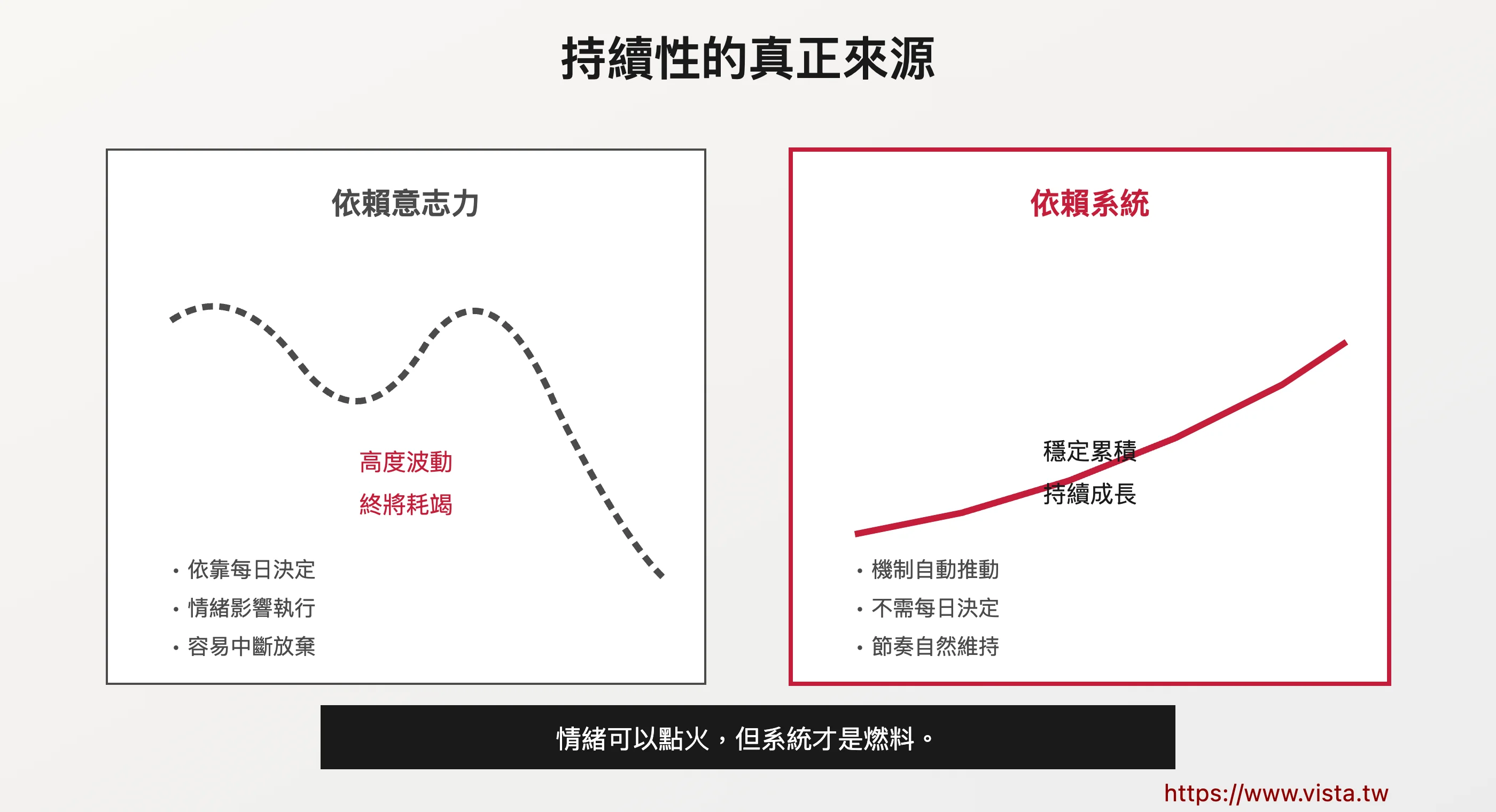
Teacher Wu Danru also used a very vivid metaphor in the program: train. She said that once the train stops, it will be very slow to start again; but if you can keep a certain rhythm and move forward, it will save you more and more effort. This metaphor made me understand and think of many application scenarios in the field of knowledge work.
I have deeply realized this truth in the process of running content creation. For a while, I paused updating my blog because I was too busy at work, thinking about starting it again when I had free time. As a result, I stopped for several months. When I wanted to start again, I found that my readers were lost, my writing skills were rusty, and I had no motivation to even sit down and type. The feeling of starting from scratch is really much more difficult than continuing to write.
If you translate this experience into a more understandable language, it is: what you want to pursue is not an explosion of inspiration, but a repeatable track. This concept not only applies to investment and financial management, but also applies to content creation, teaching product development, consulting service operations, and even health management. As long as you find a rhythm that you can do every day, do it without pain, and accumulate it over time, many things in life will be amplified by the compound interest effect.
Establish a mechanism that can operate without relying on emotions
Here, I want to emphasize a key point: the prerequisite for compound interest to work is that you must have a mechanism that can continue to operate without relying on emotions. Many people are enthusiastic and motivated when they start something, but this state usually does not last long. Most people stop when their enthusiasm wanes, when they encounter setbacks, or when life presents other pressures.
But if you design this thing as a system from the beginning, rather than relying on individual will to maintain it, the results will be completely different. This system may include: fixed time schedules, clear execution processes, measurable output standards, and appropriate external accountability mechanisms. When these elements are in place, you won’t need to ask yourself every morning do you want to do this today? The reason is simple, because the system will automatically push you forward.
For example, when I lead students in the “Vista Writing Companion Program”, what I emphasize most often is this concept: Don’t wait until you feel it before writing, but establish a mechanism that forces you to write. Some students will set up to get up at six o’clock in the morning to write every day, some students will join writing communities to supervise each other, and some students will use public commitments to increase the pressure of execution. The methods vary, but the core logic is the same: let the system carry your will, rather than letting your will fight your inertia.
Emotions can ignite the fire, but the system is the fuel. A moment of passion can certainly get you started, but only a continuously operating mechanism can get you to the end.
Amoeba Management——Profit password for small teams
In this episode, the passage that made me want to listen to it over and over again was actually not the part about financial management, but the discussion about amoeba management. Teacher Wu Danru explained this concept in a very vernacular way: Amoeba is not the amoeba in the biology textbook, but “a cooperative network connected by independent profit-making units.”
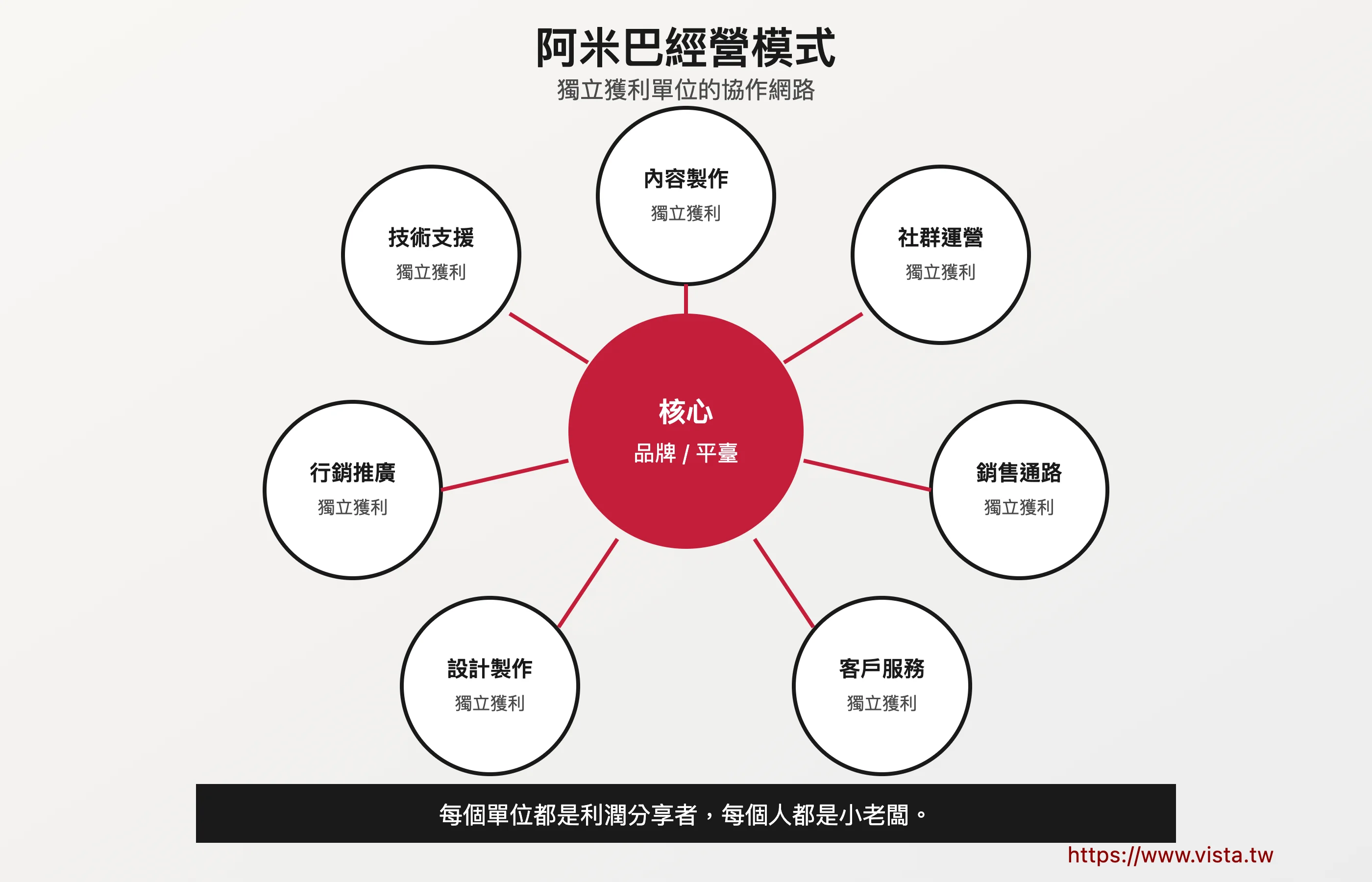
Amoeba Management is an enterprise management model founded by Inamori Kazuo, the “Sage of Management” in Japan. The core idea is to divide large enterprises into many small units (i.e. amoeba) with independent accounting. Each unit is responsible for a leader. It pursues the principle of “maximizing revenue and minimizing costs” to realize the participation of all employees in management and cultivate employees into owners with operator consciousness. This method emphasizes internal marketization and independent accounting, allowing each employee to see his or her own contribution and profit and loss, which greatly stimulates the vitality and efficiency of the company. It is an important cornerstone of the success of companies such as Kyocera and JAL.
She even put it more bluntly: “Cooperation between companies is more peaceful than cooperation between people.” When I heard this sentence, I couldn’t help but laugh out loud, because it was so true! Cooperation between people can easily cause friction due to emotions, power, and face; but between companies, at least there are contracts, boundaries, and even clear exit mechanisms.
I hire you vs. we make each other successful
Teacher Wu Danru’s approach is to dismantle the editor, partners, supply chain, content producers, etc., into amoeba units. Everyone is a profit sharer and everyone is a small boss. The core operating logic is not that I hire you, but that we achieve each other - if you make money, you will be more willing to be responsible; if you are more responsible, the whole will be stronger.
If this model is placed in Taiwan in 2026, I think it will become more and more mainstream. The reason is simple: in this era of uncertainty, the lower the fixed costs, the safer it is, and the higher the flexibility, the more risk-resistant it is. Thinking back to the black swan event like the COVID-19 epidemic a few years ago, one occurrence was enough to wake many people up for ten years!
I have gradually adopted similar thinking in the process of running the “Vista Empowerment Academy” and “Vista Writing Companion Program”. Rather than hiring a full-time employee to handle everything, build a collaborative network of professional partners. Each partner is an expert in their own field. They don’t work for me, but create value with me. When the project comes, we work together; when the project is over, everyone develops independently. The advantage of this model is that I do not need to bear huge fixed personnel costs, while maintaining a high degree of professional quality and execution flexibility.
Reflect on the obsession of raising a team
I also compare this concept to the world of knowledge workers. Many lecturers, consultants or writers, after their careers develop to a certain scale, will have an idea: “I should raise a team.” This idea itself is not wrong, but the problem is that many people are pursuing the size of the team rather than the effectiveness of the team.
To put it more directly: a big team doesn’t mean you are strong. In many cases, it just means that the salary you have to pay every month is more terrifying. If you are still pursuing me to raise a big team, you are probably pursuing face rather than survival rate.
I have seen too many cases where independent consultants or lecturers who were doing well started to hire people because they thought they should have a team. Only to find that managing a team is more tiring than doing professional work, and their income after deducting personnel costs is actually less than before. This scale trap is one that many knowledge workers easily fall into when growing up.
Vista’s point of view: In the era of knowledge economy, what you want to pursue is not the number of employees to show off, but an scalable structure. This structure should be light, flexible, and adjustable at any time. When opportunities come, you can quickly form a team to take over; when risks arise, you can quickly shrink to protect the core.
The art of partnership - don’t partner, but make money together
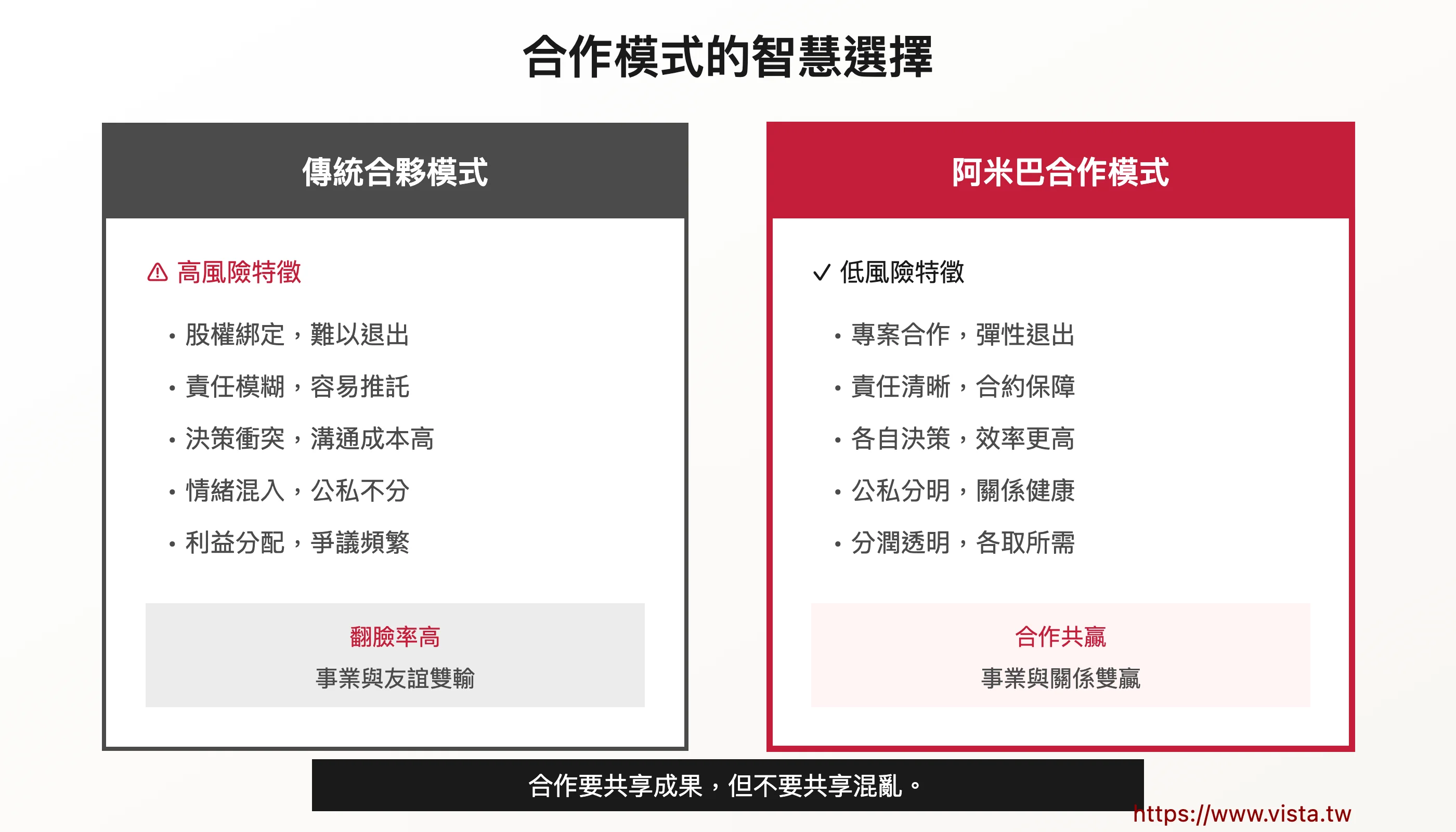
When Teacher Wu Danru talked about partnership, her statement was very straightforward: The rate of falling out is very high, so don’t gamble with your friendship. But she doesn’t want you to work alone. She’s talking about another more mature way of cooperation—using investment, profit sharing, and the amoeba model to build relationships. Make money together, but don’t tie them to death.
This concept resonates particularly well with me because I have seen too many cases of partnerships falling out. Two good friends started a business together and had a good relationship at first, but ended up drifting apart due to issues such as equity distribution, decision-making power, or work input. In the end, not only did the career fail, but the original friendship was also lost.
The distinction between sharing achievements and sharing chaos
I think the biggest skill that many entrepreneurs, lecturers, or consultants lack is the ability to differentiate between shared results and shared chaos. What everyone wants is someone to shoulder the responsibility together, but in the end it often ends up being someone to delay the time together. Why is this happening? Because the boundaries of the cooperative relationship are not clearly defined.
Therefore, I condensed Teacher Wu Danru’s words into a strategic principle: cooperation should share results, but not confusion. You can share income, results, and brand dividends; but the processes, responsibilities, and decision-making rights must be clearly demarcated, otherwise you will end up using your most expensive assets—your time and emotions—to pay tuition.
What does this principle mean in practice? First of all, before establishing any cooperative relationship, issues such as who is responsible for what, how to distribute benefits, and how to exit must be clearly discussed and written down. Don’t feel that you don’t need to talk about these things just because you have a good relationship; on the contrary, just because you have a good relationship, you need to use clear rules to protect the relationship.
Use company-to-company logic to handle people-to-people cooperation
Secondly, in terms of mentality, we must learn to use company-to-company logic to deal with people-to-people cooperation. This is not about becoming aloof or utilitarian, but it is about establishing a sense of professional boundaries. When you can clearly distinguish between our roles as friends and our roles as partners, you will be better able to behave appropriately in both relationships.
When I work as a corporate consultant, I often need to deal with cooperation issues within the team. I found that the root cause of many conflicts is not a problem of ability, but a gap in expectations. A thought B would do something, and B thought A would do that thing, but neither of them did it, and things got stuck. This situation is especially likely to happen in a traditional partnership, because everyone feels that we are in this together anyway, so if there are any problems, let’s talk about it! As a result, by the time the problem breaks out, it’s too late to remedy it.
An amoeba-style partnership can avoid this problem. Because each unit has a clear scope of responsibilities, everyone clearly knows what their tasks are, what are the criteria for success, and how are rewards calculated? This clarity makes collaboration smoother because no one has to guess what others are thinking or expecting.
System thinking - the secret behind 2000 episodes updated daily
Teacher Wu Danru mentioned in the program that her podcast program has updated more than 2,000 episodes daily. When the host asked her how she did it, her answer impressed me deeply: “It’s not about perseverance, it’s about the rhythm of the train.”
This passage clearly breaks a very common myth: success depends on self-discipline. Many people think that people who can continue to do one thing must have particularly strong willpower. But in fact, long-term persistence is rarely sustained by willpower. Because willpower is a resource that will be depleted. If you use it today, you will need to replenish it tomorrow; if you use too much of this thing, you will not have enough of that thing.
Three keys: breathing, assets, momentum
In my opinion, the reason why teacher Wu Danru has been able to continue output for so long is because she did three things right.
First, she turns output into breathing. It’s not that I do it when I have time, but it would feel weird if I didn’t do it. This is a force of habit. When something becomes part of the rhythm of your life, you don’t have to expend energy every time to initiate it, it will happen naturally.
Second, she turns content into an asset, not a performance. Daily updates are not to prove that you are hardworking, but to treat every output as accumulation: accumulating audiences, accumulating trust, and accumulating monetizable entrances. This mentality change is very important. If you treat creation as a performance, then every time you go on stage is a consumption; but if you treat creation as asset construction, then every output is an investment.
Third, she turns emotions into kinetic energy, but does not rely on emotions to maintain it. Teacher Wu Danru mentioned that she first started doing podcasts, and to some extent she was inspired by the negative people. That emotion can be a great priming force, but if you want to make it to 2,000 episodes, that anger alone isn’t enough. What you need to rely on is rhythm, mechanism and process. These are the real supports that allow you to continue to operate.
Reminder to content creators
This is a very important reminder for people like us who produce content. Emotions can ignite the fire, but the system is the fuel. Many people are driven by passion in the early stages of creation, but passion will fade, frustration will accumulate, and other things in life will continue to compete for your attention. If you don’t have a system to support your creative behavior, sooner or later you will stop, and once you stop, it will be difficult to start again. In the “Vista Writing Companion Program”, I spend a lot of time helping students build a writing system, not just teaching writing skills. Because I know that no matter how good the technique is, it will not be effective if there is no continuous output mechanism. On the other hand, as long as there is a stable output mechanism, skills will naturally improve during practice.
The key to building a system is not to find the perfect method, but to find a method that you can consistently execute. An 80-point system that lasts will always be more valuable than a 100-point system that only performs for three days.
Three-tier profit structure for knowledge workers
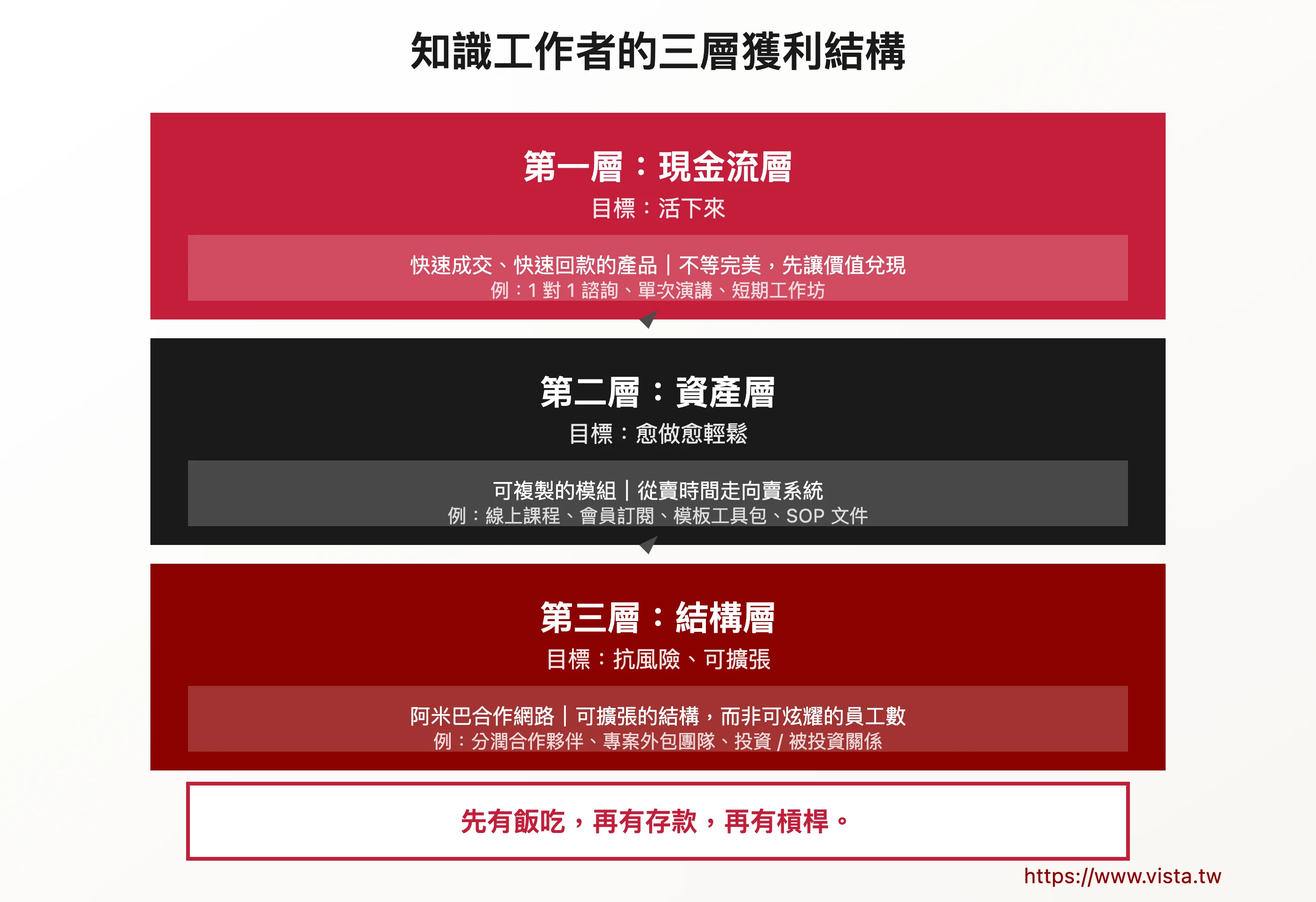
After listening to the entire episode, if you ask me: What is the implementation framework that you most want to take away? I will provide you with a three-tier structure, a monetization model I designed specifically for instructors, consultants, writers, coaches, or content creators.
The first layer: cash flow layer (survive)
The core goal of this level is simple: survive. You need products that can be completed quickly and get paid quickly.不是等灵感来了才动手,不是等万事俱备才推出,而是先把「可交付、可收款」的东西做出来。
What Teacher Wu Danru said, “You must make money on the first order” is actually talking about this level. The problem with many knowledge workers is that they spend too much time “preparing” but never actually start collecting payments. They want to wait until the course is perfect, the presentation is beautiful, and the brand is loud before they dare to ask for money. But the market will not wait for you, and neither will opportunities.
At this level, the products you need may be: one-on-one consultation, single speech, short-term workshop, paid community entry plan, etc. These products are characterized by relatively low thresholds, relatively short transaction cycles, and relatively fast cash recovery. They may not be your most ideal product form, but they can allow you to survive first. Only with this foundation can you have enough time to develop the next two layers.
Second layer: Asset layer (the easier it gets, the easier it gets)
Once you have a stable cash flow, the next step is to build equity. The assets here refer to: organizing the services, deliverables, lesson plans or methodologies you have done into modules that can be copied. It could be online courses, membership subscriptions, template toolkits, consultant SOP documents, and more.
The key to this layer is to move from selling time to selling system. When you are just selling time, your income limit is your time limit; but when you start selling systems, your income can exceed the time limit. A set of online courses, you record once, can be sold to thousands of students; a template toolkit, you design once, can be used by countless people. This is the power of assets.
In the development process of the past few years, I have gradually invested more energy in the construction of the asset layer. For example, the content of past speeches can be compiled into teaching materials that can be authorized for use, the consulting service process can be standardized into replicable SOPs, and writing methodologies can be compiled into course modules that can be sold independently. The accumulation of these assets makes my current job easier than before, but my income is more stable.
The third layer: Structural layer (anti-risk, scalable)
The highest level is the structural level. At this level, what you have to do is to modularize the cooperative relationship in an amoeba way. Editing, design, community operations, advertising, customer service, sales… these functions can all be related to the relationship between the company and the company or profit sharing unit, rather than you having to hire a bunch of full-time employees.
What this layer wants to pursue is a scalable structure, not the number of employees to show off. When opportunities come, you can quickly mobilize resources to take them; when risks arise, you can also quickly shrink to protect the core. This kind of flexibility is difficult to achieve in the traditional fixed team model.
I condensed these three levels of logic into a more straightforward sentence: **First have food, then deposits, and then leverage. ** This order cannot be reversed. If you rush to build a second-tier asset or a third-tier structure before you even have the first-tier cash flow, you’re probably building a castle in the air.
Micro-organizational capabilities in the AI era
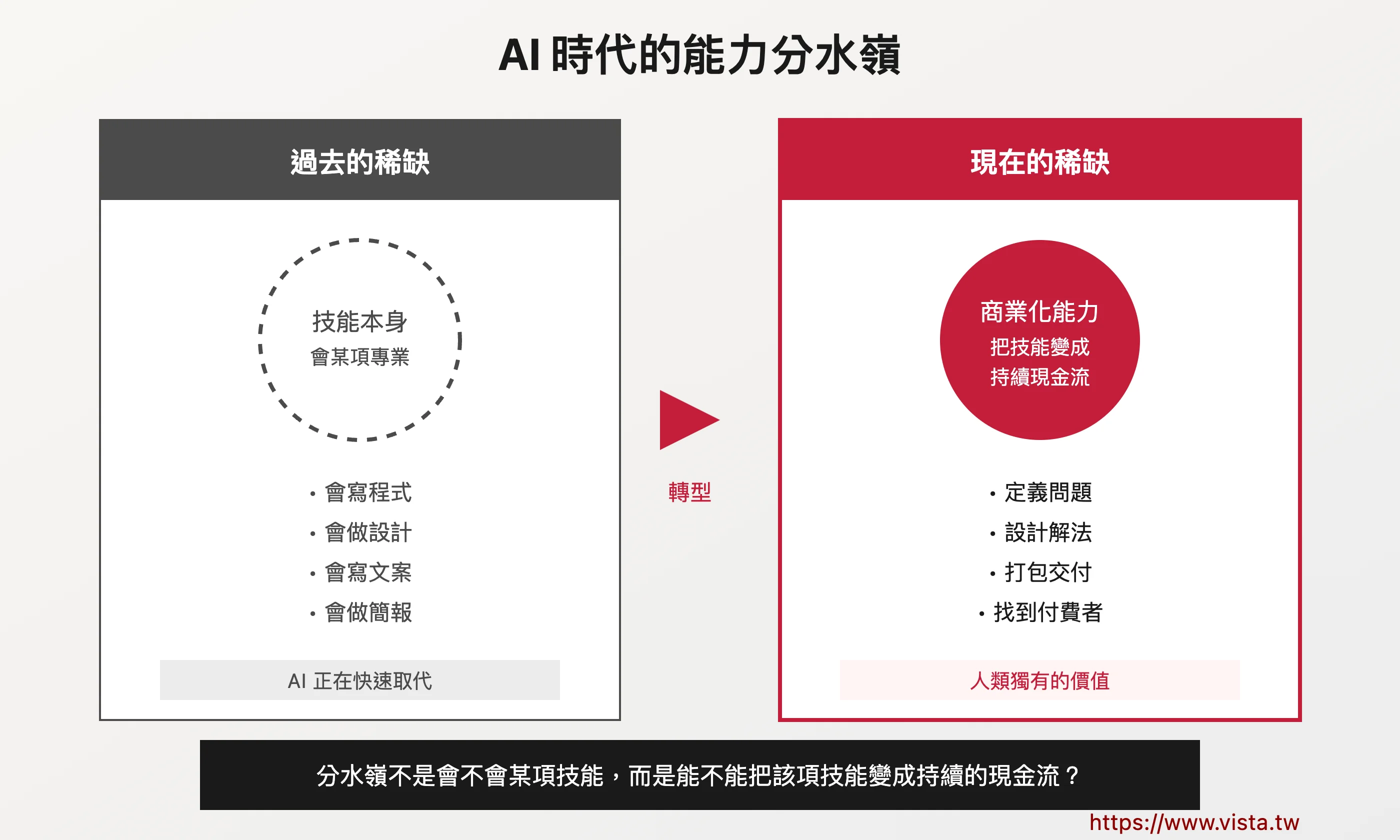
Teacher Wu Danru mentioned in the program that large companies are laying off employees and more people are becoming Solo Founders. This trend will become more and more obvious. I strongly agree with this observation, and I want to take it one step further: you don’t have to start a business, but you do have to have micro-organizational capabilities.
What are micro-organizational capabilities? To put it simply, it means: you need to be able to define the problem, design the solution, package and deliver it, find payers, and continue to iterate. You may be in a company, or you may operate independently in the market; but no matter what your identity is, you must have this set of self-profit capabilities.
AI allows a person to do more
There is no doubt that AI will make this happen faster. Why? Because AI allows you to do things alone that required a small team in the past: content, briefings, scripts, processes, customer service, data collection, and even simple product prototypes. When the production threshold for these things is significantly lowered, what is truly scarce is no longer the expertise to do something, but the ability to turn something into commercial value.
Therefore, when I taught AI application courses in some universities in the past, I often emphasized this point to students: learning to use AI tools is just the beginning. The real challenge lies in how to use these tools to create value, solve problems and serve customers. AI can help you do a good job at the technical level; but business-level judgment, interpersonal-level communication, and value-level positioning still need to be led by humans.
Where is the real watershed?
Therefore, the real watershed is no longer whether you know a certain skill? , but: Can you turn this skill into a commodity, turn the commodity into a process, and turn the process into sustainable cash flow. As you can imagine, this is a higher-level ability that cannot be obtained by learning a certain software or mastering a certain skill, but needs to be cultivated through continuous practice, reflection and adjustment.
I wrote an academic paper before and was thinking about this question: When AI-generated content becomes more and more popular, and when virtual influencers can produce content 24 hours a day, what is the value of human creators? My preliminary answer is: the value does not lie in the output itself, but in the judgment, selection and integration capabilities behind the output. AI can generate countless possibilities, but choosing which one, how to combine it, and how to present it to a specific audience still requires human wisdom.
This is why I believe that in the AI era, everyone needs to have micro-organizational capabilities. Because as tools become more powerful, those who can make good use of the tools to create business value will gain greater and greater advantages; while those who only know how to operate the tools but do not know how to create value may become increasingly marginalized.
The thankless philosophy of making money—the long-term survival rules for creators
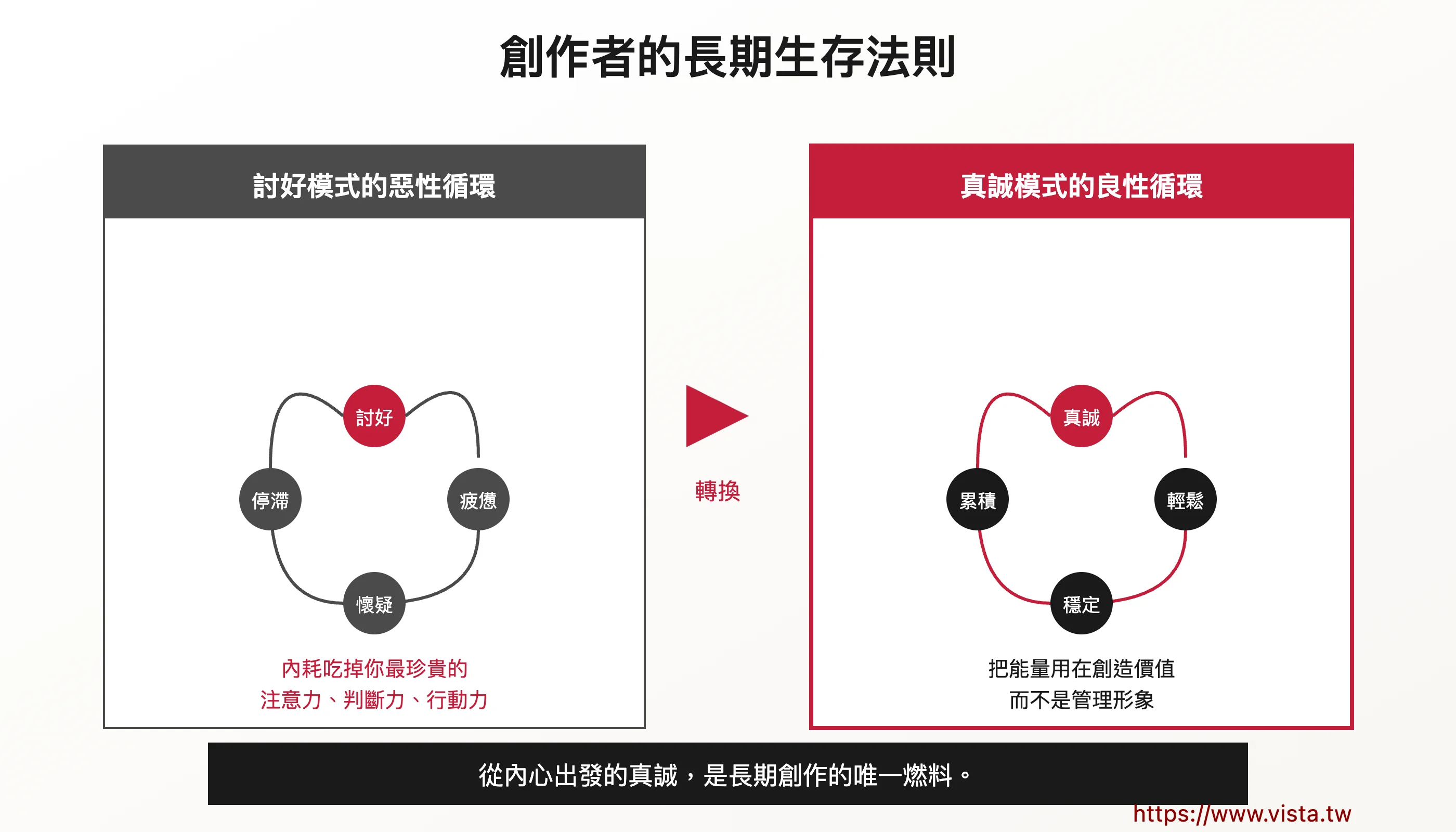
Teacher Wu Danru mentioned in the program that she doesn’t care much about whether others like her or not, she cares more about whether what she says comes from her heart. When I heard this passage, I was actually very moved.
This is not just a personality issue, but the key to a creator’s long-term success. If you are always trying to please others, you will always be tired; if you are always tired, you will start to doubt yourself; if you start to doubt, it will be difficult for you to achieve stable output and stable profits.
Internal friction is the biggest enemy of knowledge workers
For those of us who produce knowledge, content, and teach, what we fear most is not lack of inspiration, but internal friction. Internal friction eats away at your most precious things—your attention, your judgment, and your ability to act. When you spend a lot of energy thinking about what other people think of me, whether saying this will offend someone, or what that comment means, you don’t have enough energy to do the things that really matter.
I myself have also gone through this stage on my creative journey. In the early days, I paid great attention to every message and every evaluation. If someone said that I wrote well, I would be happy for half a day, and if someone criticized me, I would be sad for two days. This state makes my own creative quality very unstable, because my emotions are constantly fluctuating due to external influences, and emotional fluctuations will directly affect the quality and output of my creations.
Later, I slowly learned one thing: focus on what I want to say, not what others want to hear? This does not mean that you should completely ignore the needs of the audience, but that you should first establish your core point of view and then express it in a way that the audience can understand. Maybe everyone’s situation is different, but I think it’s best not to reverse the order. If you start with an idea of what content will be popular and then try to cater to that imagination, you may quickly lose your voice.
Action Motto for the New Year
After listening to this episode, I set a very simple reminder for myself as my motto for action in the new year:
Pull attention from fame back to cash flow, pull enthusiasm from emotions back to the system, and pull efforts from self-comfort back to profitability.
These three sentences sound very utilitarian, but if you can really do it, your status may change a lot. Because they point to the same core: don’t be trapped by illusions, and return to the foundation of reality. Reputation is false, but cash flow is real; emotions fluctuate, but the system is stable; self-comfort is cheap, but profitability is valuable.
写在最后:把人生拆成可执行的机制
If you are currently in a stuck period, whether it is due to stagnant income, creative bottleneck, or confusion about the future direction, I suggest you find time to listen to the episode of Teacher Wu Danru’s program. Not to learn her investment methods, but to learn her way of thinking that breaks down life into executable mechanisms.
When you start using structure to live your life, you’ll find that a lot of your anxiety isn’t the real problem, but the feeling of chaos caused by a lack of structure. When you have a clear structure, you know what to do next; when you know what to do next, anxiety naturally decreases.
The structure can be designed.
This is the core message I want to convey in this article. Whether you are a lecturer, consultant, writer, coach, or any form of knowledge worker, you need to design a system for yourself that works sustainably. This system includes: the source of cash flow, accumulation of assets, cooperation model and output rhythm. When these elements are in place, you no longer rely on willpower to strive, but rely on the system to move forward.
Finally, I would like to end this article with a sentence, which is also my blessing to all knowledge workers:
May you find your own rhythm, build your own system, and create your own value. In this era of uncertainty, only by becoming your own micro-organization can you truly control your own destiny.
If this article is helpful to you, please share it with your friends who are also working in the field of knowledge work. You are also welcome to go to my website to see more articles about writing, content management or AI applications. See you next time!
Further reading
- Podcast 笔记术:6 个步骤,用 Podwise + Anytype 搭建内容飞轮
- Ulysses + Claude + MCP: Create an AI-driven smart writing system to double productivity
- AI Board Method: A set of dialogue methods that will make your thinking more clear