AI is not your master, but a deputy of inspiration: inspiration from Mo Yan’s use of AI to write poems
Recently, the Nobel Prize winner Mo Yan shared his several experiences with AI, which resonated deeply with me. As a lecturer and creator who has long been concerned about the development of generative AI, I not only feel cordial to Mo Yan’s sharing, but also feel that it is a microcosm of the collision between literature and technology of the era. His words: “You have to let him be your assistant, not your master” not only resonated with me, but I can’t let it go for a long time.
AI can be written well, but it may not be written deeply.
Mo Yan gave several personal examples, from his initial attempt to let AI write an antique fu, to poetry, to imitating the styles of Mao Zedong and Mo Yan himself. At first glance, the AI’s work is indeed impressive: the language is neat, the imagery is complete, the rhythm is clear, and even the rhymes are well matched. The efficiency of writing a poem in just one second is really staggering.
But as Mo Yan said: “It is gorgeously written, but has no thought.” This sentence actually points out the core limitation of generative AI at present: it lacks self-experience and depth of thought. We can say that AI can write technically good articles, but it cannot create truly moving works. Because the soul of literature often comes from people’s appreciation of life and contemplation of the world, rather than just the dazzling display of words and phrases.
Thought input is the key, AI is just an extended organ
Interestingly, when Mo Yan tried to input a thought: “A temple is not a market, and charity is not a transaction,” the AI was able to use solemn and elegant language to generate an essay full of moral weight. He cited a few of them as examples:
“The bells in the morning and the drums in the evening are not tools to attract people; how can the Beiye Scripture be used to make profit?”
When I read this sentence, I really admired AI’s ability to master language forms, and also understood what Mo Yan’s friend said: “If you give it an idea, it can deduce it; if you don’t give it, it will just imitate.”
This actually illustrates an important point: Generative AI is not the starting point of inspiration, but an extension organ. It can transform the vague ideas in our minds into formed sentences, and it can gather scattered fragments into articles, but the prerequisite for all this is that we must first have the fire of thought.
The essence of literature still comes from life
Mo Yan’s last reminder, I think, is the most important wake-up call in this AI wave. He said:
Whether writing poems, novels, or scripts, they should still be based on real life… go deep into the folk and life to obtain the freshest and most contemporary experience.
This reminds me of a sentence I once shared with students in class: “AI can help you remember the world, but only humans can feel the world.” This world does not lack content, but what it always lacks is creators who are sensitive and can penetrate daily life. No matter how powerful the algorithm is, it cannot replace a person who cried in the heavy rain and wrote the sentence “I saw myself in the rain.”
Mo Yan’s observation also pointed out that the current performance of AI is more of a cultural collage than a true cultural creation. It is good at imitation and recombination, but it is not yet able to truly produce works with originality and emotional thickness. Even if AI can learn from this, it will not be able to write the kind of tension that interweaves history and emotion in the short term.
Additional perspective from a university AI lecturer
From a technical perspective, we can understand why AI falls into the creative dilemma of “perfect format but pale emotion”.
Most current generative models rely on a large amount of training corpus and statistical probability for text generation. It can learn to use “word B” frequently in “context A”, but it cannot truly understand the historical, cultural and emotional connections behind A and B. It’s like asking a person who has never been in love to write a touching love letter just by reading romance novels - even if it is similar, it is only superficial.
Furthermore, AI creation actually comes from prediction rather than experience. Therefore, it does not know the humidity, heat and stickiness of the Dragon Boat Festival, nor does it sit outside the temple at four o’clock in the morning and think about life and death. Every word in it comes from statistical results, not spiritual reflections.
This also means that we cannot expect AI to do the essence of creation for us, but should learn to collaborate with it.
Don’t be intimidated by AI writing, but don’t be controlled by it either
In the past few years, I have often taught in different public sectors, enterprises and universities, and I have also observed that many people have two extreme emotions towards AI: one is inexplicable fear, and they are deeply afraid that AI will take away the value of creation and work; the other is over-reliance and regard AI as a universal writer. Both of these are actually going in the wrong direction.
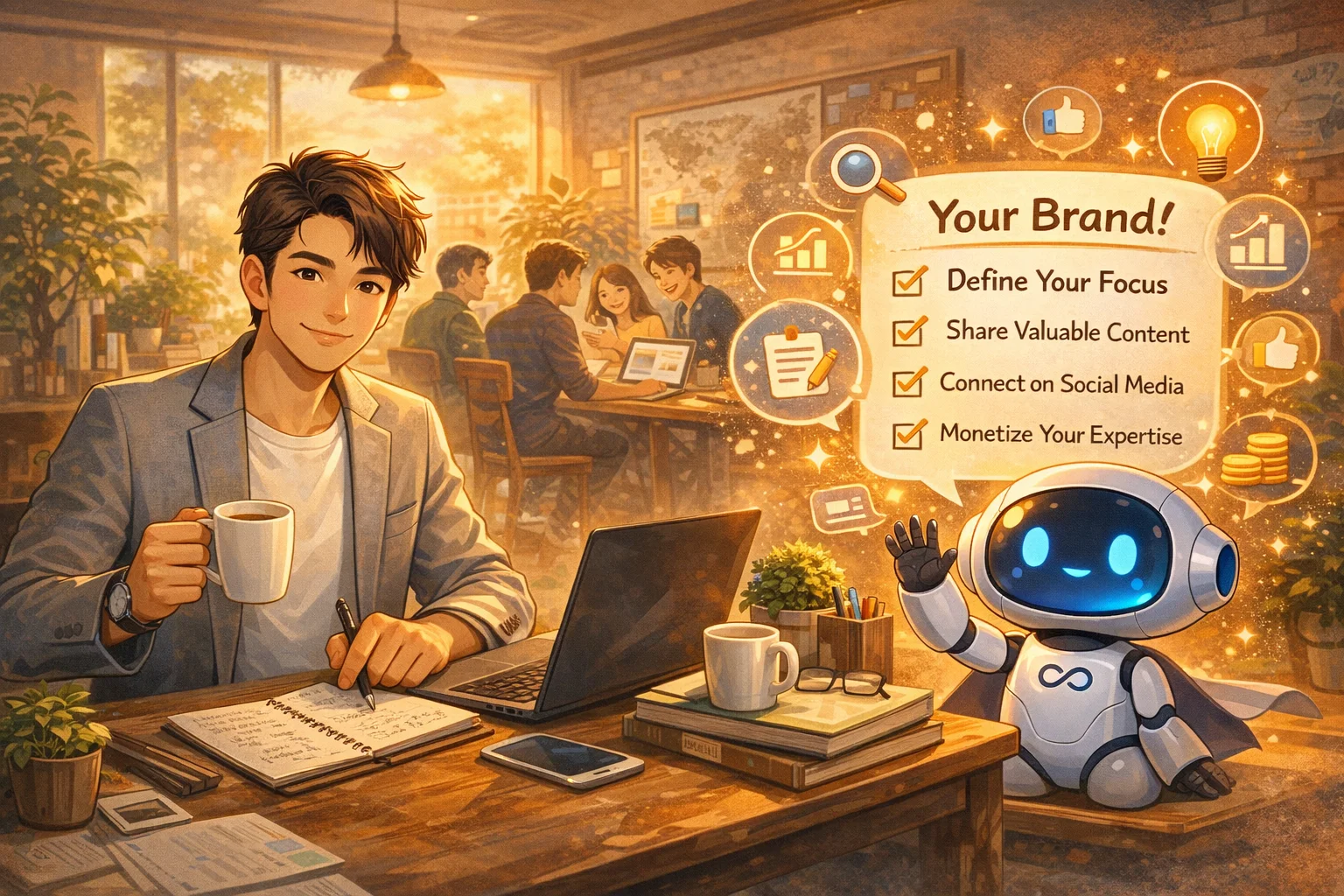
Let’s be honest, AI is not the ghostwriter of your soul, but the assistant of your inspiration. It can help you check information, generate first drafts, and polish rhetorically, but the most touching sentences, the most heartfelt metaphors, and the deepest reflections can still only come from you.
Therefore, I would suggest that every creator—whether you are a writer, journalist, teacher, or brand operator—should learn to use AI, but please remember:
- Write first, then optimize: You write the core ideas and let AI help you expand and organize them.
- Feel first, then generate: You provide emotional context, and AI can write a more accurate tone.
- Think first, then give instructions: If you clarify the proposition, the AI will not talk nonsense.
The essence of creation is the proof that we are still alive
Mo Yan’s fighting with AI is actually very similar to the situation we are all facing: we have entered the AI era, there is no way to avoid it, and there is no need to panic. But only by returning to one’s own feelings, memories and values can creation have the power to transcend time.
AI is not the end of creation, but a new starting point. As Mo Yan said:
You have to let him be your assistant, not your master.
And I would like to add:
Only if you don’t forget your original intention of experiencing and traveling this world can AI help you speak words with soul.
Further reading
- A powerful tool for academic writing: UPDF allows me to breathe freely in the world of knowledge
- When AI becomes a writing assistant: My real experience and future prospects
- Can you use AI to write