A complete guide to personal branding in the AI era: from positioning, content to monetization, understand it all at once
A while ago, after a certain open class, a student came up to me and said something that left a deep impression on me. He said: “Teacher Vista, I feel that after AI comes out, it seems that building a personal brand becomes meaningless! When everyone can use ChatGPT to write articles, what value does my brand have?”
I was silent for a few seconds. Because I know that this problem is not his only confusion - it is a question hidden in the hearts of almost all knowledge workers, freelance case takers, corporate lecturers, consultants and creators in this era.
My answer is: No, you did it backwards.
The emergence of AI will not make personal branding meaningless, but will make personal branding more important than ever. For those who know how to make good use of AI, now is the best time to build a personal brand!
Next, please let me organize my thoughts and practices over the past few years into this article and share it with you completely.
📘 **Read and do at the same time, the effect will be doubled! ** I’ve condensed years of course and consulting experience into a 50-page hands-on manual that includes a Brand Positioning Checklist, AI Prompt Toolkit, and 30-Day Action Guide. Use it together with this article so that you can get started immediately after reading it. 👉 Free download of “Guide to Building a Personal Brand in the AI Era”
Why is personal brand more needed in the AI era?
Have you noticed a phenomenon? When everyone can use ChatGPT to produce a decent-looking article in just a few minutes, any social platform you open will be full of content with the same format, similar views, and no special feeling after reading it. You may think AI feeling is disgusting, but what’s scary is actually the “content inflation” brought about by AI.
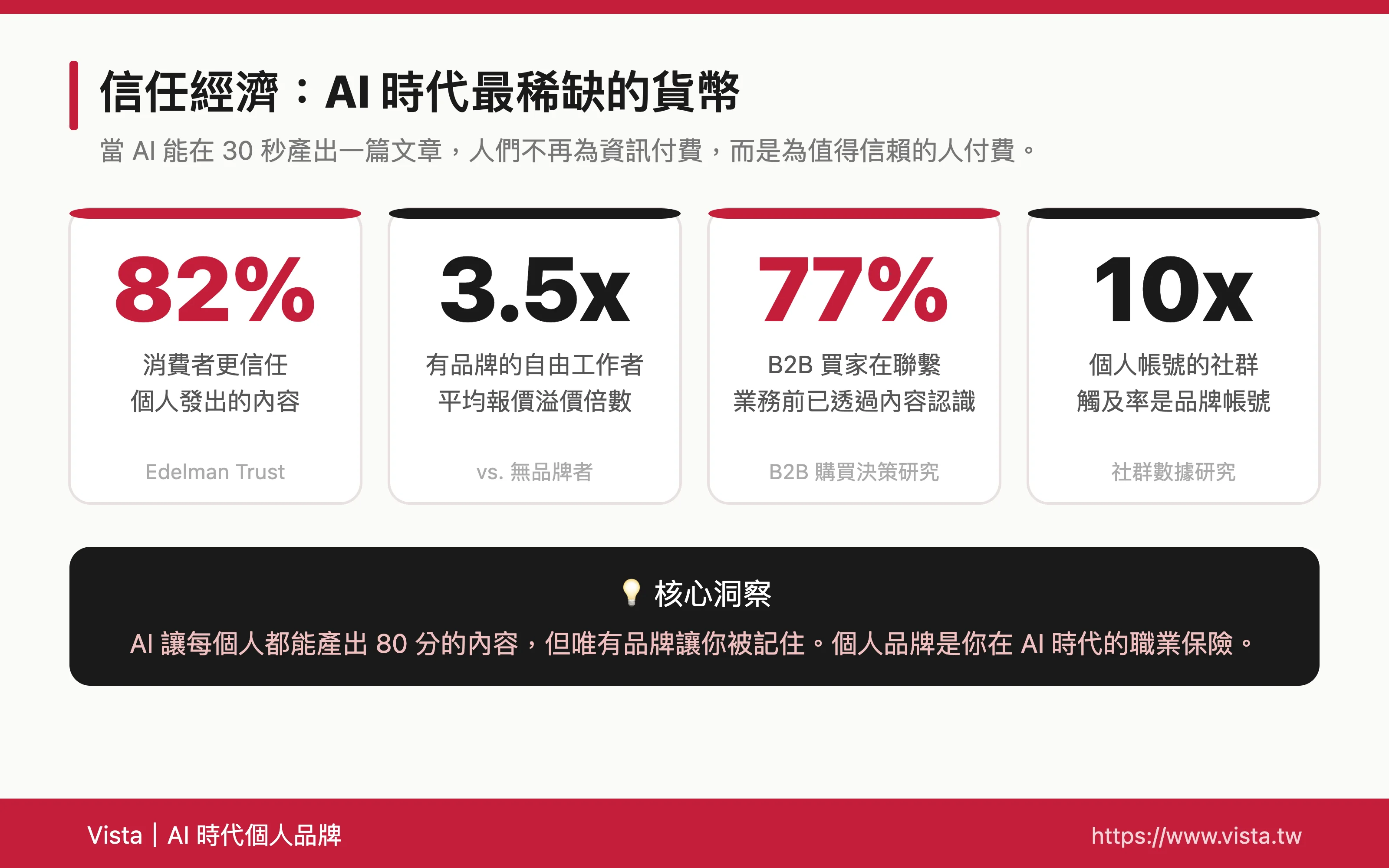 ▲ Trust economy: the scarcest currency in the AI era
It is true that the threshold for producing content has been lowered, but the threshold for trust has actually been raised. When readers, clients or companies choose who to follow, who to cooperate with, and whose course to sign up for, what they ask is no longer “Is this article of good quality?” but “Is this person trustworthy?”
Brand is not what you say to consumers, but how consumers talk about you? ——Seth Godin
Seth Godin once said: “Brand is not what you say to consumers, but how consumers talk about you?” In the AI era, this sentence has new weight. When AI can help anyone produce seemingly professional content, the only real scarce resource left is one thing: people.
A real person with opinions and warmth.
I myself am the most direct example. I have been writing [blogs] (https://www.vista.tw) on the Internet for more than 20 years. These articles do not rely on traffic techniques to gain readers, but because readers know that “this is what Vista said”, and what Vista says includes his way of thinking, the pitfalls he has stepped on, and his real observations accumulated from hundreds of consultations and trainings. AI cannot replace these things, because they are never just information, but trust.
According to Edelman’s Trust Study, 82% of people trust personal content more than business accounts. Freelancers with a personal brand quote on average 3.5 times more than those without a brand. In the B2B scenario, 77% of buyers said they had already gotten to know the person through their personal brand content before contacting the business.
In an era where everyone can produce content, personal brand is your professional moat.
Six myths you may have been having
After more than ten years of training and consulting, I have found that what hinders most people from building a personal brand is often not a technical issue, but a conceptual issue. Now, let me get right to the point with six of the myths I hear most often.
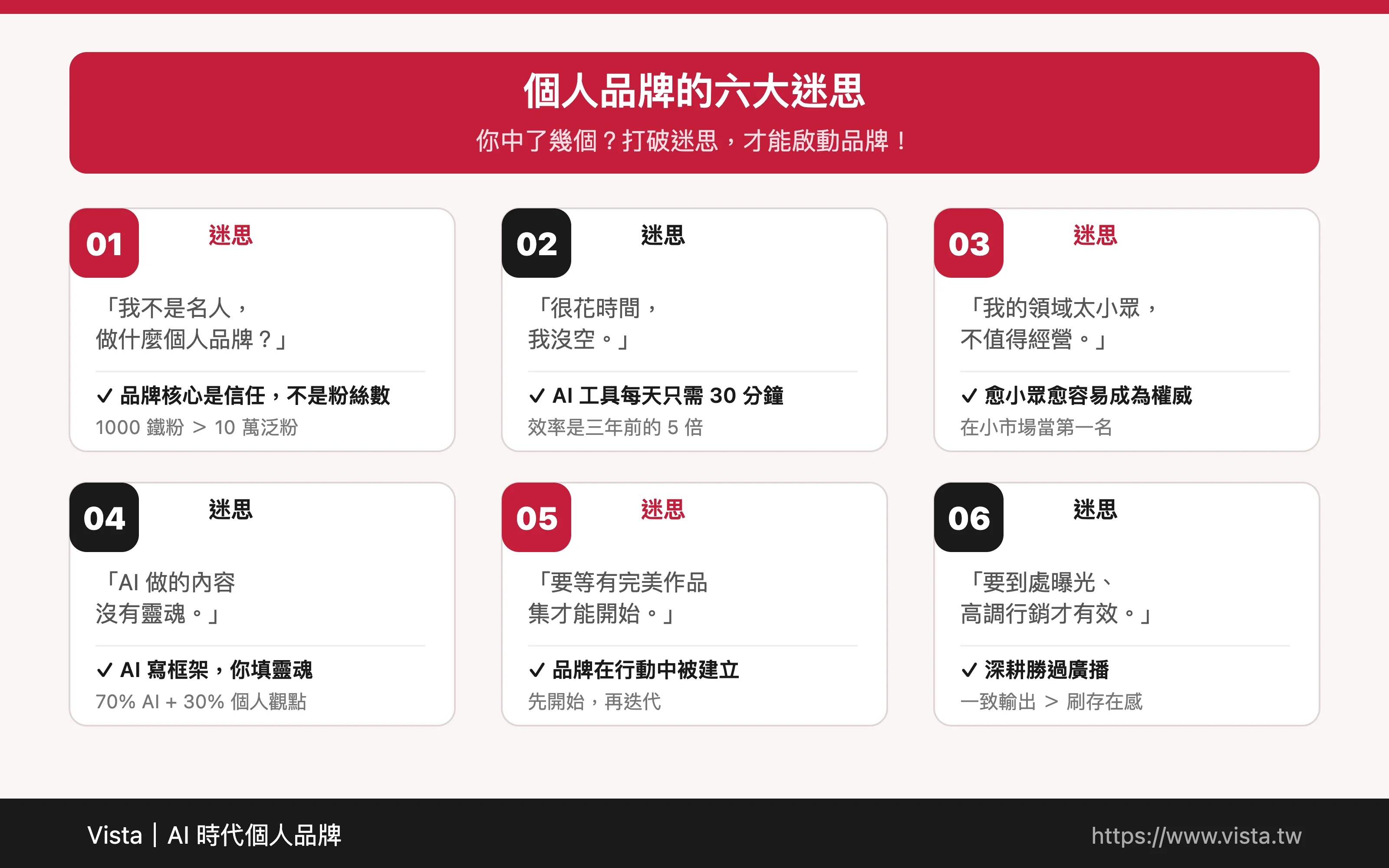 ▲ Six myths about personal branding
Myth 1: “I’m not a celebrity, so how can I build my personal brand?”
The core of personal brand is professional trust, not the number of followers. An expert in a specific field with a thousand loyal followers has far greater commercial value than an account with 100,000 followers. You don’t need to be on a show or become an Internet celebrity. You just need to be the person who knows this best in the eyes of your target audience.
Myth 2: “Running a personal brand takes time and I don’t have time.”
Well, that was indeed the case before. But now with AI tools, you can maintain stable output by investing thirty minutes a day. With batch output and scheduled release, the efficiency is five to ten times that of three years ago. The problem is not time, but whether you have established a good workflow.
Myth 3: “My field is too niche and not worth running.”
Quite the opposite. According to my observation, the smaller the niche, the easier it is to become an authority in the field. Just think, “the consultant who knows the best about B2B marketing for small and medium-sized enterprises in Taiwan” has more business value than the “marketing consultant who knows everything” because it is easier for your potential customers to find you and decide to come to you.
Myth 4: “Content made with AI has no soul, and the audience can see it.”
If you think of AI as a replacement, it really has no soul. But if you use AI as a collaboration tool and let it do the scaffolding, research, and first drafts, and you inject your own opinions, experiences, and stories, the result is completely different. Therefore, the best approach is: 70% AI assistance and 30% personal soul, which is both efficient and warm.
Myth 5: “I need a perfect portfolio before I can even begin.”
Brands are built in action. My vista.tw is also optimized while writing. From the first article to the present, I have never felt that I was really “ready” at any moment. It’s more important to start first and iterate later than to wait for perfection. The day it starts is the first day of the brand.
Myth 6: “Personal branding is all about exposure and high-profile marketing.”
Continuously cultivating and outputting valuable content on the right platform is far more effective than trying to create a sense of presence everywhere. I know quite a few consultants and instructors who have a low voice but a strong brand, and they rely on depth and consistency, not volume.
AI’s five-step flywheel for personal branding
I organized the complete path to building a personal brand into five interlocking steps. These five steps are like a flywheel. As long as it is started, it will strengthen itself and spin faster and faster.
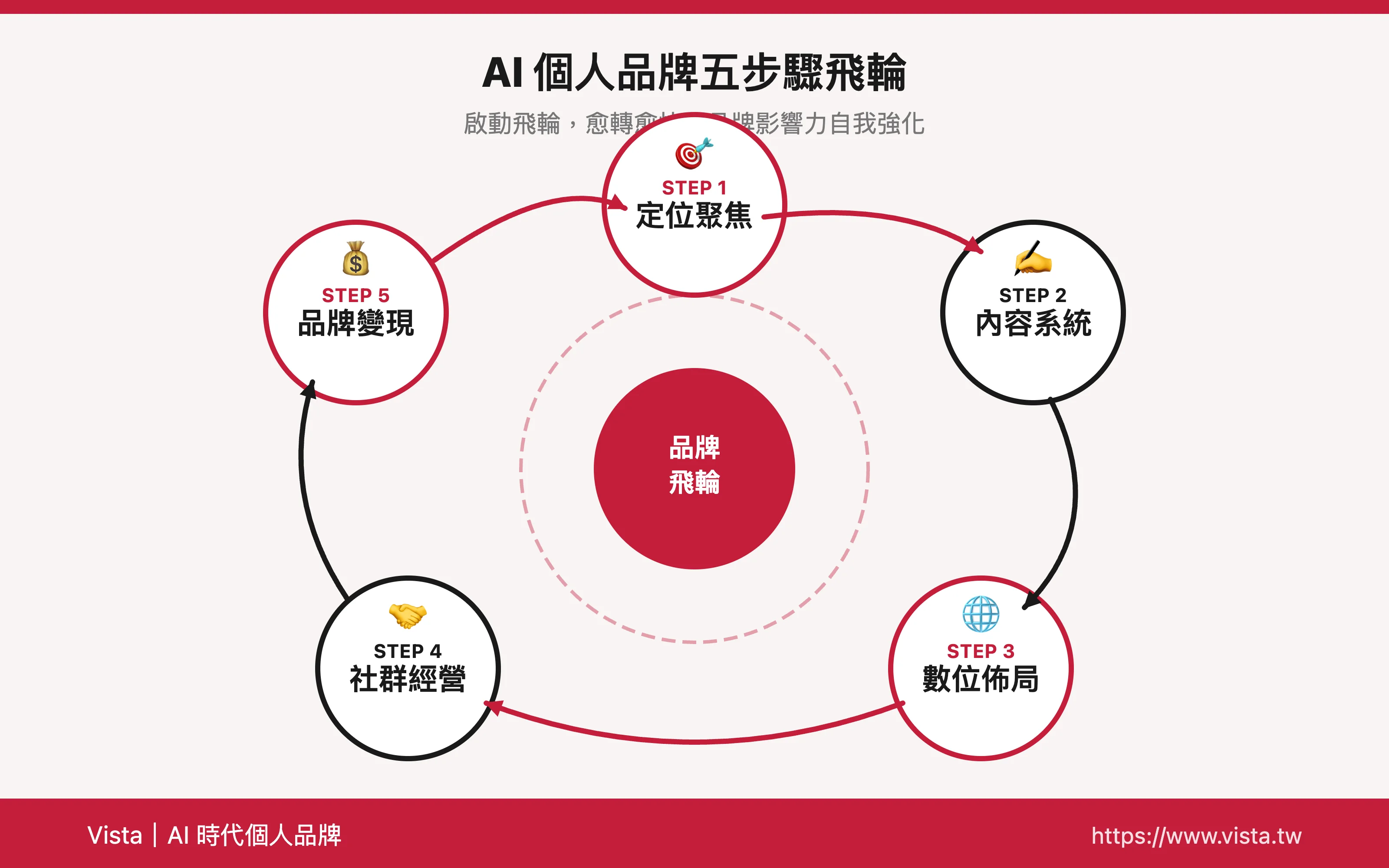 ▲ AI personal brand five-step flywheel
Step One: Positioning and Focusing
The source of all brand problems is almost unclear positioning. A brand without positioning is like a store without an address - no matter how good your products are, others can’t find you.
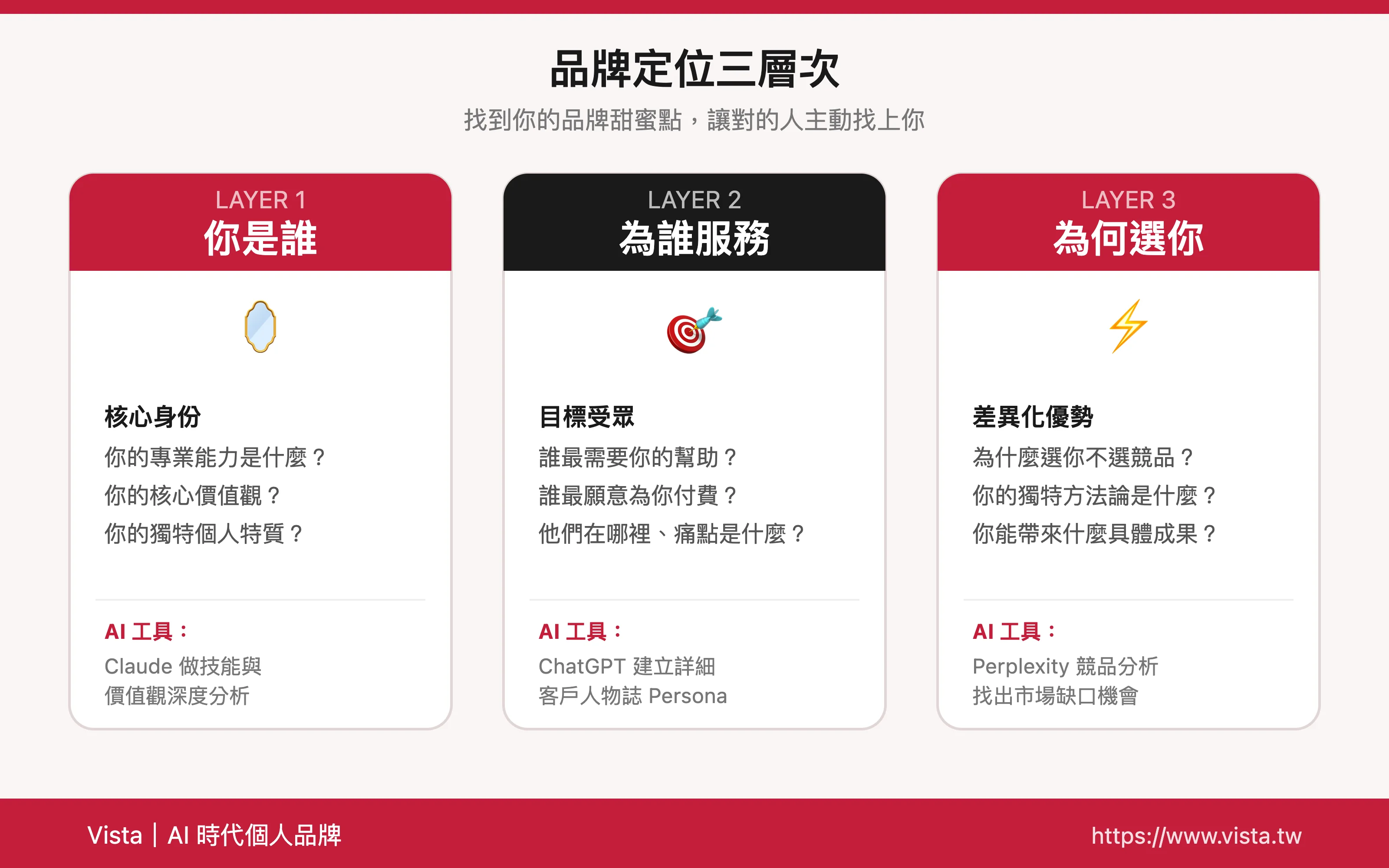 ▲Three levels of brand positioning
Simply put, brand positioning has three levels: who are you, who do you serve, and why should they choose you instead of others? These three questions seem simple, but perhaps most people have never answered them seriously.
The first exercise I ask students to do in the course is to answer five core questions: What are you best at? Who do you most want to help? What is their biggest pain point? What unique solutions can you offer? What specific results will your clients get from working with you?
Organize these five answers and throw them to Claude or ChatGPT, ask it to help you produce a first draft of the brand positioning statement, and then ask three to five target audiences to read it once to see if they can understand what you are doing. This process can be completed in an afternoon using AI, while traditional methods may require several months of exploration.
Positioning is not a one-time decision, so speed is not the key to success or failure. My own positioning has also continued to be refined over the past few years - from a content marketing consultant to a strategic partner who helps workers use AI to build their personal brands. I hope that every adjustment can bring more accurate customers and clearer brand identity.
It is worth mentioning that there must be a differentiated strategy behind positioning. You can choose the professional depth type (go the deepest in a certain niche), the unique methodology type (develop your own framework), the personality differentiation type (use your personality and story to attract followers), or the technology integration type (be the first to integrate AI tools into your services). There is no right or wrong in these routes. The important thing is to choose the direction that best suits your true characteristics and then keep going.
Step 2: Content System
80% of the value of your personal brand comes from what you share publicly.
80% of the value of your personal brand comes from what you share publicly. I have said this sentence for many years, but it still feels important every time I say it.
Before the advent of AI, content production was the biggest bottleneck for personal branding. A good article can take four to six hours, and outsourcing a beautiful newsletter can cost tens of thousands of dollars, not to mention videos and podcasts. However, these thresholds have now been significantly lowered.
To put it simply, you can refer to this content workflow: use Perplexity to do topic research and market research, use Claude to produce the structure and first draft of long articles, use ChatGPT to brainstorm the angle and title of community posts, use Canva AI to design the key points of the article into a visual chart, and use CapCut Edit short videos. After the entire process, an article published on a personal website only takes about thirty to forty-five minutes from conception to publication.
However, there is one key point here that I want to emphasize: AI writes the skeleton, and then you fill in the soul.
The first draft produced by AI does not involve you. What you need to do is to add in all the pitfalls you have personally stepped on, the reactions of students you observed in class, and the moment of enlightenment that occurred when you were talking to customers. These are all real details that belong only to you. I think this is what makes readers want to keep following you.
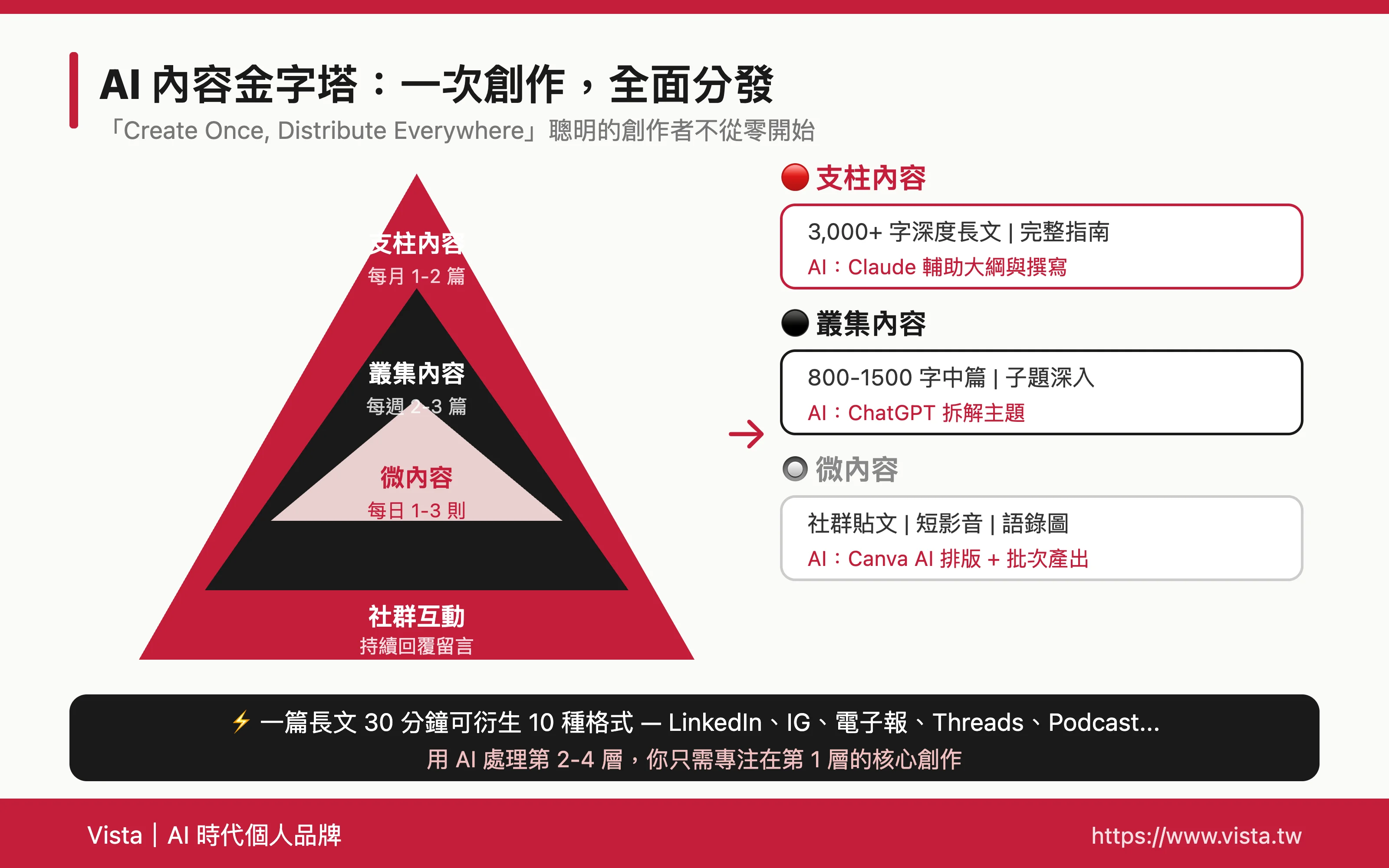 ▲AI Content Pyramid: Create Once, Distribute Fully
Another focus of the content system is the pillar content strategy. I suggest that everyone select three to five core topics, and create an in-depth long article of more than 3,000 words for each topic as a pillar, and then derive short content in various formats from the pillar content, such as: LinkedIn posts, IG carousels, Threads short comments, e-newsletter summaries, and video scripts. With the assistance of AI, a piece of core content can be derived into ten different formats in thirty minutes. This is the power of “Create once, fully distribute”.
Step 3: Digital Layout
I often mention to many students that social platforms are just rented sites, and only the official website is your own home. Algorithms may change and platforms may fail, but the official website will always be your home.
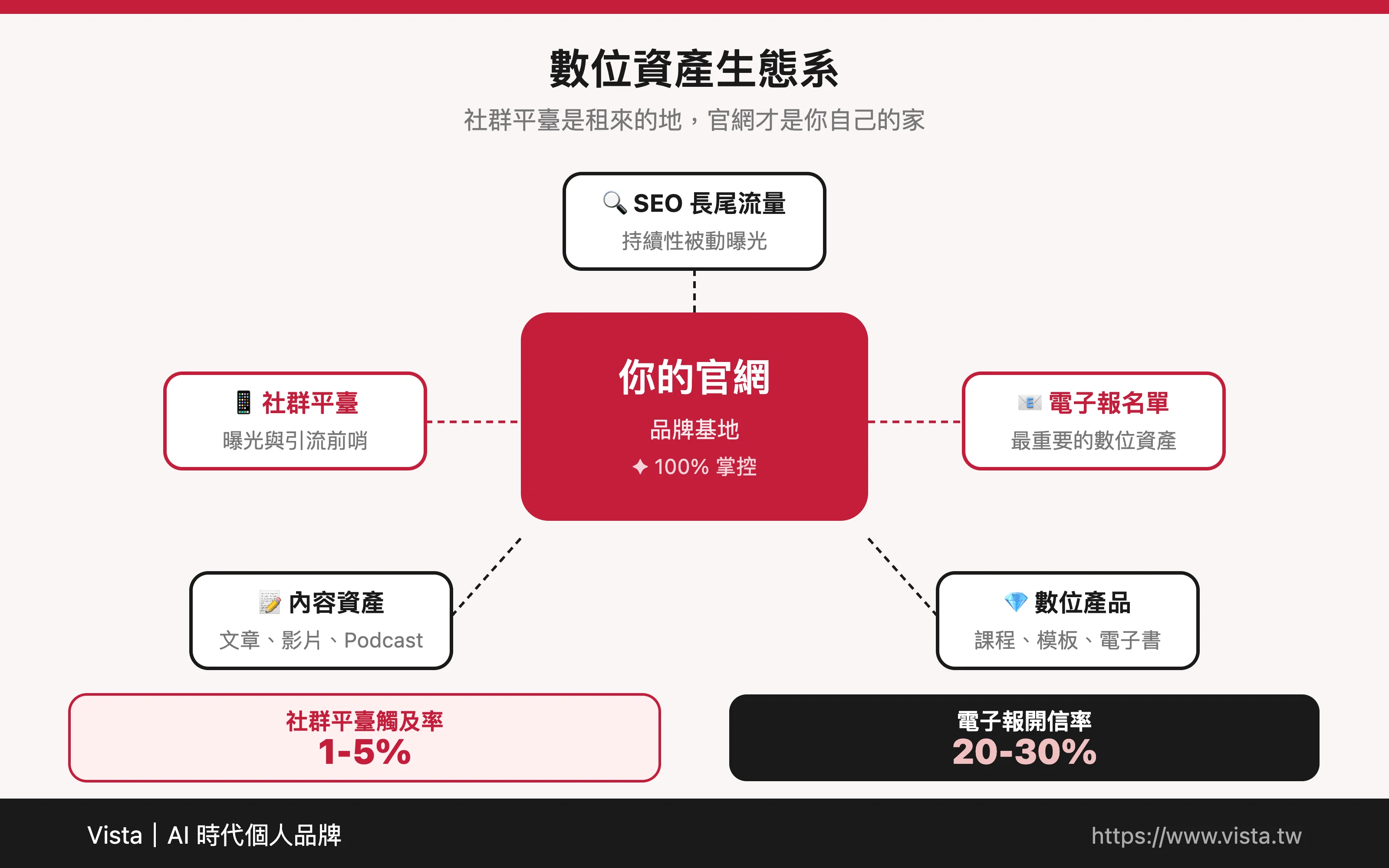 ▲Digital Asset Ecosystem
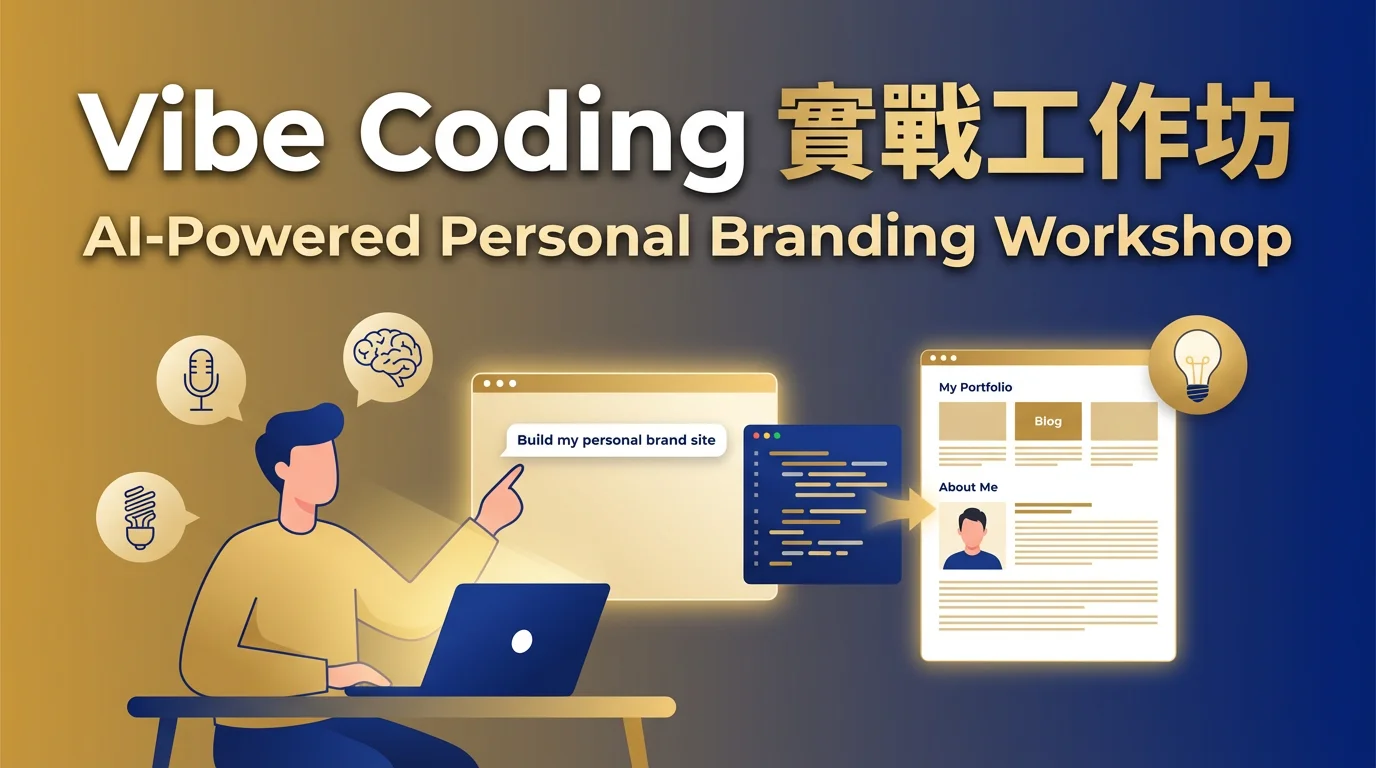
I used Vibe Coding to build vista.tw in less than a week. The so-called Vibe Coding is to describe what you want in natural language and let AI write the program for you. I don’t need to know too much HTML or JavaScript, I just need to be able to say something like: “Help me build a personal brand website. It needs homepage, service introduction, blog and full-text search function.” AI will automatically help generate the code and structure.
The significance of this is not only to save money, but also to completely break the restriction that one cannot make a good website without technical ability. In the past, building a professional website required outsourcing and cost hundreds of thousands. Now you only need to be able to describe what you want, and AI will have the opportunity to make it.
🎯 **Want to use AI to build your personal brand website? **
In Vibe Coding Practical Workshop, you will learn how to use natural language to describe your requirements and let AI help you build a professional personal brand website from scratch - no programming background is required, and the finished product can be produced in three hours.
When it comes to digital layout, I have a few core suggestions. First, the official website must have a clear conversion path: after search traffic or social traffic comes in, what do you want visitors to do? Subscribe to newsletters, receive free resources, inquire about cooperation, or sign up for courses directly? Every page should have a clear call to action. Second, SEO is the most cost-effective traffic engine in the long run. A well-ranked article can bring visitors every day for several years, which is something that social posts cannot do. Third, your electronic subscription list is your most important digital asset because it is the only access channel that is not controlled by an algorithm.
Step 4: Community Management
Choosing the right social platform is more important than doing it everywhere. Looking at the Taiwan market, LinkedIn is the first choice for B2B personal brands, Instagram and Threads perform strongly in visual and knowledge-based brands, Facebook groups still have extremely high interaction rates among specific groups, and YouTube is the best channel to build long-term and deep trust.
My suggestion is: select one or two main platforms, invest 80% of your energy here, conduct in-depth operations, fix the frequency of posting, and actively interact. As for other platforms, AI can be used to rewrite the main content into a suitable format and maintain a basic sense of presence.
The most common mistake in community management is to treat it as a broadcast channel, only posting content without interaction. True trust is built through two-way dialogue. Spend fifteen minutes every day, proactively leave in-depth comments under the posts of the target group, use AI to quickly generate valuable replies, but remember to add your personal opinions. The long-term rewards of this habit are far beyond your imagination.
Kevin Kelly’s “Thousand True Fans” Theory: As long as you have a thousand true readers who are willing to pay to support you, you can make a living.
The real goal is not follower numbers, but converting followers into fans. Kevin Kelly I strongly agree with the “thousand true fans” theory - as long as you have a thousand true readers who are willing to pay to support you, you can make a living. The core task of brand management is to continue to create experiences that turn followers into loyal fans.
Step 5: Brand realization
Many people think about monetization too complicated, or start it too late. In fact, the core of the personal brand monetization model has only one logic: first provide value that far exceeds the other party’s expectations, and then use a reasonable price to make the other party thank you for letting them pay.
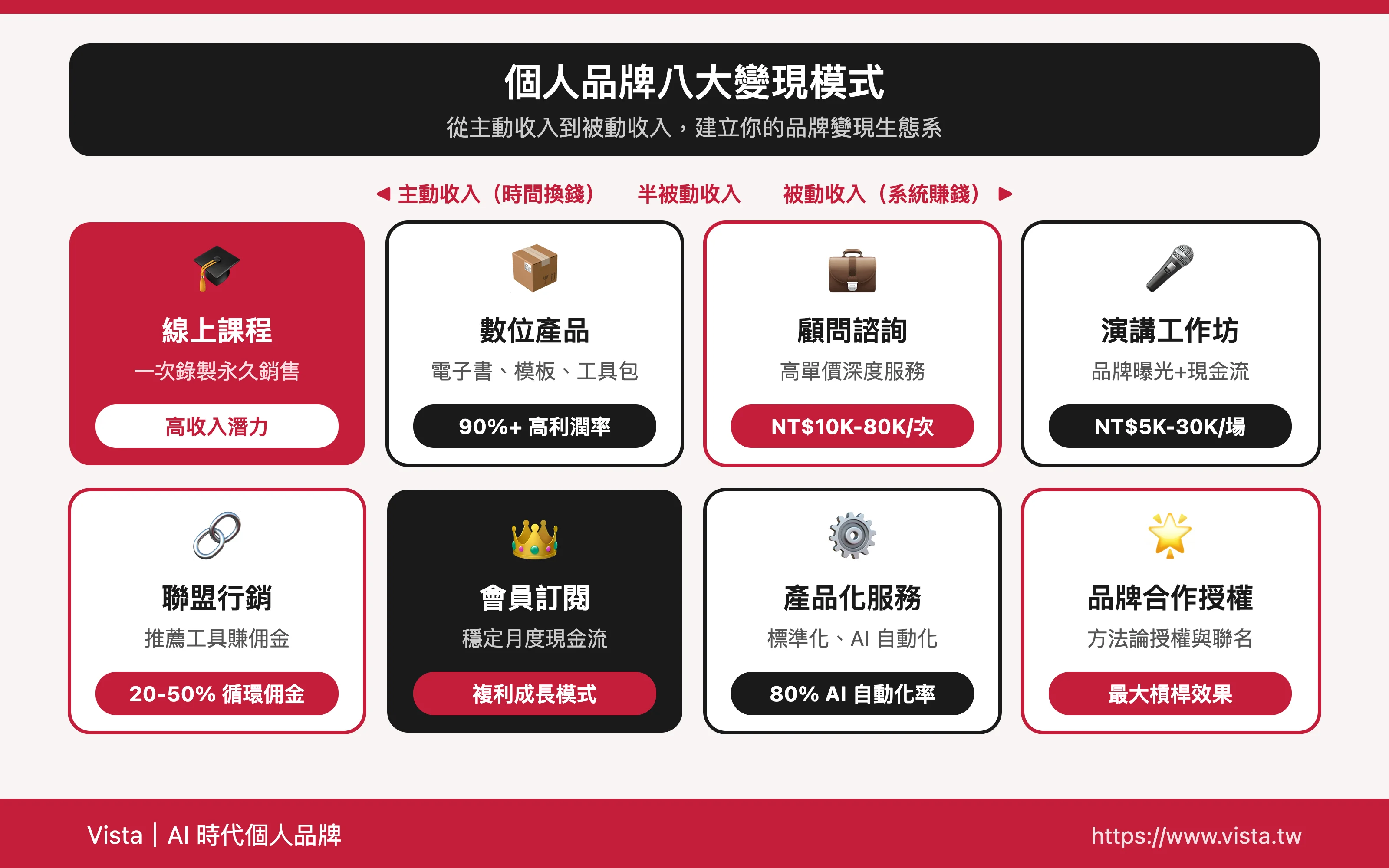 ▲ Eight monetization models for personal brands
I divide the income structure of personal brand into three levels: active income (speeches, consulting or workshops), semi-passive income (online courses, e-books or templates), and passive income (affiliate marketing, membership subscriptions or advertising). Everyone’s ideal target combination is different. For example, it could be 40% active, 35% semi-passive or 25% passive.
Today, AI makes it easier to build all three levels of revenue. For example, for an online course, AI can speed up the entire process from syllabus design to film scripting to presentation production, compressing six months of work into three to four weeks. For an e-book, AI helps you produce the first draft, and you are responsible for adding real cases and personal insights. A productized service solution, AI automatically handles questionnaire analysis, first draft of reports, and customer communication, allowing you to focus your limited time on high-value parts that really require manual judgment.
Every article, every online course, or every template is a digital asset that continues to work for you. A brand established today will often bring in more than ten times the revenue three years later.
But honestly, the compounding effect of brand monetization is what excites me the most. Every article, online course, or template is a digital asset that continues to work for you. A brand established today will often bring in more than ten times the revenue three years later.
AI is an accelerator, not a substitute
This is a core idea that I must say again because it is so important.
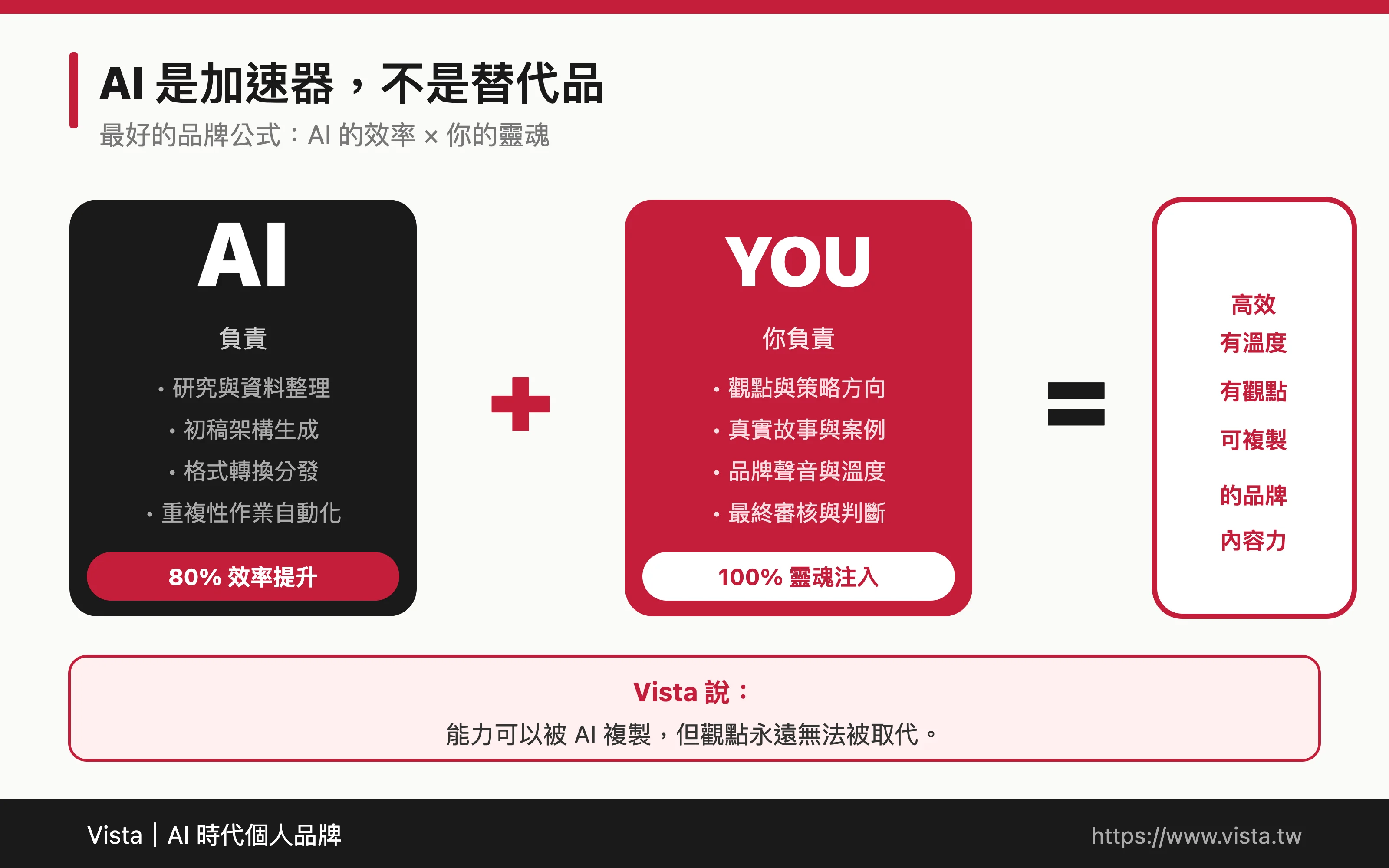 ▲AI is an accelerator, not a substitute
When many people first come into contact with AI tools, they have two extreme reactions: one is excessive worship and leave everything to AI, thinking that everything will be OK; the other is excessive resistance, thinking that using AI is cheating and that it will lose authenticity.
The greatest value of AI is to automate 80% of repetitive tasks, allowing you to devote 100% of your creative energy to the most important 20%.
In fact, the greatest value of AI is to automate 80% of repetitive tasks, allowing you to devote 100% of your creative energy to the most important 20%. What is that 20%? It’s your perspective, your story, your judgment, the authentic relationships you build with your customers and readers.
我在课堂上常打的一个比喻:AI 就像一个超级全能的助理,可以帮你做研究、整理资料、起草文件、排版设计。 But you are the boss, and you are responsible for the strategic direction, final judgment, and insights that only your life experience can bring you.
I used Claude to write a lot of first drafts of articles and course scripts, but every version that was finally sent out had something I added to it - that observation that suddenly came to mind after a video conference with the client at one o’clock in the morning, that question that was knocked down by a student on the stage and then went home to think about for three days, and that was the stupidest mistake I have ever made in the process of building my own brand. These are what give the article a soul and why readers are willing to continue reading.
Starting now is more important than being perfectly prepared
The last core idea I want to share in this article is about timing.
Many people ask me: “Teacher Vista, is it too late for me to start building a personal brand now?” My answer is always: not too late. There are two best times to build a personal brand, one was ten years ago and the other is today.
It’s not that it’s too late to start now, but it’s really too late to wait any longer. Consistency beats perfection—an imperfect article sent out every week will do more to build your brand than a perfect article sitting in your drafts folder forever.
But one thing I want to make clear: It’s not that it’s too late to start now, but it’s really too late to wait any longer.
Your competitors are already using AI. Every month more people are getting serious about personal branding. Every day that passes, the gap between the content and trust you have accumulated and those who are serious about doing it becomes a little bigger.
AI democratizes brand building—the threshold for tools is lowered, the threshold for design is lowered, and the threshold for technology is lowered. But the real gap never lies in the tools, but in whether you are willing to continue to output, continue to learn, and continue to share your most authentic opinions and your most solid expertise over and over again.
Consistency trumps perfection. An imperfect article sent out every week can do more to build your brand than sitting in a draft folder forever waiting for the perfect article.
I’ve been writing online for over twenty years. Looking back at my earliest articles, I now feel that they were really green and there are many areas where they could be written better. But precisely because I wrote it at that time, I had the opportunity to continue to make progress and accumulate the trust that these readers and customers have in me today.
Every article is your vote for the future.
Your next step
If you read this, I want to invite you to do one thing: open an AI tool such as ChatGPT or Claude right now and answer the five core questions of brand positioning I mentioned in the article. Give your answers to AI and ask it to generate three versions of your brand positioning statement. This can be done now, it only takes twenty minutes.
This step may sound small, but it’s the moment your brand-building journey really begins.
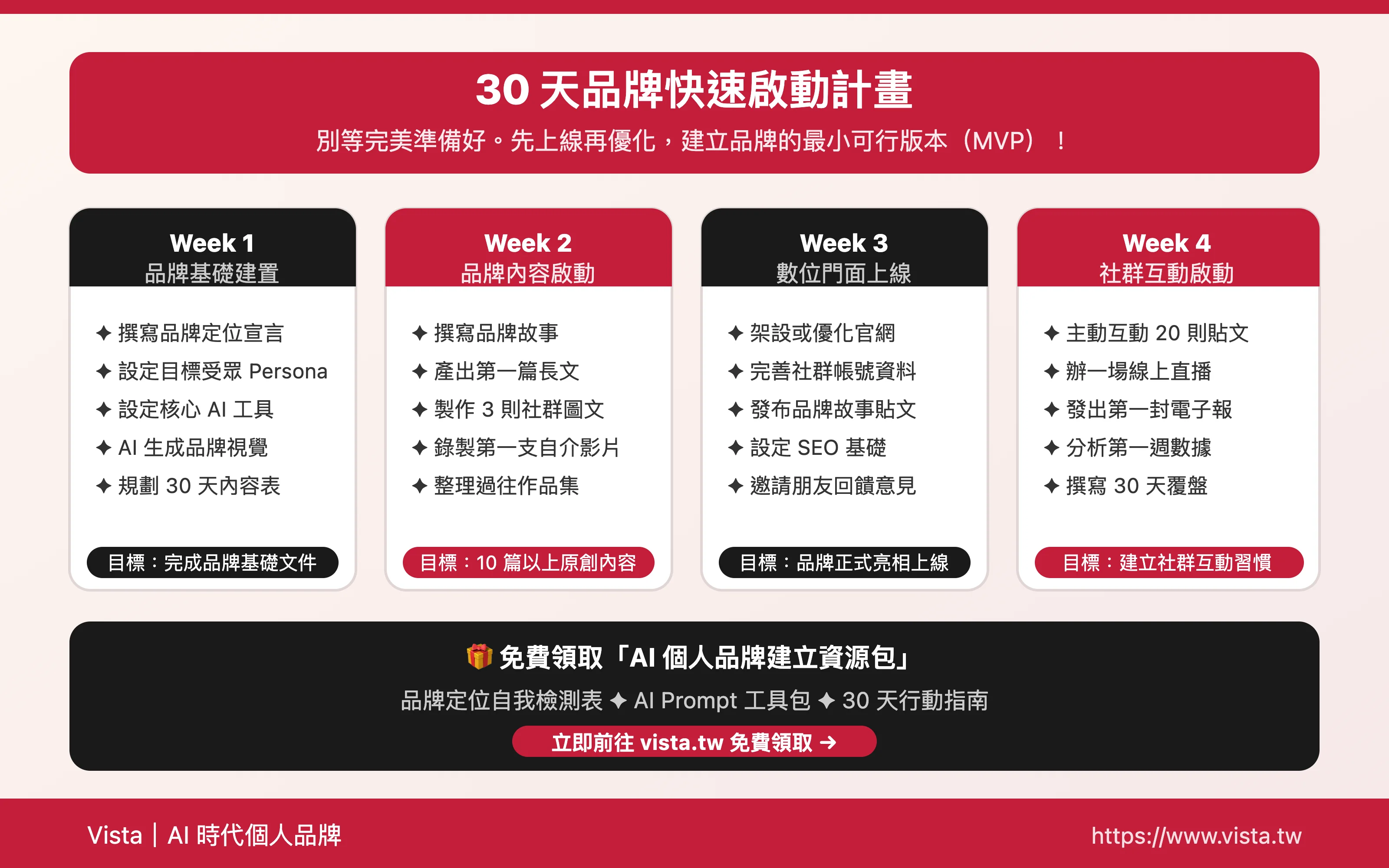 ▲ 30-Day Brand Quick Start Plan
I have prepared a great resource for everyone, which is the essence of my many years of courses and consulting work. It is specially designed for you who want to build a personal brand in the AI era. This 50-page resource includes a brand positioning self-checksheet, an AI personal branding prompt toolkit, and my 30-day brand jump-start action guide. Welcome to get it for free.
If you want systematic learning, I will soon launch a complete “Personal Brand Practical Course in the AI Era”. From positioning to content to monetization, seven modules will take you step by step through the entire brand building process. Each module has a theoretical framework, practical implementation of AI tools, and a list of actions that can be implemented immediately.
In this era where AI democratizes brand building, your brand is not about your skills, but how you think, filter and express your opinions. Ability can certainly be replicated by AI, but perspective cannot be replaced.
Now is the time for you to take action!
Further reading
- Why does AI-sensing content make people sick to their stomachs? Create an irreplaceable personal content style
- I use AI to build an entire content production line: let one article automatically turn into six outputs
- Stop waiting for engineers! Vibe Coding lets your ideas run today
- How to build a personal brand
External resources
- Guide to building a personal brand in the AI era (free download)
- Seth Godin’s Blog
- Kevin Kelly: 1,000 True Fans
- Edelman Trust Barometer