Read Wanweigang's "Humans Are More Dangerous than AI": Your micro-decisions are the key that AI cannot replace
I recently finished reading Wan Wei Gang’s new book “Humans are more fierce than AI: No matter how powerful the AI is, your micro-decisions are the key!” ”, the title of the book seems a bit provocative at first glance, but after reading it, I think this is the most sober book on the relationship between AI and humans in recent years.
Wanweigang is a popular science writer that I have followed for a long time. I have subscribed to the “Elite Daily Class” column he created on the “Get” App for several seasons. His specialty is that he can explain complex academic research clearly in plain language, and he can always put forward original viewpoints. This book continues his consistent style: neither selling anxiety nor being blindly optimistic, but calmly analyzing how humans should deal with themselves in the AI era.
What is “micro-decision-making”?
The core concept in the book is “micro-decisions”.
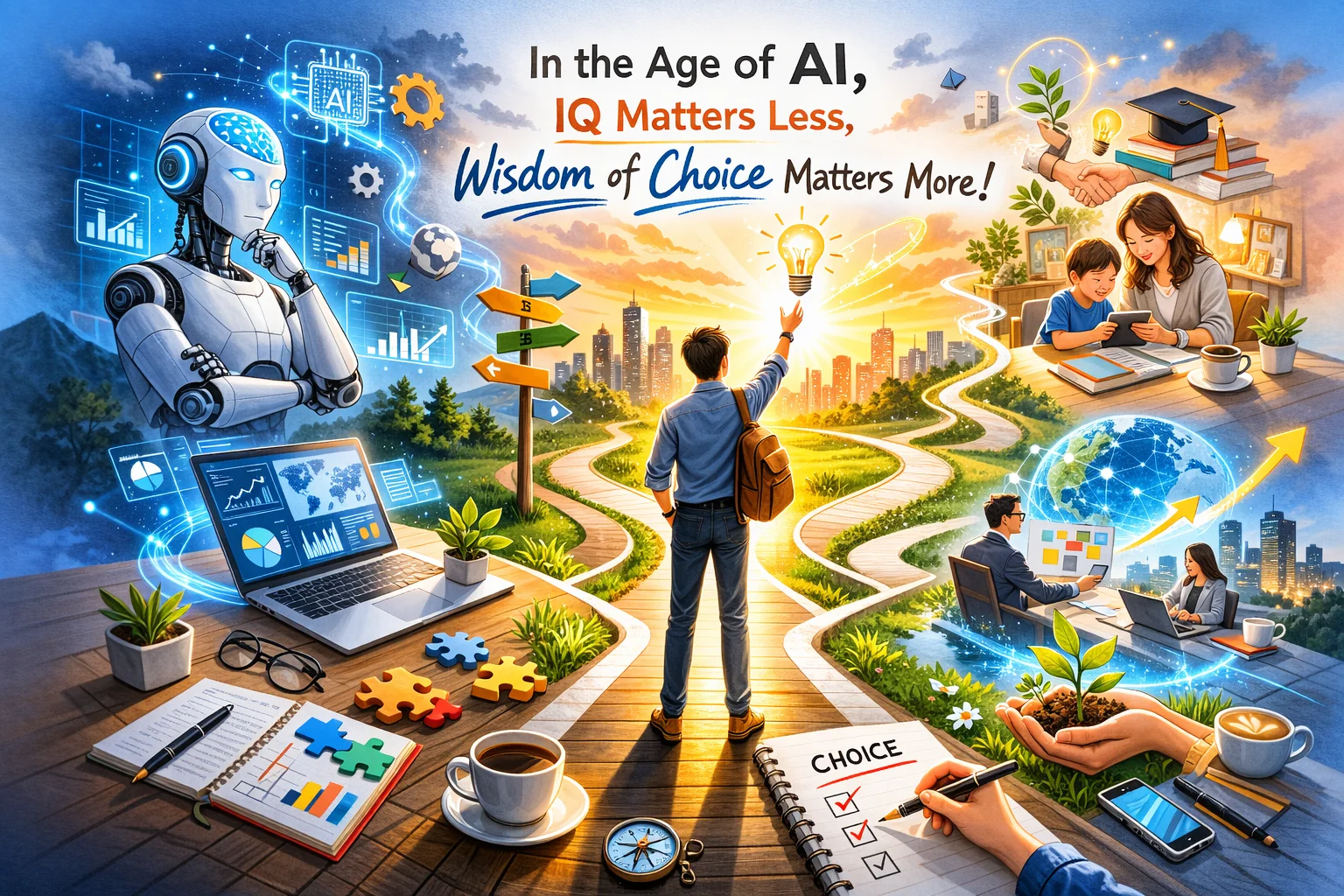
Wanweigang believes that the real value of people does not lie in who is smarter or faster than AI, but in the small decisions we make every day. Choosing what to focus on today, deciding what tone to use to reply to a letter, judging whether the opportunity in front of us is worth investing in - these seemingly trivial decisions constitute our unique life trajectory.
He quoted the French philosopher Derrida: “If a decision does not experience the torture of indecision, it will be just a routine operation.” Real decision-making inevitably involves risk and willfulness, which is exactly what AI cannot do. AI can give you the optimal solution based on data, but it cannot bear the weight of choice for you.
The stronger the AI becomes, the more important micro-decisions become.
This perspective reminds me of my own experience using AI tools over the past few years.
I use Claude to write articles, AI to organize materials, and AI to help me plan course outlines. These tools have really improved my productivity significantly. But the more I use it, the clearer one thing becomes: AI deals with “execution”, and I am responsible for “decision”.
It’s my job to decide what the core message of the article is. It is my job to decide which pain points of the students this course is going to solve. It is still my job to decide whether to take on this project and how to proceed.
Wanweigang said it well: “Every decision you make shapes you, and you shape the world through every decision.” AI can give you ten options, but in the end which button you press must be you.
The irreplaceability of people does not lie in their intelligence
Another argument in the book that impressed me is that the reason why people cannot be replaced by AI is not because we are smarter, but because we are “fragile and unique.”
It sounded like it was talking about human shortcomings, but Wanwei Steel interpreted it as an advantage. Precisely because humans are limited, fallible, and have emotions, we can create value that cannot be replicated by AI. An article written by an AI may have perfect logic, but lack warmth. The advice provided by an AI may be data-rich, but it may not understand your situation.
I often see this contrast in corporate training settings.
During a corporate internal training, I observed that the company’s employees have two extremes: one is that they don’t use AI tools at all, and the other is that they rely heavily on AI, hardly make any decisions, and outsource all their thinking to AI. Both kinds of people have problems. The former missed the opportunity to improve efficiency, while the latter turned himself into an AI executor and lost the most precious judgment.
In the past, when everyone heard the word “decision-making”, they felt that it was the exclusive domain of corporate executives or elites. As everyone knows, in the AI era, everyone should make micro-decisions in order to stand firm in this change.
After companies introduce AI tools, those employees who only follow the instructions are really affected. But people who know how to judge situations, can build relationships with customers, and make the right decisions at critical moments become more valuable.
From “doing things right” to “deciding what is right”
Wan Wei Gang proposed an important change in the book: the value of work in the AI era is shifting from “doing things right” to “deciding what is right.”
In the past, an employee’s value might be reflected in how quickly he could complete a report or how accurately he could perform a task. But when AI can do these things in seconds, the value at the execution level is compressed.
What replaces it is judgment—judgment about what to emphasize in this report, whether the task is worth doing, and whether now is the best time to take action. These judgments are micro-decisions.
I have made similar points in previous articles. Whether it’s How professionals can make good use of AI Agent or Let AI be your thinking partner, the core is the same thing: people should do what humans should do, and leave mechanical work to machines.
Three practical suggestions
After reading this book, I sorted out three directions that can be put into practice immediately:
1. Deliberately practice your micro-decisions
Don’t let AI make all the decisions for you. When AI gives you suggestions, first ask yourself: Is this really what I want? Do I have any other options? Developing decision-making muscles requires practice. The more you avoid making decisions, the more your judgment will atrophy.
2. Accept imperfect choices
The essence of micro-decision-making is to make choices amid uncertainty. No one can guarantee that every decision will be correct. Derhida quoted by Wanwei Steel is right - if a decision has no risks, then it is not a decision at all, just the execution of a procedure.
3. Treat AI as an amplifier, not a substitute
The best use of AI is to amplify your abilities rather than replace your thinking. Let AI help you collect information, organize options, and speed up execution, but leave the final judgment to yourself.
Conclusion: Humans are more dangerous than AI. Where is the evil?
After reading the whole book, I have a new understanding of the title. “Humans are worse than AI.” What is worse is not our computing power, nor our memory capacity. What is fierce is our courage to make decisions, be willing to bear the consequences, and move forward in uncertainty.
This book will not tell you what skills you should learn to fight AI, nor will it sell the anxiety of “transforming into an AI expert in three months.” What Wanweigang wants to say is something more fundamental: In the AI era, you have to become a better decision-maker, not a better executor.
If you are also thinking about how to live with AI, I recommend reading this book “Humans are worse than AI”. It won’t give you standard answers, but it will help you ask the right questions.