I want to "have sex" with you
[ ](https://blogger.googleusercontent.com/img/b/R29vZ2xl/AVvXsEgZGKIBnaWLyTa5YNfD9tsq6EQDnKfBpJ5LBfe0jDJSjL2fZ Bvf6xnOBIjYbgeg5LG_IBHaAf0O2HZU348Jkt28fGDevw4n0J5EvEyqtXK-hwT6UVOAN2mBL7aifNWoa_lOnKAEwpREW0Q/s1600/photo.jpg)
Want to have sex with me? Come to me.
Since 1850 AD, the retail industry has undergone three important transformation revolutions… From 1850 to 1950, demand was greater than supply. In the manufacturing-oriented era, as long as you make something, you will definitely sell it. Manufacturers and retail stores have pricing power, and consumers have few options. Due to imperfect infrastructure, the channels for purchasing goods are also very limited. This is the era of factory modernization (production line concept), the rise of mail order and department stores.
From 1950 to 2000, supply gradually exceeded demand. Due to mass production and the birth of the middle class, the concepts of mass market and mass marketing emerged. This was a market-oriented period and the golden age of the marketing and advertising industry. Many large advertising companies such as Ogilvy and Mather, JWT, etc. emerged at this time. A large number of new brands appeared in various industries, and consumers’ basic needs were gradually satisfied. Marketers began to “create demand” through mass media such as television, newspapers, and radio to induce consumers to buy more goods.
And now comes the most important and drastic change in retail history.
After 2000, supply far exceeded demand. The emergence of Internet technology has made the information gap between supply and demand smaller than ever before. Consumers even have more information than retailers. In 1980, there were only six large jeans brands. Now it is estimated that there are more than 800. Hundreds of millions of brands and products can be delivered to you at your fingertips. Sales channels have also grown explosively, including mass merchandisers, shopping malls, supermarkets, brand chain stores, convenience stores, department stores, mail order, TV shopping, online shopping, mobile shopping, pyramid schemes, direct sales… You can get any brand and any product almost anytime, anywhere, with any payment method and purchase method you like. Consumers use online services to obtain vertical (company information, product parts, various price comparison methods…) and horizontal (introductions from relatives and friends, word-of-mouth from Internet users, strangers’ experience…) information that exceeds the imagination of enterprises.
Before 2000 AD, we used mass marketing to create demand and get consumers to go into stores and make purchases. After the year 2000, we must enter consumers’ homes, we must be close to consumers, and let our products or services appear around consumers anytime, anywhere.
Simply creating demand is outdated. All consumer needs have been 100% filled. What consumers now buy is not things or services. What they want is a comprehensive experience. This is an era when consumers dominate the market, and we must… “have a relationship” with consumers.
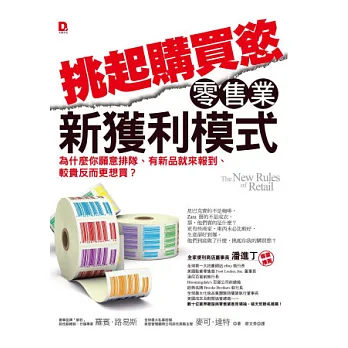
According to the retail business rules stated in the book “Instigating the Desire to Buy, a New Profit Model for Retail Pages” written by Robin Lewis and Mike Dart:
-
Neural connection: You must connect with consumers in all aspects. Simply put, what do consumers like about you? It does not refer to a specific connection but a spiritual connection. For example, what do you think of when you mention Zara? How do you feel about shopping at Zara? What do you think others will think of you? I think you will never think about the material of Zara’s clothes, right?
-
Preemptive marketing: Whenever and wherever consumers think of you, they can obtain your goods or services. Consumers are the center of all commercial activities, not your store or website. You must appear faster and closer to consumers than your competitors, and bring your goods or services into consumers’ life circles and into the communities where consumers live.
-
Control the value chain: Your goods or services must be controllable over the entire value chain from raw materials, manufacturing to marketing, channels, and stores. It does not require you to vertically integrate the supply chain, but you must be able to effectively control the entire value chain. Nowadays, even whether the process of producing goods is environmentally friendly, and even your attitude towards employees will be one of the considerations for whether consumers are willing to buy.
All goods or services are no longer “necessities”. In reality, every consumer makes a choice at the “margin”, that is, between more and less or less and more. This means that everything is substitutable at the margin. Economics Friedman mentioned in his book “Price Theory” that everyone can spend less on something in exchange for spending more on other things to make themselves better off.
“On the margin, everything is equally necessary and equally superfluous. 』
When a consumer buys an Iphone5s in order to save money, he reduces the consumption of one cup of coffee a day. Then Starbucks’s competitor will not only be 85℃ next door, but Apple will also be its competitor.
How can we win in this 360° all-round competition?
The answer is to segment the market based on consumers’ values and life attitudes.
In the past, we would target a certain group of consumers and use marketing tools to reach them and influence them. Now we will divide consumers into dozens or hundreds of communities based on their lifestyles, and look at consumers from the perspective of a large number of customized markets. This means that we no longer treat a certain group of people as target customers just because they have the habit of drinking coffee. Instead, we will classify them into mothers who get up early because they have to prepare breakfast, mothers who live a tight life and are often late They all drink coffee, but the time, place, motivation, and purpose of drinking are different. The reason is that they have their own lives and belong to their own social circles. If you only sell coffee to the so-called coffee-drinking group, but do not create different marketing, products, and contact methods according to their respective lives, then you can only hope that God will bless you.
The marketing method I recommend here is “micro-marketing”, which means that while the core of your brand remains unchanged, you must have different faces when facing consumers with various lifestyles. Consumers, now you have to use ten different marketing methods to target consumers with ten different lifestyles, and make good use of the power of technology, such as the Internet, mobile, social, localized technology, portable electronic devices, interactive electronic signage, cross-industry integrated data, cloud computing, etc., to have a comprehensive relationship with consumers.
Bibliography: “Stirring up the desire to buy, a new profit model for retail pages”, written by Robin Lewis and McDart
https://www.books.com.tw/products/0010596830
 Business Weekly Issue 1290
Written by: Lin Wenjie
Further reading
- When red bean cake meets social marketing: How small businesses use Facebook and LINE@ to promote
- Marketing is an organic creation: looking at marketing through antifragility
- How to detonate a pop? Manipulate choice?
📖 深入探索相關主題