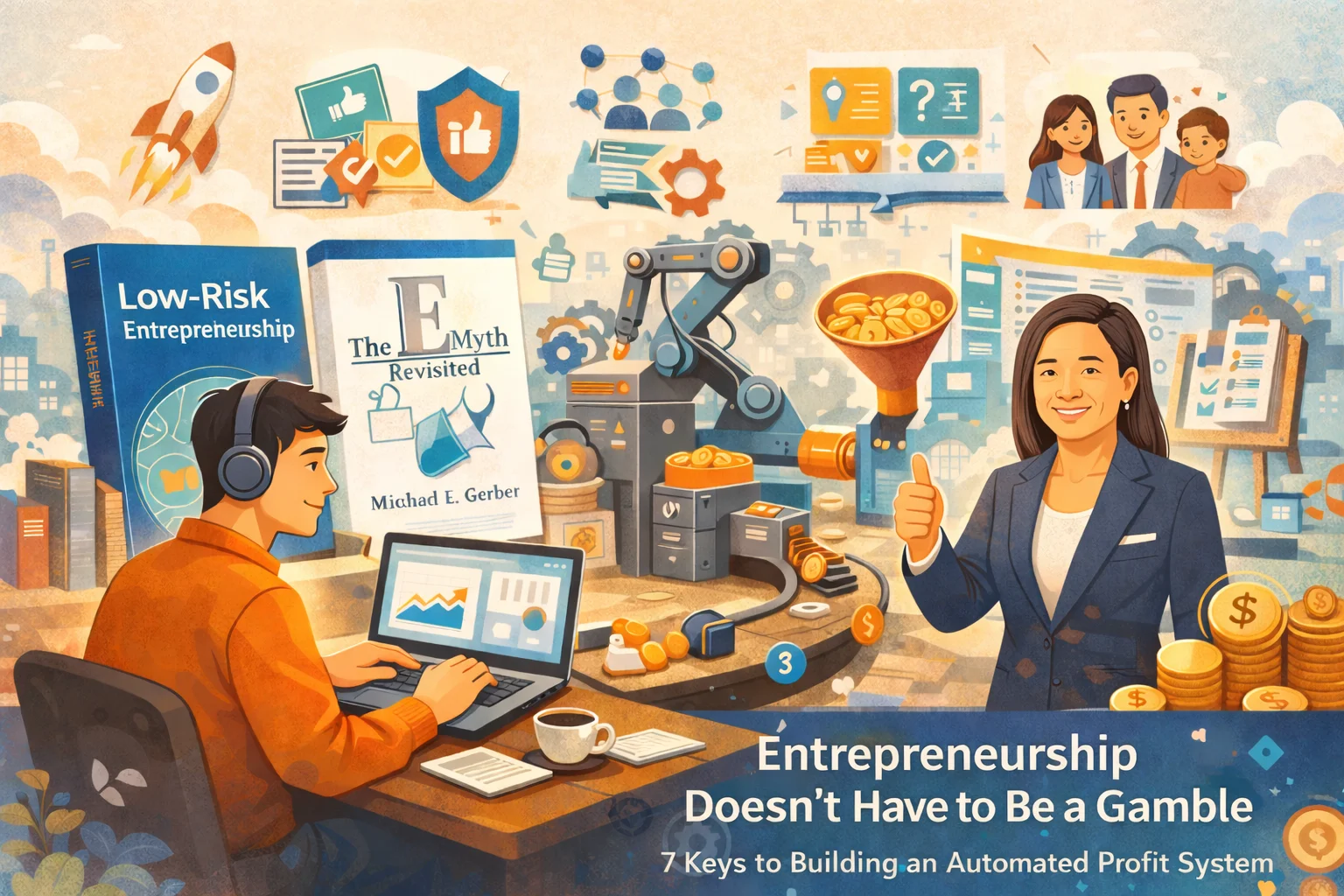
You don’t have to risk your life to start a business: Learn the seven keys to building an automatic profit system from two sacred books
Recently I watched a video shot by Zhang Xiuxiu. He combined “<a href=“https://www.books.com.tw/exep/assp.php/vista/products/0010861608?utm_source=vista&utm_medium=ap-books&utm_content=recommend&utm_campaign=ap-202602” target=“_blank” rel=“noopener” by Fan Deng noreferrer”>Low-risk entrepreneurship”, Michael Gerber’s href=“https://www.books.com.tw/exep/assp.php/vista/products/0010874896?utm_source=vista&utm_medium=ap-books&utm_content=recommend&utm_campaign=ap-202602” target=“_blank” rel=“noopener noreferrer”>The path of entrepreneurship》(The E-Myth Revisited), as well as the practical experience of the legendary entrepreneur Mr. Lin Mingzhang (MJ), who once turned over tens of millions of debts and achieved revenue of over 100 million, compiled the seven steps to start a business. This video touched a lot of my thinking, not only because of its solid content, but also because several of its viewpoints accurately echoed my real experience of being torn between being a corporate consultant, lecturer, and creator over the past decade.
I want to use my own perspective to review the inspiration this video brought me. This is not just a video note, but also my in-depth reflection on how knowledge workers should build sustainable careers.
First tear down the three walls in your mind
At the beginning of the film, Zhang Xiuxiu directly addresses three major entrepreneurial myths. To be honest, many people have bumped into these three walls, and their heads were badly bruised.
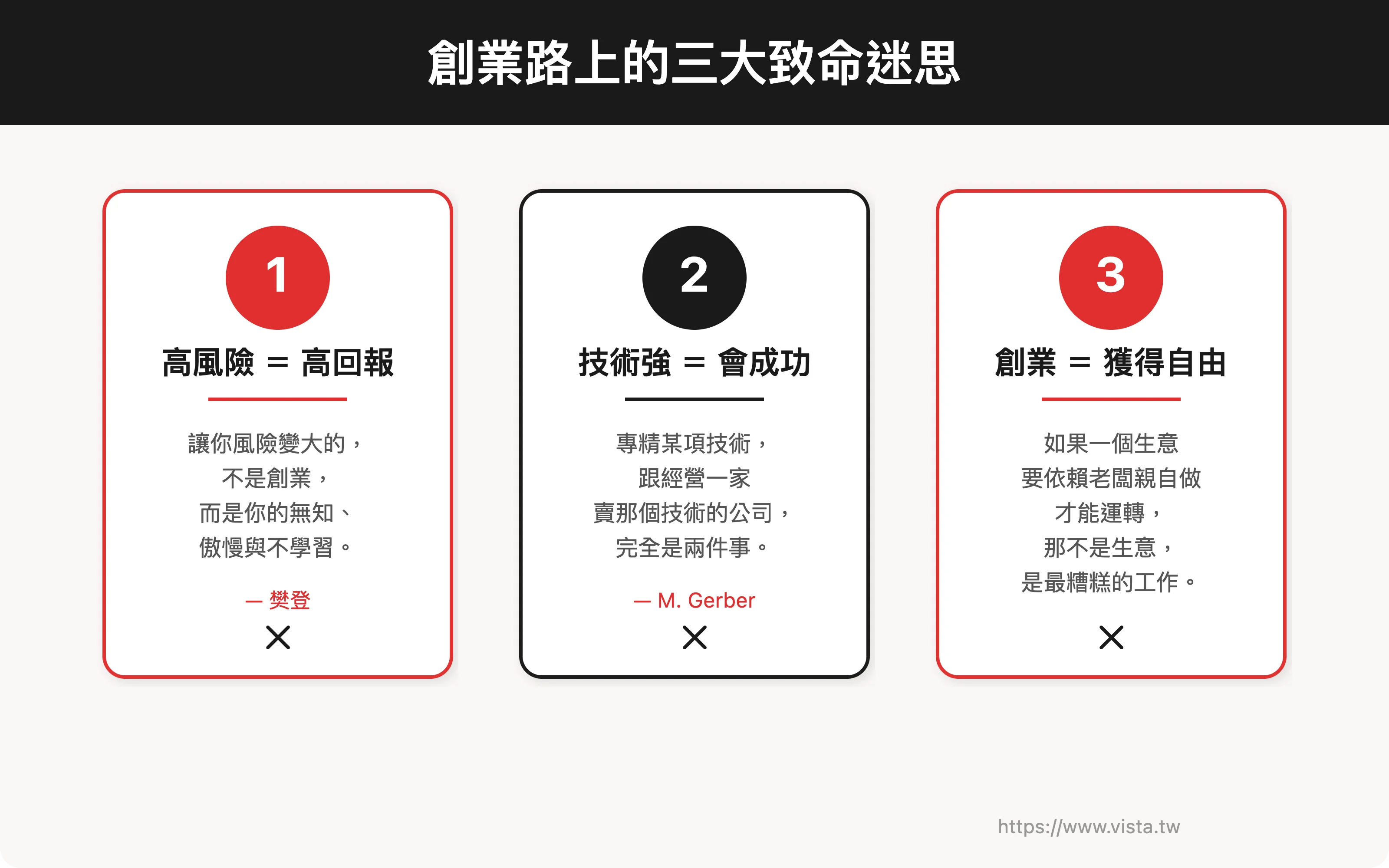 ▲ How many of the three most common fatal myths on the road to entrepreneurship have you fallen into?
The first wall: high risk leads to high reward
Fan Deng quoted Li Ka-shing in the book - “I have never taken any risks in starting a business in my life. Because I have figured out that industry a long time ago.” This sentence may sound a bit arrogant at first, but it actually reveals a truth that is ignored by most people: risks are directly proportional to returns, which is an iron law for people who have not done their homework; for those who have really worked hard, the correlation between risks and returns is actually not great.
When I teach AI application and digital content strategy at the university, I often emphasize a concept with my students: “If you think a certain field is very risky, it’s often not because the field itself is dangerous, but because your knowledge of it is not deep enough.” This is exactly what Fan Deng said. We are always misled by the dramatic entrepreneurial stories played out by the media—dropping out of school to found Microsoft, selling a house in a desperate move—but forget that Bill Gates had already accumulated top-notch technical capabilities and sold his products before dropping out of school.
What makes your risk greater is not entrepreneurship itself, but your ignorance, arrogance and lack of learning.
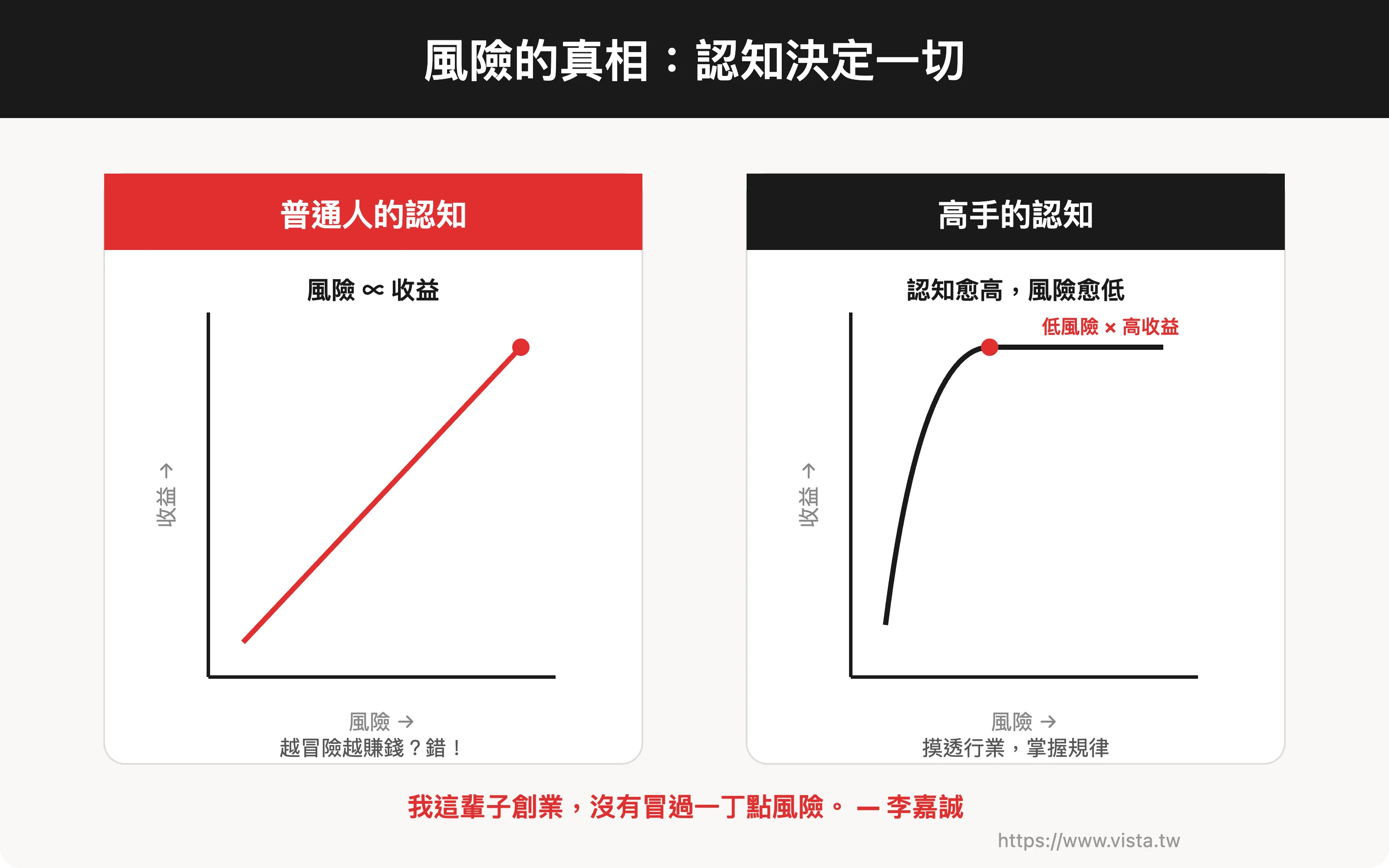 ▲ The size of the risk often depends on your depth of knowledge in the field
The second wall: If you are technically strong enough, you will definitely succeed.
Michael Gerber in “<a href=“https://www.books.com.tw/exep/assp.php/vista/products/0010874896?utm_source=vista&utm_medium=ap-books&utm_content=recommend&utm_campaign=ap-202602” target=“_blank” rel=“noopener The book “noreferrer”>The Road to Entrepreneurship” dismantles this myth very thoroughly. A master who is good at baking bread may not necessarily succeed in opening a bakery, because making bread and running a company that sells bread are two completely different things. This insight is especially important for knowledge workers: no matter how strong your expertise is, if you only stay at the stage of a technician and do not develop an entrepreneurial perspective, you will eventually exhaust yourself to death.
To put it bluntly, I am the best negative teaching material. When I was working as a content marketing consultant in my early years, I thought that as long as I wrote well enough and taught deeply enough, my career would grow naturally. The result? I became that super employee who had to do everything by himself, rather than a real business operator.
The third wall: Entrepreneurship can give you freedom
Michael Gerber’s words made me gasp in admiration: “If a business relies on the boss to do it himself, then it is not a business, it is the worst job in the world. Because you are working for a madman: this madman requires you not to rest 365 days a year, and makes you do a lot of things that you are not good at, and even does not pay you at the beginning.” Then, think about it, this madman is you. I believe that many friends who are engaged in self-media and personal brand will feel sad after reading this.
If your business can’t run without you, then you don’t have a business, you have the worst job in the world.
The systematic thinking behind the seven steps
After watching the three major myths, the film gets to the real core, which is the seven steps of starting a business. I think these seven steps are powerful not just because they each make sense, but because they form a complete system. This coincides with the systematic thinking I have been promoting: entrepreneurship is not a series of scattered decisions, but an interlocking organism.
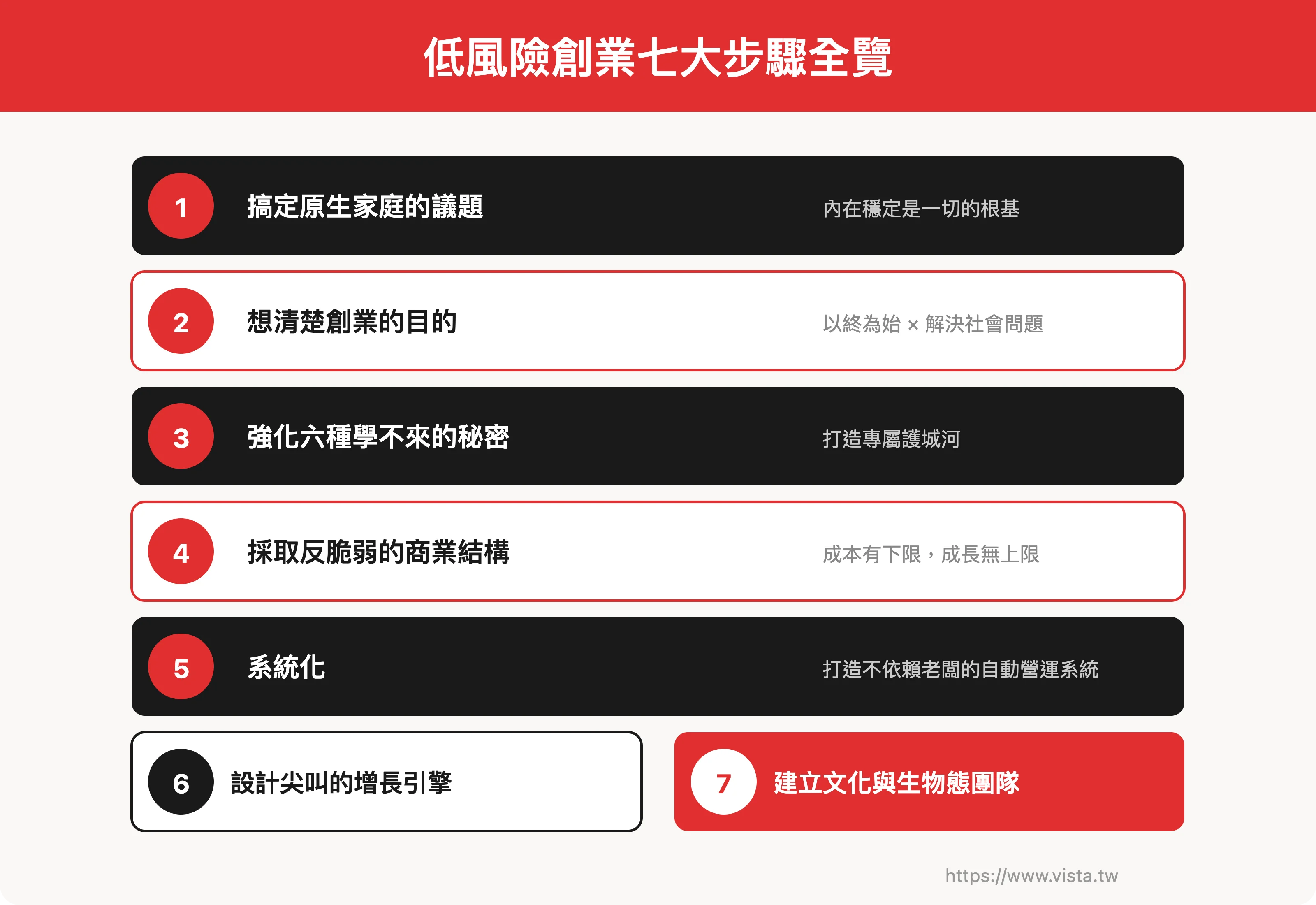 ▲ An overview of the seven steps of low-risk entrepreneurship: from figuring yourself out to building a team culture
The first step: resolve the issue of the original family
This is a point of view that I have never seen in any entrepreneurial books, but it is the one that shocked me the most. Fan Deng pointed out that when the company is running smoothly, many entrepreneurs will unconsciously make risky investments and put the company in danger, and even feel proud of it; or they may work hard until their bodies are broken even though they have made more money than they can spend in a lifetime. The common denominator behind this is that these people all had a bad childhood. They all encountered deprivation, turmoil, being beaten and scolded, or abandoned.
This passage resonates deeply with me. In the process of coaching companies, I did observe a phenomenon: the biggest bottleneck for many small and medium-sized enterprise owners is not market strategy or product strength, but their inner fear of success. When some people are about to break through, they will sabotage themselves inexplicably and find various reasons to give up. This is not a problem of ability, but of the underlying psychological code at work.
As someone who has studied knowledge realization systems for a long time, I must say: If you are internally unstable, no matter how good the business model is, you will not be able to sustain it. This is the foundation of entrepreneurship, bar none.
The biggest risk in starting a business is not in the market, but in your own heart.
Step 2: Think clearly about the purpose of starting a business - two must-ask questions
The two questions raised by Fan Deng are worthy of repeated consideration by every knowledge worker.
The first question: What kind of life do you want to live? Naval Ravikant in “The Navarre Book” said that when a person is in a state of doing whatever he wants, he will learn and create most efficiently and has the greatest chance of success. This means that your career design must serve your ideal lifestyle, not the other way around. If you want freedom, you can’t start a company where you have to manage hundreds of people.
Second question: How do you elegantly solve a major social problem? Fan Deng himself is the best case. What he wants to solve is the problem that most people have no reading habits, and his elegant solution is to read 50 books a year to members.就这么简单的模式,做到年营收超过 10 亿人民币、付费会员超过 1,000 万人。
I like the adjective “elegant” very much. In the AI era, I think what knowledge workers should pursue most is not a complex business model, but finding an elegant solution - solving the biggest pain points with the smallest complexity. The Google homepage is still so clean after almost 30 years, this is elegance.
Your career design must serve your ideal lifestyle, not the other way around.
Step 3: Create six types of moats that others cannot learn from
Fan Deng summarized six secrets, namely: resources, technology, operational capabilities, brand reputation, price and users. I want to talk specifically about this dimension of users. Kevin Kelly’s concept of “1000 True Fans” is the underlying logic that I mention repeatedly in every speech and class. It means that you don’t need everyone to know you, you just need to cultivate a thousand true fans who are willing to continue to pay to support you.
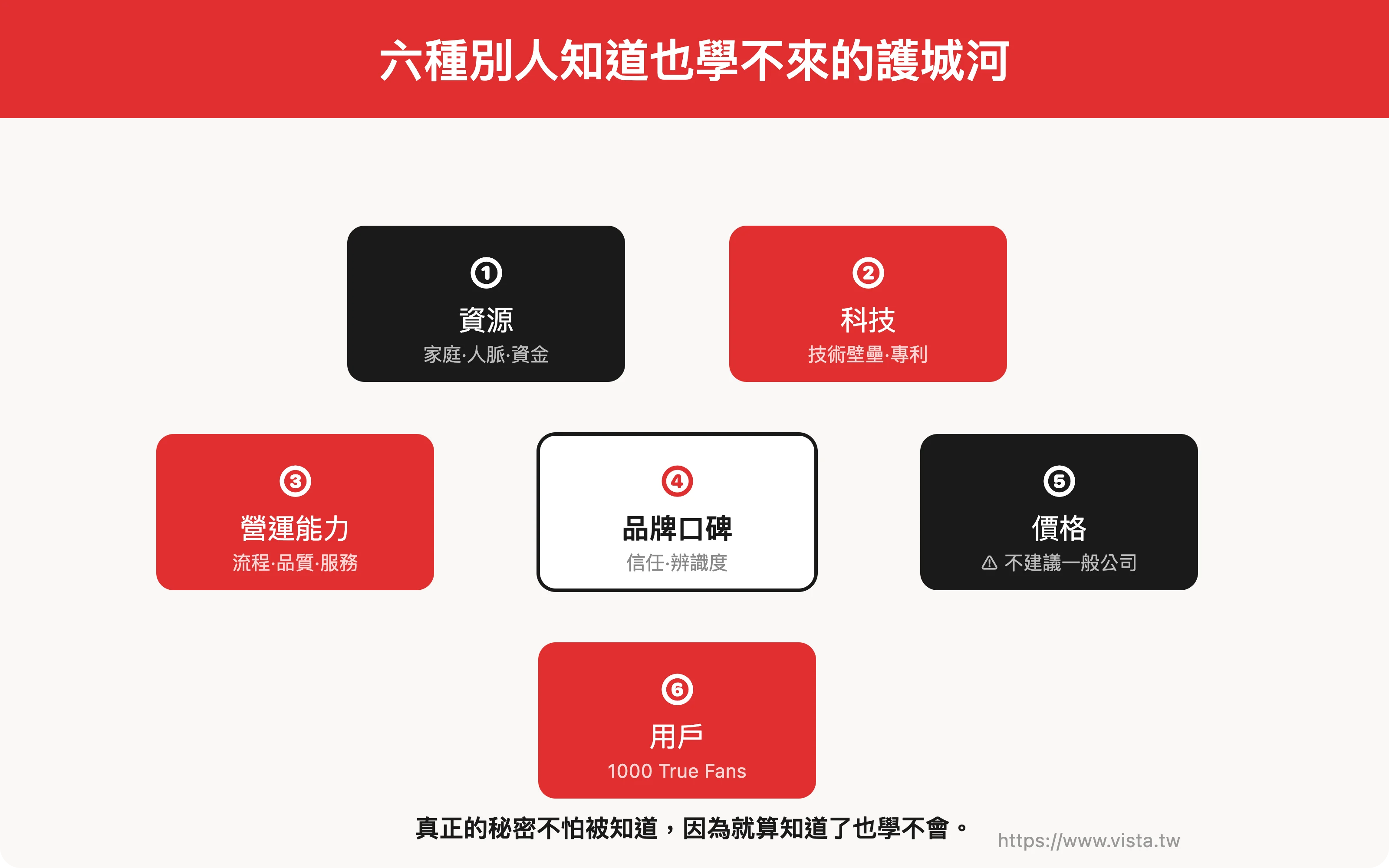 ▲ Six types of moats: For knowledge workers, brand reputation and users are the two most worthy of priority investment.
For knowledge workers, among these six moats, brand reputation and users should be the most priority to invest in. Because resources and technology often require large amounts of capital, price wars are the point of no return. But brands and users can be accumulated bit by bit through continuous high-quality content production. Having said that, this is the most essential power of content marketing.
Step 4: Adopt an antifragile business structure
“Never quit your job and borrow money to start a business, you will definitely fail.” Fan Deng’s words are categorical. I was reading his “<a I was deeply impressed by this book. His logic is clear: only in a stable state can people make high-quality decisions. A strong man breaking his wrist sounds very passionate, but the brain is under long-term survival pressure, with high cortisol concentration, narrow vision, and mood swings. How can it make good judgments?
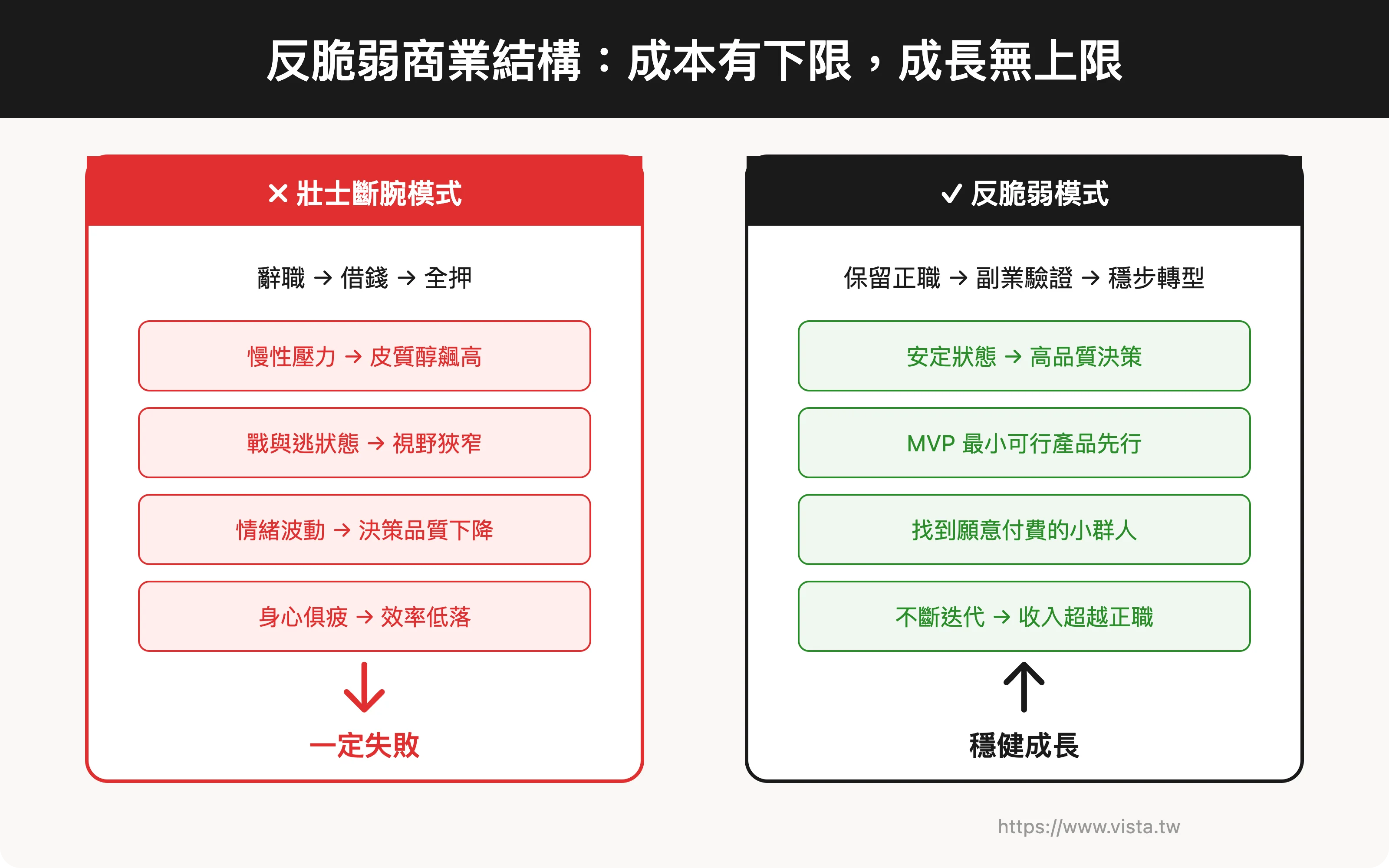 ▲ The core logic of antifragility: there is a lower limit to cost and no upper limit to growth
In my opinion, MJ teacher’s personal experience is even more exciting. He and his partners pooled 72 million yuan to start a business, but set a clear stop-loss mechanism: burn 10 million yuan a year, and stop if they can’t produce a reasonable business model in seven years. As a result, it burned nearly 30 million in the first two years, and started to make money in the third year. This is the anti-fragile structure of “cost has a lower limit and growth has no upper limit”.
For knowledge workers like us, the practice of antifragility is more straightforward: keep your day job or a stable source of income, use your off-duty time to build a minimum viable product (MVP), find a small group of people on the Internet who are willing to pay, and then iterate. Wait until the income from your side job stably exceeds that of your full-time job before you consider investing in it full-time. This is not cowardice, this is smart. If you are interested in the practical method of low-risk side-hustle, I recommend you to read this article that I wrote before.
Never quit your job and borrow money to start a business. This is not cowardice, this is smart.
Step 5: Systematize – Create a career engine that does not depend on you
This is “Entrepreneurship” is also the most critical step for knowledge workers in my opinion. Michael Gerber puts it very clearly: Even if you are not selling your company, run it as if you are selling it to someone else.
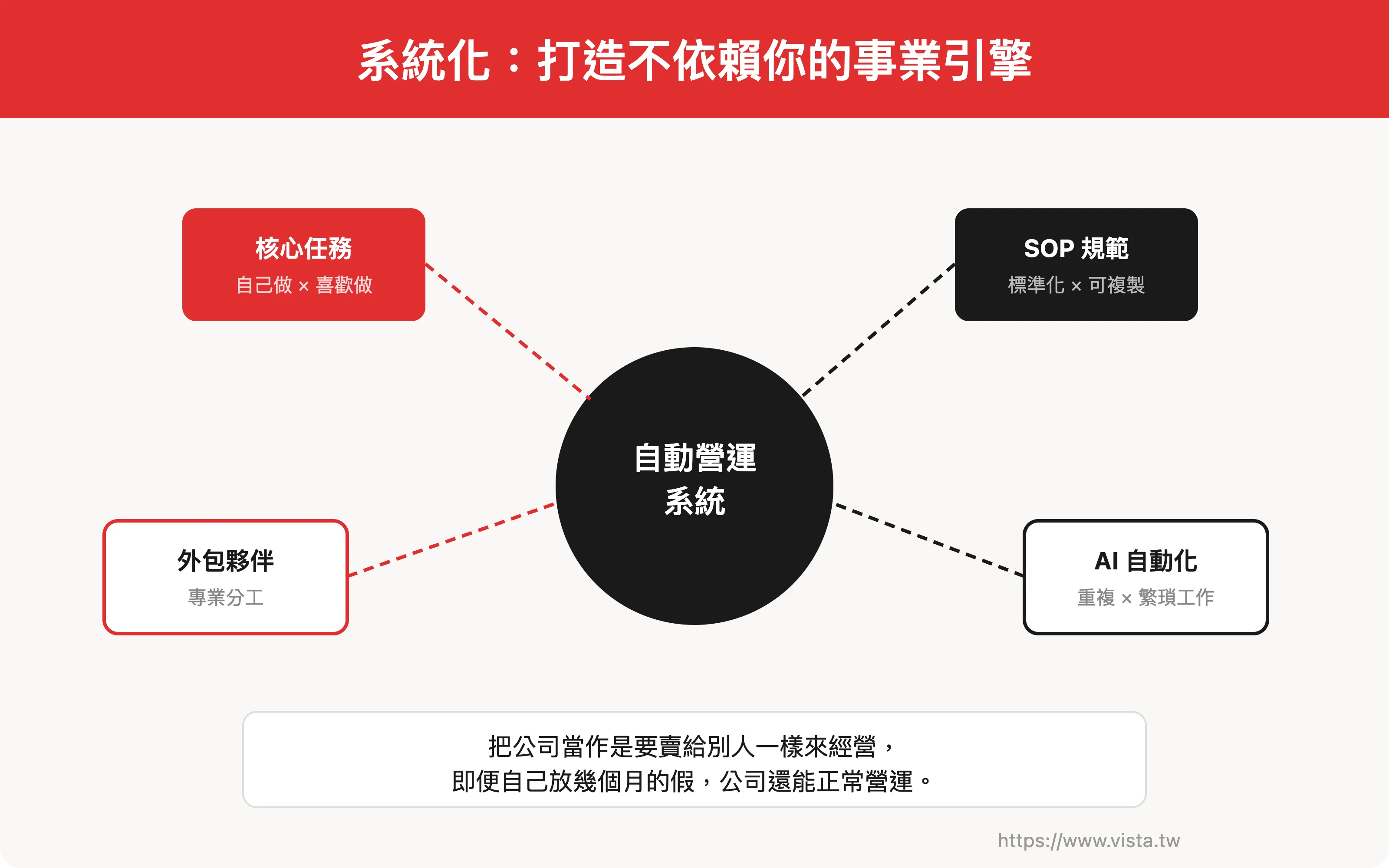 ▲ The key to systematization: identify core tasks and leave everything else to SOP and AI
What does this mean? You have to identify the core tasks you can and enjoy doing, and then systematize everything else—create SOPs, hand them over to partners, or outsource them. Today, with the rapid advancement of AI tools, the threshold for this systemization has been significantly lowered. Content production, customer service responses, data analysis, marketing placement…many tedious and highly repetitive tasks can now be handled by AI.
I often tell students: “AI is not here to replace you, AI is here to help you systematize.” The more your career relies on the AI system rather than your personal labor, the closer you are to true freedom. If you want to see how I use AI to build an entire content production line, you can refer to this complete teardown.
AI is not here to replace you, AI is here to help you systematize.
💡 **Want to experience the complete process of using AI to build digital products from scratch? **
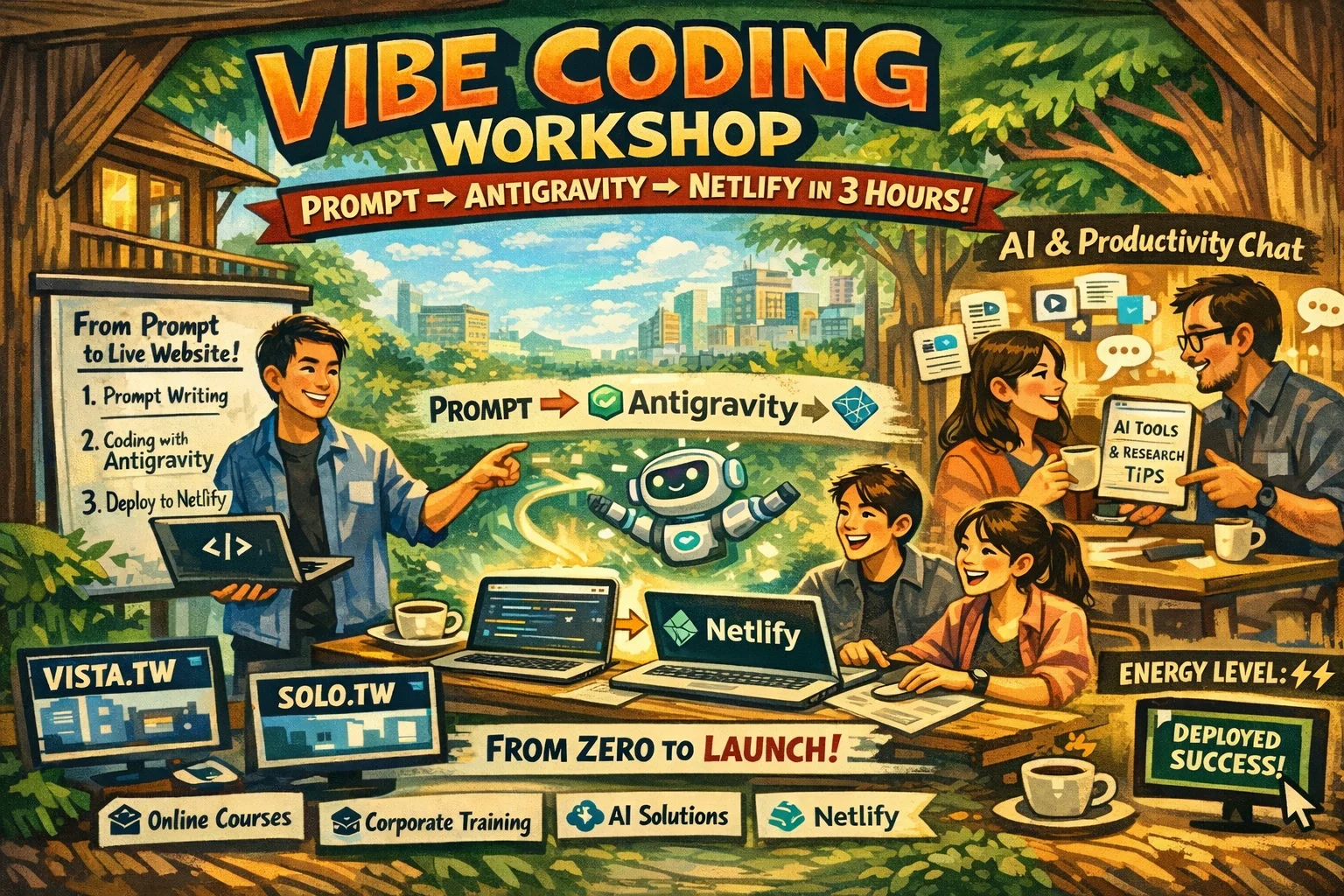
I have opened a Vibe Coding Practical Workshop, which will take you to use AI to turn the idea in your mind into a truly online work within 3 hours. There is no need for any programming foundation, as long as you bring your professional knowledge, you can feel the power of “one person is a team”.
Step 6: Design a growth engine that makes customers scream
“It is better to let a hundred people scream for you than to let a hundred thousand people think you are good.” This sentence deserves to be engraved on every entrepreneur’s desk.
 ▲ The power of word-of-mouth marketing: Let customers take the initiative to speak for you, which is more effective than any advertisement
Teacher MJ’s GA Golden Armor brand takes this concept to the extreme. He shared an impressive case: a customer just bought more than 40,000 products, and the next day was the annual anniversary celebration with a 13% discount. The customer service team proactively refunded the difference to the customer and called to inform them. As a result, that customer placed an order of hundreds of thousands more the next day. This is the power of word-of-mouth marketing!
The secret of word-of-mouth marketing does not lie in how fancy your marketing is, but in whether you can truly make customers say, “This is too exaggerated, how could such a company exist?” Five key questions for the bottom half of the funnel from teacher MJ – What do you like about me? What don’t you like? What would you do if you were me? What were the key words when you introduced me? What problem did you solve with my stuff? ——These five questions are extremely simple, but they correspond to the core logic of the entire management, marketing, brand and business.
Instead of having 100,000 people think you are good, let 100 people scream for you.
Step 7: Establish company culture and build a bioecological team
This is the biggest point of difference between the two books, and it’s also the passage in the film that made me think the most. Michael Gerber advocates building the company into a system that can be easily copied like McDonald’s, with complete SOPs for each position so that even low-skilled employees can quickly integrate. But Fan Deng believes that this kind of management that treats people as machines is outdated. He proposed the concept of a bioecological team: giving employees only a few core values, and then giving them room for growth and trial and error, allowing the team to iterate itself like the ecosystem of nature.
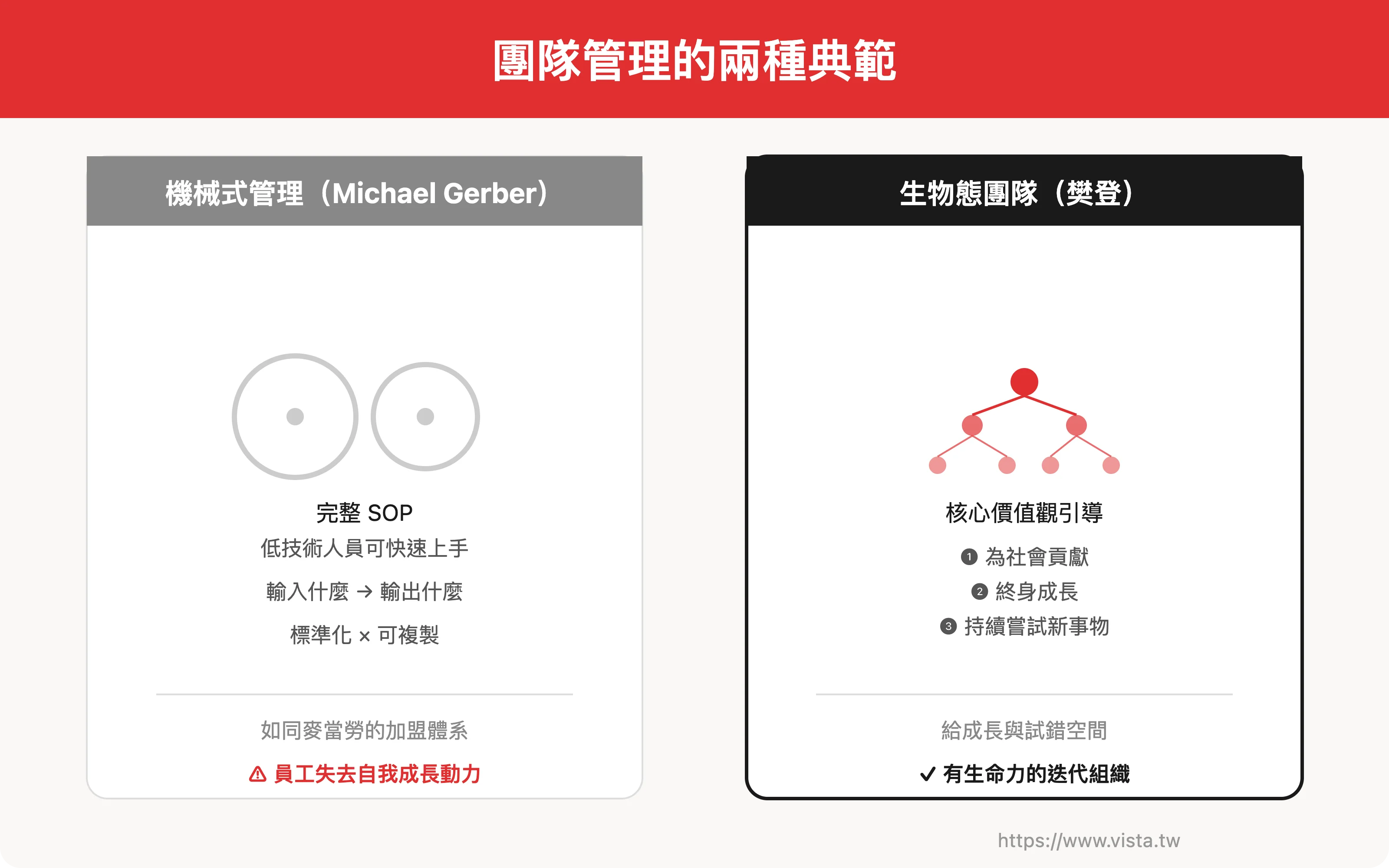 ▲ Mechanical management vs. biological team: two completely different management philosophies
The most powerful thing about Mr. MJ is that he combines the best of both worlds. He has a clear cultural DNA—doing the right thing, always thinking two steps, delivering WOW service—but also giving the team a lot of room for trial and error. His customer service team has a rule: “Never sell anything.” If you violate it, you will be fired. As a result, the first thing the customer service said when they called me was: “Our boss said we can’t sell anything, otherwise I’ll be fired.” As soon as the customer heard this, they let go of their guard and were willing to chat and reciprocate. This is the most valuable source of intelligence in the lower half of the funnel.
This reminds me that in the field of paid knowledge, the essence of community management is actually a kind of ecological team. Your students, members and readers are not customers you manage, but ecological partners who grow with you. You give them values and direction, allowing them to naturally develop connections and value in the community.
A one-man company in the AI era is no longer a fantasy
Now with the help of AI, as long as you master the basic logic of entrepreneurship, it is no longer a fantasy to set up a one-person company that can make you rich and free as soon as possible.
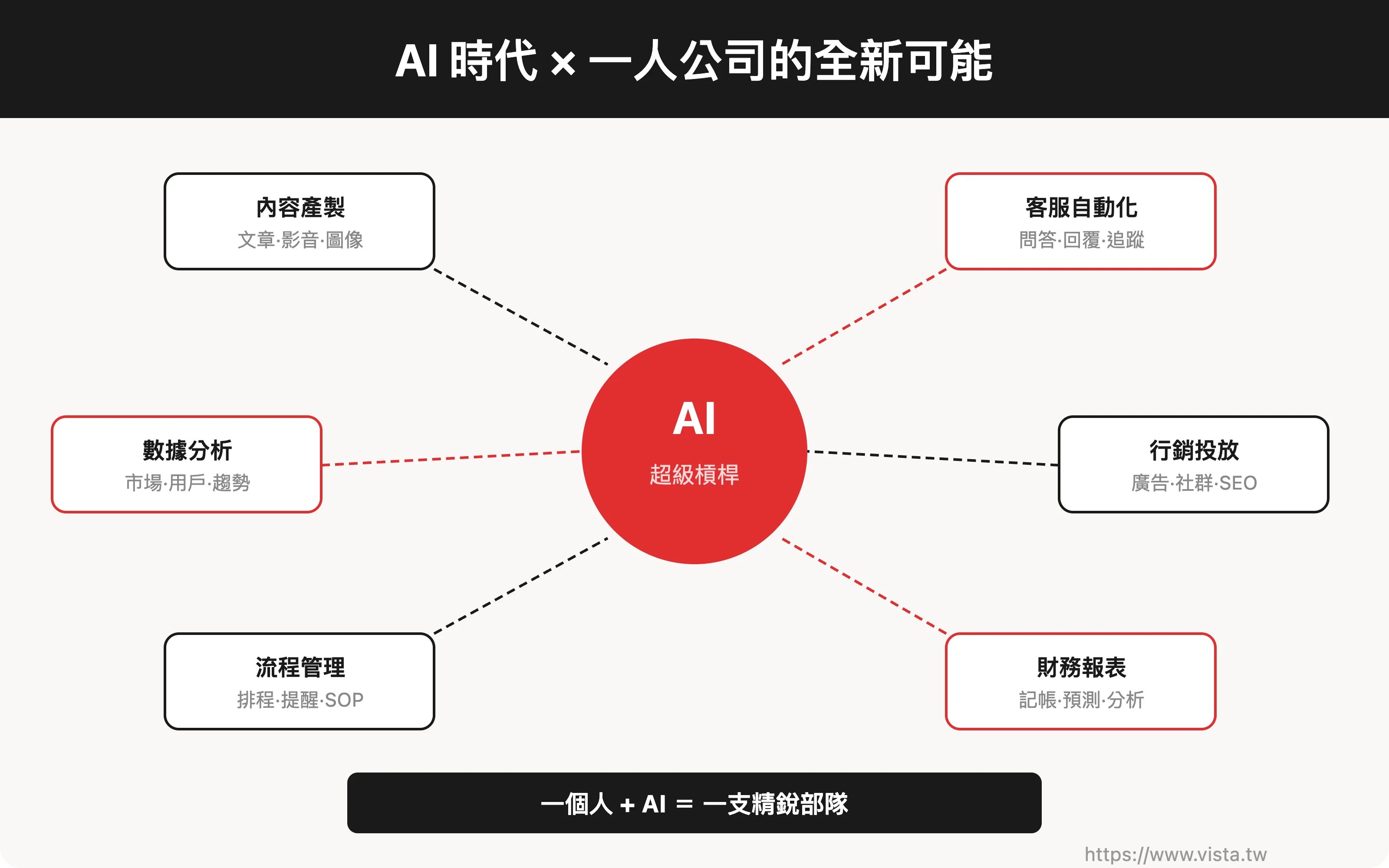 ▲ One-person company in the AI era: Individuals can also have the efficiency of the enterprise and personal freedom at the same time
I completely agree, and I will go one step further: The one-person company in the AI era may be the first time in human history that individuals have the opportunity to have the efficiency of a business and the freedom of the individual at the same time. In the past, to achieve systematization and automation, you needed to hire people, capital, and management. Now you add one person to the AI, and you have an elite force. This is why I think Claude Code is not just a tool for engineers, it is an all-round career accelerator for knowledge workers.
But - I want to emphasize the word “but” - AI is just a tool, it amplifies what you already have. If your business logic is unclear, AI will only help you go in the wrong direction faster. If you are internally unstable, no amount of efficiency that AI can give you can fill that psychological black hole. This is consistent with what I said before in Cognitive gap is the real wealth code: No matter how powerful the tool is, cognitive level is the key to victory or defeat.
So, back to the core of these seven steps: fix yourself first, then fix the system. Think clearly about the purpose first, then pursue efficiency. First make a hundred people scream, and then talk about scale.
AI is just a tool, it amplifies what you already have. Cognitive level is the key to winning or losing.
Written at the end: For everyone who wants to use knowledge to change the world
After watching this video, my deepest feeling is not the strategies or methodologies, but a more fundamental realization: entrepreneurship is a set of skills that can be learned.
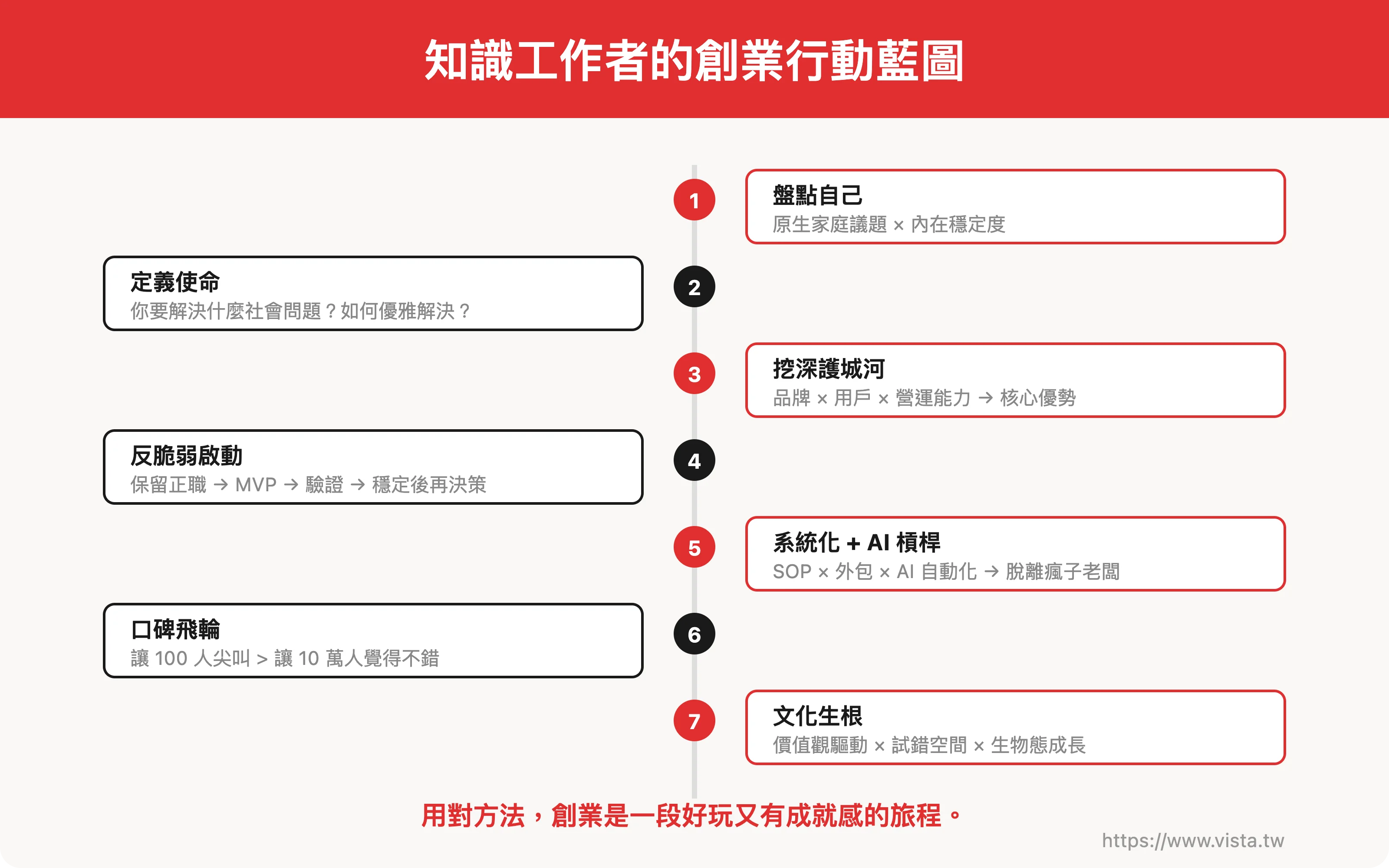 ▲ Entrepreneurship Action Blueprint for Knowledge Workers: You Already Have the Materials to Build a Good Business
Not only geniuses can start a business, not only those who dare to gamble can succeed, nor only those who were born with a silver spoon in their mouths are qualified to try. Fan Deng spent a year reading 50 books to build a knowledge empire. The tools he used were not fancy at all, and his app interface was extremely simple, but his business model was extremely elegant.
▲ Entrepreneurship Action Blueprint for Knowledge Workers: You Already Have the Materials to Build a Good Business
Not only geniuses can start a business, not only those who dare to gamble can succeed, nor only those who were born with a silver spoon in their mouths are qualified to try. Fan Deng spent a year reading 50 books to build a knowledge empire. The tools he used were not fancy at all, and his app interface was extremely simple, but his business model was extremely elegant.
I want to tell you who are reading this article: If you are a knowledge worker with expertise, ideas, and passion, you already have the ingredients to build a good career. What you lack is not the courage to take a gamble, but a systematic method that allows you to step by step turn these raw materials into a profit engine that can truly operate automatically under the premise of low risk.
As Zhang Xiuxiu said: “With the right method, starting a business can really be a fun and fulfilling journey.” As long as you continue to learn, try and iterate, time will be on your side. In the new year, let’s work hard together!
Entrepreneurship is a set of skills that can be learned. What you lack is not courage, but a systematic approach.
Extended reading:
- Low-risk-slash-freedom: From the lessons of blood and tears of starting a business naked to the practical wisdom of smart trial and error
- Stop chasing tools! Build your own “unbeatable system” in the AI era
- I use AI to build an entire content production line: let one article automatically turn into six outputs
- Claude Code is not just a tool for engineers: five practical uses that amaze knowledge workers
- Cognitive gap is the real wealth code
External Resources:
- “Low Risk Entrepreneurship” - Fan Deng
- “The Road to Entrepreneurship” - Michael Gerber
- “Naval Book”——Naval Ravikant
- Zhang Xiuxiu
- Teacher MJ (Lin Mingzhang)