Make good use of podcast sound marketing: a practical guide for small and medium-sized enterprises to build brand influence
🚀 This article was originally published in “Economic Daily”
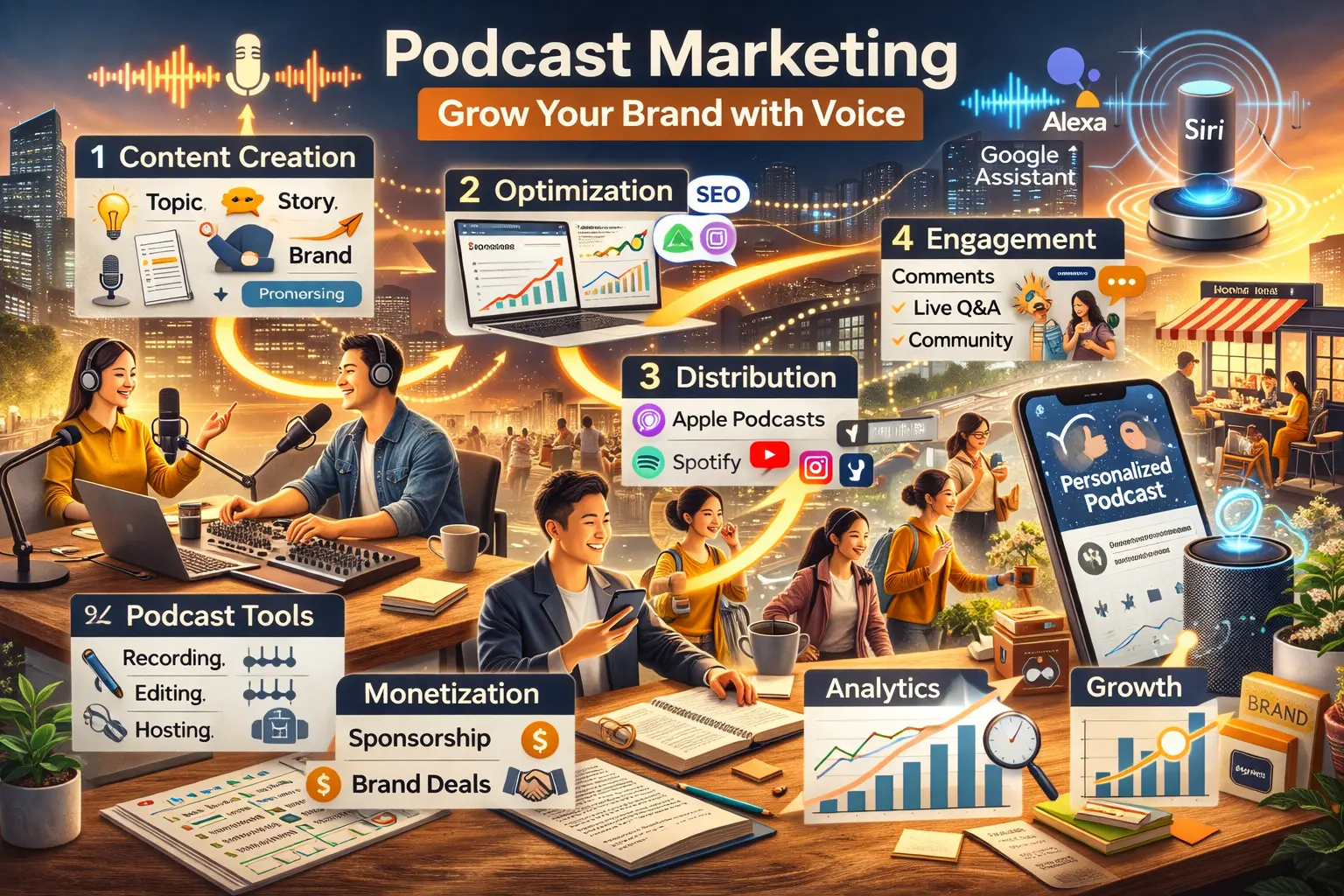
When it comes to digital marketing, audio content has become a new force that cannot be ignored. With the popularity of smart assistants such as Google Assistant, Alexa and Siri, consumers are increasingly accustomed to obtaining information through voice interaction. And podcasts, as an intimate, portable form of media, are growing at an astonishing rate.
According to the latest data, there are more than 500 million podcast listeners worldwide and are expected to reach 650 million by 2027. For small and medium-sized enterprises, this is a low-cost, high-return marketing opportunity. If you can make good use of this tool, from content creation to optimization strategy, you can gradually build your own sound empire.
Why are podcasts a marketing tool for small and medium-sized enterprises?
Imagine an office worker hearing your company’s brand story while commuting. It’s easier and more hassle-free than browsing a mobile screen. For small and medium-sized enterprises, this is good news, because unlike big brands that monopolize visual advertising, the audio field is still relatively blue ocean.
Sound is the most intimate medium. When listeners put on their headphones, your brand story becomes a part of their lives.
The marketing potential of podcasts is mainly reflected in several levels:
High loyalty and deep connections
The average listener spends 20 to 40 minutes listening to an episode, far longer than the few seconds spent on social media. Brands can build emotional connections through storytelling. For example, a small coffee shop can produce a “Story Behind the Coffee” series to share the origin of coffee beans and brewing techniques, and subtly promote the product.
Accurate audience targeting
Podcast platforms such as Firstory, Spotify and Apple Podcasts provide detailed audience data, including age, region and interests, allowing SMEs to target niche markets.
Podcasts are not just an extension of radio, but a one-on-one brand conversation. 20 minutes of deep companionship is better than a thousand three-second swipes.
Starting from Scratch: Building Your First Podcast Episode
The threshold for podcast production is low, and the starting budget can be controlled within NT$10,000. First, define your goals—ask yourself: Who is your audience? What message do you want to convey?
For example, a craft store might choose a craft-inspired theme to appeal to DIY enthusiasts. A software company can explore the “application of AI in small and medium-sized enterprises” and indirectly showcase its own products. The focus is on finding the intersection of your brand’s positioning and your audience’s needs.
Practical production suggestions
- Choose the right tools: Free or low-cost recording and editing software is recommended, such as Audacity or GarageBand.
- Plan the program structure: Determine the program length (recommended 20-40 minutes), update frequency (weekly or bi-weekly) and theme direction.
- Invest in basic equipment: A good-quality USB microphone (about 2,000 to 5,000 yuan) can greatly improve the sound quality.
The threshold for making a podcast is much lower than you think. A good microphone, a quiet space, and sincere content is the starting point for success.
Cross-platform integration: amplify the impact of your voice
A smart content marketing strategy will never allow a piece of content to live on only one platform. Cut podcast segments into short videos and share them on TikTok or Instagram Reels to drive traffic back to the full show.
For example, a small bookstore could create a “Book Review of the Week” podcast and upload a visual version to YouTube to cover more senses. This cross-border content marketing thinking allows the same content to reach audiences on different platforms.

🎯 Want to double your content output efficiency?
If you are running a podcast or self-media, but suffer from the problem that a piece of content can only be used once, then the "AI Content Production System Workshop" is a course designed for you.
In this workshop, Teacher Vista will lead you to practice: how to use AI to automatically convert a podcast episode into multiple content formats such as blog articles, social posts, e-newsletters, etc., to create your own content production line.
Diversification of strategies: not just making your own programs
The key for small and medium-sized enterprises to make good use of podcasts is to diversify their strategies.
Build authority with homemade content
A software company can invite industry experts for interviews to discuss “AI applications in small and medium-sized enterprises” and indirectly showcase its products. Interviews not only enrich content but also expand connections. This is the same logic as Building a Personal Brand - to accumulate trust through professional content.
Sponsor Others Podcast
If you have a limited budget, choose niche programming. For example, by sponsoring the “Entrepreneurship Story” series, each episode only costs a few thousand dollars and can reach thousands of listeners. This creates a greater sense of trust than traditional advertising because listeners see the sponsorship as a recommendation rather than a sales pitch.
Make good use of interaction to increase stickiness
Encourage listeners to leave comments or participate in live podcasts, utilizing Discord or Clubhouse integration. You can also join the Podcast community to communicate with more creators and increase the exposure of your program.
The best marketing isn’t selling, it’s building relationships. Podcasts allow brands to transform from “people selling things” to “trustworthy friends”.
Data-driven: Use numbers to test results
Don’t just focus on your show, use data analysis tools to optimize your podcast strategy. We recommend using tools like Podtrac or Chartable to capture downloads, listener retention, and conversion data.
Set specific goals, like bringing in 10 new orders per episode, and continually adjust your strategy. If the audience churn rate is high, you can try shortening the episode length or adding interesting elements. This is similar to the thinking of SEO Optimization - using data to guide the direction rather than acting by feeling.
Without data, there is no optimization. Regularly review the key indicators of podcasts to upgrade voice marketing from “interest” to “strategy”.
Overcoming common challenges
Small and medium-sized enterprises often face two major challenges when running podcasts:
Lack of time: You can consider outsourcing editing to a freelance platform and focus on content creation and recording. You can also use AI tools to build content production lines to greatly shorten post-production time.
Difficulty in audience discovery: It is recommended to adopt a multi-pronged approach - optimize SEO keywords of program titles and descriptions, actively promote on social platforms, and cross-promote with other podcasters. Welcome to listen to Vista’s Podcast program to learn more about practical sharing of voice marketing.
Looking to the future: What’s next for voice marketing
Looking to the future, the trend of podcast production will more deeply integrate AR and AI. Imagine a smart assistant that not only recommends shows, but also generates personalized episodes—playing customized suggestions based on your fitness history and recommending book reviews based on your reading preferences.
SMBs can start thinking about the possibilities of interactive podcasts, allowing listeners to choose plot branches, creating a more immersive experience. Paired with AI-assisted marketing thinking, voice marketing in the future will be more precise and personalized.
The combination of Podcasts and smart assistants will open a new era of voice marketing for small and medium-sized enterprises. Arrangement in advance is to seize the opportunity.
Conclusion: Use your voice to express the soul of the brand
Overall, the combination of podcasts and smart assistants is expected to usher in a new era of voice marketing for small and medium-sized enterprises. Not only is it low-cost, it builds lasting relationships. Start planning your first episode today: choose a topic, record your content, and optimize for voice SEO. Remember, the key to successful podcasting is consistency and authenticity—making your brand voice a part of your listeners’ daily routine. When you truly share valuable content, your audience will naturally become your most loyal customers.
Further reading:
- I use AI to build an entire content production line: let one article automatically turn into six outputs
- Tell brand stories and build relationships with customers
- Create everlasting content and leverage content marketing influence
External resources:
📖 深入探索相關主題