Time Weaver: Create a career blueprint with a content calendar
[ ](https://blogger.googleusercontent.com/img/b/R29vZ2xl/AVvXsEhCleV5U19Zh5cbk6Bfnxmpb2oquH7ZfZ440fNCX-6QIZagmtQWLF7T5N8ngbh 01U6BwnYBDSE6QJqpK93diglGmmbWIZCoVLFMCm_jOkJn4pue_TbaFG7qe_ujnbqtXcqmHnPKIXngOLEJysP7yWxRB_IP9wjqBicS34rt6cQ-MUzRE1CqiD6pcJPmS qZB/s1792/DALL%C2%B7E%202024-02-13%2008.52.08%20-%20An%20organized%20and%20visually%20appealing%20workspace%20featuring%20a%20 large%20digital%20calendar%20on%20a%20computer%20screen,%20displaying%20a%20content%20calendar%20for%20the%20entire%20ye.webp)
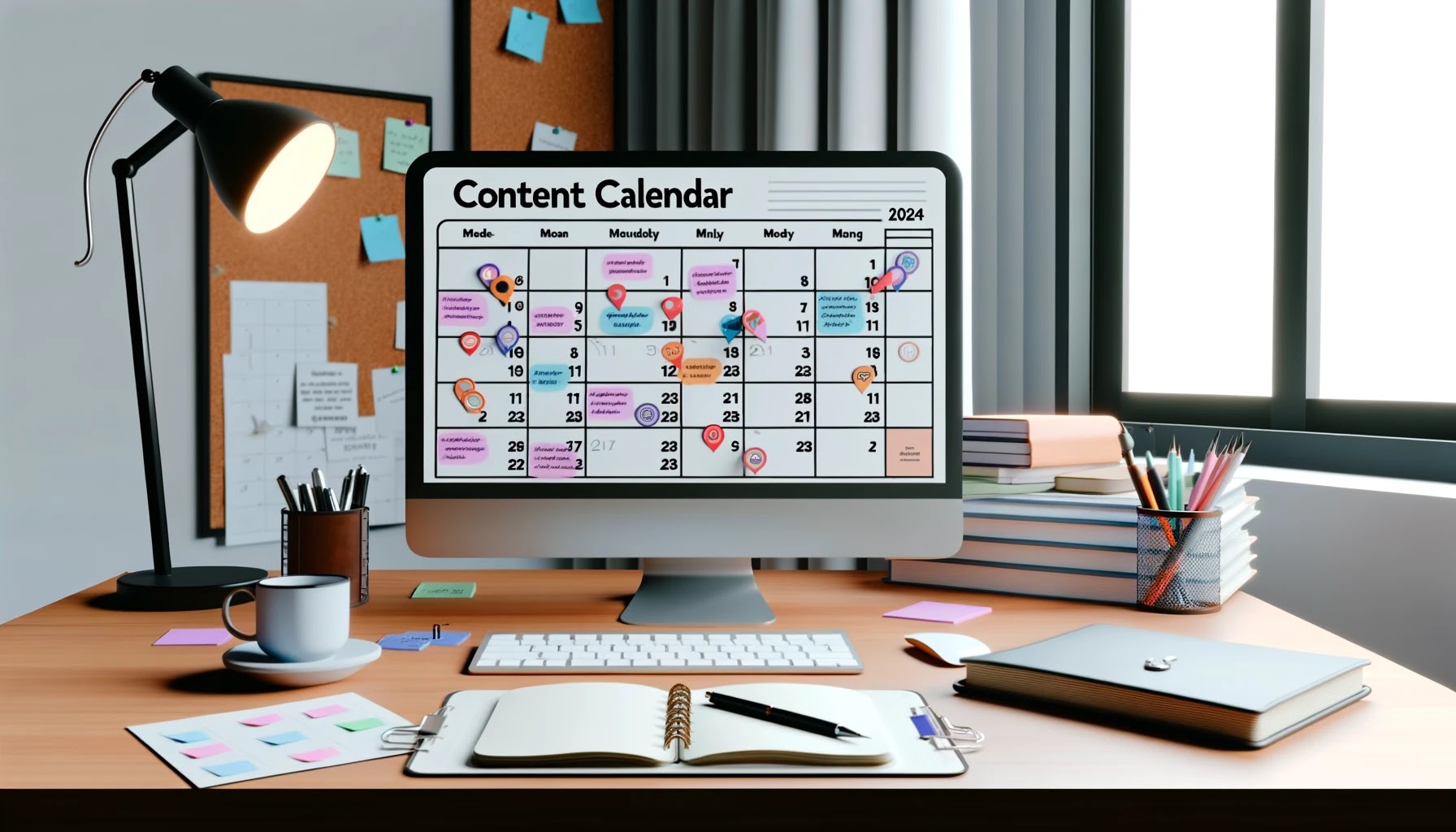
Content Calendar is a strategic tool that can help professionals plan and organize their content creation and release in advance. By clearly planning daily, weekly or monthly content topics, formats, distribution channels and target audiences, businesses can more effectively attract, engage and retain customers. Especially during holidays or special events, content calendars can help businesses prepare in advance to ensure that marketing activities and promotional content are timely and attractive.
The concept of content calendar has developed with the rise of content marketing. In the early days, business operators mainly relied on traditional advertising and public relations activities to promote brands and products. With the popularity of the Internet and social media, content marketing has become an important way to connect brands and consumers. Content calendar serves as a tool to help marketers plan and publish various content in a more organized manner, ensuring the consistency and timeliness of the content, as well as continuous interaction with the target audience.
Nowadays, content calendars are widely used in various industries and fields, such as:
- E-commerce: promotions, product launches and holiday sales.
- Education: Arrange academic activities, online course promotion and holiday special content.
- Medical care: planning health promotion activities, sharing medical information and disseminating health education information.
- Technology: Publish product updates, technical seminars and industry trend analysis.
So, how do we use content calendars to produce content?
Step 1: Determine marketing goals and audience
- Set clear marketing goals: This could be to increase brand awareness, increase sales, drive customer engagement or improve customer retention.
- Understand your target audience: including their needs, preferences and consumption behavior.
Step 2: Conduct festival and event research
- 列出重要节庆、活动和事件:这些节庆、活动,应该与你的品牌和目标受众相关。
- Research industry-specific events: events such as exhibitions, webinars or product launches.
Step 3: Plan Content Topics and Format
- Choose appropriate content themes based on festivals and events.
- Decide on content format: for example, blog posts, social media posts, videos or email newsletters.
Step 4: Set Timeline and Assign Responsibilities
- Establish a specific publishing schedule: include content creation, review and publication dates.
- Assign responsibilities: Designate team members to be responsible for different content creation and publishing tasks.
Step 5: Monitor and adjust
- Track content performance: Use tools to monitor audience engagement and feedback.
- Adjust strategy based on feedback: Flexibly adjust content plans to maximize impact.
An effective content calendar template should include the following elements:
- Date and time: Determine the date each piece of content was created and published.
- Content theme: Set a theme based on holidays, events or marketing goals.
- Content format: Indicate the format to be used (article, video, etc.).
- Target Audience: Define the target audience for each piece of content.
- Publishing channels: List the channels through which the content will be published.
- Responsible person: Designate the team member responsible for authoring, reviewing and publishing work.
- Status Tracking: Track content as it progresses from planning to completion.
The following is an example of a 2024 content calendar template, covering holidays, special events, and industry-specific activities, designed to help professionals comprehensively plan content strategies.
month
Date
Content topic
Format
target audience
Release channel
Responsible person
Status
1
January 1
new year wishes
Article
all customers
Website, social media
Miss Zhang
Under planning
2
February 14
Valentine’s Day Special Promotion
audio and video
young couple
social media
Mr. Li
Complete
3
March 8
Women’s Day Appreciation Activities
female customer
Ms. Wang
Under planning
4
April 22
Earth Day raises environmental awareness
Article
environmental enthusiast
Website, social media
Miss Zhao
Under planning
5
May 1
向劳动者致敬
image
all customers
social media
Mr. Huang
Under planning
6
June 21
Summer solstice event promotion
audio and video
outdoor activity enthusiast
social media, email
Miss Liu
Under planning
7
July 1
Mid-year review and preview for the second half of the year
Article
all customers
website, email
Mr. Zhang
Under planning
8
August 8
Special plan for Father’s Day
image
home user
social media
Ms. Li
Under planning
9
September 28
Teacher’s Day Thanksgiving Activities
Article
students and parents
Website, social media
Mr. Wang
Under planning
10
October 10
National Day activities
audio and video
all citizens
social media
Ms. Zhao
Under planning
11
November 11
Double Eleven Shopping Festival Special Offers
image
online shopper
social media, email
Mr. Liu
Under planning
12
December 24
christmas celebration
Article
all customers
Website, social media
Miss Zhang
Under planning
The benefits of creating a content calendar are obvious, such as:
- Allows you to stay organized: When you have too many ideas or ideas to consider, it’s easy to scatter. If you can make good use of the content calendar at this time, you can better understand the overall marketing strategy.
- Brainstorm with the team: When you start organizing content topics with the team, you may brainstorm new ideas. Through the management of digital tools, you will be able to obtain valuable information and adjust the content accordingly.
- Provide cross-department collaboration: Marketing and sales can be said to be the guardians of the enterprise, and successful companies will try to keep these two departments on the same page. A content calendar is a very useful resource that will keep all teams on the same page.
- Keep track of work progress: Modern people are busy at work and have endless meetings every day. If you want your content calendar to be effective, it is recommended to plan it at least one month in advance so that you can be notified of your marketing planning progress in time so that you can prepare content such as blogs, Facebook posts, and Instagram photos.
- Easily evaluate marketing effects: Just by launching the marketing plan, you still don’t know the success or failure. Only by setting up tracking indicators can you measure the effectiveness and success of content marketing. At the same time, we must also establish certain evaluation criteria to adjust the content we send out, while providing our broad target audience with information they are interested in or need.
When you start using a content calendar, here are some things to keep in mind:
- Flexibility: While planning ahead is important, you also need to remain flexible to respond to unexpected events or market changes.
- Content Quality: Content should not be created just to fill your calendar, quality is always the most critical.
- Audience analysis: Regularly evaluate the appeal of the content to the target audience and make adjustments based on feedback.
- Consistency across channels: Ensure brand voice and messaging are consistent across different distribution channels.
- Measure and evaluate: Set KPIs and use analytics tools to track content performance so you can continuously optimize your strategy.
Overall, using a content calendar can help professionals effectively plan and implement their content marketing strategies. By planning relevant content for holidays and special events in advance, businesses can better engage their target audiences and increase brand awareness and customer engagement. Please remember that detailed records alone are not enough. A successful content calendar needs to be flexible and optimized based on actual performance!
 ★ Want to embrace the AI era? Welcome to sign up for “AI Copywriting Course”!
★ To comprehensively improve your writing skills, welcome to sign up for the “Vista Writing Companion Program”.
Further reading
- Life in a Foreign Country and Self-Media: Teacher Li Sixuan’s Experience Sharing Meeting on Social Media Strategies for Traveling to the Netherlands
- Writing good copy starts with understanding the target audience
- “A Compulsory Course for Introduction to Content Marketing in the Digital Era”: Unlocking Creativity in the Digital Era
📖 深入探索相關主題