Import AI and start from work pain points: small and medium-sized enterprises should no longer wait for miracles to happen
 *▲ The starting point for small and medium-sized enterprises to introduce AI is not to purchase a few accounts, but to first find out the most annoying and time-consuming chore in the department. *
Originally published in “Economic Daily (opens in a new tab)”
Many small and medium-sized enterprises want to introduce AI, and the initial approach is very similar: the boss has just finished listening to a lecture, turns around and tells MIS to purchase paid accounts and distribute them to employees, plus conducts a few internal trainings, and then waits for a miracle to happen. A month has passed. Except for colleagues in the marketing department occasionally using it to edit social posts and administrative staff using it to check Excel formulas, the entire company’s operations have not changed at all.
The tool is never the problem, the problem is the person giving the orders
Tools have never been a problem. Now anyone can rent the smartest brain in the world for more than NT$600 per month. The problem is that when the marginal cost of producing text, code, and projects drops directly to zero, many things that we originally regarded as professional become worthless in an instant.
At this time, the most valuable thing is not the technology itself, but what is in the heads of those who give orders in front of the screen.
The most fatal fault often lies in the ability to ask questions
The most fatal fault often lies in the ability to ask questions.
Many people feel very frustrated when facing AI, complaining that the answers given are too mediocre and empty. But if you look back at the instructions they throw in, it is usually a vague “Help me think of a new product promotion plan.” No matter how smart the machine is, it can’t guess whether you want to clear inventory, expand new customer groups, or have a budget of only 50,000 yuan.
People who can see through business pain points and break down a messy on-site situation into precise conditions were good supervisors in the past, but now they are the only ones who can squeeze out the potential of AI.
The other extreme is low-level mistakes caused by blind trust.
The other extreme is low-level mistakes caused by blind trust.
The scariest thing about AI is that when it doesn’t understand, it can still talk nonsense with a straight face and full of emotion. Employees who have no sense of control will directly forward the market analysis or contract drafts spit out by the machine to customers. Once the data is captured and used for publicity, the company will lose the credibility it has spent many years accumulating.
The prerequisite for daring to use AI is that the person’s professional foundation is solid enough. He can tell at a glance where the logic in the seemingly smooth discussion is illogical and which set of numbers are simply fabricated out of thin air. A person who knows how to apply the brake is much more important than a person who only knows how to apply the accelerator.
The real moat is the tacit knowledge that is not written into the SOP
Not to mention, even if the large model on the public cloud reads public information all over the world, it will never know which format your company’s eccentric big customer likes to use to view quotations, or how many days a certain mold factory that has cooperated for five years usually takes delivery.
This tacit knowledge hidden in the heads of senior colleagues and not written into standard operating procedures is the real moat for small and medium-sized enterprises.
If employees only regard AI as an enhanced search engine, then it is just a typewriter; if employees know how to feed it the company’s private experience and train it into an exclusive strategic deputy, the company can truly have the leverage of a multinational enterprise.
🎯 Do you want to turn your “pain point” into a running assembly line?
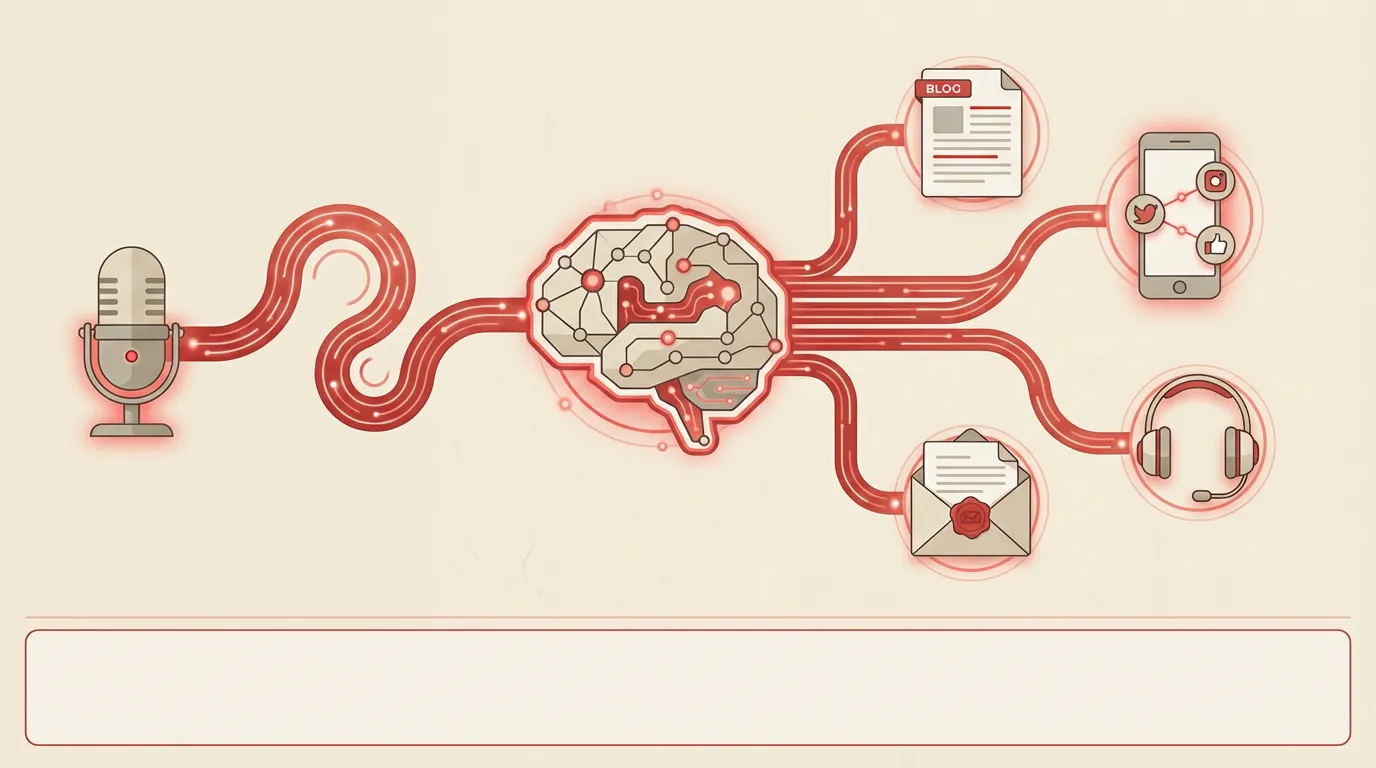
It’s not enough to just know where to start from the pain point, you have to have a system to solve it in ten minutes. The “AI Content Production System Workshop” I designed is to break down the most common chore of content into a five-layer structure: from input, research, production, refinement to distribution. A piece of material can be produced in six formats, allowing you to leave class with a workflow that can be copied directly back to the company.
🗓️ October 3, 2026 (Saturday) in Taipei, 3 hours of practical training, small class size of 16 people.
👉 Learn the course content now: vista.tw/courses/ai-content
If you want the team to keep up, the most taboo thing is to have a great success
If small and medium-sized enterprises want their teams to keep up, the most taboo thing is to have a grand success.
Don’t follow the trend and chase new software that pops up every day, which will only make the grassroots exhausted; and don’t expect everyone to automatically transform after taking the class.
The most effective method is often very down-to-earth: directly identify the most annoying and time-consuming drudgery in the department. Whether it’s customer inquiry letters that take three hours to sort out every week, or to-do items to track after lengthy meetings, just pick a specific thing and lead everyone to use the same set of tools to solve it in ten minutes.
As long as employees taste the benefits of leaving work an hour early, you don’t have to force them at all, and they will start to think about the next place to be lazy.
Turn personal laziness into public assets of the company
At the same time, personal “lazy experiences” can be turned into public assets of the company.
Whoever can adjust a set of useful inquiry templates will be saved in a shared folder for everyone to copy; whoever finds a certain command that can convert the specification sheet quickly and accurately will be given a substantial reward. Gather scattered attempts into standard actions, and establish an iron rule: No matter who writes the draft or whose name is sent out, he must be fully responsible. Customer personal information and confidentiality are never allowed to be thrown into external systems without processing.
AI will not eliminate small companies. What will really delay small companies is when the boss spends a lot of money to buy advanced weapons, but the people below still use them as hoes.
Next step
Bring this topic to your team
Vista Cheng speaks and runs workshops on AI workflows, writing and content systems for companies, schools and public agencies.