AI-driven curriculum design revolution and educator transformation journey
[ ](https://blogger.googleusercontent.com/img/b/R29vZ2xl/AVvXsEh7mg4u-b7Zp1j26gw4_ph5upuIkzlmqE6Zm3JPMpv60DCPLbvOCCWEQGgN xGBAXlxybVd2RCsuZYH1vIAe495H6GKBhWHc07nThBG_HQgePSFiKMsWZ3KmEv982L58spqkU6HyBvcf77G9cFztW1oE43VNzl_teiYIvSZmvNC6APjwtFdHPB %E8%82%B2%E7%9A%84%E8%B6%A8%E5%8B%A2%E8%88%87%E6%8C%91%E6%88% B0%E3%80%8D%E5%9C%8B%E9%9A%9B%E7%A0%94%E8%A8%8E%E6%9C%83.jpg)
Preface
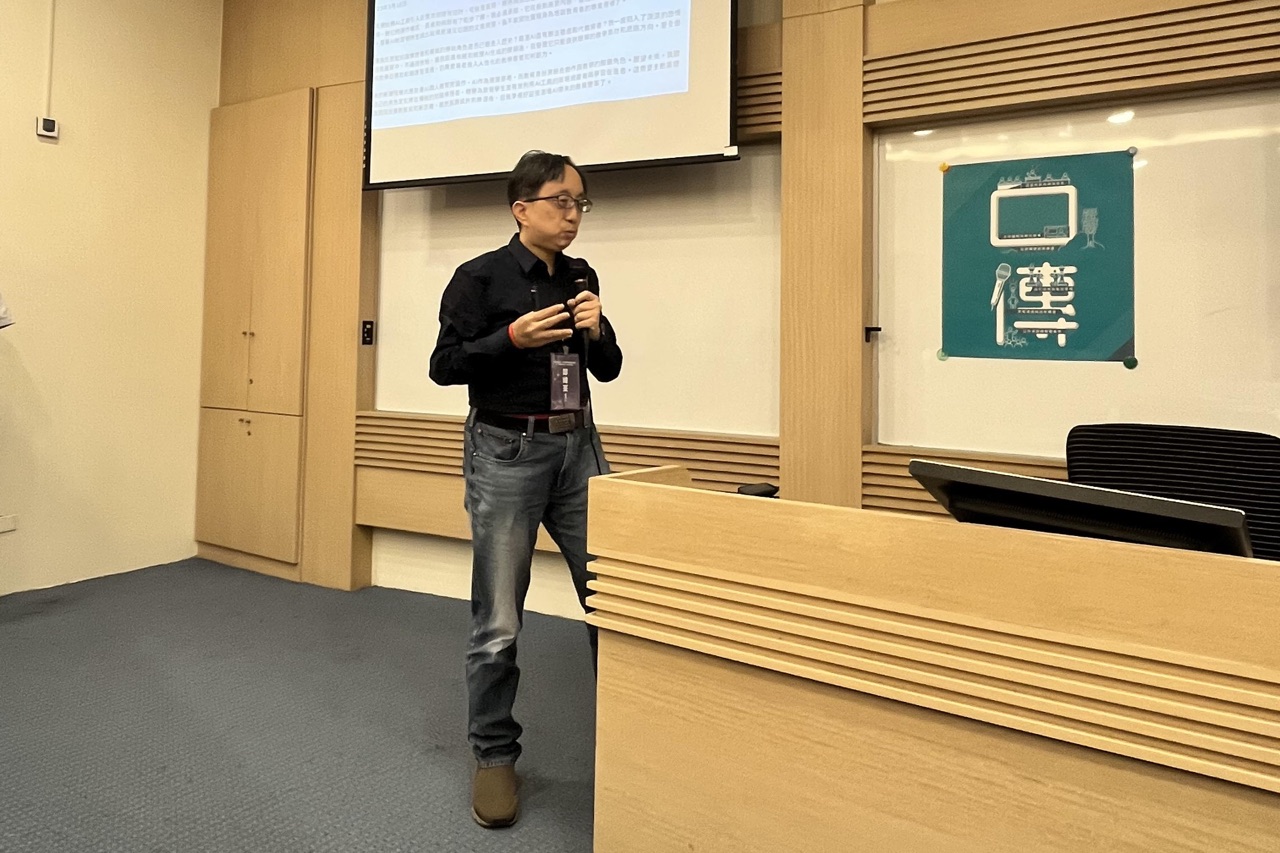
In today’s era of rapid development of information technology, artificial intelligence (AI) is affecting every aspect of our lives, and the field of education is no exception. The integration of AI, especially in traditionally human-centered fields such as culture and education, has brought a series of challenges and opportunities. This time, I am very happy to have the opportunity to participate in [2024 “AI and Communication Innovation: Trends and Challenges in Higher Education” and “Politics, Culture and Technology of Journalism” Seminar] (https://speech.shu.edu.tw/2024 “AI and Communication Innovation: Trends and Challenges in Higher Education” and “New/”).
My research will explore how AI drives changes in the education industry, especially in areas such as curriculum design and educational practice, and assess the new challenges and opportunities that training educators may face in this wave of innovation.
The historical intersection of AI and education
From the classroom learning model led by the Enlightenment thought of John Dewey in the 18th century, to the rise of computer technology in the mid-19th century, to computer-assisted instruction (https://pedia.cloud.edu.tw/Entry/WikiContent?title=Computer-Assisted Instruction&search=Computer-Assisted Instruction) (CAI), to the current rapid development of AI, information technology has been constantly shaping the face of education. AI is particularly good at big data analysis and building efficient knowledge bases, which allows it to potentially surpass traditional education methods in many aspects such as course design, teaching implementation, and learning assessment, serving as an assistant to teachers or even replacing some teaching roles.
Reshaping the Role of Educators
As AI continues to advance, the role of traditional educators must evolve as well. Educators are no longer just transmitters of knowledge, but need to be facilitators of learning and designers of innovation. This includes developing students’ information literacy, media literacy and critical thinking skills, which are essential skills for today’s students in a rapidly changing world. Educators need to use AI as a tool to enhance students’ learning experiences while also developing students’ understanding and critical skills of these new technologies.
Wide application of AI in education
The application of AI is not limited to the improvement of traditional teaching methods. It can also play a huge role in learners’ personalized learning, automated assessment and learning effectiveness analysis. AI technology can personalize courses by adapting to students’ learning speed and style and provide instant feedback, which significantly improves learning efficiency and effectiveness. However, this also brings new ethical issues such as educational equity, privacy protection and intellectual property rights.
Pay equal attention to norms and self-discipline
In the face of the powerful functions of AI, corresponding regulations and policies must be in place to ensure the fairness of education and the security of data. However, the speed of technological development often exceeds the pace of government legislation, which requires the education sector itself to establish a strict self-discipline mechanism. Schools and educational institutions should actively participate in formulating these regulations to ensure that the negative impacts of AI technology are effectively controlled while playing its positive role in educational innovation.
AI-assisted course design process
In practice, the AI-assisted course design process includes the entire process from demand analysis to course implementation. This process emphasizes the importance of human-machine collaboration, with every step from initial AI course design to ongoing evaluation and optimization requiring the deep involvement of educators. Through this model, AI not only accelerates the course development process, but also improves the pertinence and effectiveness of course content.
[ ](https://blogger.googleusercontent.com/img/b/R29vZ2xl/AVvXsEjXsfgf331Yxs0i DKoYoudQ91UYTqtnC2DkXISXqtIM1NdoezZN_dKv02fbdd2eovR1vAkSs0hSqjYKU2i46Iu7RZMwjBgIK 6ee4g1nN1GRvwOGSQOJbQ0OQav2mmwNsXqznLCwT1NyZj8K_7oieQws7CVUpP_QUOO6VWIs4Kr7-c0OoY 2I-T9lsvADcfEo/s1154/AI%E8%BC%94%E5%8A%A9%E8%AA%B2%E7%A8%8B%E8%A8%AD%E8%A8%88.png)
- Needs analysis: Clearly define learning goals and needs.
- AI preliminary design: continuous evaluation and optimization.
- Human-machine collaboration: continuous trial and error and feedback.
- AI tool assistance: Accelerate the course design process.
Conclusion
The development of AI is rapid, and now it has become an important driving force in promoting educational innovation, and it is also an irreversible trend.身为培训教育者,我自觉更应以开放和包容的心态来接受这些变化,并透过人机协作的模式来保护和促进学生的最佳利益。
As a training educator, I also know that I have the responsibility to foresee and participate in this technological revolution, open up a broader learning horizon for future students, and jointly create a new era of education.
➤ Special thanks to Professor [Hu Quanwei](https://speech.shu.edu.tw/faculty lineup/Hu Quanwei/) for helping to take photos and Secretary Huang Yiting for her assistance
📖 深入探索相關主題