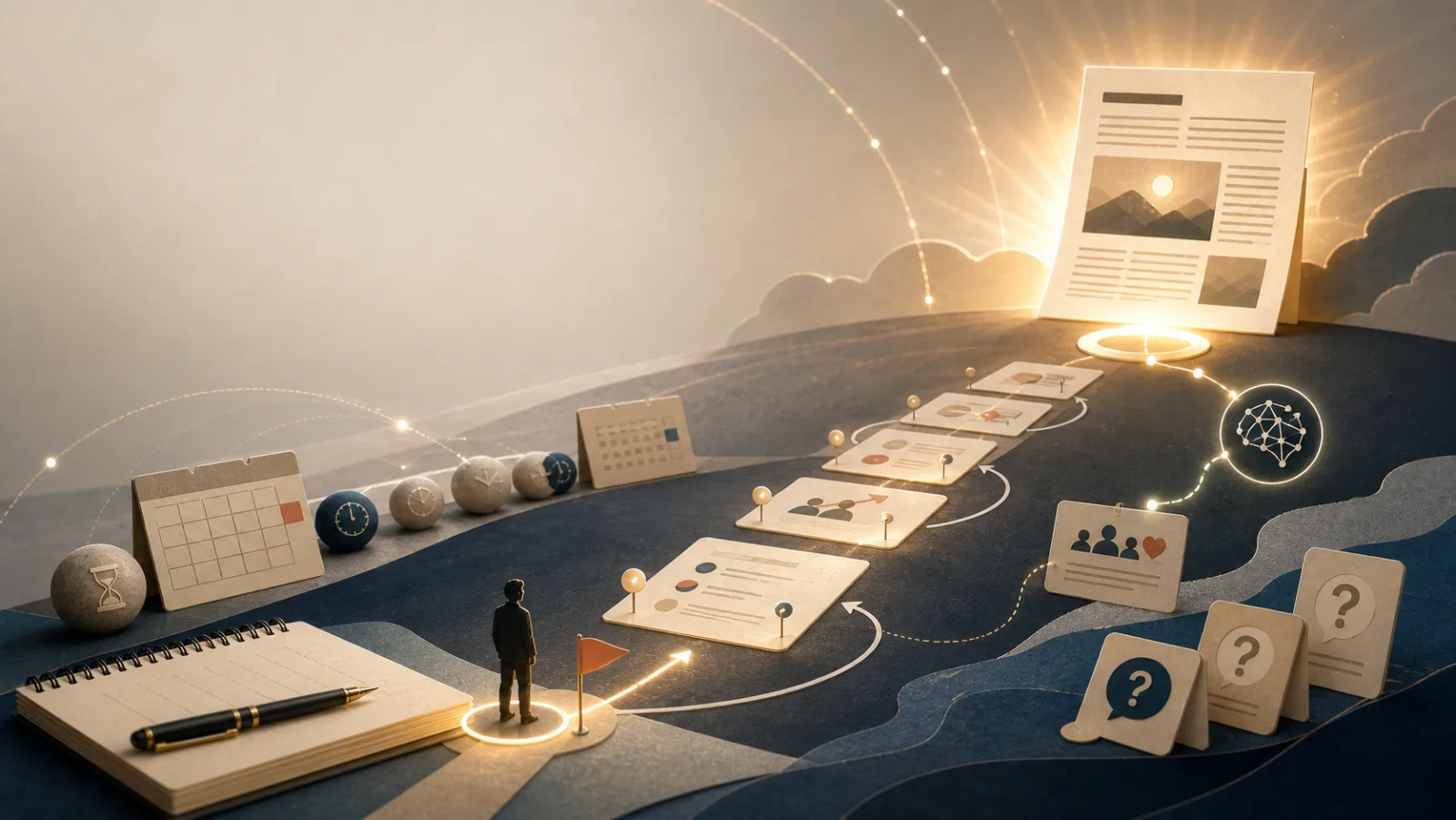
Your idea has already been done by someone before: In the AI era, where is the innovation space for ordinary people?
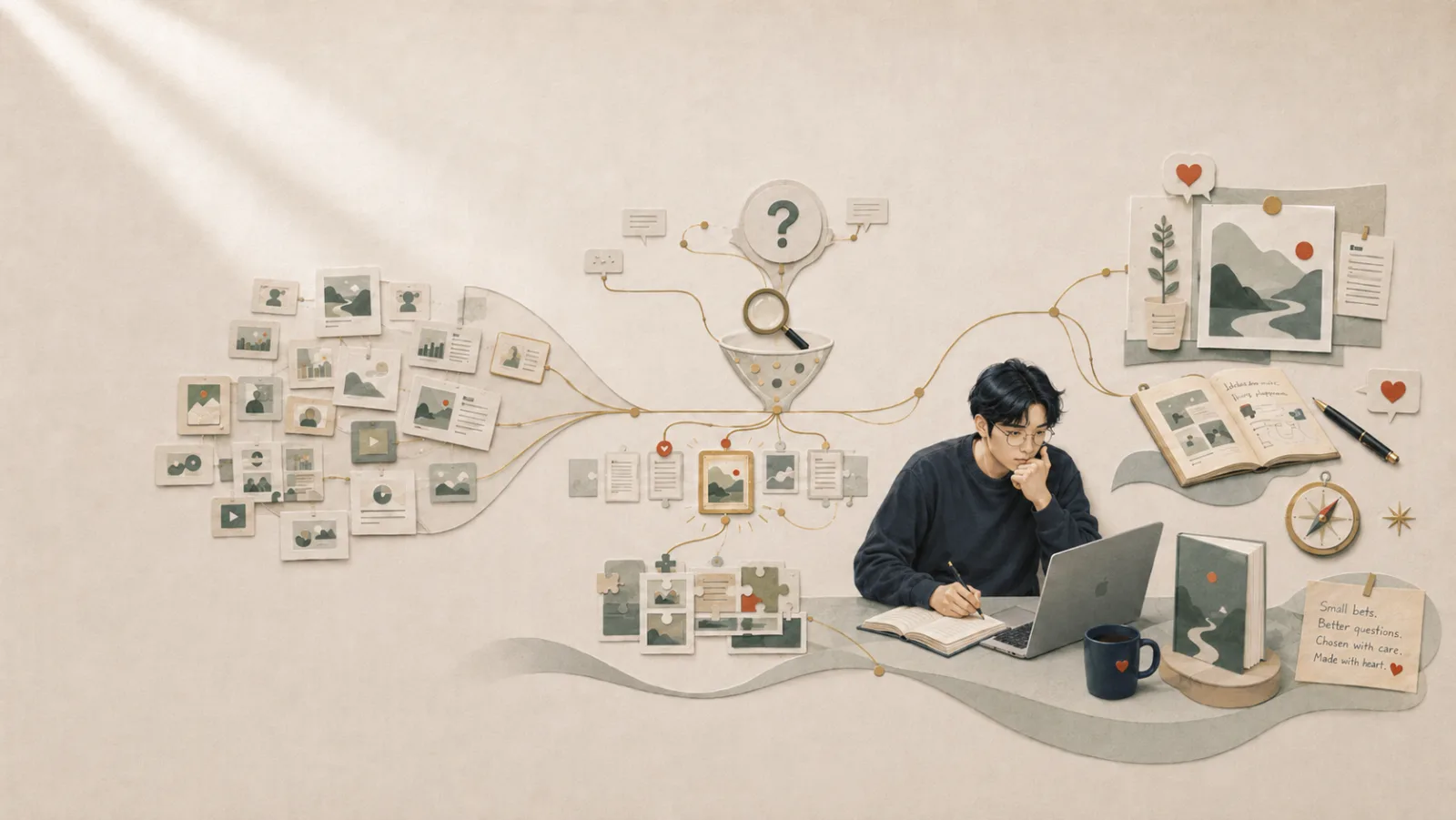
*This article was originally published in “Vista Newsletter” No. 125 (original link (opens in a new tab)). *
A while ago, a reader wrote to me and asked me a question. He said: “Vista, AI is so powerful now. Every idea that flashes in my mind, it seems that someone has done it just by searching Google, and even did it better than me. At this time, what room for innovation does an ordinary person have?”
I read this letter three times. Because it asked a question that has caused the most anxiety in the past two years, but also the least answered seriously.
Our generation grew up under an old concept of innovation. That view of innovation tells us: Innovation means thinking of things that others have not thought of, and then making things that others cannot do. These two things, one depends on talent and the other depends on hard work, are both scarce, so there are very few people who can innovate, and innovation is therefore valuable.
But AI has almost completely rewritten the second half of this logic.
Today, if you want to build a website, an App, an analysis report or a set of marketing copy, or even automatic advertising, it used to require an entire team and take weeks or even months to complete. Now you alone can have a prototype in just one afternoon by having a conversation with AI. Being able to do it is no longer the threshold; but when execution is no longer scarce, the scarce things are transferred. And people who don’t understand this transfer will keep using the old map to find the new continent, and then wonder why there are dead ends no matter how they go?
Therefore, in this e-newsletter, I want to give a good answer to that reader, and also to myself: What will Innovation in the AI Era (opens in a new tab) look like when the things that can be done become cheap?
The first transfer: from correct answer to correct question
Let me first tell you about my own personal experience.
At the beginning of this year, when I was building digital products related to a one-person company, I fell into a strange excitement for a while. Because of AI, I can design a new widget](https://builder.tw/blog/100-day-chatgpt-challenge-review/ (opens in a new tab)), new page, or new automated process almost [every day]. Not going to lie to you, I once thought this was the liberation of productivity.
It wasn’t until one day that I stopped to take stock and discovered one thing: I had made a lot of things, but very few of them were actually used by people and really solved problems. It’s not that I lack the ability to execute, I lack the ability to judge whether it’s worth doing. AI helped me tear down the wall of whether I had the ability to do it, but instead pushed the more difficult question in front of me, whether I should do it or not.
This is the first key shift: the focus of innovation is shifting from answering questions to asking questions.
In the past we worshiped answers because they were hard to come by. But now that answers are cheap, the value of a good question is magnified. You ask an AI a mediocre question and it gives you a mediocre but decent-looking answer, which is actually more dangerous than no answer at all because it makes you think you’re making progress. The person who really makes the difference is the person who can ask questions that no one thought to ask.
So, I later developed a habit: before opening any AI tool, take the time to sharpen the problem itself (opens in a new tab). I will ask myself again and again, what is the real solution to this matter? Who will be better off because of it? If this question is asked fundamentally wrong, then no matter how fast and beautiful I use AI to do it, it will only lead to the wrong place more efficiently.
The first lesson of innovation in the AI era is not to learn to use tools, but to learn to ask questions again.
The second transfer: from idea to taste
Returning to the reader’s anxiety: “What should I do? It seems like my idea has already been done by someone else.”
I want to be honest: He’s right, but it’s not as deadly as he thought.
Because in a world where execution costs approach zero, original ideas are not inherently moats. Ideas are always cheap, and a good brainstorm can produce dozens of them. What is truly scarce is choosing the right one among a bunch of seemingly similar options and making it the best it can be, while also having the right judgment. I call this thing “Taste”.
What is taste? It’s the ability that you can’t quite explain, but you can recognize good and bad at a glance.
It is when you see two solutions that can be used, you know which one is more honest, more attractive, and closer to the user’s real situation. It means that when AI generates ten versions of copywriting, you can pick out the one with warmth at a glance and decisively delete the other nine.
And here’s the most troublesome and fascinating thing about taste: it can’t be outsourced to AI.
AI can help you generate a thousand possibilities, but it can’t decide for you which one is yours. What it gives you is an average, a weighted average of all relevant data in the world. And innovation is precisely a deviation from the average. A person who listens to AI for everything will inevitably make things closer to the middle, becoming safe, correct, and without any memory points.
So I often tell my friends who make content (opens in a new tab) and make products (opens in a new tab) around me: In the AI era, you have to deliberately protect your biases. Your unique persistence, your untimely attention to detail, and your almost stubborn care about a certain detail. These things that were regarded as shortcomings in the past are now the reason why you are you. When everyone can produce the right thing, having views becomes the scarcest asset.
Start with regrouping: take what you know best and multiply it with what AI has just unlocked
At this point, some people may be even more panicked: asking the right questions requires talent, and having good taste requires accumulation. So I want to start now. What can I do?
I would like to give a specific answer with a low threshold: start with regrouping.
We have a very romantic misunderstanding about innovation (opens in a new tab), thinking that it must be something earth-shattering that comes from zero to one, out of thin air. But if you dismantle what has really come out in the past few years, you will find that most of the so-called innovations are actually connecting two existing things that everyone knows in a way that has never been tried before.
For example, podcast is not a new invention. It is a distribution method that connects broadcasting to the Internet. The food delivery platform is not a new invention. It reconnects existing restaurants, motorcycles and maps with an app. These are not things created out of nothing, but something new out of something.
In the AI era, the space for this kind of combinatorial innovation has been magnified countless times. Because you suddenly have a lot of building blocks in your hand that you had to rely on a professional team to operate in the past: writing programs (opens in a new tab), doing design, editing videos, analyzing data, and multi-language translation. When these building blocks become something within your reach, the number of arrangements you can create increases exponentially.
My own practical method (opens in a new tab) is very simple: take the field you know best and multiply it by the capabilities that an AI has just unlocked.
For example, if you are a teacher, then combine your teaching expertise with AI’s ability to quickly generate personalized teaching materials. If you are an accountant, multiply your understanding of financial reporting with AI’s ability to process unstructured data. If you are an implementer in any field, you have knowledge that no one else has about the real pain points in this field. This knowledge is your unique building block. What AI makes up for is the half you were missing in the past.
Innovation is not magical and does not have to come from a place that is completely unfamiliar to you. Its most fertile soil is often on the piece of land you are already standing on, but you lacked the tools and couldn’t dig it down. Now the tools are here.
The third transfer: from one big bet to multiple small bets
With direction, the next step is mentality. The most important innovation mentality to adjust in the AI era is about trial and error.
Trial and error used to be expensive. If you want to test an idea, you have to invest a lot of time and money to create a finished product and push it to the market, and then you know whether it works or not. Because the cost of every attempt is high, we naturally become conservative, want to think everything through before taking action, and put all our chips in a few directions that seem to be the most stable.
But AI crushes the cost of a single attempt. Today you have to verify a product concept. You can make a working prototype within a day and show it to real users to see their reactions. This means that innovative strategies should be completely flipped: instead of betting big, small, and safe, make each bet smaller and make more bets.
I call this making lots of small bets.
The logic goes like this: In a world full of uncertainty, you simply can’t predict in advance which idea will succeed. The one you think is the most stable is often silent, while the one you do casually sparks unexpectedly. Since predictions are inaccurate, instead of investing all your resources in a carefully calculated direction, it is better to spread many low-cost small experiments and let the real world screen the answers for you.
The key here is that every small bet should be so small that even if you lose everything, you won’t feel bad. Only in this way can you dare to keep playing, not be hurt by losing once, and only then can you hold on until the big win with non-linear rewards occurs. Under this framework, innovation is no longer a big gamble, but a continuous, low-risk, and large-scale trial. You don’t need to get it right once, you just need to try enough, lose enough, and learn fast enough.
And AI is what makes it possible for the first time to try enough in terms of time and cost.
The last transfer: The more machines can copy places, the more valuable human traces are.
Finally, I would like to make a seemingly contradictory but increasingly important point.
When AI makes the production of content, products, or solutions extremely cheap, the world will soon be flooded with a lot of okay stuff. Every article is smooth, every picture is beautiful, and every proposal is well-structured. And when everything becomes okay, people will start to crave something different.
Here lies an opportunity that is extremely friendly to innovators: the more machines can copy in large quantities, the more valuable human traces will be.
A real personal story of hesitation and struggle cannot be imitated by AI because it has not lived it. A unique insight that grows because you stepped on a specific pit, AI cannot give birth to it, because it does not have that scar. A kind of trust and tacit understanding accumulated over a long period of time between you and your readers and customers, AI cannot replicate it, because relationships take time to build.
So my last suggestion for innovation in this era is: Don’t try to compete with AI in terms of quantity and speed. That is its home field. You can’t win, and you don’t have to win. What you should do is to treat AI as a partner that helps you achieve quantity and speed, free yourself up and concentrate on doing things that only talents can do: judge, choose, feel and bear, and tell a real experience to another person candidly.
Innovation in the AI era, in the final analysis, does not require you to become more like a machine, but rather requires you to use the machine to become more like yourself.

*▲ The “Tool Innovation and Design Power in the AI Era (opens in a new tab)” physical workshop opened by innovative Mr. Chen Jianming is for those of you who have already done Vibe Coding works and want your works to be truly needed. *
The space has not become smaller, but the position has moved.
Let’s go back to the reader’s question: In an era when AI is so powerful, what room for innovation does an ordinary person have?
My answer is: instead of getting smaller, the space has become larger. Only its position has moved.
It moves from whether you can do it to whether you can ask the right questions, choose the right things, and do it like you. AI will help you tear down the high execution wall that blocked ordinary people from the door in the past; and the remaining truly important abilities, such as questioning, taste, judgment, and human touch, are not the exclusive preserve of geniuses, but can be developed bit by bit by everyone who is willing to continue to practice, continue to make bets, and continue to maintain their own opinions.
So stop worrying about whether an idea has been done before or not. This question is no longer important today. What matters is: Have you made it the way only you would do it.
Well, that’s all we’ll talk about in this newsletter. If this article makes you want to try the idea you have never dared to move, then start with the smallest bet (opens in a new tab) today!
See you in the next issue.
Sincerely, Vista
🚀 For those who want to do it themselves, what they lack most is not teaching resources, but a set of working documents that can be followed without making mistakes. The Starter Kit (opens in a new tab) I designed organizes topic selection, specifications and verification methods into a template that you can use directly. I will give you the construction blueprint manual first, you are welcome to request it for free!
Next step
Bring this topic to your team
Vista Cheng speaks and runs workshops on AI workflows, writing and content systems for companies, schools and public agencies.