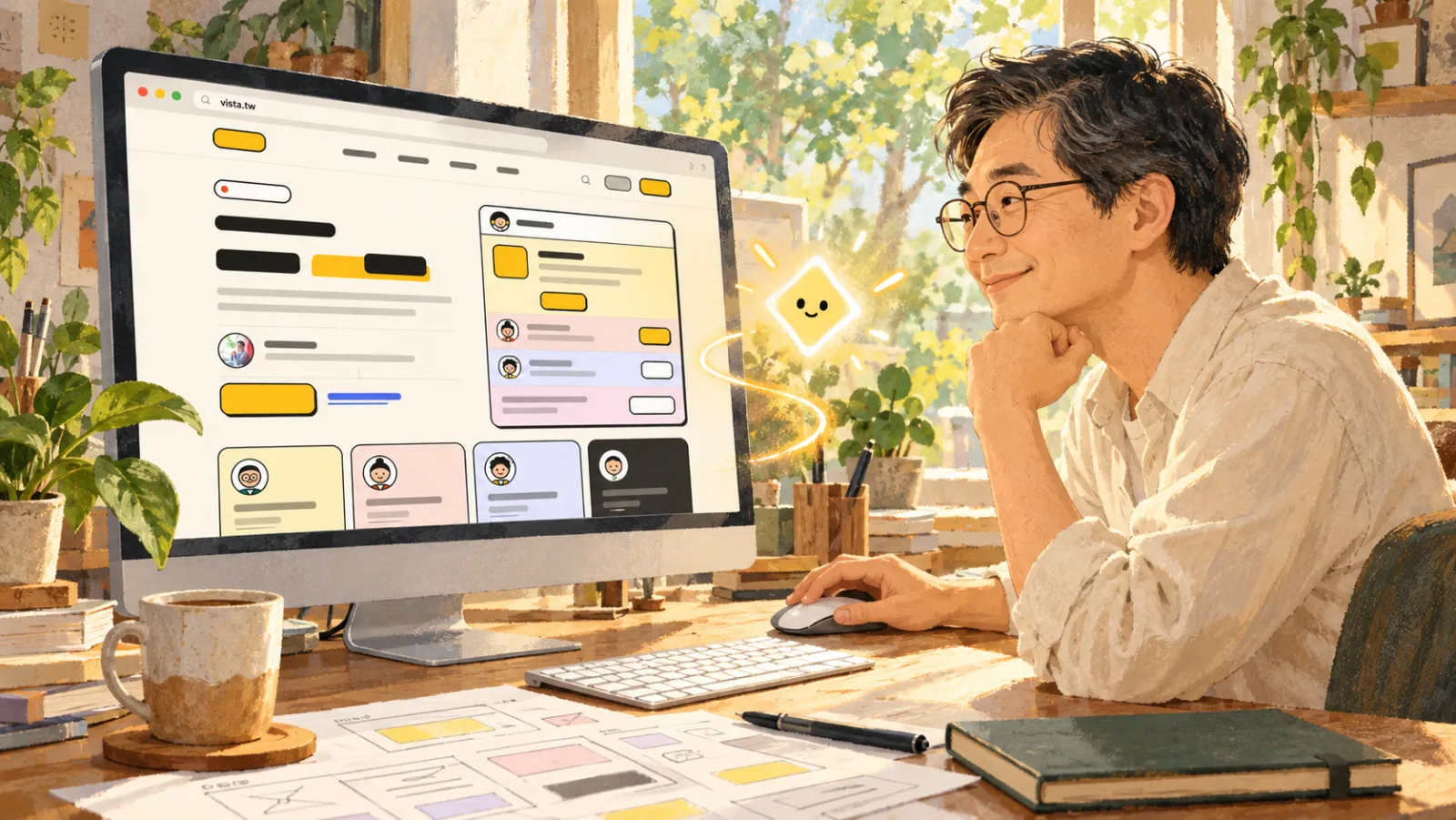
AI assists, you can create profit-making tools even if you don’t know programming

The resources of individuals or small and medium-sized enterprises are limited, and the high cost and lengthy cycle of traditional software development often directly kill many ideas with great commercial potential. In the past few decades, if entrepreneurs with a non-technical background wanted to build a digital product, the only way was to spend money to outsource or find a technology partner. However, as AI tools mature, the practice of Vibe Coding is becoming popular.
The core of this working model is to focus entirely on business insights, process logic and intent command, and leave the underlying grammar writing, system architecture construction and debugging to large language models, allowing front-line practitioners who do not know how to write programs to quickly build software systems that can bring substantial revenue and save manpower at very low cost.
ShipFast: One or two people support millions of dollars in revenue
For example, ShipFast (opens in a new tab) developed by American entrepreneur Marc Lou packages all the basic functions required to develop a software service, including cash flow connection, account login, email sending, SEO optimization, database connection, etc. It helps developers save the time of repeatedly writing basic code, and focuses on allowing people to quickly launch their own online innovations within a few days.
Marc Lou does not have an information background. In the past, whenever he wanted to test a micro-business idea, he was always limited by the cumbersome underlying infrastructure. Faced with this pain point, he decided to completely abandon the habit of traditional programming and completely switch to an AI-driven intent development process.
He identified the most time-consuming pain points of individual developers and created a set of tools that can be used out of the box. In subsequent product iterations and maintenance, he deeply integrated AI-assisted development. When encountering abnormal payment callbacks or authentication token errors, he directly fed the error record of the terminal back to the dialogue window to obtain repair suggestions. With only clear business flow design and extremely compressed feedback loop, he completed a commercial-level architecture in just a few days that traditional outsourcing teams charged tens of thousands of dollars and required months of planning, becoming a global benchmark case.
This system, which was assembled entirely through Vibe Coding, generated tens of thousands of dollars in sales through social word-of-mouth and natural traffic in the first month of its release. Within a year, it evolved into a micro software empire that generates more than a million dollars in recurring revenue every year. Throughout the entire operation process, the team size has always been maintained at one to two people, and no full-time front-end and back-end engineers have been hired. The huge personnel expenses, server maintenance outsourcing fees and project management losses of traditional software companies have all been eliminated with the efficient collaboration of AI.
Interior AI: Tool to earn tens of thousands of dollars a week
Another classic case that has attracted widespread attention in the European and American communities is the interior design visual generation tool Interior AI (opens in a new tab) created by veteran independent entrepreneur Pieter Levels at the end of 2022, who keenly captured open source AI business opportunities. He did not recruit a team at all, but relied on his best minimalist technical capabilities of native PHP, jQuery and SQLite to directly connect to the API of the open source image model Stable Diffusion, and assembled a commercial website with a paid subscription wall, multiple decoration styles switching and high-resolution graphics in less than a week.
When the product became popular in the community and saw a large number of simultaneous connections and the server faced overload, he relied on more than ten years of experience to resolve the crisis of system crash. This lightweight tool achieved high net profits of tens of thousands of dollars per month within a few months of its launch, reducing the trial and error costs from concept proof to commercial realization to the limit, and became an indicator example.
Competitive advantage shifts from writing programs to dismantling needs
These two real foreign cases clearly reveal that the competitive advantage of software development is shifting from the ability to write grammatically rigorous program code to the ability to discern unmet needs and accurately disassemble business logic. Small and medium-sized enterprises no longer need to be burdened with huge outsourcing quotations and lengthy contracts. As long as operators or front-line employees can clearly define the boundary conditions, exceptions and expected results of the process, natural language can be directly transformed into highly productive software assets, allowing small teams to establish operational agility and profitability comparable to large enterprises without increasing fixed personnel costs at all.
★ This article was originally published on Lianhe News Network’s “Digital Marketing/AI Assistance: You Can Create Profit Tools Without Programming (opens in a new tab)” by Zheng Weiquan.
Further reading
- “Learning Vibe Coding from Zero Basics” new book is on the market: written for you who have never written a line of program, but want to do something yourself
- This is how all my Vibe Coding ideas grow: Four sources behind 40 AI tools
- The marketer’s head finally catches up with your hand: Use Vibe Coding to turn your ideas into online works on the same day
- Enterprises import AI, bosses should not just watch
Next step
Bring this topic to your team
Vista Cheng speaks and runs workshops on AI workflows, writing and content systems for companies, schools and public agencies.