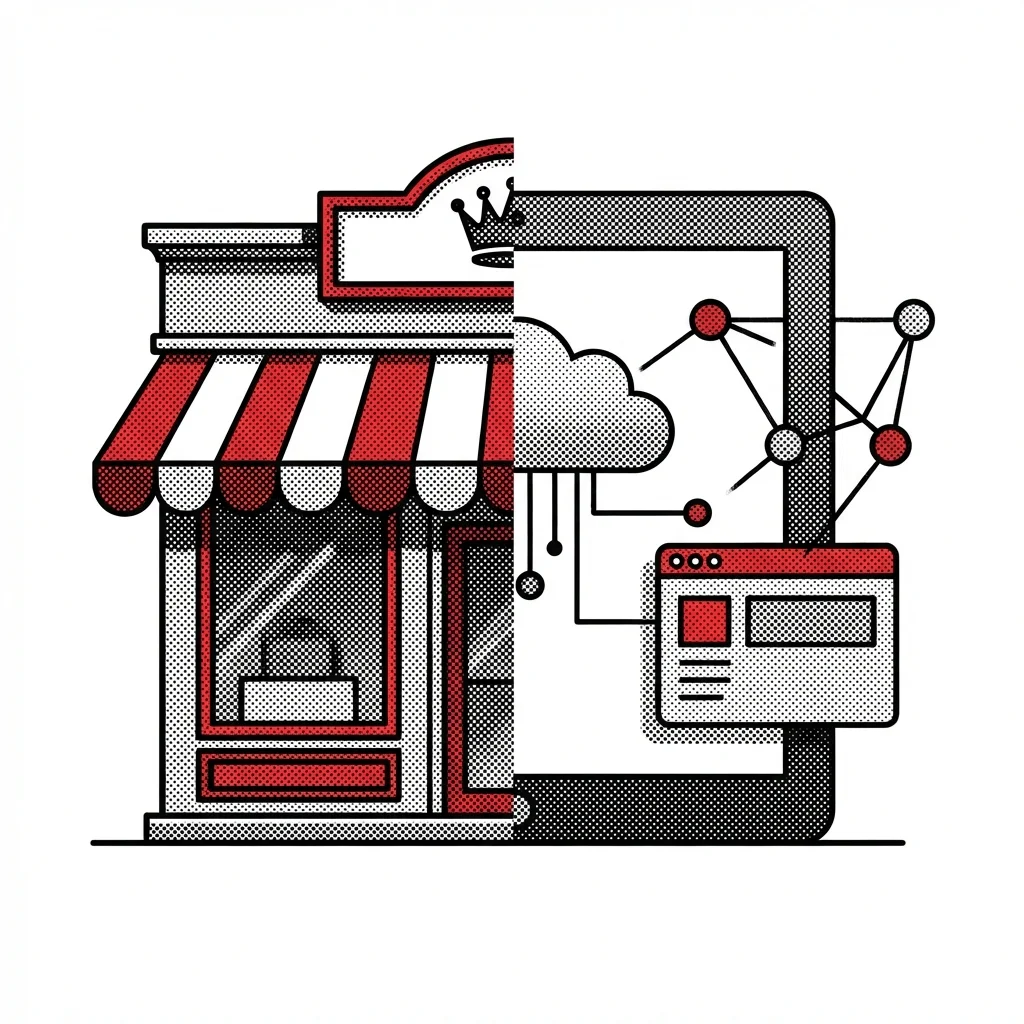
High-end customers don’t need teaching: what you sell is never the method, but how to get things done.
[ ](https://blogger.googleusercontent.com/img/b/R29vZ2xl/AVvXsEjfdiYBNHEVPeUnFRGnPr MkJZ4qo3CPrz4yjwVG-aUh3LppXbMRY2w56_6muDE7SPV3ZJWEi1poMHo_v2fyYRtdLXmCz7NySvMKzeKbDZQ sj8oQefkGA4ceUuPVjou3AAeaJRyyckFBncSSUkJhRlelUKuRbCUM_VQKo_LuTrcZykkaQExSunlIikir0Mv l/s1536/%E9%AB%98%E7%AB%AF%E5%AE%A2%E6%88%B6%E4%B8%8D%E9%9C%80%E6%95%99%E5%AD%B8.png)
Dilemma of knowledge service providers
Everyone who sells knowledge services, including but not limited to lecturers, consultants or coaches, will hit the same wall sooner or later: you obviously share seriously and teach hard, and the content does help people, but you always feel that you are still one step away from high-end customers. What’s even more heartbreaking is that the more generous you are, the easier it is to attract people who just want to “learn”; while the decision-makers you really want to work with - people who hold budgets in their hands, are burdened with performance, and are accustomed to measuring the world by results - instead just give them a polite thumbs up and disappear from your radar.
Many people misunderstood this phenomenon as insufficient exposure, not enough fame, or not enough cases in hand, so they began to increase their efforts: providing more intensive teaching, more detailed SOPs, and more complete template packages, and even forcing themselves to become a machine that never rests. These efforts are certainly not without value, but they often create a fundamental mismatch in strategy: when you use a teaching tone to announce to the market that I can teach you how to do it, what high-end customers care about is whether you can come in and solve the problem? The trading logic of the two is originally different, so the people they attract are naturally different.
To be honest, high-end customers have never been short of information. When you are still hesitating whether to write down the steps in more detail, they have already read ten articles, listened to three podcast episodes, and collected five templates. What they really lack is not methods, but certainty - how to reduce uncertainty and achieve results within a limited time. This is why high-end clients tend not to spend time learning a set of processes.
It’s not that they can’t learn it, but it’s not cost-effective for them.
You are willing to spend ten hours studying AI tools, testing processes and iterative corrections because that is your profession; if they also spend ten hours doing the same thing, it is equivalent to giving up their precious decision-making time, management time and business negotiation time in exchange for a possible answer. For policymakers, this is not improvement, but waste.
What do high-end customers really need?
Next, let me explain it to you using a common scenario.
Suppose the marketing director of a certain company complains that “the content has traffic but no conversions”, local lecturers will immediately provide solutions: how to write a title, how to write a [call to action] (https://copywriting.vista.tw/two-methods-to-call-to-action/) (CTA), how to design a marketing funnel, how to connect registration forms - every step is correct, and it can even be made into a course. However, the real high-end issues are usually not here.
If the content is not converted, it is probably not because the copywriting skills are not skilled enough, but because the value proposition is unclear, the product ladder is incomplete, or the path to trust building is broken; more realistically, internal cross-department collaboration makes every action stuck in the process, and as a result, no matter how good the copywriting is, it cannot be pushed forward. When you use a teaching tone to convey information, the signal the other party hears may be: “Go back and do it.” But what he really wants to ask in his heart is: “Can you do me a favor and get this done quickly? What I need is results and performance, not listening to your preaching.”
As a lecturer, I know very well: the biggest side effect of teaching content is that it implies that you should do it yourself. This appeals to a general audience because people like a sense of control: If I learn, I can change. But for high-end customers, this is equivalent to throwing the responsibility back to him.
High-end customers are not incapable, but have no interest in putting themselves in the position of apprentices. What he wants is for you to stand in the position of the surgeon, enter the scene to see clearly, issue a valid prescription, and complete the operation quickly. If you keep emphasizing “I teach you”, you are actually positioning yourself unconsciously: you are a teacher, not a master who can provide solutions. When you want to attract high-end customers, positioning like this is likely to cause you to lose customers invisibly.
Diagnosis and delivery capabilities
Having said that, what will high-end customers be impressed by? The answer is unromantic: diagnosis and delivery. You must let him see three things from your content: first, you understand his pain, and you are not just saying “I understand you are working hard”, but you can point out the bottleneck where he is really stuck; second, you have a set of implementable plan structure, you do not need to teach all the details, but you must clearly show how you dismantle, how to promote and how to accept; third, you must be able to implement it, not just talk about theory, but be able to run the plan and deliver the results smoothly.
I call this kind of content “prescription writing”. Please forget about inheritance, transfer, and synthesis for the moment, and put writing and grammar aside for now! It is written not with the purpose of teaching, but with the purpose of reducing uncertainty. You don’t need to explain all the operations like an instruction manual. What you have to do is make the other party believe that as soon as you enter the market, you can turn chaos into structure and anxiety into rhythm.
[ ](https://blogger.googleusercontent.com/img/b/R29vZ2xl/AVvXsEh7VD7hUiuw_MsrrQnkkf_PN7QG PdIIMTmF44BqRny9p_qhyphenhyphen68Z8e9aUEZ8xnMLnp6LBuIKKoILr8gazH2XbePIZKITwG889p-APYW2_zT LvI1o5GxIJYTiJ4dPD54HeSAUktOVxLW40HZbDAN1xJmyOUJm1l2nrNweWPDSWWgOAnT1dEw-JD-Os1EDSAd_/s16 00/%E9%AB%98%E7%AB%AF%E5%AE%A2%E6%88%B6%E4%B8%8D%E9%9C%80%E8%A6%81%E6%95%99%E5%AD%B8.png)
Prescription Writing Strategy
Your writing strategy can be very simple: first describe the symptoms, but use the language of the decision-maker - for example, “The project has been delayed” is not actually a progress problem, but unclear responsibilities; “I bought a lot of AI tools” is not actually a tool problem, but the process and data are not available; “The team is busy, but the output has not increased significantly” is actually not a lack of effort, but a lack of reusable combat systems.
Then, boldly make a diagnosis: dig down the surface phenomenon to the causal chain and point out the real stuck point. Next, be brave enough to give a prescription: instead of teaching the operation steps, give a clear plan framework and explain clearly how many stages you will divide, what you will do at each stage, and who needs to participate. The last step is also the most easily overlooked step: tell the deliverables - what are the deliverables, how to run the rhythm, how to check and accept, and what is completion? Only after completing these four stages of trials can high-end customers be convinced.
You’ll find that when your content shifts from how-tos to how-tos, the questions potential customers ask will also change. You will no longer be asked, “Can you teach us how to use this tool?” You will start to be asked, “Where is this situation in our company stuck? Can you spend two days a week in our factory and lead your colleagues to complete it?” This is the difference: the former only buys knowledge, but the latter buys results; the former requires you to speak more carefully, while the latter requires you to see more accurately.
So, if you are running a [personal brand](https://www.pressplay.cc/project/53DAE41EY982P0068A25D3C35403811C/about?srsltid=AfmBOoofosCsdy-Zf1e VmugUvFmavATpsM8rhzOQ1gZl48v2Ah7ItlGa), working as a consultant or providing professional services, and you really want to go upmarket, I am happy to give you a straightforward but effective suggestion:
Stop operating yourself as a free teaching channel.
Teaching can certainly be done, but it must serve a larger narrative: you are not just selling methods, but also demonstrating decision-making and judgment. It’s not enough for you to be hardworking, you also need to prove to your customers that you are reliable! You know, what high-end clients need is not an enthusiastic teacher, but a professional consultant who can be responsible for the results.
Go back to the wall at the beginning, and you will understand: the crux of the problem is not that you are not generous enough, but that the role signals you send are wrong. When you want to win high-end customers, you need to let the market see you as a problem solver: you can diagnose, prescribe, execute, and deliver perfectly. When you convey this signal clearly, you naturally don’t need to cut prices to compete, and you don’t need to be busy chasing customers - because what high-end customers are looking for is never more teaching, but less fuss and more certainty.
🚀 If you want to know what to do next, welcome to make an appointment at Vista Consultation Room, let us face the problem squarely and find a suitable solution.