Use the VISTA five-step personal positioning method to help you stay in the AI era
[ ](https://blogger.googleusercontent.com/img/b/R29vZ2xl/AVvXsEj9suzPLU-fVAkTOcECU5546fBO0d9pKfFjfpOc35LBA_rZrfZRzfUzTkUL7_o43p8g1Do7gmJFk_fdlujpQ1jehhMg- EgSw_xEpOUUpY7JLF4-mn7xGJPwgJ9Fm_fSdnitL3kyhT5xPxuF9K-hPlxHBbjwgzCQlYiR9OMvzi AC5HUeqaMMtawqyGC5-Qk/s1792/a%20doctoral%20student,%20with%20dark%20skin.jpg)
This article was originally published in “Technice Island”
There is a passage in Lao Tzu’s “Tao Te Ching Chapter 58”: “Misfortune lies where blessings depend, and blessings lie where misfortune lies.” I believe everyone is familiar with it. The meaning of this passage is very simple. The ancients reminded us of the principle that misfortune and good fortune depend on each other, that is, happiness is next to disaster, and behind happiness there is often disaster.
In addition, I believe you must have heard the saying “A crisis is an opportunity” and you should agree with it. We all know that crises are inevitable. As long as we can respond and prevent them in advance, we can prevent them from happening, which is better than dealing with them afterwards. Returning to today’s topic, artificial intelligence (AI) has been surging in the past six months. Although AI has brought many opportunities, it has also exacerbated many inequality problems in today’s society.
In recent months, I have been invited to give lectures in many public departments, enterprises, or universities to share my knowledge and experience with everyone on AI-related issues. Many people asked me worriedly, where should we go when the AI era comes? They worry that with the rise of AI, their jobs will be in jeopardy.
Today’s global situation is changing, and AI can do jobs such as customer service, accountants, programmers, and human resources managers quickly and well. According to media reports, some institutions at home and abroad have recently begun to introduce AI. The benefits of this are not only expected to save costs and improve efficiency, but also to conduct a comprehensive inventory of the company’s overall manpower needs and planning. It is conceivable that AI can do the same thing with less manpower, or even do it better! This great change of the times will not only disrupt the original life rhythm of many office workers, but also make many company managers or senior executives start to think about the meaning and value of work again.
Clare Gustavsson, a counseling psychologist from New York, USA, recently accepted an exclusive interview with the media and pointed out that many people are worried about the rise of AI. After all, anything new and unknown is likely to cause people anxiety, especially those who are originally engaged in creative work. It is more difficult for them to adapt to the rapidly changing situation of technological development, and they will feel somewhat at a loss as to what to do.
Claire Gustafsson claimed that AI brings fear and worry to people as much as climate change and the new coronavirus epidemic. But she also said that she is trying to let patients embrace the unknown and find ways to use new technologies to help them.
The question of whether humans will be replaced by AI has always been a topic of widespread concern. It has become more and more popular recently and has also attracted the attention of David H. Autor, an economics professor at the Massachusetts Institute of Technology in the United States. David Otto is a well-known American economist and public policy scholar. His academic research mainly focuses on the field of labor economics. Regarding the issue of whether AI will replace humans, his view is relatively optimistic: He believes that AI does have the potential to enhance the value of people’s skills, but it will not directly replace people.
Professor David Otto believes that the reason why AI is different from traditional information technology is that it can be applied to more types of problems. In the past, the main obstacle for computers to simulate human logic was the need to clearly regulate everything. Nowadays, AI can understand human logic from examples and statistical reasoning through machine learning, and can handle more tasks that require judgment and flexibility, such as writing, research, and decision-making.
Professor David Otto emphasized that AI technology can not only be applied to industrial automation, but also provides us with various convenient and useful tools. The emergence of AI will undoubtedly have an impact on many industries. It may also change the supply chain of certain professional knowledge and thereby relieve expert bottlenecks, but it can also supplement deficiencies in other fields.
换言之,AI 所带来的变革力量相当巨大。 The economics professor gave a concrete example to illustrate the concept of AI as a substitute or a complement. If you were a taxi driver in London, England, and spent years memorizing all the streets, you might have been proud of it and made a living from it. Now with the help of AI, your expertise is no longer scarce when others can easily do the same.
The popularity of AI may indeed have an impact on people’s jobs, and may even affect professionals who already have high incomes. In the past, professionals with information background were quite scarce, and the advent of AI may reduce the bottleneck of professional talents in certain fields. For example, in the future, nurses may perform some of the work of doctors with the assistance of certain instruments or medical technology. In other words, the popularity of AI is not entirely a bad thing. It will allow people with basic professional knowledge or judgment capabilities to “upgrade” and engage in more professional work.
According to new research by Professor David Otto, some companies adopting AI have reduced hiring in some tasks that AI is good at. However, reconfiguring and designing work tasks will be a new challenge for HR departments. Just as office paperwork was replaced by computers in the past, the rise of AI is not all about shortcomings. It will also bring a series of opportunities. Therefore, we must be able to make proper use of AI, strengthen the value of our skills, and then apply professional knowledge to a wider range of tasks.
Professor David Otto provided a unique insight into how AI may change the supply and demand in the labor market. His optimism is well-founded, mainly based on the fact that AI has advanced application capabilities, rather than just replacing human labor. He emphasized the importance of career design and called on everyone to make effective use of AI tools.
As you can imagine, we are still in the early stages of AI development and the actual impact remains to be seen. It may bring opportunities and challenges at the same time, so we must face it cautiously and think carefully about how to make full use of this information and embrace a better future.
Therefore, in my recent lectures, I also encouraged the guests not to panic too much, but it is necessary to take some time to take inventory of their own skills, clarify their interests, majors and positioning, and then find a career development direction that is truly suitable for them.
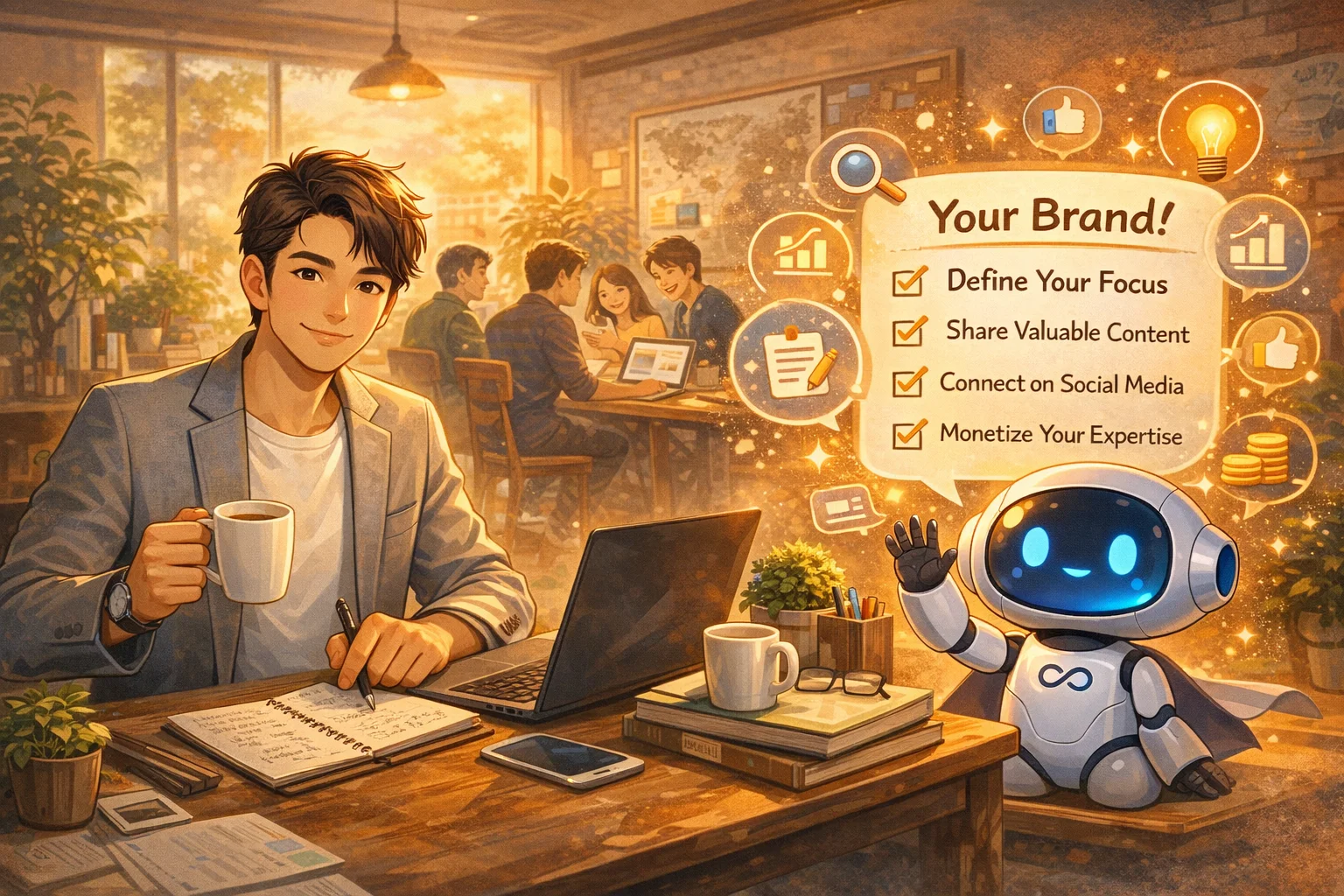
Here, I would like to share with you the “VISTA five-step personal positioning method”. In the past, I only provided this method for corporate customers. Now I share it with you. I hope it will be helpful to your friends’ personal development and career planning. I also hope that in the era of rapid development of AI technology, everyone can find their own direction and foothold.
V: Visioning (vision setting)
Steps: Self-Analysis and Skills Assessment
Purpose: Start by understanding your interests, strengths, and weaknesses and establish a clear vision for your life and career.
Method: Help individuals find their own direction and goals through Myers-Briggs Type Indicator (MBTI) or SWOT analysis.
I: Industry Insight
Steps: Understand the development trends of various industries and the impact of AI on work and life
Purpose: Gain insights into industry trends and analyze how AI is changing the industries of interest or existing industries.
Practical examples: Research the impact of AI in areas such as healthcare, finance or education, as well as potential career opportunities.
S: Strategizing
Step: Set career goals and direction
Purpose: Develop effective career strategies and goals to achieve life and career vision.
Method: Use the SMART goal method to ensure the attainability and measurability of goals.
T: Training (skills training)
Steps: Improve necessary skills and knowledge
Purpose: To train and improve the skills and knowledge required for the chosen direction.
方法:透过 Hahow、Coursera 或 Udemy 等线上学习平台,学习 AI、数据科学或管理等必要的知识与技能。
A: Action & Networking (action and network establishment)
Steps: Build professional networks and practices
Purpose: Through actions and the establishment of professional networks, you can put the knowledge you have learned into practice and create new career opportunities.
Method: Join professional social networks such as LinkedIn, participate in various physical and online activities, and hone skills through the implementation of real projects.
In a nutshell, you can think of the “VISTA five-step personal positioning method” as a comprehensive framework that covers self-understanding, industry analysis, goal setting, skills training and the establishment of a professional network. Through these five steps, you can help you find your position in the AI era and effectively plan and advance your career.
As long as you can start with inventory and self-positioning, it will not only help improve your own competitiveness, but also more effectively grasp the opportunities in the AI era! If you still have questions about career positioning and development, you are welcome to write to me to discuss.
★ Photo Credit: Barbara Zandoval on Unsplash
🚀 Want to know more marketing tips? Welcome to Vista Empowerment Academy!
Further reading
- Refuse to be a digital tenant: Why do you need to use Vibe Coding to build a digital headquarters in 2026?
- Find your keywords: Use AI to hone the core elements of your personal brand
- Facing the advent of the era of generative artificial intelligence: An AI action guide for professionals