When Ulysses meets AI: How I created a low-friction creative workflow
Last night, I was invited by teacher Zhang Yongxi to be the first guest in his live broadcast program “Seven Weapons” series. The theme was the writing tool I have used for many years - Ulysses.
To be honest, I’ve always been a little hesitant about sharing tools. Not because there is nothing to say, but because I am afraid that saying too much will make people more anxious. After all, in this era, new tools are released every day. Just researching tools can consume a lot of time, and the time to actually sit down and write is compressed.
But I am also grateful that this live broadcast gave me the opportunity to reorganize my views on writing tools, and it also made me more certain of one thing:
Good tools don’t let you do more things, but let you do one thing more focused.
Writing is like rock climbing
Zhang Yongxi Teacher used a metaphor that I like very much during the live broadcast. He said: Tools are like climbing sneakers.
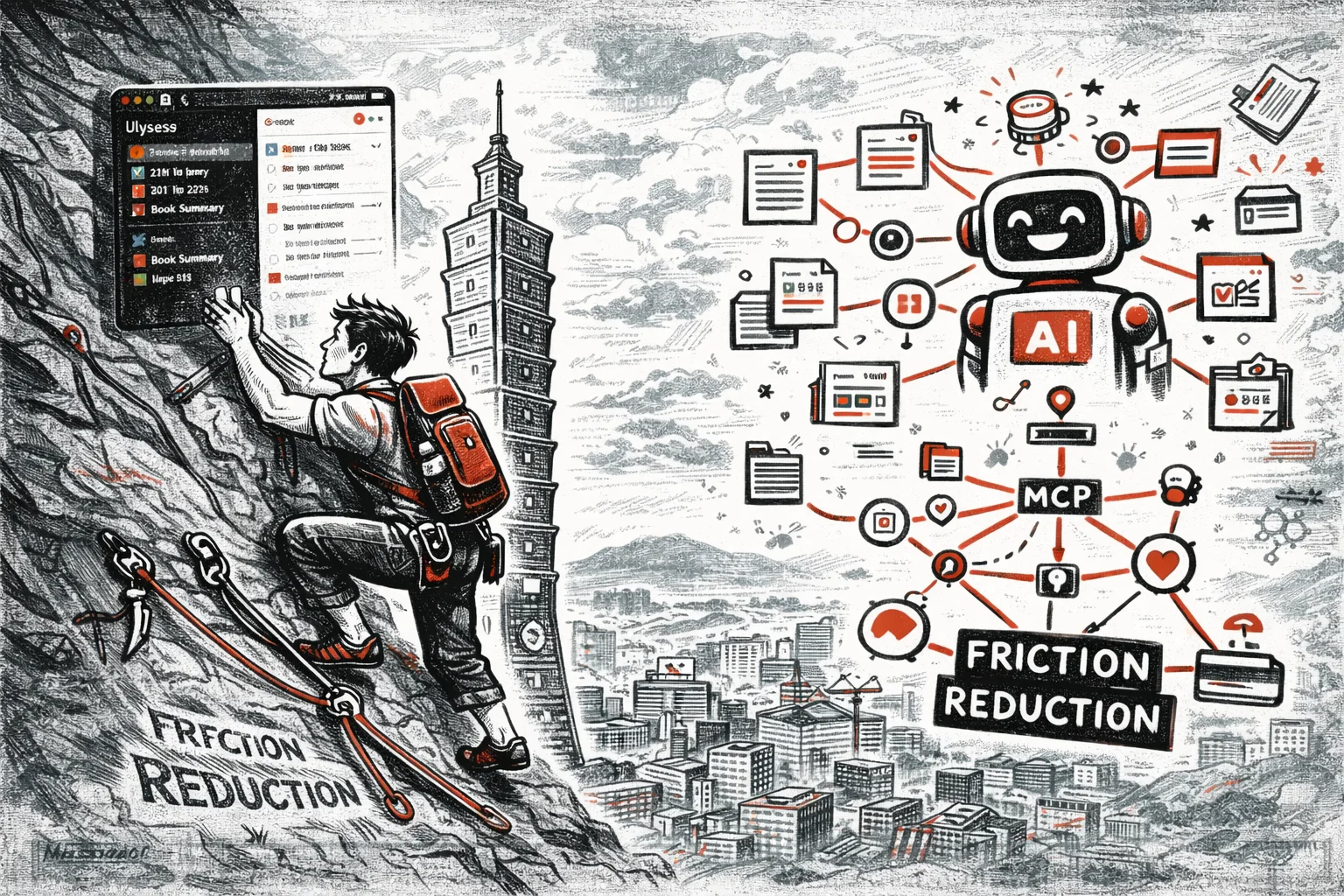
He mentioned the story of Alex Honnold, who climbed Taipei 101 with his bare hands. Everyone thinks that rock climbing requires a lot of equipment, but in fact the most important equipment is very little: a pair of good shoes, a bag of magnesium powder and a music player. A world-class player like Honnold doesn’t use many tools, but every one of them can resist friction.
I think the same goes for writing. Ulysses are my go-to sneakers—they reduce the friction of creating and allow me to focus more on climbing that mountain of words. But in the end, it’s me who climbs the mountain.
 ▲Writing is like rock climbing, you need good tools to reduce friction, but in the end it is you who climbs
The difficulty of writing: from net to tree to line
During the live broadcast, Teacher Zhang Yongxi quoted a passage I wrote before:
The difficulty of writing lies in converting the network structure, constructed using tree syntax, into a linear string of words.
This saying actually comes from the Canadian-American experimental psychologist, cognitive scientist and science writerSteven Pink Pinker’s point of view, but I realized it more and more deeply during the writing process. The ideas in our minds are often like a network - this concept is connected to that concept, intertwined and pulled together. But when you want to write an idea into an article, you can’t spread the entire web in front of the reader. You must first organize it into a tree-like hierarchical structure, and then flatten the tree into a linear string for the reader to read from beginning to end.
To write a short article of 500 words, this process may also be completed in the mind. But when you want to write a long article of 5,000 words, or even a book of 150,000 words, the project from network to tree to line becomes extremely complicated. Just like building a Taipei 101 building, you can’t just have the design drawings. You also need scaffolding, tower cranes, and various construction equipment to support the longest construction process in the middle.
Ulysses, to me, is that scaffolding.
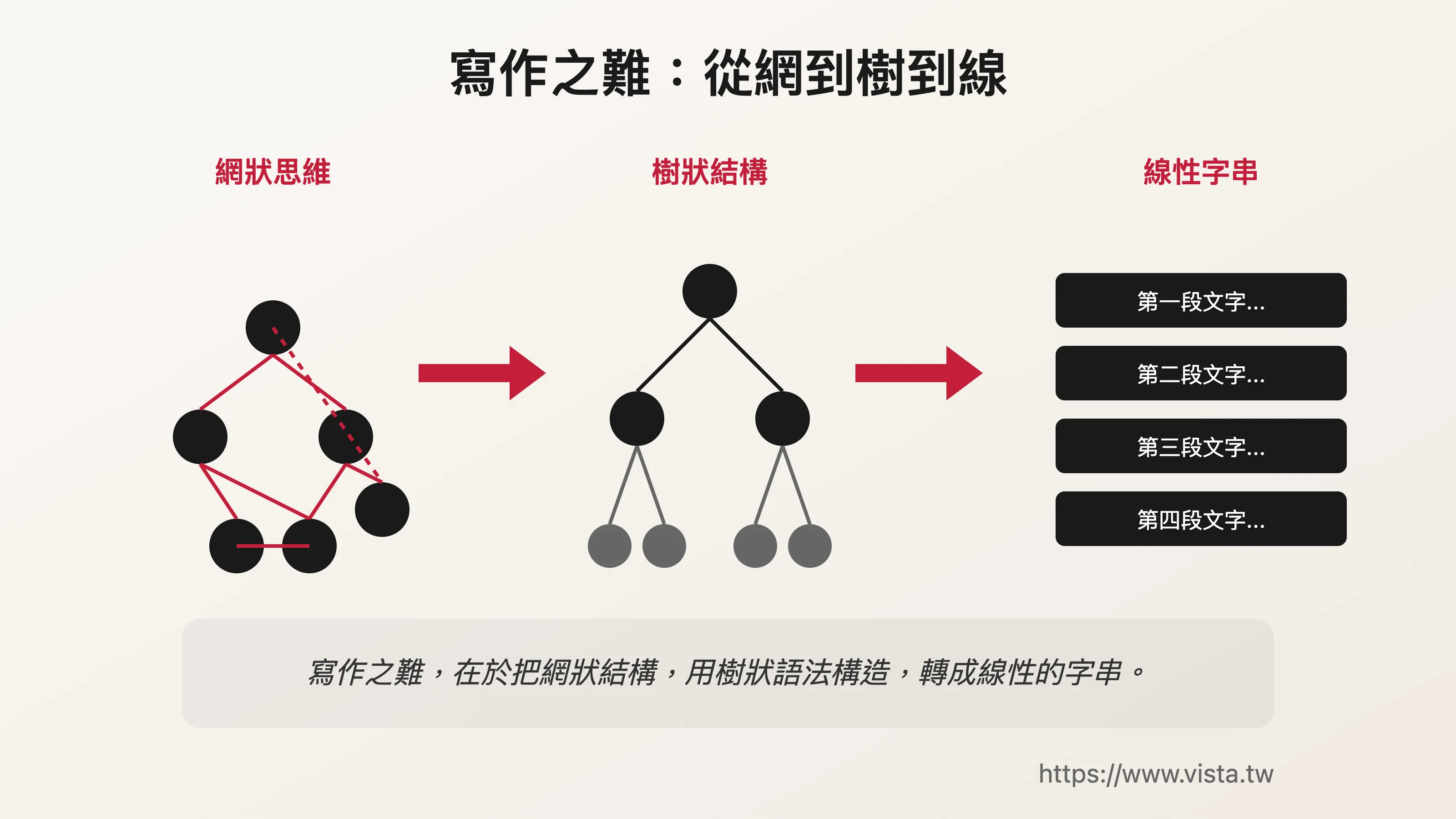 ▲ The essence of writing is to transform the network of ideas in the brain into a tree structure, and then compress it into linear words
Ulysses’ Philosophy
Ulysses’ logo is a pen with butterfly wings. I have always found this image beautiful: it symbolizes the transformation from cocoon to butterfly. Each of us has many ideas in our minds, but these ideas need to be honed, brewed, and accumulated before they can be turned into works that can spread their wings.
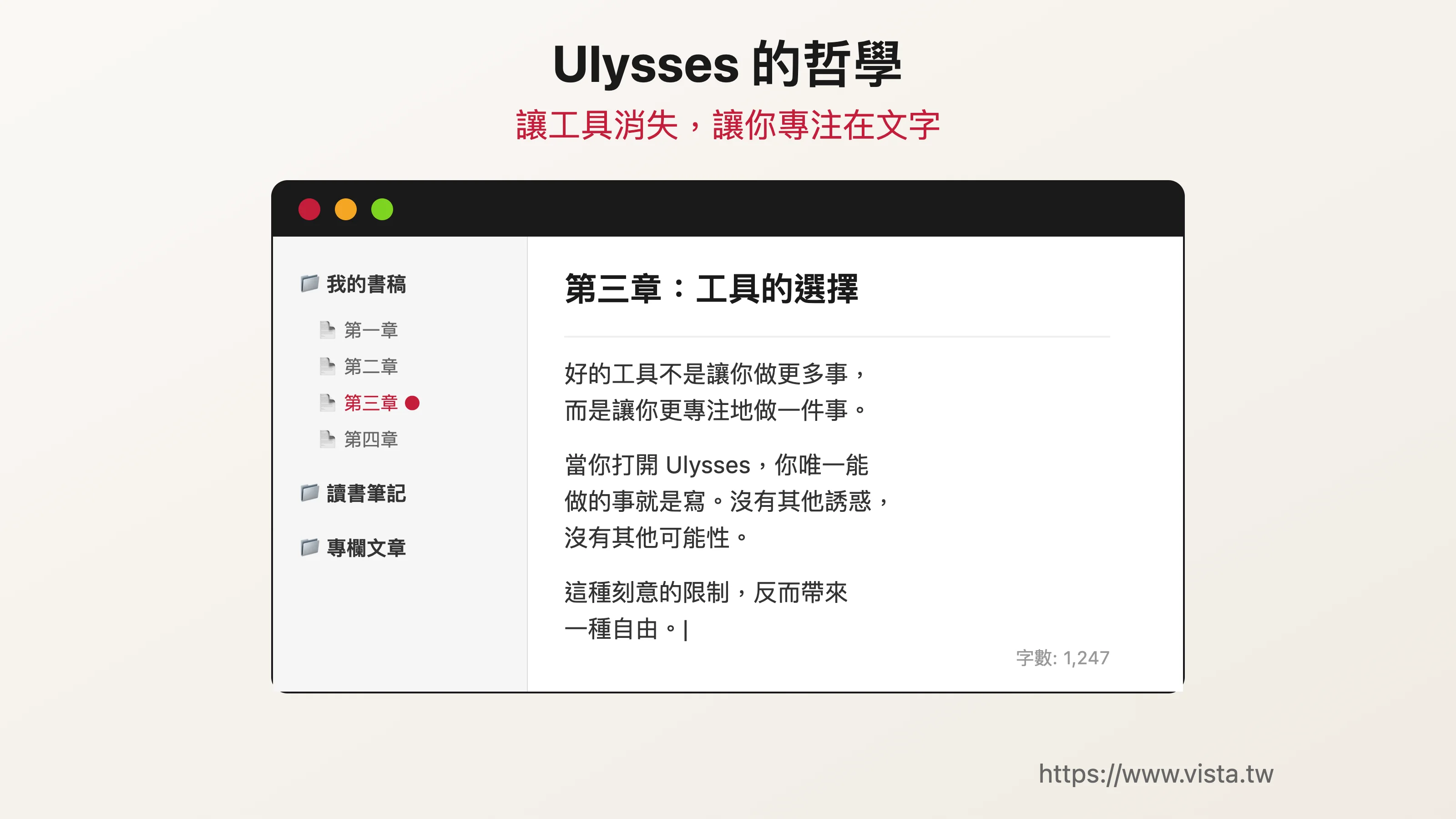 ▲ Ulysses’ design philosophy: let the tools disappear and let you focus only on words
Thoughts on tool anxiety
To be honest, I use a lot of writing and note-taking tools. Evernote has been with me for many years and has a deep affection for it. However, after taking too many notes, it becomes difficult to find information and the system is prone to confusion. Notion’s All-in-one is fascinating, but I often find myself falling into a state of productivity porn - getting excited looking at those fancy templates and features, but not really increasing my output. The two-way connection between Roam Research and Obsidian is indeed powerful, but sometimes it is too complicated and heavy for people who simply want to write.
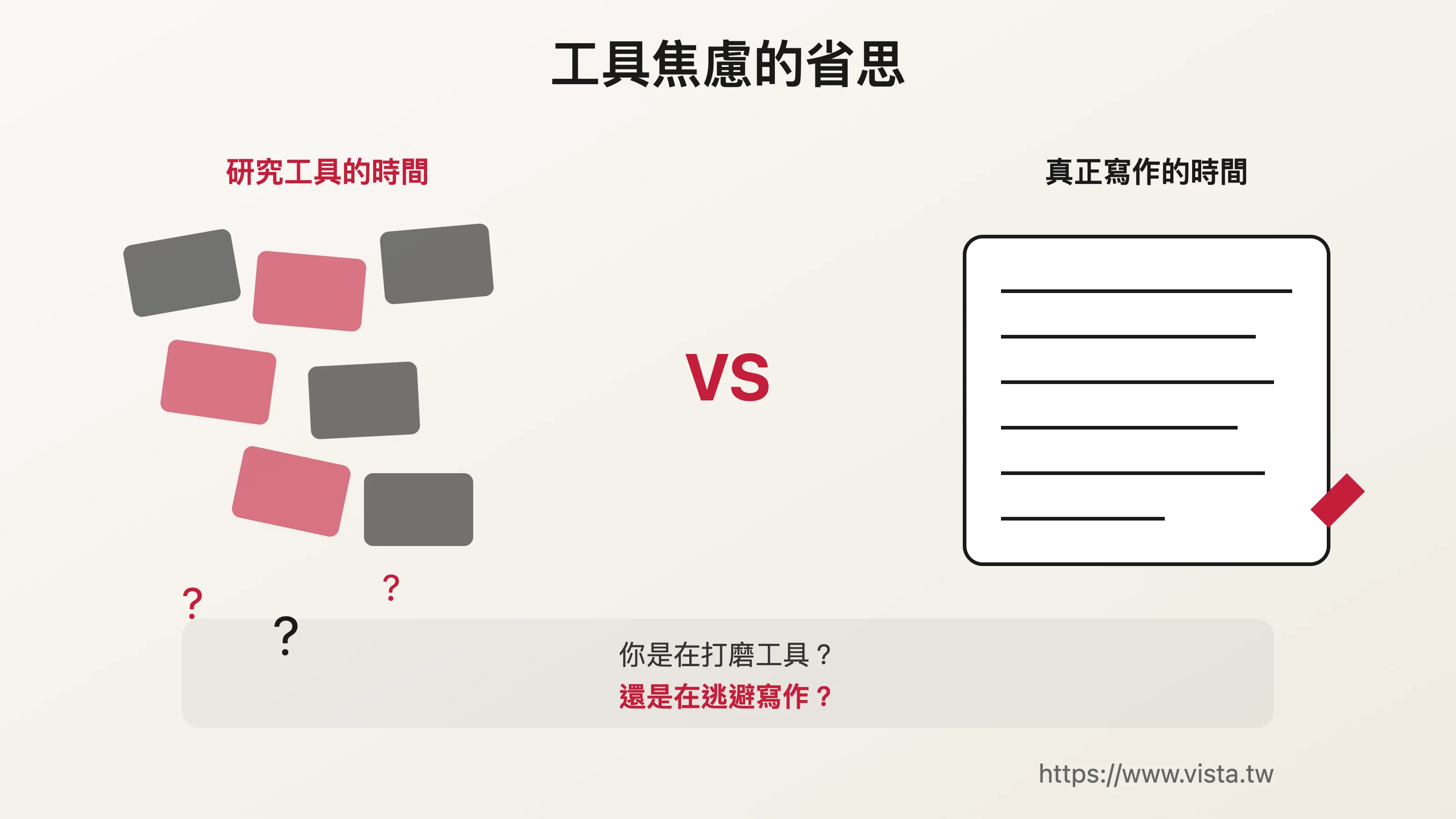 ▲ Tool anxiety is a common problem in this era, but what really matters is the output, not the tool itself
Ulysses is different. It’s not a database or a second brain, it’s just a writing tool. On the left are tree-like categories and directories, and on the right is a clean editing area. It has word count, output function, and tag system, but it has no plug-ins, no two-way links, and no database view.
It’s not that the Ulysses team can’t do it, it’s that they choose not to.
Make the tools disappear so you can focus solely on the words. When you open Ulysses, the only thing you can do is write.
It took me a long time to really understand this philosophy. There is no other temptation, no other possibility. This “deliberate restriction” brings a kind of freedom.
Cell writing method
Teacher Zhang Yongxi shared his “cell writing method” influenced by Japanese scholar Yukio Noguchi during the live broadcast. This concept resonated with me very much.
He breaks down writing into the smallest controllable units: 150 words is a cell, 1,000 words is a small organization, 7,000 words is a chapter, 30,000 words is a book, and 150,000 words is a book.
The value of this framework lies not just in the numbers themselves, but in the “predictability” it provides. When you know that a reading experience is about 1,000 words, and 1,000 words is composed of about six to seven 150-word cells, you won’t stare at the blank screen in a daze - you just need to find a way to write the first 150-word cell.
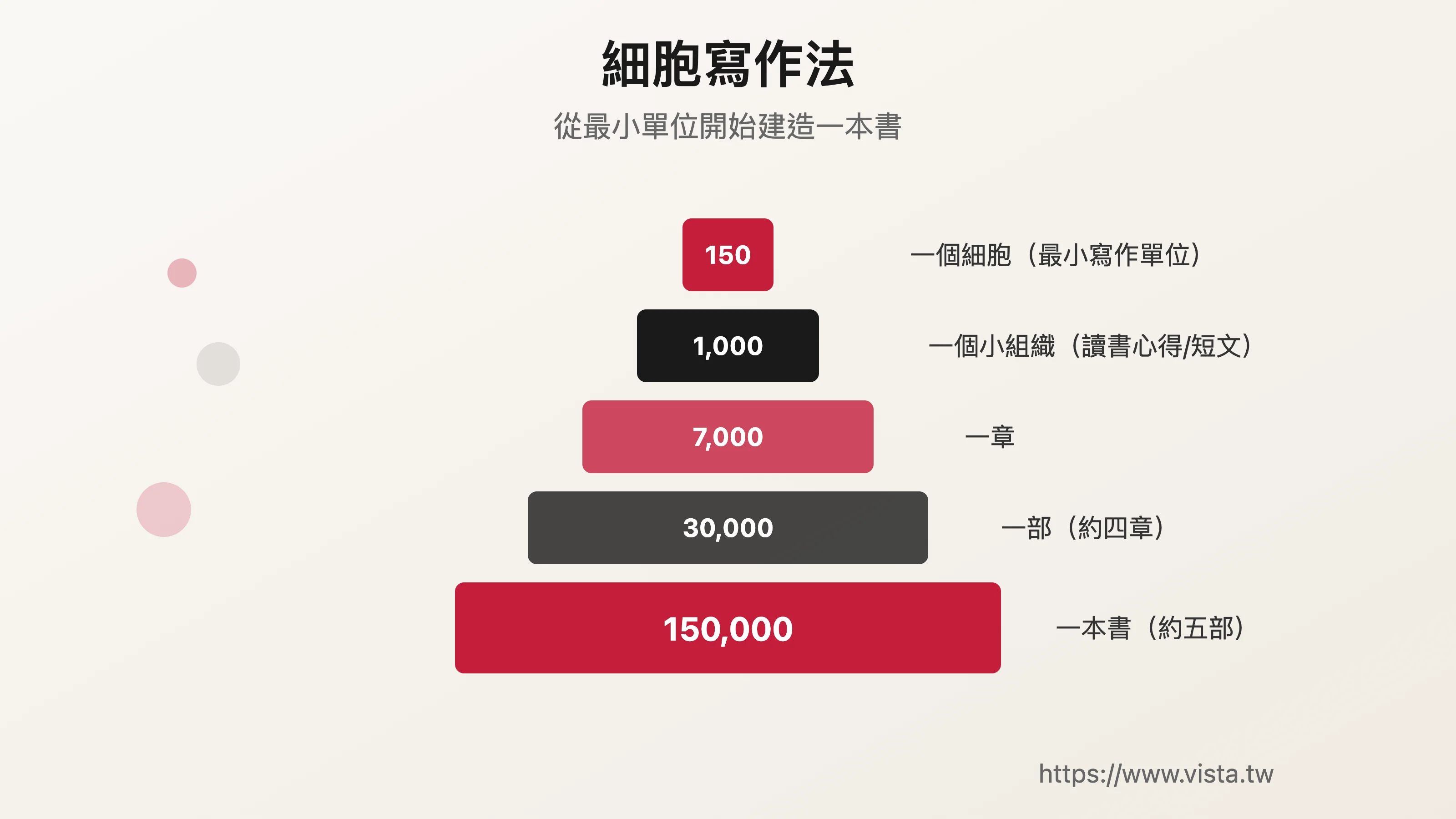 ▲ Cell writing method: break writing into the smallest controllable units, 150 words is a cell
Jiugongge thinking method
In the past two or three years, I have become more and more aware that word count is a very important variable to control. Before writing, I will first decide how many words I want to write in this article, and even how many words I want to write in each paragraph. This is not to limit creativity, but to give yourself an achievable goal.
For example, “Economic Daily can only write about a thousand words, while “Technology Island” can write two or three thousand words. They are both media columns, but they have completely different meanings to me.
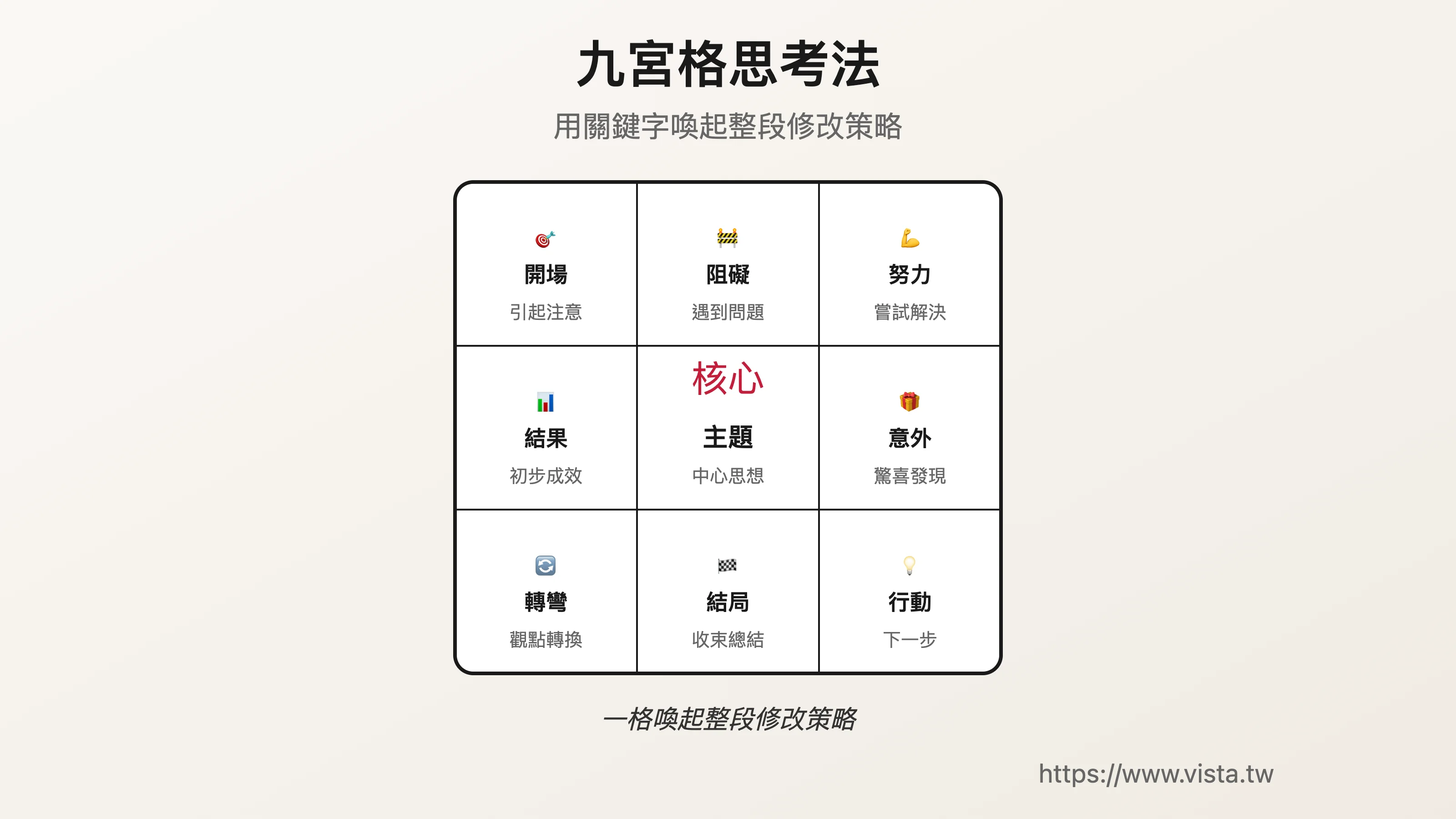 ▲ The Jiugongge thinking method can help you quickly develop the structure of an article
Many people can’t finish writing articles, not because they have no ideas, but because they don’t know when to stop.
When you have a clear word count goal, you will naturally know where the end point is.
Three practical scenarios
During the live stream, I shared three scenarios where Ulysses helped me:
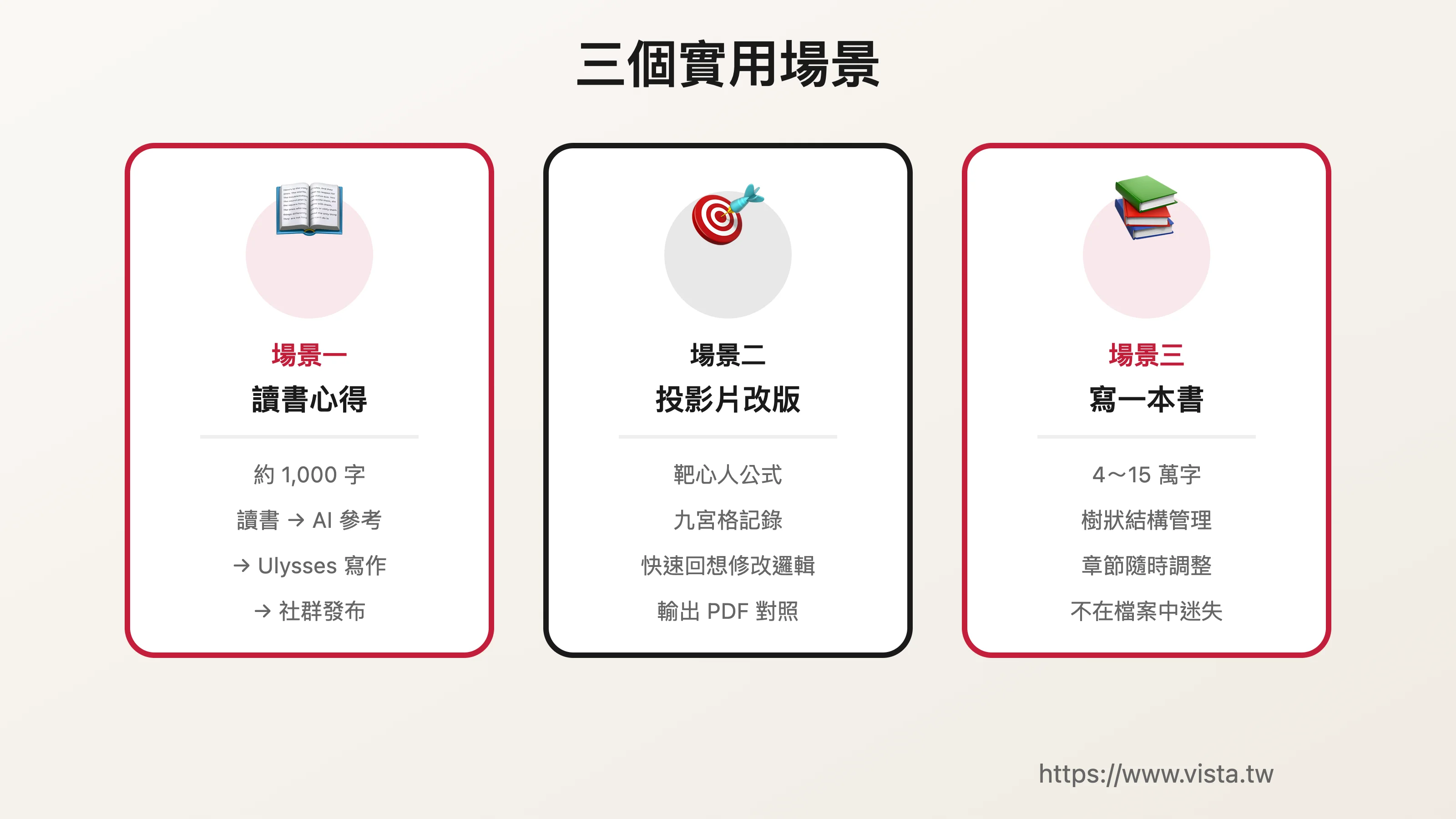 ▲ Three main application scenarios of Ulysses in my work
AI reading experience workflow
The first scene is to quickly write down your reading experience. I often share my reading experience on Facebook, usually more than a thousand words. I would read a book, take notes, then throw the notes to the AI and ask it to generate reference materials, and then go back to Ulysses to write my article. I write articles on the right and put AI references on the left. This double-column editing allows me to quickly compare, extract, and reorganize.
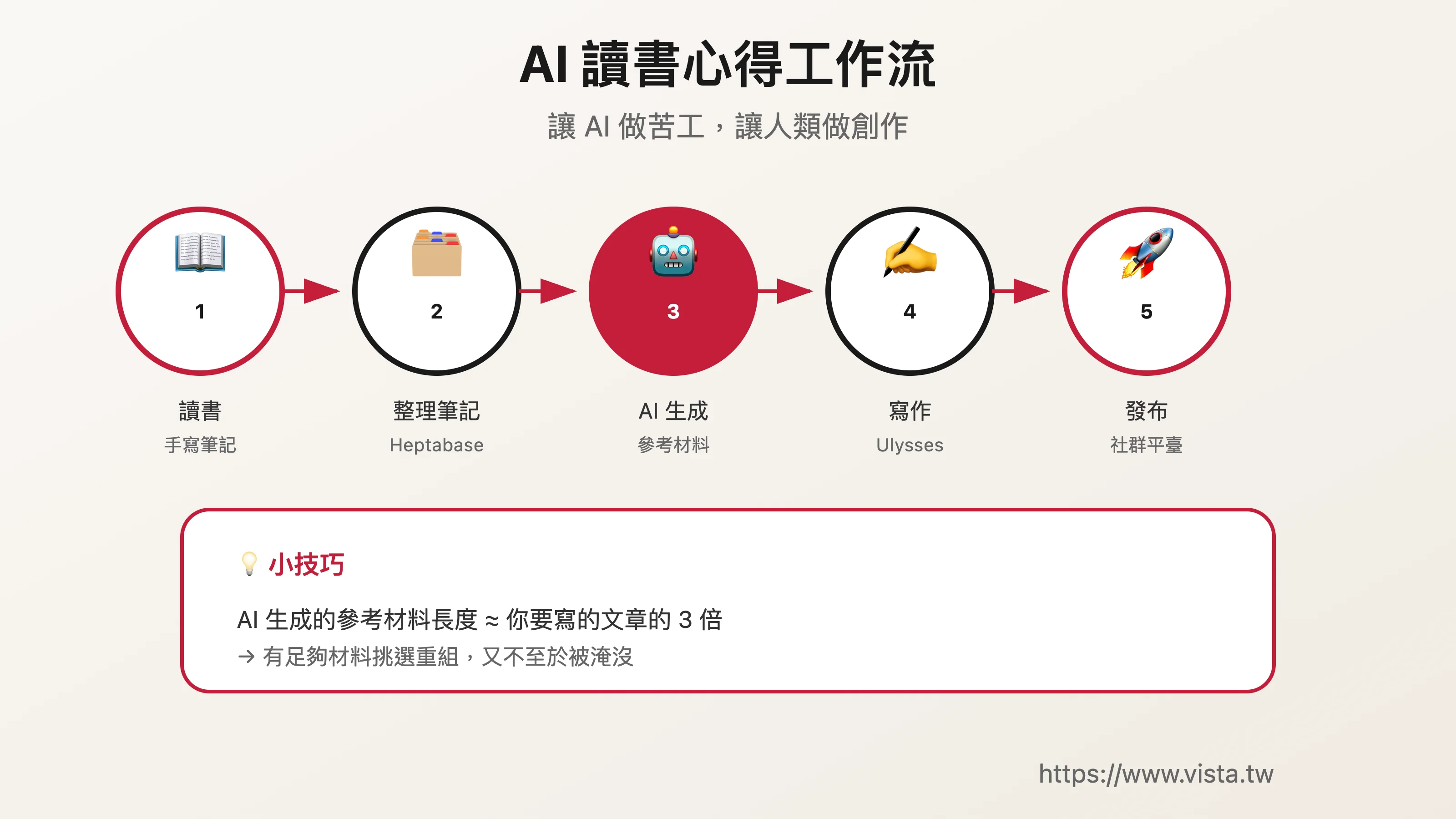 ▲ Reading experience writing workflow combining AI and Ulysses
Quickly revise slides
The second scenario is a quick revision of the slide show. I often give speeches on fixed topics, and each time I need to fine-tune the content for different audiences. I will use Ulysses to record the modification logic of the slides into a text structure, and mark each node with emoticons and keywords, so that I can quickly recall my thoughts at that time the next time I revise.
Write a book
The third scenario is writing a book. Whether you are writing a book of 50,000, 60,000 words, or 150,000 words, it takes a while to manage a large amount of material and chapters. The tree structure of Ulysses allows me to clearly see the skeleton of the entire book and adjust the order of chapters at any time without getting lost in a huge archive.
New possibilities for AI concatenation
The most exciting part of this live broadcast is actually the discussion about AI connection. I also know very well that most of the partners come here for this theme.
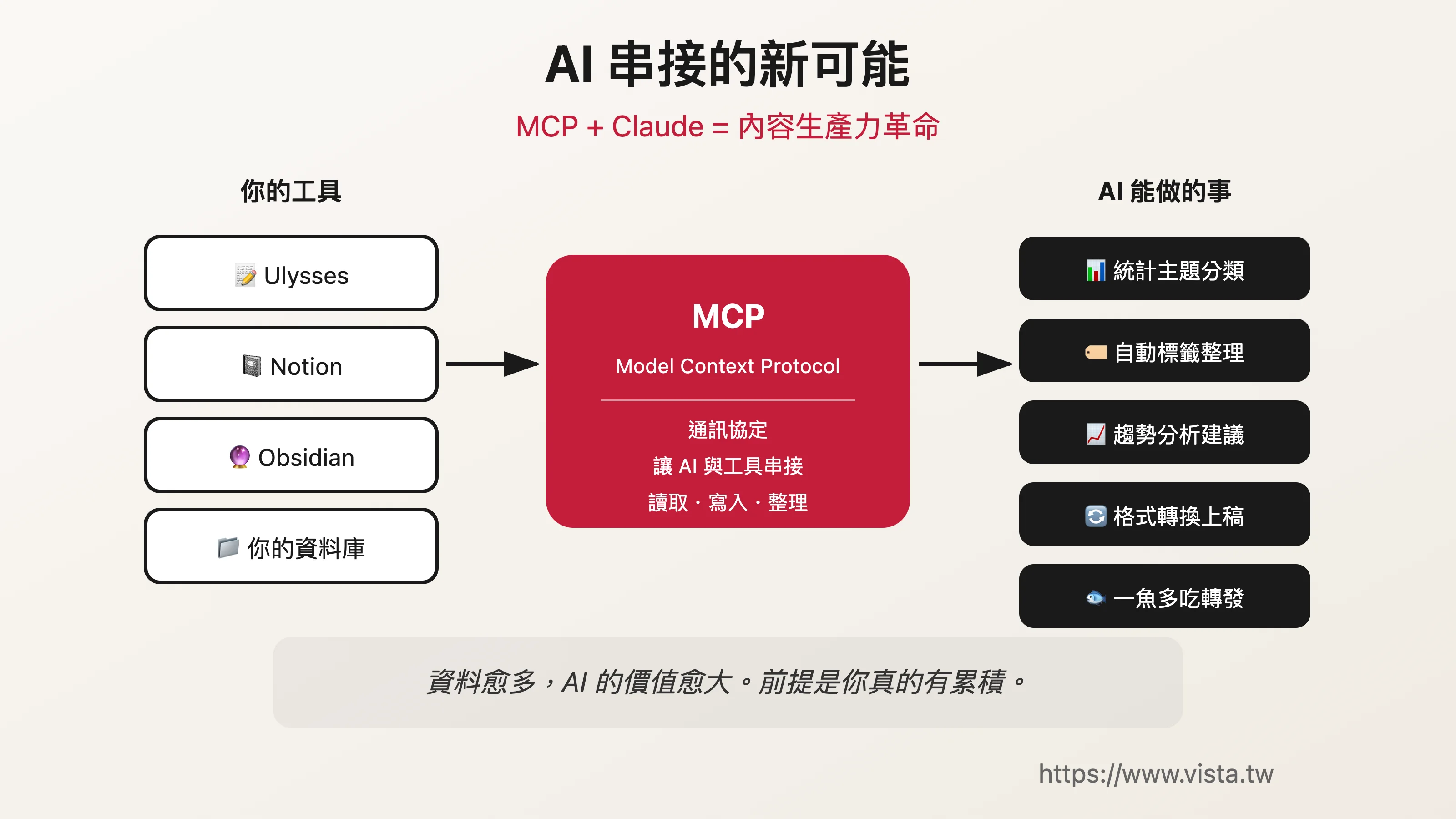 ▲ Connect to AI through MCP to make your writing tools smarter
However, let me make one thing clear first: AI doesn’t have to write for you. In fact, I think the greatest value of AI is not to help you write, but to help you handle everything other than writing, such as-organizing, classifying, summarizing, tagging, cross-article search, submission and defining format specifications. These tasks are important, but they are not the core of writing; in other words, on the writing spectrum, they can count as writing drudgery.
Let AI do the hard work and humans do the creation. This is my working philosophy now. The key to realizing this vision is MCP (Model Context Protocol). MCP is a communication protocol that allows AI to connect with your tools. Not only Ulysses, but tools such as Notion and Obsidian may also have MCP. After being strung together, AI can do things for your database: create files, read content, add tags, organize the structure, make statistics, and do reviews.
Economic Daily Ranking
Let me give you a practical example. I have been writing columns for “Economic Daily for many years and have accumulated hundreds of articles. It used to be painful to sort out the categories, but now I can ask AI to read that folder, count subject categories, analyze proportions, observe the ebb and flow of trends, and even ask it to predict from an editorial perspective what topics I can write about in the future.
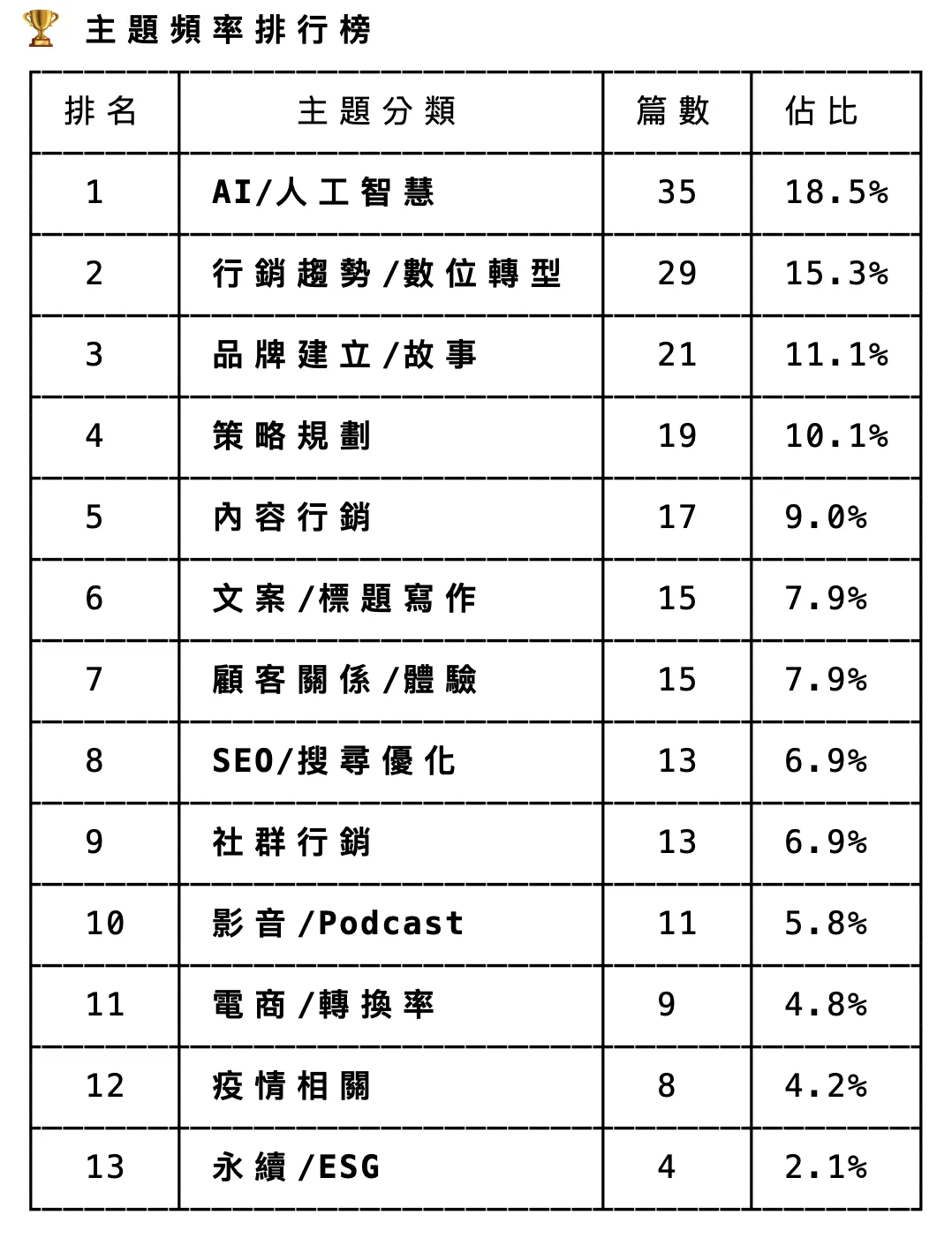 ▲ Use AI to analyze the topic distribution and trends of the Economic Daily column articles
At this time, you will find one thing: the more data there are, the greater the value of AI. The premise is that you really accumulate. If your writing is scattered in various places and full of confusing formats, AI can’t do anything about it. But if you have a clearly structured database, AI can turn it into a usable asset.
Content production line and manuscript submission automation
Now I can submit the manuscript (including links, illustrations, formatting, style, etc.) in about three to five minutes, because I first define strict submission standards, and then let AI process it according to the standards. Submitting a manuscript is not just copying and pasting, it has many details: link level, image size, caption format, title style… AI can naturally do all of these. As long as you can give clear specifications and continue to revise the specifications, AI can accurately submit the manuscript.
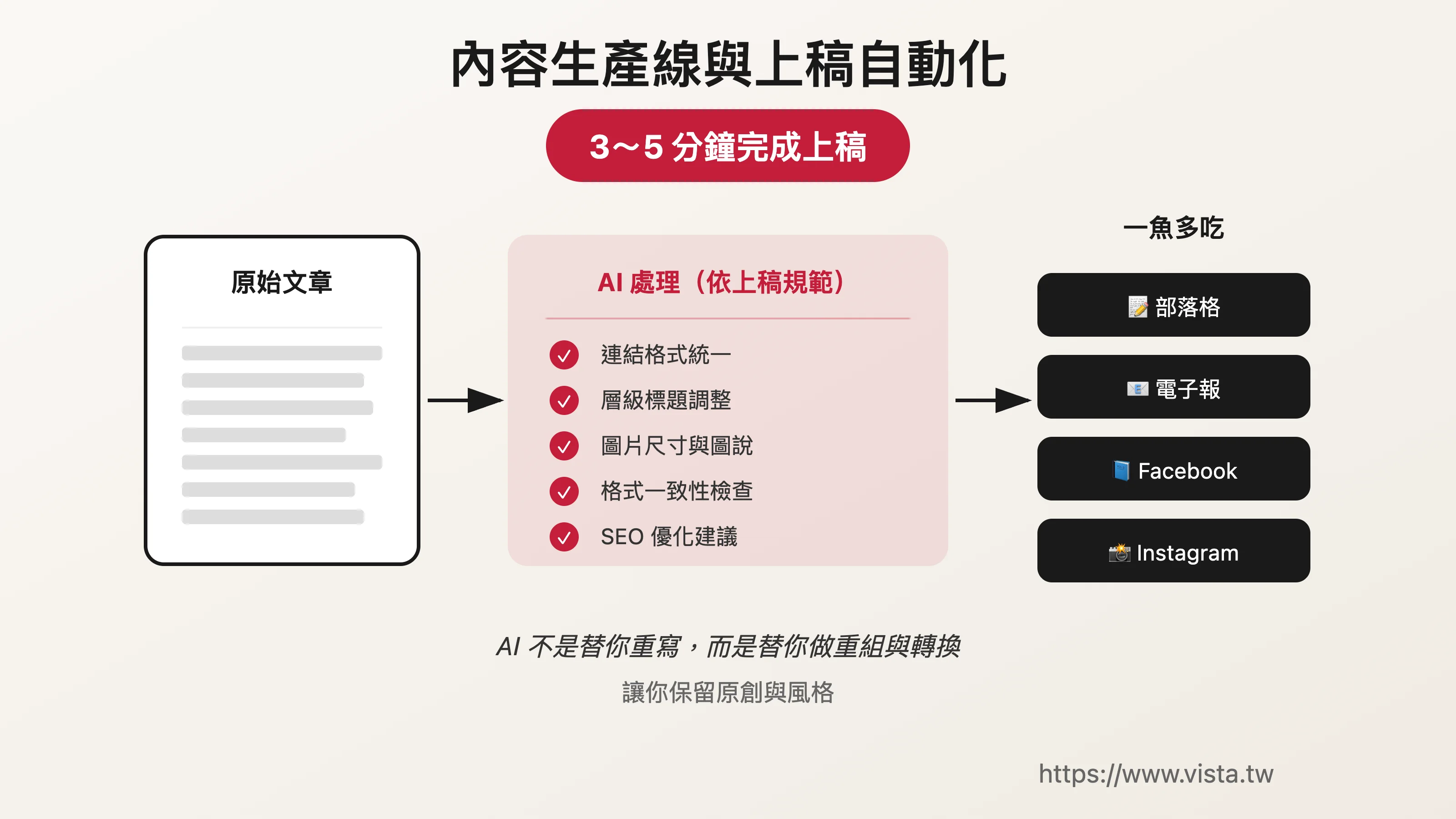 ▲ Establish a content production line and let AI handle the trivial details of submission
Furthermore, AI can also help you eat more with one fish, that is, convert the same article into the tone and format of different platforms. For example, newsletter posts should be more formal, Facebook posts should be more intimate, and Instagram posts should be more streamlined. AI does not rewrite for you, but reorganizes and transforms for you, allowing you to retain the original spirit and your own style.
Tools are like climbing sneakers
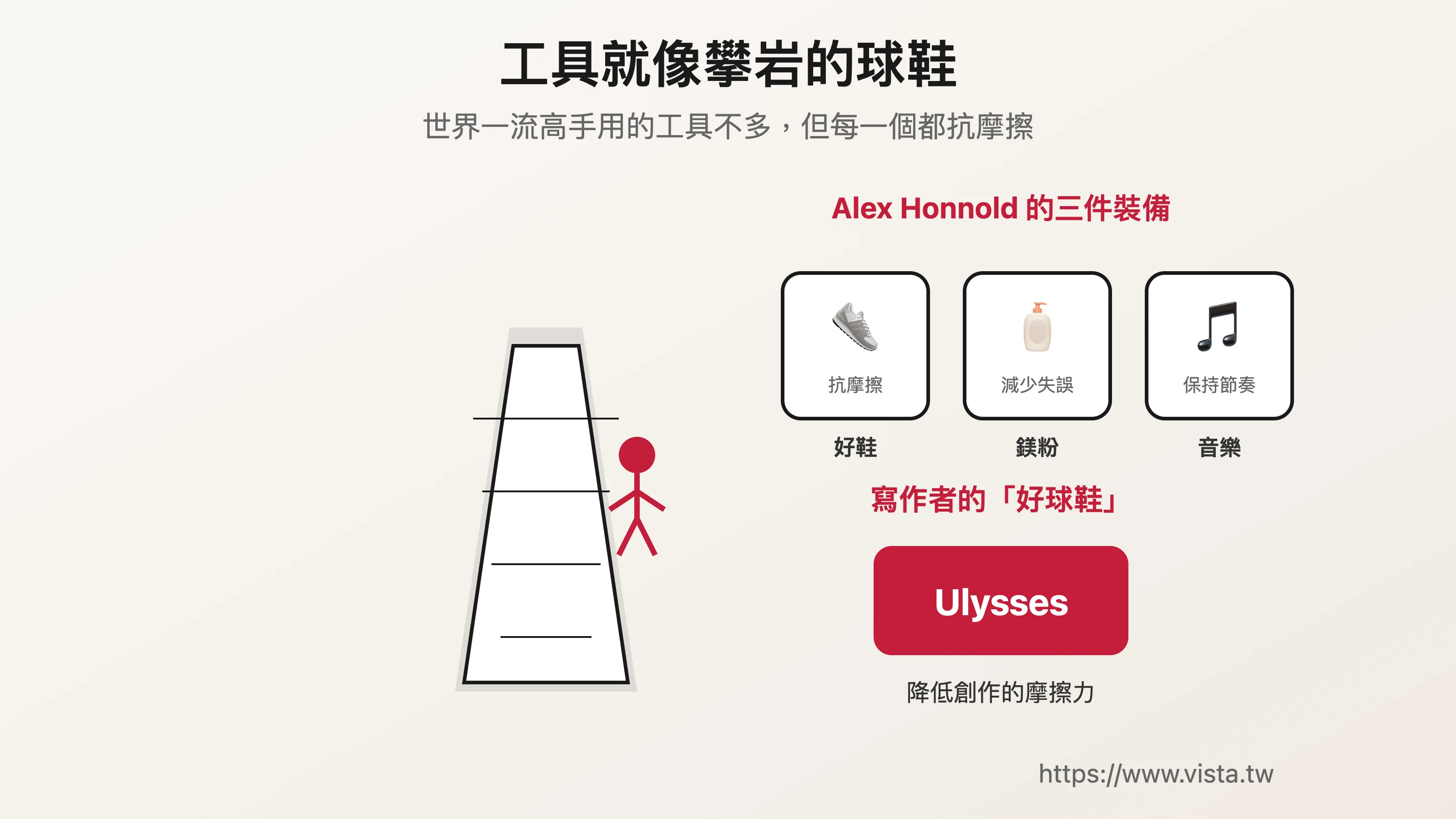 ▲ Tools are like climbing sneakers: it’s not about having many, but it’s about reducing friction
Suggestions for selecting tools
If you are also looking for a writing tool that suits you, my advice is: first think about what you want to do, and then choose a tool. Don’t adopt it rashly just because others recommend it, and don’t choose it because of its multiple functions. The reason is very simple, because having more functions is not necessarily an advantage, but sometimes it is a burden.
 ▲ The key to choosing tools: first think clearly about what you want to do, and then choose the tools
Find a tool that can make you “disappear” - disappear until you forget that you are using the tool and only remember that you are writing.
Well, that’s right.
Extended reading:
- When AI Becomes My Editor: How a creator used AI to revive content plans that had been shelved for years
- Anytype + Claude: Create an AI-driven second brain to make your notes come alive
- From Chaos to Conquest: A personal transformation blueprint to completely turn your life around