I no longer "write" a diary: AI lets me "talk" instead, turning my life into a database
Now, using AI to write articles or draw pictures seems nothing special! But, will you use AI to keep a diary?
When it comes to using AI to write diaries, I have always been deeply impressed.
The starting point of everything: Voice × ChatGPT × Diary
I still remember that starting about two or three years ago, I was often invited to teach courses on AI applications in the public sector, enterprises, and universities. Whether it is an open class or in-house training, I often share some of my secret skills with everyone.
For example, I use ChatGPT to help organize my diary. The method is actually very simple. First create a shortcut on your iPhone and set the path and process; whenever you have free time every day, pick up your phone and record a paragraph. That passage may be the result of reading a book, the feeling of seeing an advertisement, or it may just be the sound of birds chirping or the wind blowing through the treetops while walking. Although these contents are very real and fragmentary, they are all true.
I often accumulate three, five, or even ten voice clips a day, and only give these clips to ChatGPT late at night. Ask it to transcribe first, and then rewrite the scattered contents into a complete diary. What’s more interesting is that I will also add more pressure: ask it to act as an observer or mentor, find blind spots in my words, provide insights, and even give me encouragement and suggestions.
What is really changed by AI is never just the writing speed, but the way you see yourself, understand yourself, and accumulate yourself.
Every time I hear this sharing, the students react greatly. Many people were surprised when they heard it, and some even came to me after class and asked me: “Teacher Vista, how do I write Prompt to have this effect?” It feels like it happened yesterday, but looking back, the diary really helped me write a different version of my life in the past two or three years.
The second step of evolution: Use AI to design diary templates
A few months later, I took another step forward: I started using AI to design a diary template and pasted it into Heptabase (of course, you can also use Notion or whatever note-taking software you’re used to). Every day, you just need to call out the template, fill in the fields with your feelings and what you saw and heard that day, save it, and you’re done.
This method lasted for almost a year. It is less troublesome than writing after thinking about it, and it is more intuitive than free writing. More importantly, it makes the diary no longer just an expression of emotions, but gradually turns into a database that can be reviewed, tracked, and even reused.
You will begin to see your behavior patterns, emotional rhythms and growth curves - it feels very solid and powerful.
Ultimate form: Just say it, AI will help you organize the archives
But recently, I came up with a new idea: Since AI has become so powerful, can I push diary writing and self-examination forward?
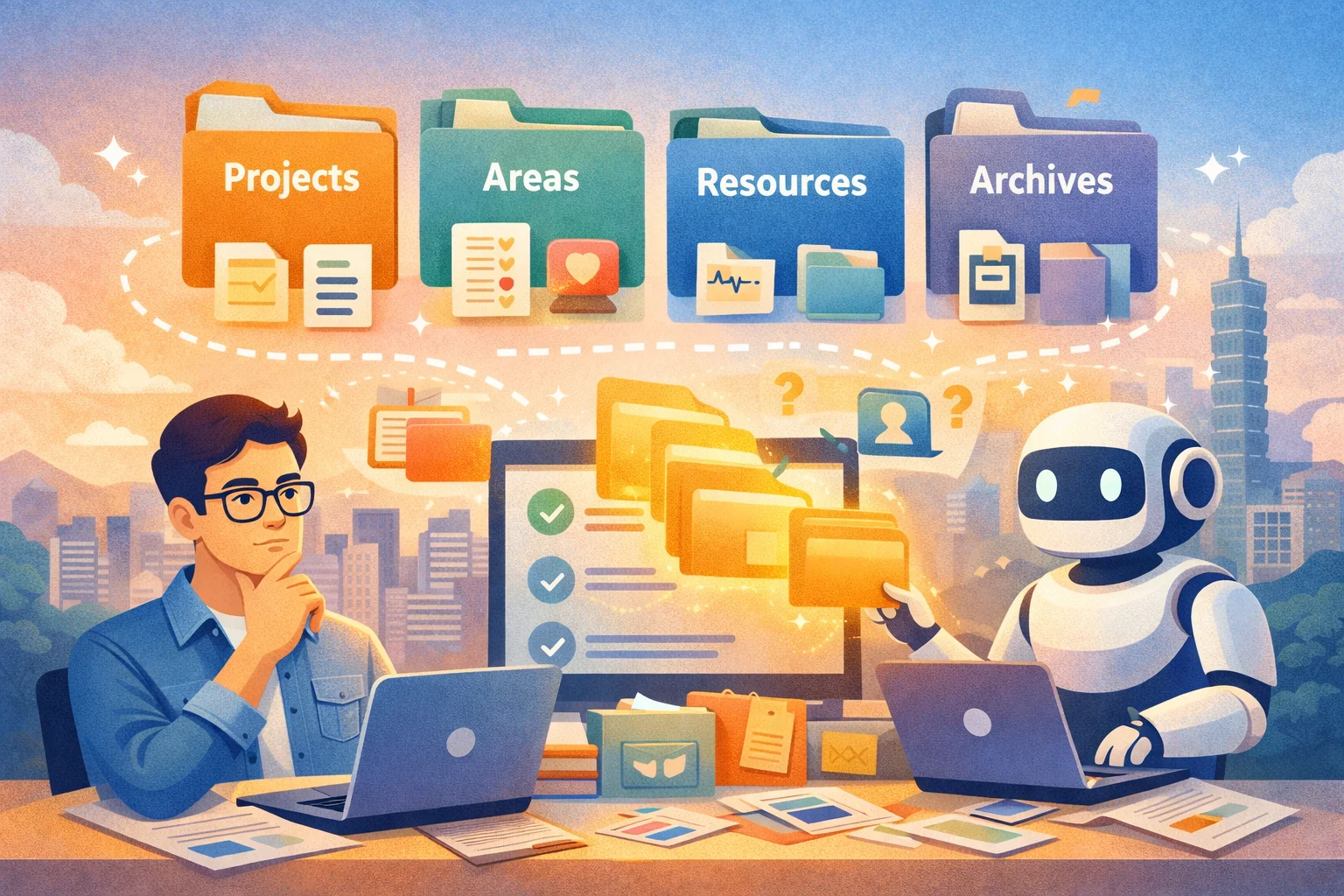
What I want is not just to convert speech into text, but to allow AI to automatically sort, classify and organize according to my preset templates, and finally write the diary directly into the note-taking software I use. In other words, I just need to speak naturally into the air, and the system will do the rest.
And this is really possible now.
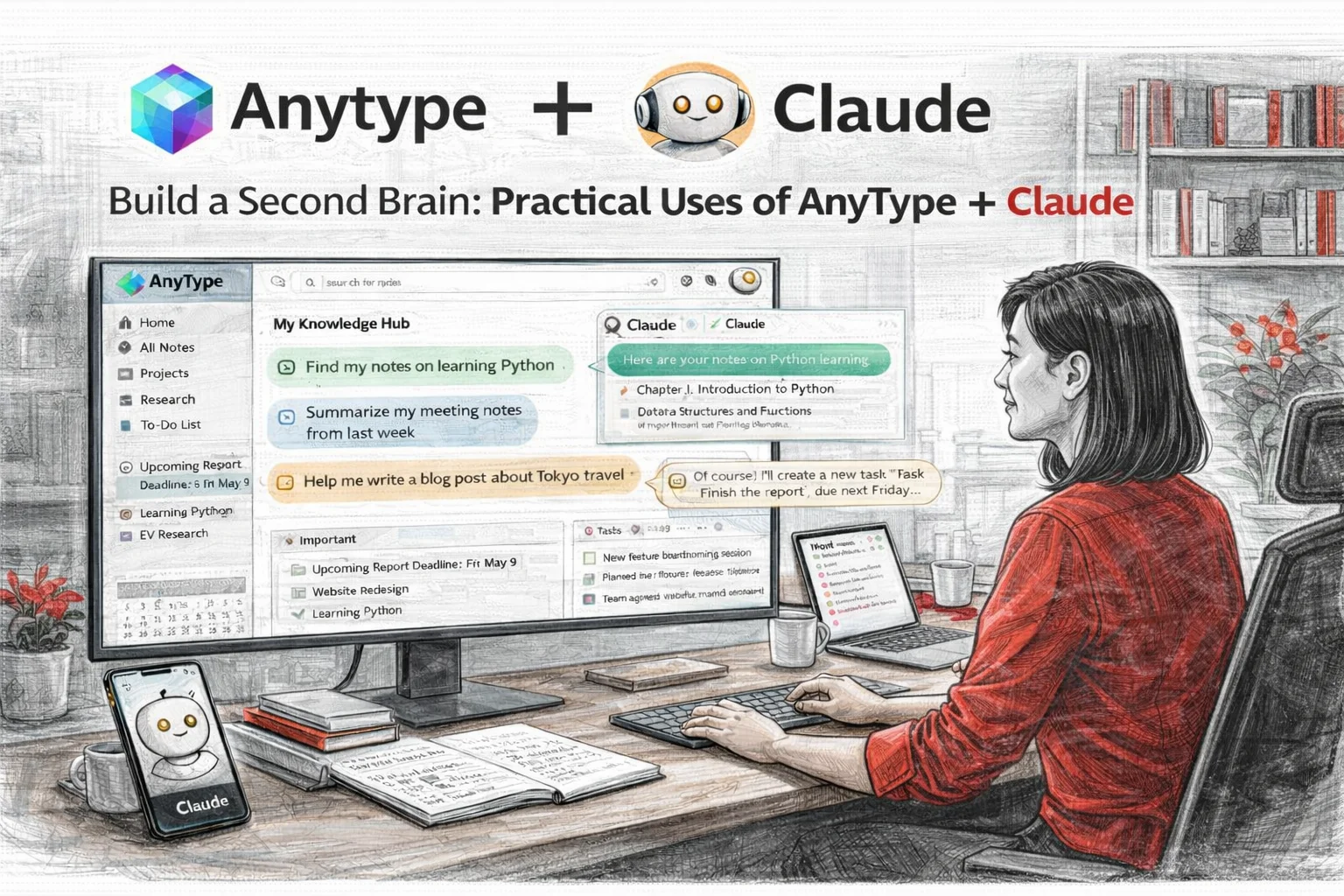
Because, common note-taking software - whether it is Notion, Heptabase, Evernote, or Anytype - have begun to support MCP This type of integration allows external AI tools to synchronize content more smoothly. This means: you no longer have to manually copy and paste your daily diary, and you no longer have to worry about formatting being lost. You just need to speak out the content, and AI will organize it for you into the way you want and automatically archive it.
We finally have the ability to keep and sort out those feelings that would have been diluted by life, and read them back into our hearts one day in the future.
From diary to personal database
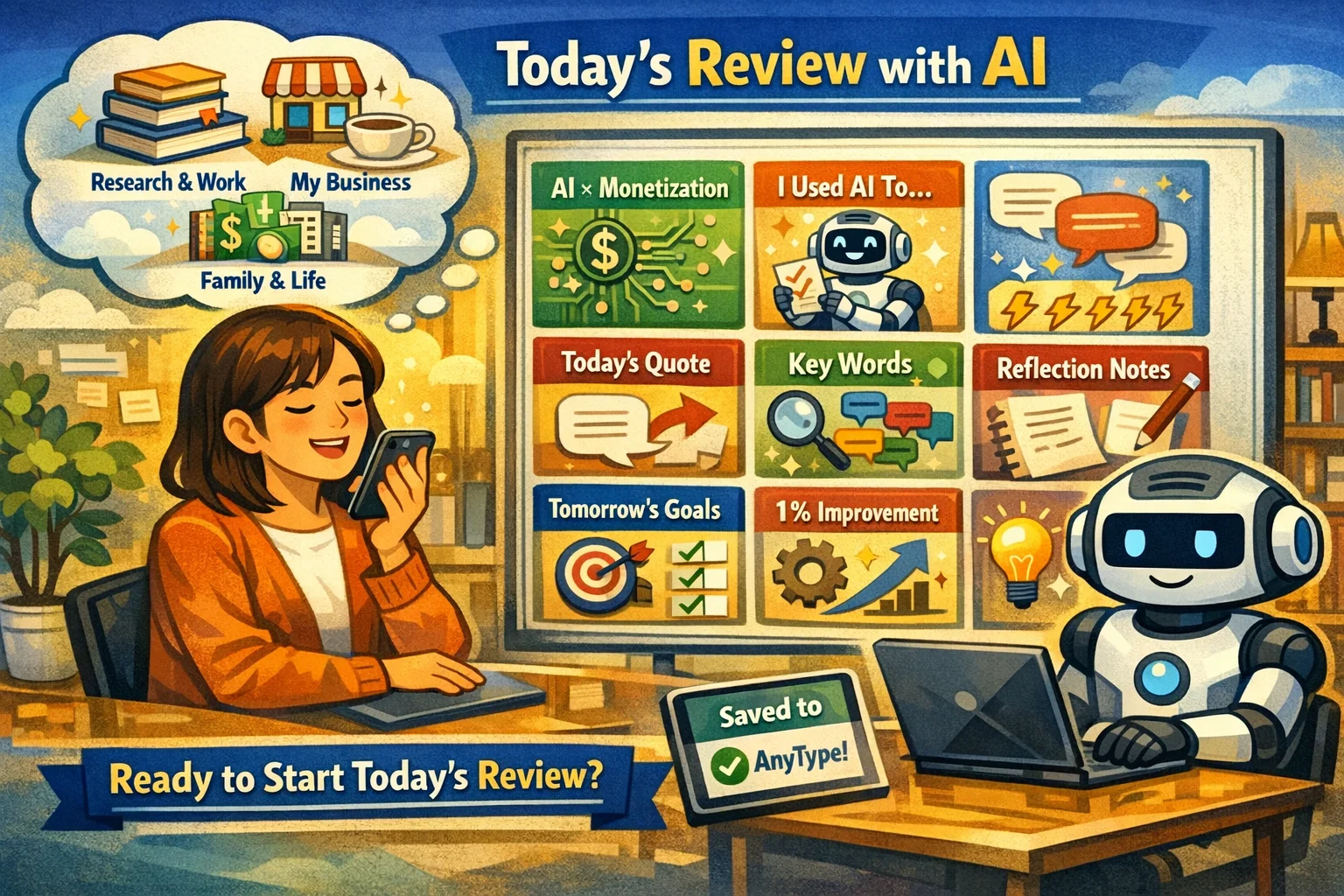
I mainly use Anytype, so these days, almost every night, I tell the AI what I saw, heard, and felt about the day, just like chatting. It will help me organize, refine, write into structured text, and then write it into my note-taking system.
For me, this isn’t just about saving time—it’s like I’ve literally built a personal database that can last a lifetime: something that can be queried, reviewed, and distilled into posts, lesson plans, and even a future book. If you also want to build your own second brain, you might as well start with a daily diary.
Invitation to you
Looking back at the changes in the past two or three years, I am actually very emotional: it is not that writing a diary has become easier from now on, but that we finally have the ability to retain and organize those feelings that would have been diluted by life, and read them back into our hearts one day in the future.
I just finished writing today’s review diary. I want to share this journey with you. I hope you will like it. Of course, I also hope that you will start trying - because you will find that AI changes not only efficiency, but also the way you see yourself, understand yourself, and accumulate yourself.
A diary should not be just an outlet for emotions, it should be a database of your life.
Extended reading:
- Anytype + Claude: Create an AI-driven second brain to make your notes come alive
- Ulysses + Claude + MCP: Create an AI-driven smart writing system to double productivity
- When AI Becomes My Editor: How a creator used AI to revive content plans that had been shelved for years
- Stop “reading hard”, AI is rewriting your reading efficiency and knowledge absorption method
- Recommended preface to the second brain: Embracing the AI era, starting from utilizing the second brain
External Resources:
- Anytype official website
- Heptabase official website
- MCP (Model Context Protocol) official description