How daily review grew into a dashboard that will remind me back: The record of an unmanned company that I didn’t write a single line of programming
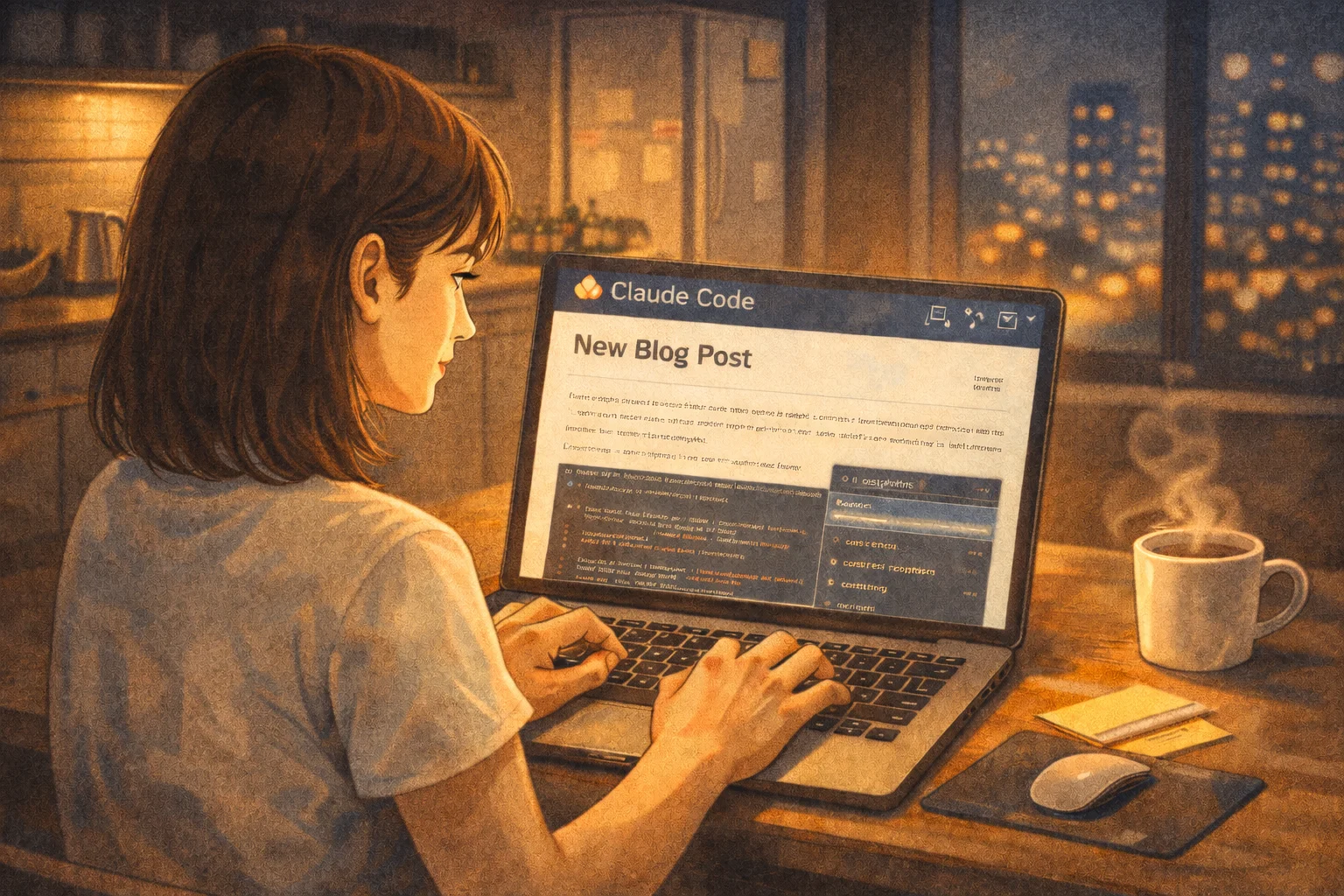
There is a habit that I have maintained for a long time: do a review before finishing work every day. What did you do today, what bottlenecks did you encounter, and what do you want to push forward tomorrow? I can ask three questions through voice input, and AI can help me organize them into a diary and save them in Anytype. Day after day, quiet and regular. If you don’t have this habit yet, I wrote about the lowest threshold way to start in “3 minutes a day, use microdisk to start your atomic habit”.
Until today, I opened Anytype’s daily review directory page and found that it only recorded until July 1st.
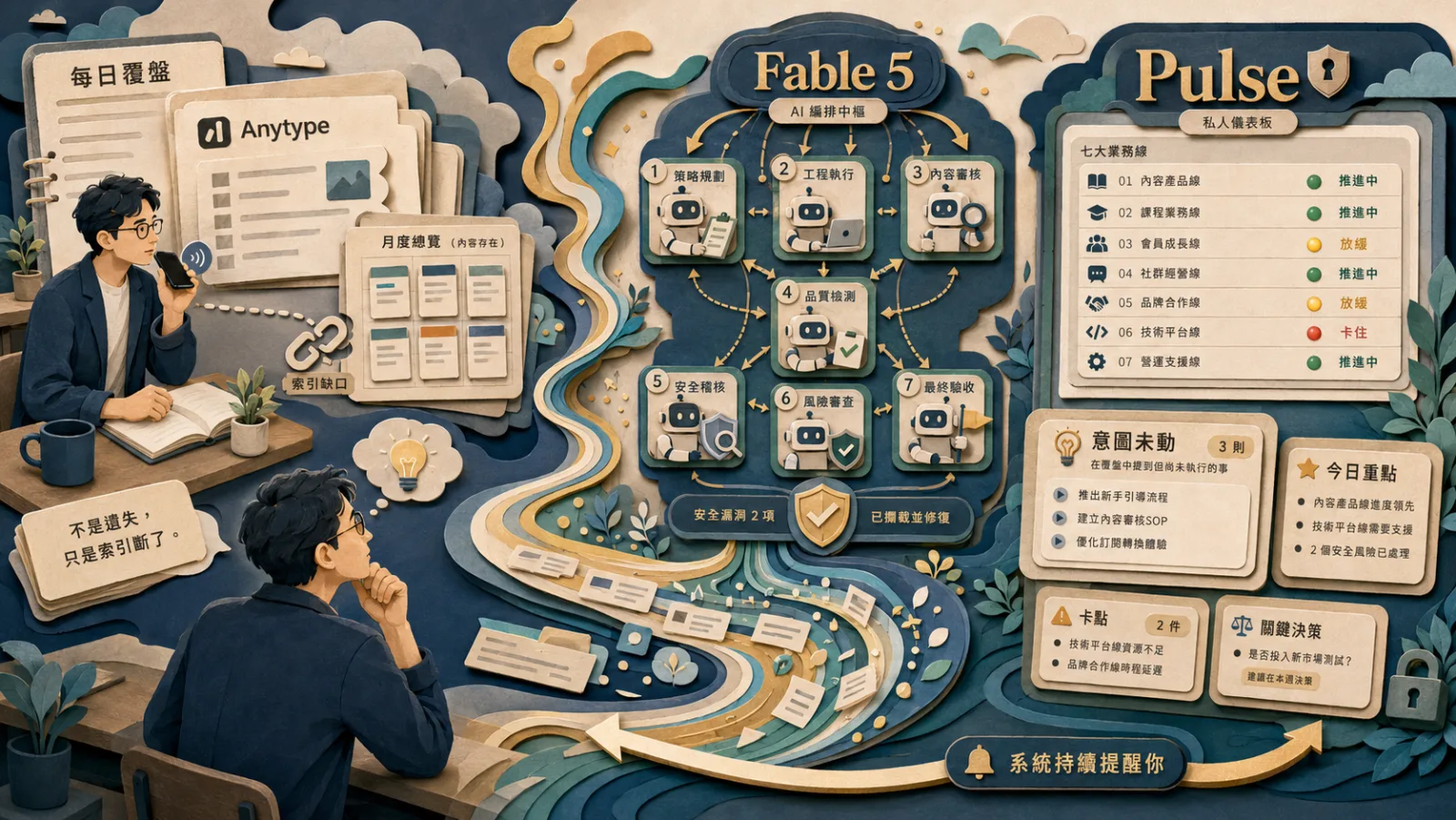
The first thought is: It’s over, the review is discontinued. But I will do it tomorrow and every day. After further investigation, I found out that there were no leaks in the review for a whole day, but the index was missing. My archive actually has two levels: a main directory and an overview of the review for the month. After July 2, the new review disk only has the monthly overview, and the main directory layer is skipped, so it looks like it stops at the beginning of the month at the entrance.
It takes five minutes to add the link. But for those five minutes, I was thinking about something more fundamental.
Is the data alive or dead?
I write my reviews diligently, but if I don’t look back at them after I finish writing, my notes will sink to the ground. It’s sitting in Anytype, and I probably won’t read it back over time, and there won’t be any system to do anything else with it. At the same time, my project progress is scattered in three places: the daily journal is in the review, some decisions are in the memory file, and the development tasks are in the work order system. I have never had a place where I can see my multiple career lines at a glance. Where are they going now?
In other words, I produce materials every day but never consume them.
This is where “Only remember until July 1st” really stung me. The problem is not that the index is missing updates. The problem is that even if the index is complete, it is just a long list of links that I won’t actually click on to read. The value of the review to me is that it would be a pity if I was only stuck at the recording step and did not go forward to let the records come back to help me!
So I decided that instead of manually filling in the missing link, it would be better to let this information stand up.
I didn’t write a single line of program
What happened next is the part I want to talk about the most.
I want a personal dashboard that shows the status of each business line, has work orders, and can automatically generate insights from my feedback. Put it under my own laboratory website and add a password. This requirement is very clear in my mind, but to turn it into something that can really be online, password-protected, and automatically updated, there is a lot of work that I don’t want to do myself.
I turned this over to Claude’s newest model, the Fable 5 .
I didn’t sit down and write a program. What I do is describe what I want and then answer its questions. It first asked me which level I wanted to track: should I only look at the general business line, or should I also look at development work orders. Ask me again what I want to see in the insights area, how often the information is updated, and whether the password should be easy to remember or strong enough. Each question was a decision that I had not thought clearly about, but had to express my opinion when asked. After I finished answering, a design plan took shape. It also gave me three methods, explained the trade-offs, and recommended one of them. This development method of “using dialogue instead of writing programs” is exactly the change that I repeatedly emphasized in “Why now is the best time to learn Claude Code”.
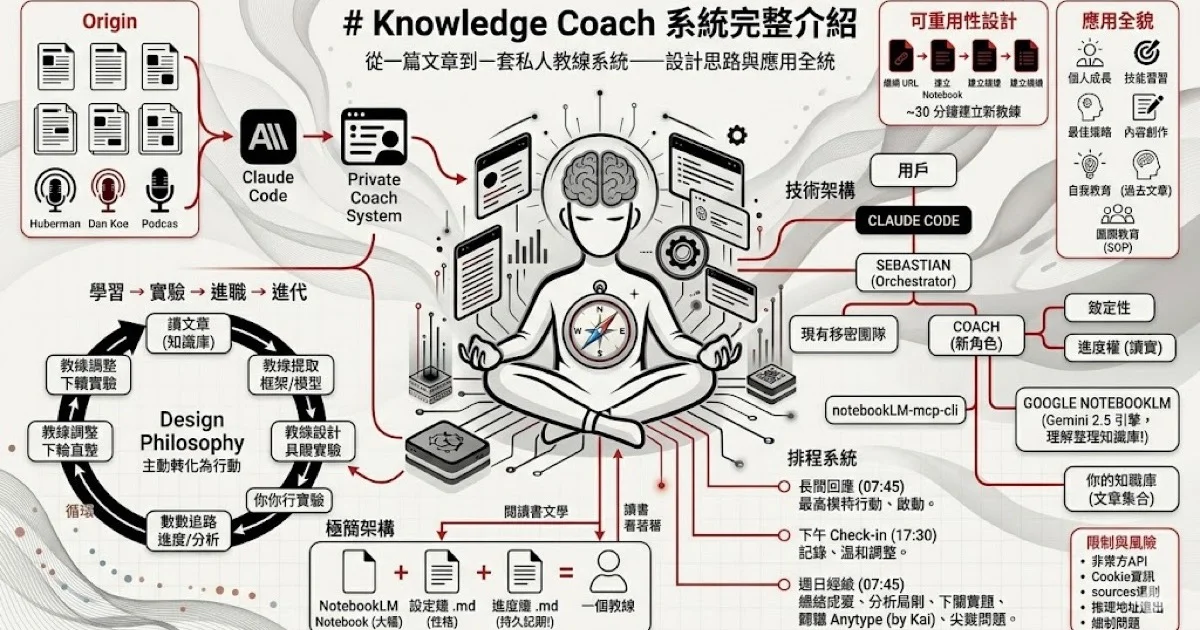
What really showed me what an unmanned company would look like was after the construction started. Instead of immersing themselves in writing, Fable 5 split the entire project into seven tasks. Each task was assigned an independent AI to implement. After completion, another independent AI was assigned to review, find faults, and reject the work for revision. Engineers implement, examiners check, and the final round of overall acceptance are all different AIs, each performing its own duties and not communicating with each other, so they will not check their own work. I have a more complete breakdown of this role transformation of commanding multiple AI divisions and collaborations in “Make good use of AI Agent digital clones and upgrade from mid- to high-level supervisors to Agent commander-in-chief”.
In other words, it is impossible for one person to play product, engineering, security and review roles at the same time. But I’m not alone.
It will remind me now
This dashboard, the finished product is called Pulse. Open it, and seven career lines are lined up, each with a status light: green light is advancing, yellow light is slowing down, and red light is stuck. The lights will change color on their own. A line will automatically turn yellow if there is no movement for more than two weeks, and it will turn red for three weeks, forcing those things that have been silently suspended to emerge on their own, without me having to remember them.
Below is the insight that grows from the overlying disk. The section that made me sit up straightest the most is called “Untouched Intentions”: it lays out in front of me the things I said I would do in my review but haven’t done anything for several days. The first time it came out, it named the “Conceiving a New System and Experimental Plan” that I wrote on July 3rd. I forgot that sentence after I said it, but it didn’t.
From a person’s diary to a dashboard that will remind you back, what is in between is not programming ability, but an idea: hand over what you write down every day to an AI army willing to consume it.

*▲ The AI tools I usually develop are placed on lab.vista.tw, among which member-only tools require a monthly pass code. Subscribe to the Vista AI Inspiration Supply Station (opens in a new tab), unlock every new tool as soon as possible, and communicate with me directly in the subscriber-only community. *
Tools are second, rhythm is the key
I know very well that it is not difficult to make this dashboard. What is difficult is to develop a rhythm of looking at it every day. So I set three levels for myself: spend thirty seconds scanning the status lights in the morning, looking for yellow and red lights; spend five minutes every week reading card points, especially the “said but not done” list, forcing myself to decide whether to do it or let go that week; spend fifteen minutes every month to read back on the key decisions of the previous month to see if they have turned into actions for this month.
This is what a review should really look like. It shouldn’t be a running account that sinks to the bottom after writing. It should compound interest. What makes it compound interest is not that I write more diligently, but that I have an AI team next to me that will not get tired, will not forget, and will find out my loopholes. This team is not just responsible for development: I previously shared how to use Claude Code to help you form an 8-person secretarial team, and the schedule, emails, and morning briefings are also handed over to them. What widens the gap is never questions and answers, but building AI into a system that can run on its own.
I have always said that an unmanned company is not one without people, but one person plus an AI army. What happened today is the smallest and most complete demonstration of this sentence: I am responsible for leaving one truth every day, and leave the rest to them for consumption, extraction, creation and control.
If you also want to grow such an AI army in your career, but don’t know where to start, welcome to take a look at the courses and workshops (opens in a new tab) I opened at solo.tw: from AI workflow design to the business model of a one-person company, these are the methods I actually use every day. Your review can be more than just a diary, it can be the heartbeat of your career.
Next step
Bring this topic to your team
Vista Cheng speaks and runs workshops on AI workflows, writing and content systems for companies, schools and public agencies.