Read "Do the right brain exercises and your performance will improve": The more uncertain the world is, the more you need to run through it in your mind first.

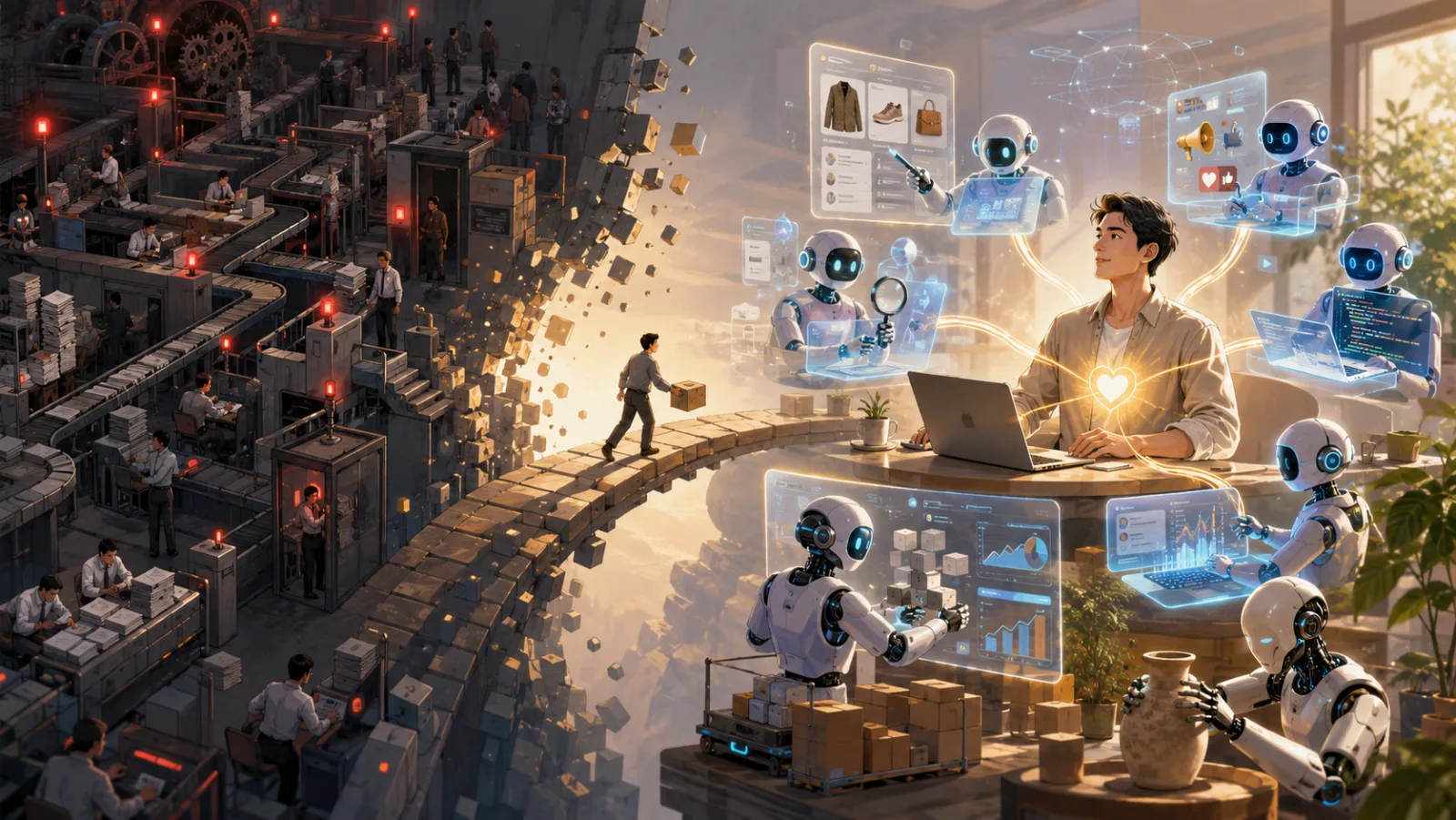
When you turn on your computer every day, your to-do list is just the first thing that catches your eye. A new large-scale language model has been released, and the workflow needs to be reorganized; market news, international situations, and community notifications have taken turns to enter the scene. When a person is sitting at a desk, it seems like there are twenty pages open at the same time in his mind. Before you even start doing anything, your attention is already half consumed.
Having said that, this is why the book “Do the right brain exercises and your performance will improve (opens in a new tab)” by Maya Rachel (opens in a new tab) seems relevant at this moment. The “Mental Rehearsal” discussed in the book is not about closing your eyes and fantasizing about success, but about simulating goals, steps, emotions and risks in your mind to reduce confusion when actually taking action.
My biggest takeaway from reading the core proposition of the book is: the more unpredictable the situation, the more we need to train our reactions instead of using all our efforts to predict the world.
When attention is lost, no matter how good the tool is, it cannot save performance.
Work Information (opens in a new tab) released by Microsoft Corporation in the United States in 2025 shows that high-volume users are interrupted by meetings, emails, or chat messages every two minutes on average during core working hours, up to 275 times a day.
This number illustrates the daily dilemma of many people: what we lack is not necessarily the tools, but the ability to bring our minds back to the task at hand. I had a similar feeling when reading “No one can steal your concentration”. Focus is never a talent, but a resource that needs to be protected.
The book proposes five visualization techniques, including result, process, creative, negative and exploratory visualization. For me, the most practical of these is process visualization. Instead of repeatedly imagining getting applause after the briefing, it is better to mentally walk through the opening, transition, being questioned, and how to pick up after forgetting the words. The former brings temporary excitement, while the latter reduces on-the-spot wear and tear.
The value of mental rehearsal is not to make things happen exactly as scripted, but to save the brain from having to process that scene for the first time when the stress is highest.
In the AI era, learning fast is not enough
The World Economic Forum’s “Future of Work Report 2025 (opens in a new tab)” estimates that between 2025 and 2030, an average of 39% of workers’ existing skills will change or become obsolete; 63% of employers surveyed also regard the skills gap as the main obstacle to enterprise transformation.
Research released by the International Labour Organization (opens in a new tab) in 2025 pointed out that about a quarter of the world’s workers are in occupations with some degree of exposure to generative AI, but only 3.3% of employment falls in the highest exposure category. The study suggests that most occupations still contain tasks that require human participation, so it is more likely that job content will be reorganized rather than entire positions disappearing immediately.
Let’s be honest, these numbers can easily create anxiety. Learn prompt words today, study agents tomorrow, and worry about the newly established process being eliminated by the new version the day after tomorrow. The problem is that anxiety will make people keep collecting information, but there will be no works and results. This is why I have always advocated Stop chasing tools: Tools will change, and the skeleton of ability is what you can take with you.
Results visualization and process visualization can form a practical combination here. First see the abilities you want to have, such as completing a research report independently; then work backwards through the process, rehearsing how to define the problem, check sources, use AI to organize materials, and make the final judgment yourself. Learning no longer chases a tool list, but serves a clear competency goal.
Rather than asking in general terms whether AI will replace me, it’s better to break down the daily work and look at it: Which tasks are suitable to be handed over to AI? Which results require human review? Which judgments involve trust, communication and responsibility and must be borne by oneself? In “Humans Are Fiercer Than AI”, Wanweigang points the answer to those inconspicuous micro-decisions. I think this judgment is quite close to the truth on the scene; the 5C Framework proposed by the CEO of LinkedIn also cuts in from the same direction.
Mental rehearsal can be a training ground in the transformation process. We first run the new workflow in our mind, imagining where AI will be added, where it may go wrong, and what standards we will use for acceptance. This is closer to a true capability upgrade than blindly chasing every new tool, and it is also closer to turning AI into a thinking partner rather than an answer vending machine.
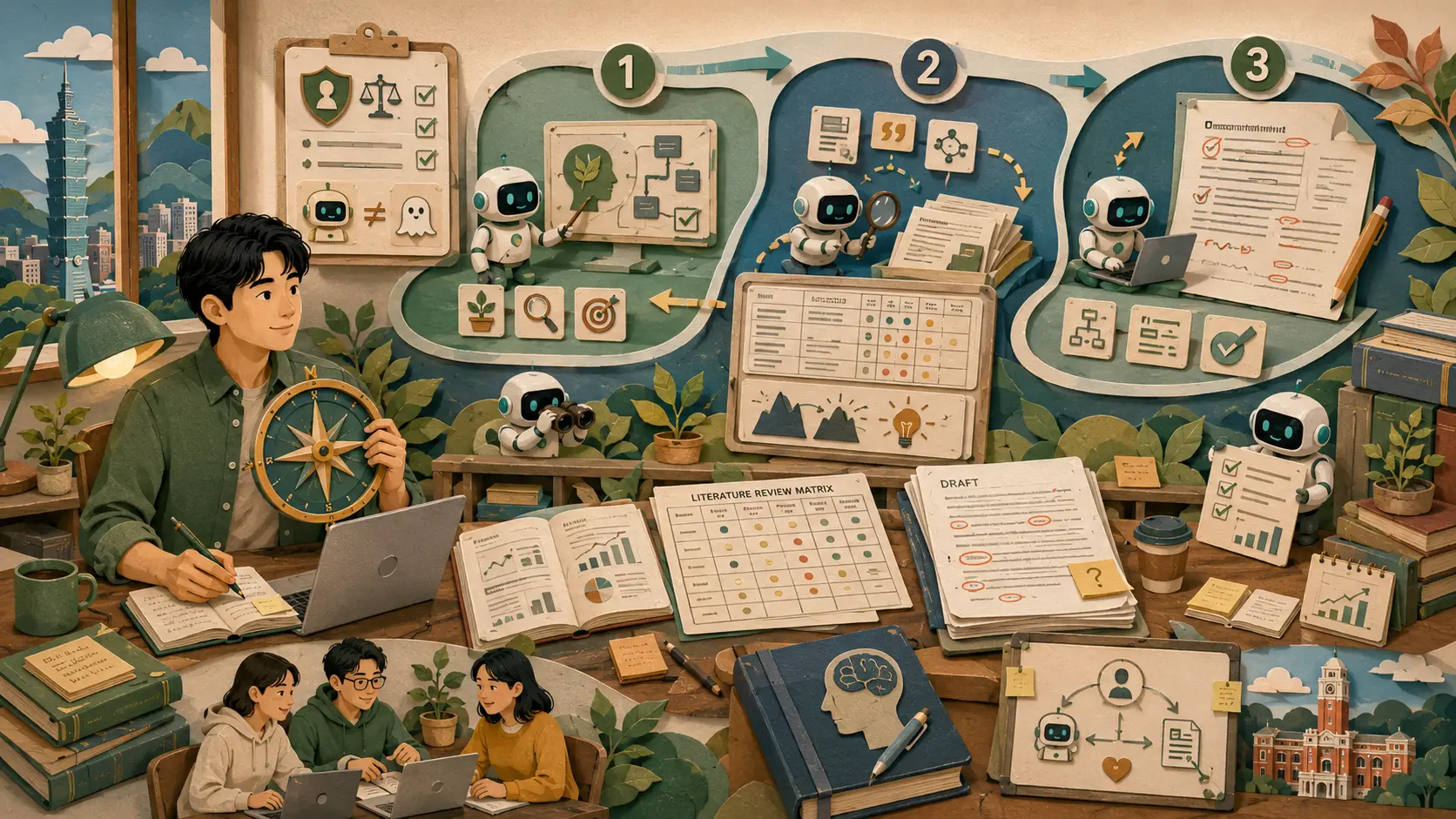
*▲ If you are a researcher, graduate student or knowledge worker and want to practice the above set of pre-drills into a real workflow, welcome to my AI Empowered Academic Research and Writing Practical Workshop (opens in a new tab). I will help you hand over the tedious work of document crawling and data compilation to AI, while maintaining the boundaries of academic ethics and keeping the most critical questions, arguments, and judgments firmly in your own hands. *
Negative preview is to keep options for yourself
The World Economic Forum’s “Global Risks Report 2026 (opens in a new tab)” compiled the views of more than 1,300 experts and ranked geoeconomic confrontation as the top risk that is most likely to trigger a global crisis in 2026. 18% of respondents regard it as the most important risk that year, and another 50% expect the global situation in the next two years to be turbulent or highly unstable.
These numbers are not predictions of the probability of an event occurring, but rather experts’ collective judgments about risk. They remind us that policies, supply chains, markets and technological rules can all suddenly shift. For individuals and businesses, the sense of security of staying on the same path is diminishing.
Therefore, I particularly identify with the negative visualizations in the book. Rather than replaying the disaster in your mind, it rehearses a reasonable worst-case scenario: What if an important customer suddenly leaves? What should I do if the platform changes the rules? Half of the originally familiar tasks have been taken over by AI. Where should we move our capabilities?
After the rehearsal, the first action is planned for each risk. Build your own roster, maintain a cash buffer, diversify your revenue streams, or organize your experience into transferable knowledge assets. When a record is in place, the brain doesn’t have to remind us every day with vague fears that something might go wrong.
When things are unstable, resilience is not about believing that everything will be fine, but about our ability to update our judgment and take the next step when things go awry.
Don’t mistake visualization for mental shortcuts
I’ll still take some distance from the book’s suggestion that the brain has difficulty distinguishing real experience from vivid imagination. Just imagine swimming a hundred times and you will not learn to breathe directly; rehearsing a negotiation cannot replace understanding of customers and the market.
Mental rehearsal must be coupled with real action, feedback, and correction. It’s more like a pilot entering a simulator and getting familiar with the procedures and surprises before actually taking off, rather than sitting in the waiting room and believing he’s arrived at his destination. If rehearsal is not followed by action, it can even become another form of procrastination.
Likewise, AI can give people the illusion that I have done a lot. Generating ten plans and organizing twenty pieces of information does not mean completing a quality decision. I made a piano song that I can play by myself, and that experience made me see clearly: what is truly scarce is never skills, but judgment. Tools and imagination can only reduce the resistance to action, but cannot bear the consequences for us.
Take five minutes a day to build your own mental simulator
I will simplify the methods in the book into a set of five-minute exercises.
First use thirty seconds to see the results you want to accomplish today, and then spend two minutes rehearsing a few key steps. Then take a minute to imagine the most likely disruption and plan a response to it. Finally ask yourself: What is the first action you can complete right now? Then start immediately.
If you want to turn personal practice into a long-term effective work system, you can also add several arrangements: reserve a period of in-depth work time every day that is not cut off by communication tools; choose a real task every week and break it down into three categories: AI can do it for you, people need to review it, and people have to judge it; set a fixed review frequency for changes in the market and workplace, so that every news does not take over your attention. This set of arrangements can be matched with the Micro Review I wrote before, one to preview forward and the other to review backward.
It is true that we cannot prevent language model updates and market shifts, nor can we ask the world to stabilize before making decisions. But at least we can train our brains to grasp direction in the noise and still have available responses under pressure.
The competition in the future may not just be about who has more information or stronger AI. When everyone can quickly obtain answers, whether they can manage their attention, preview risks, and implement ideas can actually widen the gap.
In addition to continuously upgrading tools, we must also upgrade ourselves in using tools, making choices, and continuing to move forward.
If you want to actually practice this into your daily life, in addition to reading “Do the right brain exercises, your performance will improve (opens in a new tab)”, you are also welcome to sign up for my AI Empowered Academic Research and Writing Practical Workshop (opens in a new tab), and together we can turn previews into deliverable results.
Next step
Bring this topic to your team
Vista Cheng speaks and runs workshops on AI workflows, writing and content systems for companies, schools and public agencies.