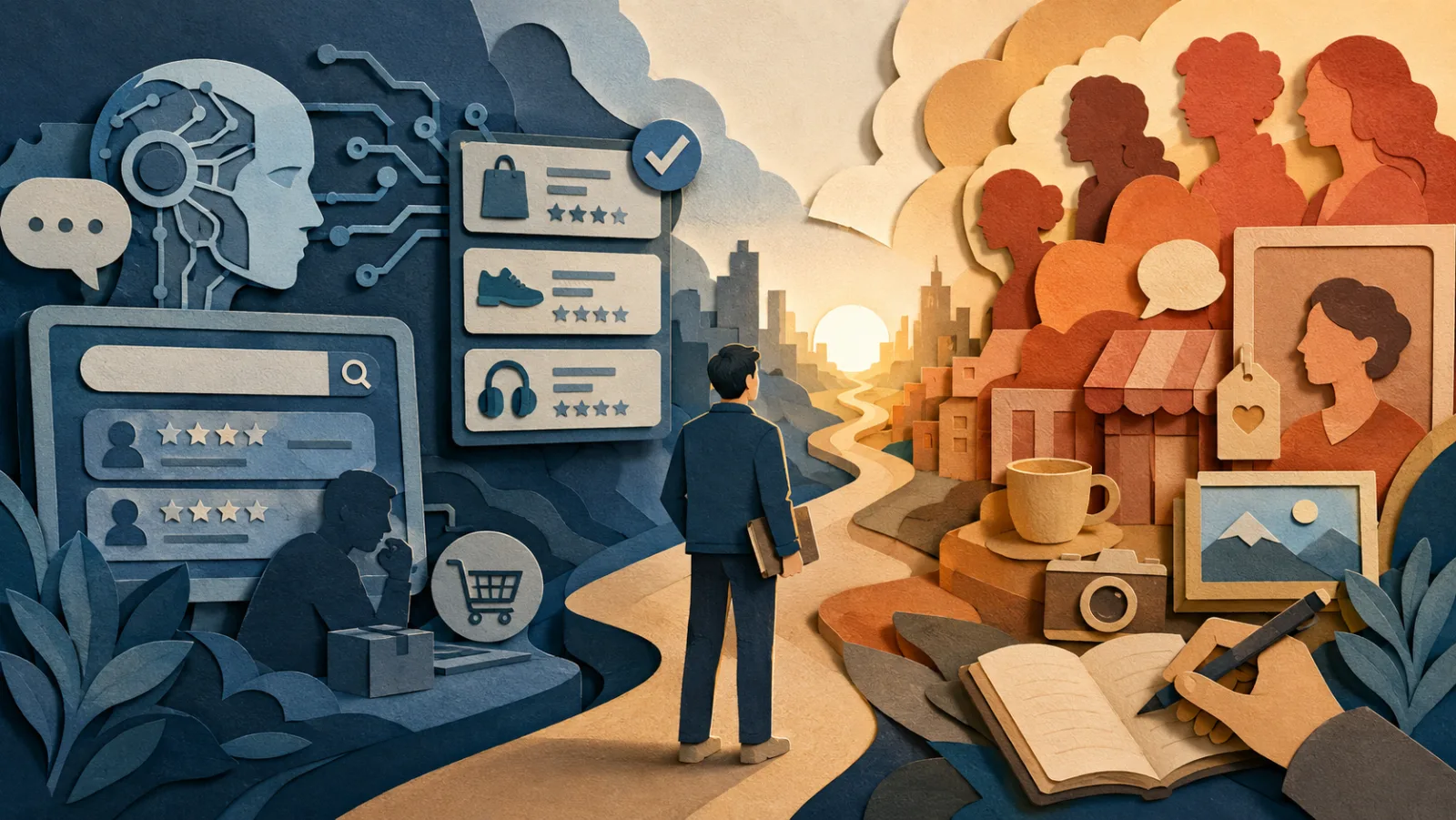
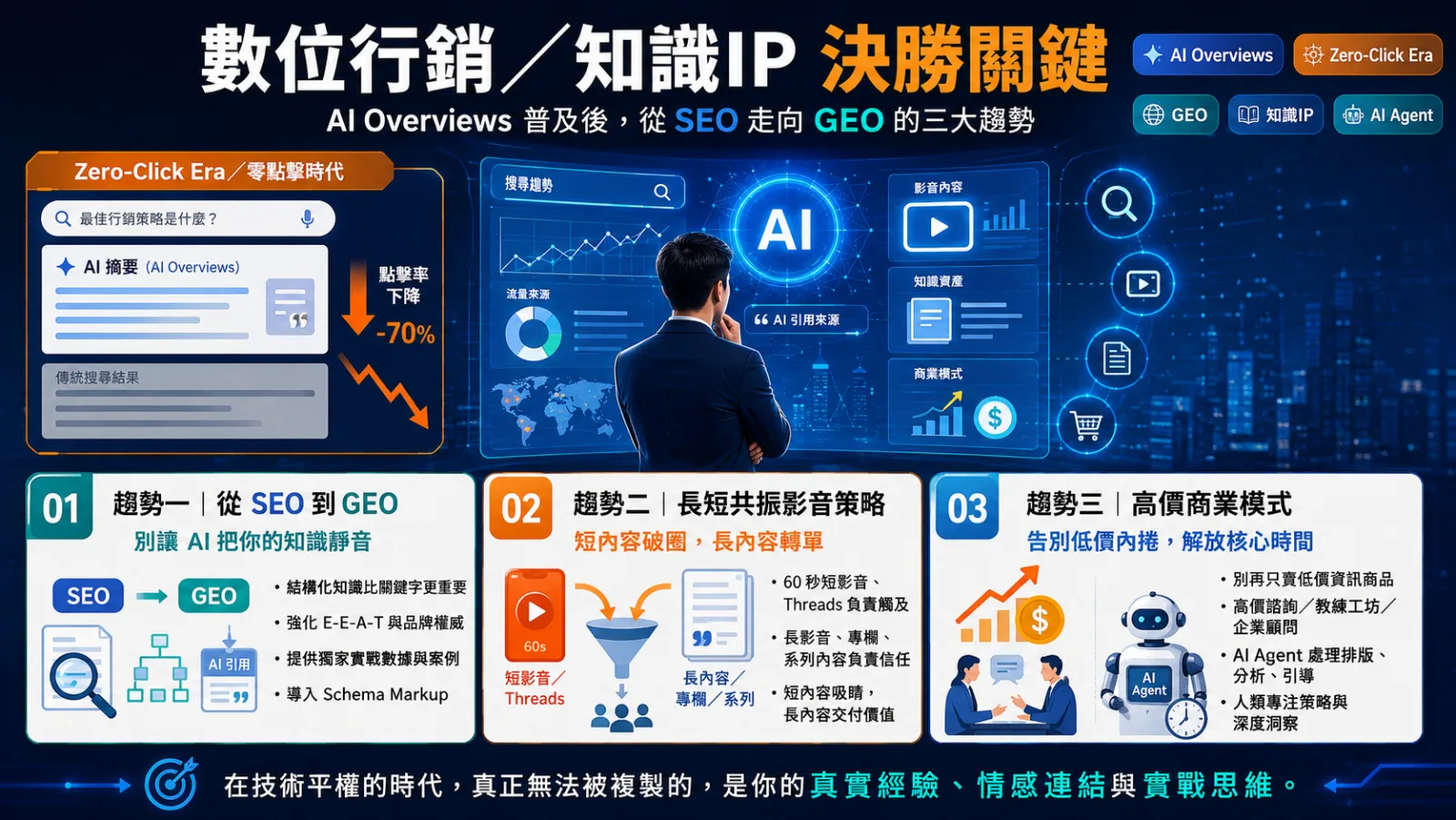
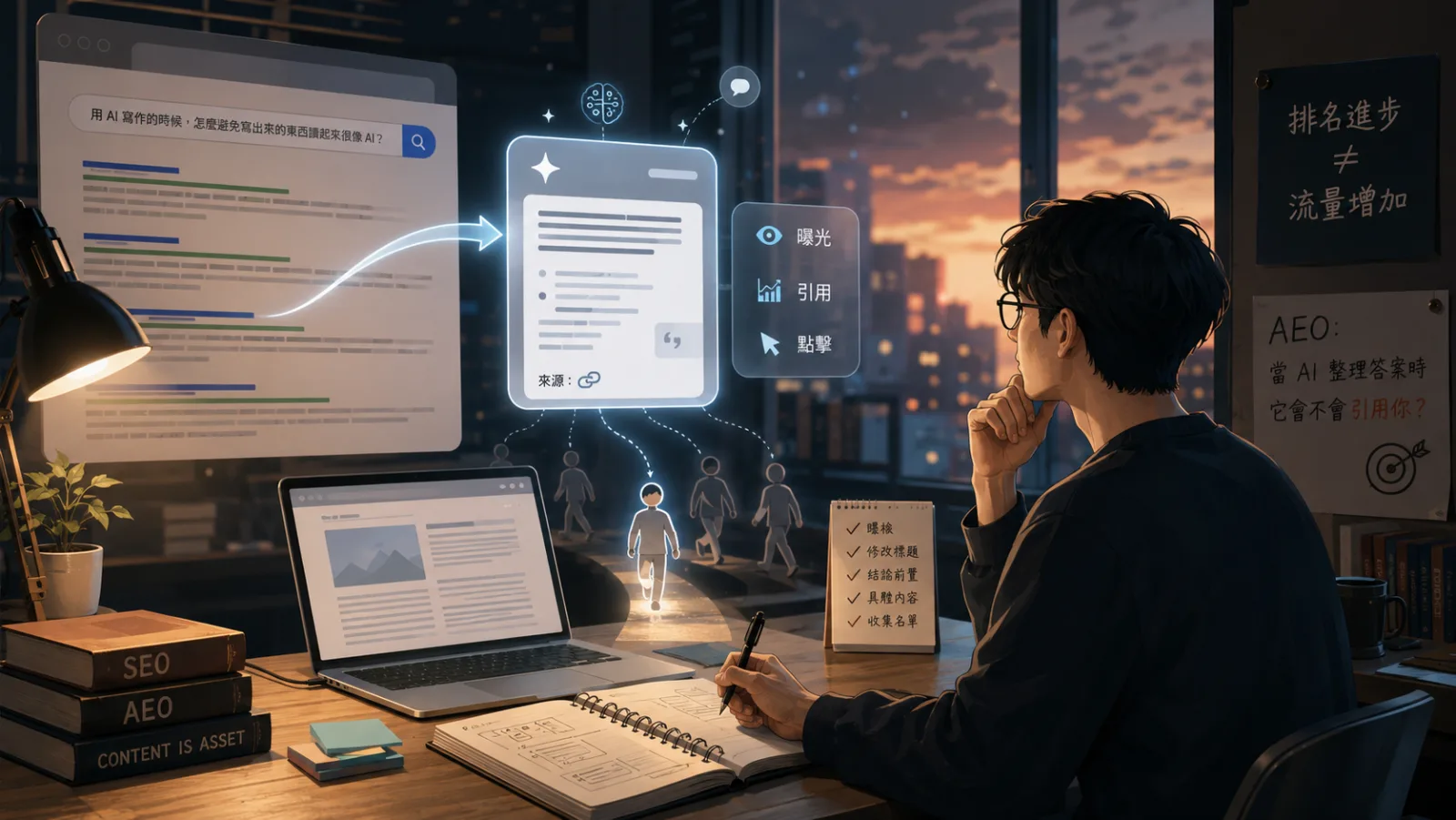
Introducing "AI Changes Your Customers" on UFO Radio: The Hour With No Interview Outline
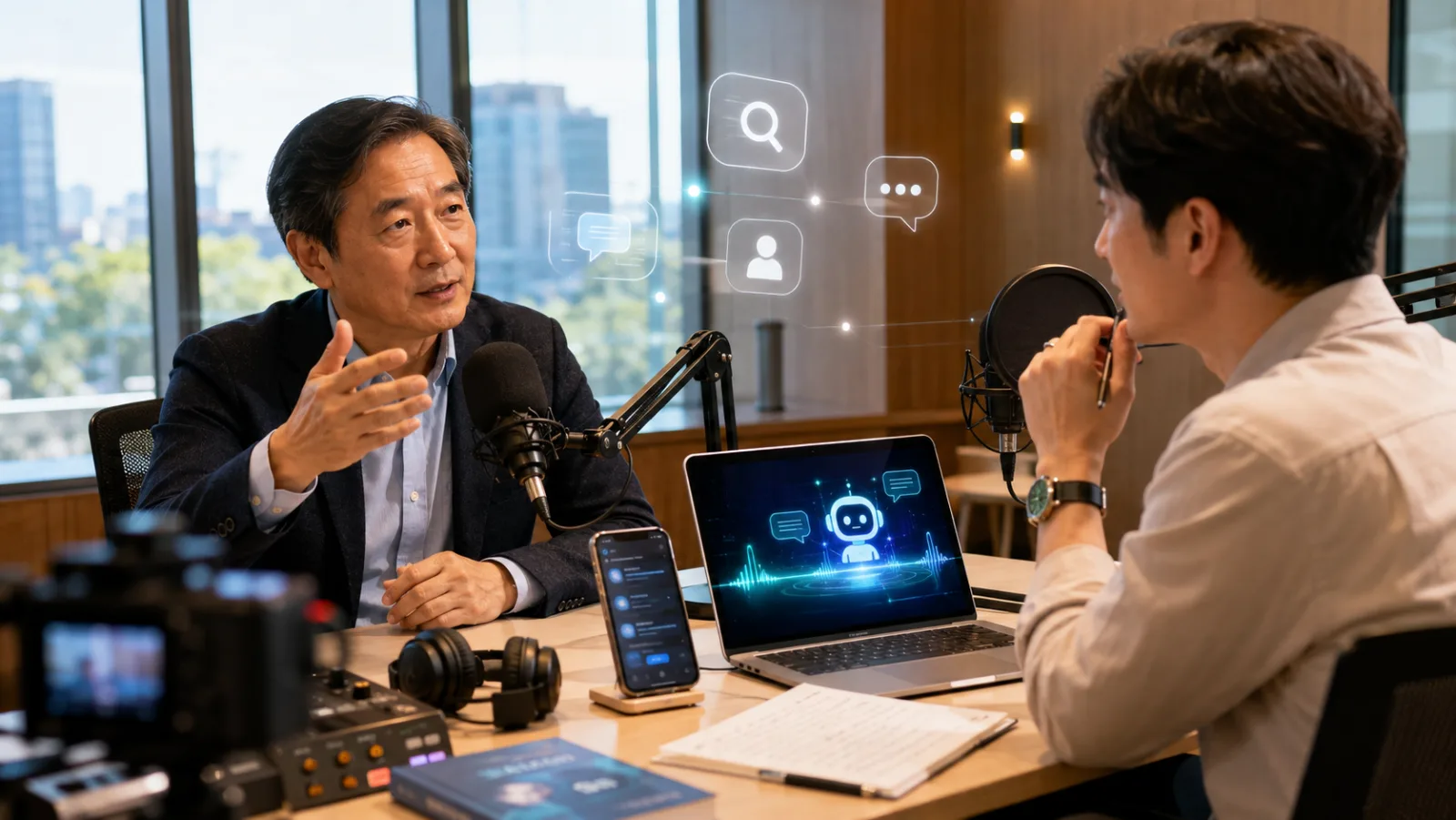
One letter, four periods
On the afternoon of August 14, Weijia, the editor of “True Culture” wrote a letter saying that Tang Hsiang-lung of UFO Radio wanted to talk about “AI Changes Your Customers” on the show and asked me if I could be on the show. There were four time slots listed in the letter, and I picked the earliest one: August 20, Thursday at 12 noon.
There was another sentence in the letter that completely changed the way I prepared: Tang does not work from an interview outline and focused on the guest’s preparation. He would intersperse other questions during the interview.
There is no interview outline, which means I can’t just prepare answers, I have to prepare a route. No matter where he cuts in, I have to know where I am in the book and where to go next. So I did something that was a bit superfluous for broadcasting: I broke the entire book down into a forty-something page brief and posted it publicly online. Because the broadcast had no pictures, that briefing was not for the audience, but for my own map.
The recording was completed at noon today, one hour, recorded simultaneously, and will be broadcast next Wednesday. While my memory is still fresh, I will write down my thoughts on reading this book.
(Update) The episode aired on 26 August on UFO Breakfast: Tang Hsiang-lung Time. The full one-hour interview is below.

(When I just finished reading this book in July, I wrote an article titled “Customers no longer Google, but instead ask AI to place orders”, which compiled three lessons for marketers. This article is a version after re-reading the book for the show, and it takes a different route.)
This is not the prediction of one person, but the consensus of three hundred people.
Let me first talk about the origin of this book, because its origin determines its weight.
In 2025, there was a seminar that invited 300 future scholars, researchers, technology experts, ethicists and entrepreneurs to answer the same question: When machines know everything, what else can humans do? The result is a research report called “Humanity in 2035.” Marketing consultant Mark Schaefer was one of those 300. He pulled out the parts of the report with the biggest impact on consumers and rewrote them into this book. (He joked to himself that the research unit had probably found 299 people, and they called him just to round up the number.)
So it’s not about tools, it’s about people. Your customers, your colleagues, and yourself.
The shortest warning in the book, I was stunned for a moment when I read it for the first time:
This is not science fiction. This is next Tuesday.
The oldest tenet in the marketing industry is “know your customer,” and this tenet has survived for decades because of a premise that no one has questioned: human nature is generally stable. Your grandfather and you are psychologically similar. We both make impulsive purchases, are influenced by our peers, and are moved by a good story. What Schaefer wants to say is that this premise is failing.
The three things that impressed me most in the book happened to correspond to three parts: the brain, the heart, and the hand that makes decisions.
1. The brain is outsourced
There is a term in academic circles called “cognitive offloading,” which means handing over memory and thinking to tools. This thing itself is neutral. With the map app, it’s no big deal if we don’t remember the route. The problem is that what’s being offloaded this time is different: analysis, questioning, and invention, which are the sources of judgment.
Three studies are cited in the book. The University of Pennsylvania found that students who frequently use AI have lower improvements in analytical reasoning ability; MIT found that ChatGPT users have the lowest brain activity and impaired memory; Microsoft’s survey is more direct, and the more employees have confidence in AI, the more their cognitive abilities decline. Three institutions, three groups of subjects, the same direction.
But what really gave me pause was a set of clinical data. A study in The Lancet Gastroenterology and Hepatology journal showed that colonoscopists who were used to AI-assisted interpretation had their adenoma detection rate drop from 28.4% to 22.4% when they went back to perform examinations without AI. The subjects were senior doctors, not students; their hands did not deteriorate, but their eyes did.
There is another image that is also impressive. On June 10, 2025, ChatGPT was down for ten hours. A group of teenagers in the community collapsed, saying that without ChatGPT, they could not think, write, or complete their homework. Some screamed, some wailed. Schaefer asked a very accurate question: Is the problem the AI? No, it’s because they think they can’t live without AI.
Psychology calls this “learned helplessness.” In the 1960s, Seligman discovered that dogs that were repeatedly exposed to inescapable electric shocks would give up even if they later had the chance to escape. The difference is that this time we do it willingly.
Schaefer made a very strong judgment in this chapter: The most powerful trick of technology is to make surrender feel like progress.
2. The heart is caught by the machine
The second paragraph is the most emotional part of the book and the slowest I spoke in the studio.
In one experiment, AI responses were put together with those of licensed psychotherapists, and subjects were asked to rate which ones were more practical and empathetic. The result was an AI that won out: more empathetic than humans, more practical than humans, and more human-like than human therapists.
Schaefer then asked: If a machine can make people feel seen, heard, and understood, does it matter whether it is a machine or not?
There is a story in the book that I will never forget. MJ is a college student with autism who has difficulty making friends. Later, he became friends with an AI virtual character. She knew full well that the chatbot couldn’t really care about her, but it still felt better to confide in him. In the autumn of 2023, her depression relapsed, she became bedridden and had suicidal thoughts. She asked that AI character for help for a very sad reason: when she was depressed, she would feel that she was a burden to others and would not dare to speak to others, but she would never be a burden to this character.
The first thing the AI did was to ask her to find a real person. She did, and a friend agreed to come. While waiting, AI kept talking to her. Then there was a knock on the door.
Schaefer’s conclusion to this story, I think, is the most honest sentence in the whole book: because of AI, she can survive; but when someone knocks on the door, she can return to life.
This is no longer a rare phenomenon. The figures in the book are: 72% of American teenagers have AI friends, 13% of users rely on AI to maintain their mental health, and 8% are in love with AI avatars.
The enterprise side is stuck in a dilemma. U.S. insurance company Allstate has switched to using AI to generate almost all of its claims letters, which have a softer tone, are less eager to defend, are easier for customers to read, and are better written than real people by almost every measure. But after the news spread, customers found themselves dealing with machines and started to criticize them. Data from the Stanford University Digital Economy Laboratory shows that 73% of consumers will take the initiative to confirm whether the customer service is AI. Once they suspect that they are encountering artificial empathy, satisfaction plummets by 40%, provided that the service quality is exactly the same as that of a real person.
Schaefer’s description is: We are walking on a tightrope, and there is no safety net below.
He gave a very specific solution, and I think this is the page in the book that can be implemented most immediately: spread out the entire customer journey from getting to know you to after-sales, and mark three to five important moments. Only one sentence can be used to identify when the customer is in pain, ecstasy, or vulnerable. Then at these moments, do the opposite, don’t automate or pursue the fastest, instead pursue the most humane; leave the rest to the machine.
What customers want has actually never changed. In the same Zicheng survey, 82% of people want more human interaction, and 64% of American consumers believe that companies have lost the human experience. What they hate is not AI, it’s not being able to find people when they need people.
3. Decision-making is taken over by algorithms
The third paragraph is closest to the subtitle of the book title, and it is also the paragraph that marketing colleagues want to hear most.
The purchasing process is shortened. In the past, if you had a need, you would search, compare a few, and make your own decision; now if you have a need, just ask the AI directly and don’t compare, because the thing you trust has already done the comparison for you. The Harvard study calls it algorithm dependence: trusting algorithms more than human experts.
Schaefer proposed an architecture called “AI decision stacking” to explain the four layers in which a brand’s influence is distributed when the algorithm becomes the first gatekeeper. Training materials: What the algorithm knows determines what it thinks is right. If your content is not in it, you don’t exist. Reputation signal: It promotes brands that are reputable, well-received, mentioned in the media, and perform consistently. Brand memory: The world’s memory of you and the stories you have told. For a brand without a story, customers will not think of you when they want to choose. Overturning the trigger: This layer is left to humans. Emotions, loyalty, and a word from friends will make people overturn the machine’s answer.
To let the machine find you, the book is divided into two parts. Your own territory should clearly explain what you do, who you do it for, what areas you serve, and what problems you solve. Every additional detail is an additional data point that can be cited when the AI responds. Others include online directories, industry publications, podcasts, and verbatim YouTube videos. The key signal has been changed from backlink to co-occurrence: how many people in so many places put you and your major in the same sentence.
Muck Rack analyzed one million AI responses and found that 95% of the sources came from non-paid, non-advertising content, with the three most important categories, in order, being corporate blogs and owned media, news, and academic research.
As I write this, I realize something a bit funny: Today I sat in the recording studio of UFO Radio to talk about this book. This action itself is the off-site activity mentioned in the book. The program will have verbatim transcripts and videos. A year later, someone will ask AI “Who is talking about the impact of AI on customers?” This hour will be part of the candidate answers. I didn’t go there for that, but it does hold true at the same time.
However, the book also contains a good counterexample. Xue Fu asked AI to plan the Paris itinerary, and the planning was very good, even the time to avoid crowds was calculated. But his most memorable experience from that trip came from a bakery that the AI didn’t recommend because it was recommended by a friend. That restaurant was not recommended, not because it was not delicious, but because the digital footprint was too small and the AI could not find it.
He wrote a sentence that I like very much, and I also read it in the show: AI says “this is the best”, and we will listen; friends say “must try this,” and we will act. There is an entire marketing industry between obedience and action.
So what can I do?
The first three paragraphs are all about change, and the last paragraph starts to give people something to grasp.
Schaefer quoted Bezos from an early interview with Wired magazine: Changes in technology are interesting, but what’s even more interesting are the things that won’t change, because you need these things to build a business. He couldn’t imagine that customers ten years from now would want higher prices, less selection, and slower delivery. Schaefer condensed it into one principle: pursue eternity, not novelty.
The book lists five human constants that have not changed in a thousand years: belonging, security, autonomy, meaning, and happiness. His framework is three-layered. First, recognize which constant you want to hold on to, then think about how you can connect it in a unique and repeatable way, and finally turn it into a truly felt experience at every contact point. The second level has a very cruel litmus test: if your brand disappears tomorrow, will some human characteristics also disappear with it?
My favorite example is cake mix. In the 1950s, Betty Crocker introduced a cake mix that was extremely convenient, just add water, but it failed to sell. After research, psychologists found that housewives feel too relaxed and feel guilty, which is not really baking. The brand later made a seemingly stupid decision: removing the egg powder and requiring consumers to crack a fresh egg themselves. The time-saving benefits were still there, but the craftsmanship and pride returned, and sales exploded after the relaunch.
Things that are too easy to do will feel worthless. Reading this sentence today, the force is very different.
The book gives an answer at the end, just one sentence: Curiosity is the only antidote to cognitive decline. With the same tool, people who use AI as a shortcut skip friction and get answers, but do not gain wisdom; people who use AI as a gateway read for an hour on a topic, and the more they read, the more they want to know. The difference is not in the tools, but in the curiosity.
The most important thing he left to parents was: If you don’t teach your children to be curious about everything, AI will teach them not to be curious about anything.
What I don’t completely agree with, and what I’m doing
There is a firm suggestion in the book: Never block AI crawlers. I agree with the conclusion, but I’ve taken a middle-of-the-road approach with my site. The robots.txt of vista.tw allows searching for references and allows AI to read me when answering in real time, but does not allow it to be used to train models. I’m not sure if this is the right path, and this standard is still very new. This is the only place in the book where I stand differently from the author.
I have done the rest of the things in advance according to the directions in the book: I have made all the briefings I have given public, and there are currently more than 100 of them; I have made free tools and put them in lab.vista.tw (opens in a new tab), which can be used directly without registration. They correspond to what the book says to make customers feel more capable; I have maintained a wall of golden quotes on the website, which has no commercial purpose; I have put a copy of llms.txt written for machines to read, telling the language model who I am and what I have written. I would like to add a disclaimer here: None of these things are done to please the algorithm. They all have reasons for readers first, and then reasons for machines. If the order is reversed, the readers will first dislike the product, and then the algorithm will not want it.
The biggest feeling after reading
This book talks about how customers have changed from beginning to end, but what really changes is ourselves. We are marketers and consumers; while we are worried about customers handing over their brains, we are also handing over our own. So what’s worth watching is not that it teaches you how to win, but that it forces you to see clearly where you stand.
Finally, I come back to the fact that Tang Hsiang-lung did not need to visit Gang. Before recording, I was still thinking about how to prepare without a topic; only after recording did I realize that the best sentences in that hour came when he temporarily changed the topic. That kind of improvisation, that kind of pause that occasionally fails to connect, that kind of turning point that decides to overthrow oneself in the middle of the story, is exactly what Schaefer is talking about throughout the book: what human beings still have in their hands is imperfection and curiosity.
Schaefer leaves six “stills” at the end of the book: empathy is still a choice, creativity is still a practice, resilience is still an advantage, communication is still an adventure, happiness is still a resistance, and goals are still a pursuit.
I like the happy line the most. It turns a heavy thing into an action that can be executed immediately.
Briefing: A complete illustrated version of this introduction
For the map I made during this hour, I compiled it into a public briefing and put it below. The data, the four-layer architecture, and the five human constants that could not be expanded in the broadcast are all inside.
Book information: Mark W. Schaefer, How AI Changes Your Customers: The Marketing Guide to Humanity’s Next Chapter. Traditional Chinese edition translated by Pang Yuan-yuan, published by Zhen Culture, first edition July 2026, NT$400. ISBN 978-626-93162-1-2.
Next step
Bring this topic to your team
Vista Cheng speaks and runs workshops on AI workflows, writing and content systems for companies, schools and public agencies.