When AI meets communicators: In the EMA lecture at National Chengchi University, we work together to redefine the boundaries of human-machine collaboration
One question makes the whole classroom quiet.
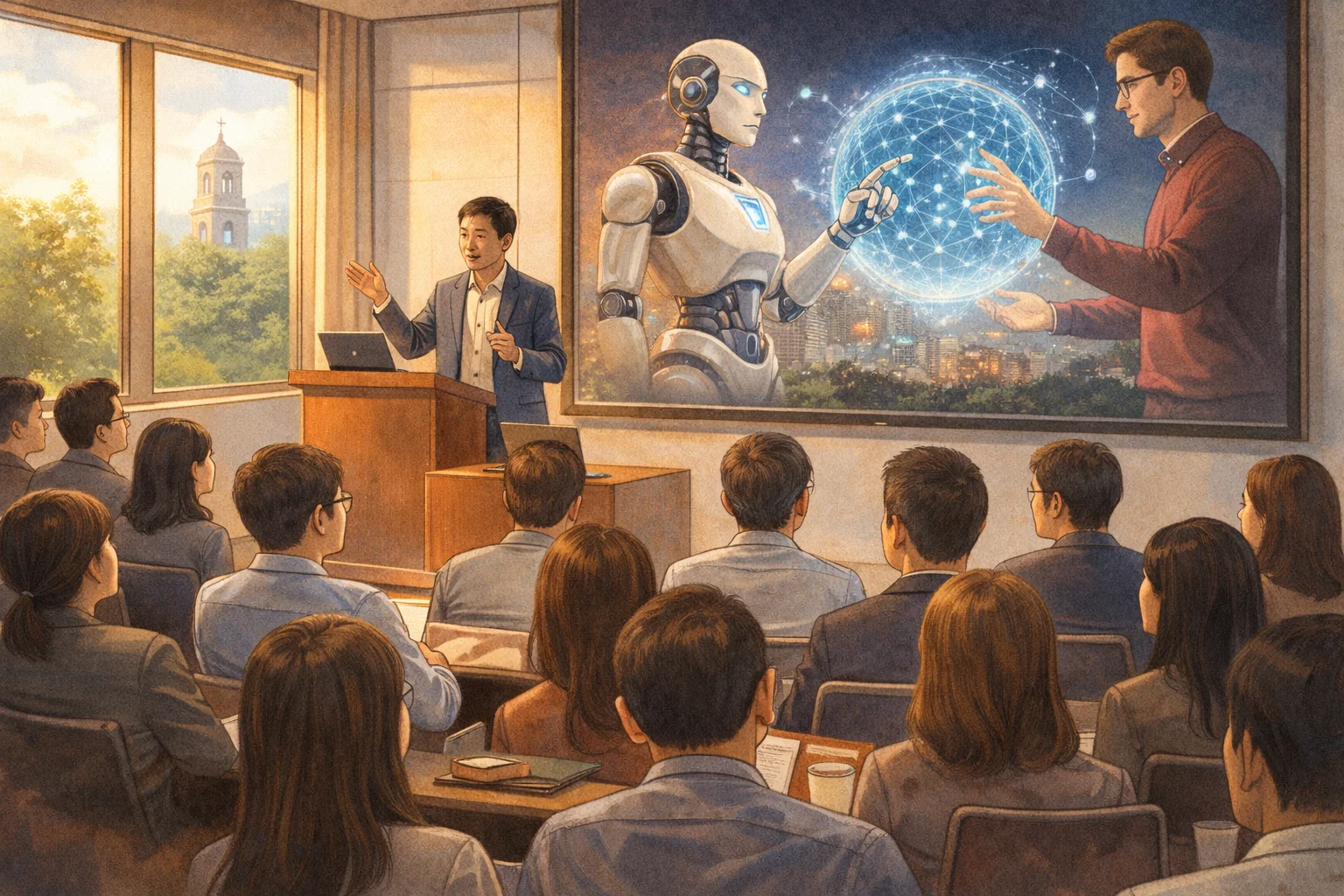
This is a typical afternoon in Taipei. The sun slants through the windows of the Li Zhan Lecture Hall at the School of Communication at National Chengchi University, and shines on the faces of people who are listening carefully. Sitting under the stage were a group of communicators who were studying for master’s degrees - some were media veterans, some were public relations executives, some were brand marketers, and some were newbies who had just entered the workplace. I would like to thank them for taking the time to come to this communication salon and listen to me talk about a few things about AI.
 ▲ National Chengchi University EMA Communication Salon
I prepared two hundred slides in advance and planned to share my experience with everyone at noon. But before that, I asked a seemingly simple question.
“What AI tools did you use today?”
Many people raised their hands. ChatGPT, Claude, Gemini, Copilot—almost everyone already has AI in their daily lives. This number is not surprising. After all, according to the latest report from the Microsoft research team, Taiwan’s AI adoption rate in the first half of 2025 was 26.4% and increased to 28.4% in the second half, which is higher than both the United States and Japan.
Obviously AI is no longer a distant place in science fiction novels, it lives in the browser tab we open every day.
However, when I then asked: “Do you think you can “use” AI?”
The whole classroom fell silent for an instant.
There is a big gap between “used” and “used well”. Many people stay at the stage of occasionally asking about ChatGPT, but never really think about: How can AI change the way I work? Change the way I think?
AI is an amplifier, not a replacement
Before formally sharing, I first talked about a core proposition that I believe in——
**AI is an amplifier, not a replacement. **
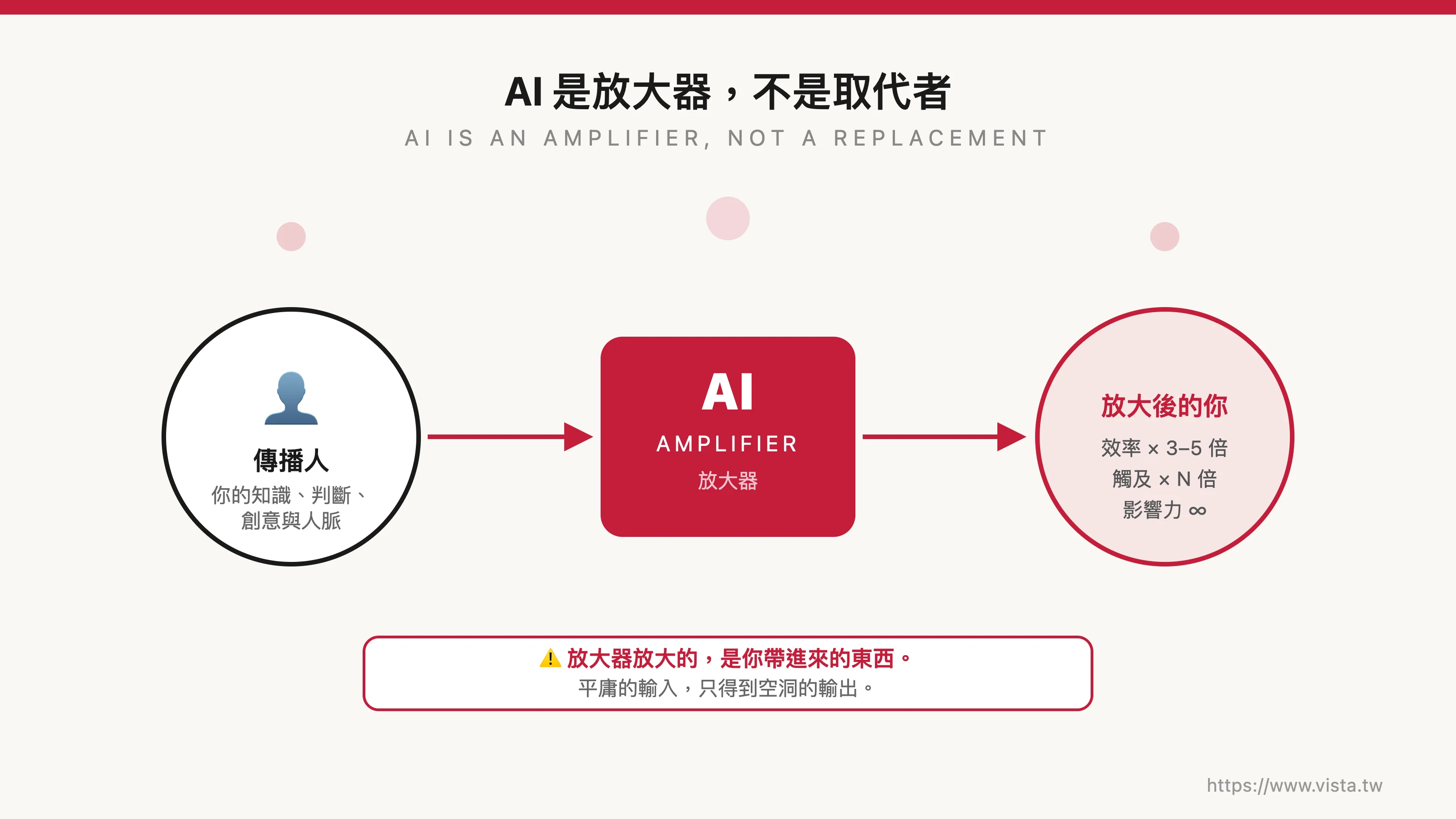 ▲AI is an amplifier, not a replacement
This statement may sound like comfort, but I believe it has a deeper meaning. What does the amplifier metaphor mean? It means: What you bring in determines what it can amplify. If you bring in deep domain knowledge, AI will make your insights spread farther; if you bring in unique perspectives, AI will make your voice heard by more people. On the other hand, if you bring in empty questions, AI can only give you empty answers.
It’s not the AI that determines your ceiling, it’s you.
Of course, that doesn’t mean no jobs will be affected. The reality is: People who know how to use AI will replace those who don’t use AI. ** The communication industry is already changing rapidly - 73% of content marketing people are using AI to assist creation, and productivity has increased by three to five times. This is not a trend, this is something that has already happened.
The question is not “Will AI affect me?” but “Am I ready?”
Three levels, where are you?
要理解 AI 素养,我喜欢用一个三层框架来描述:
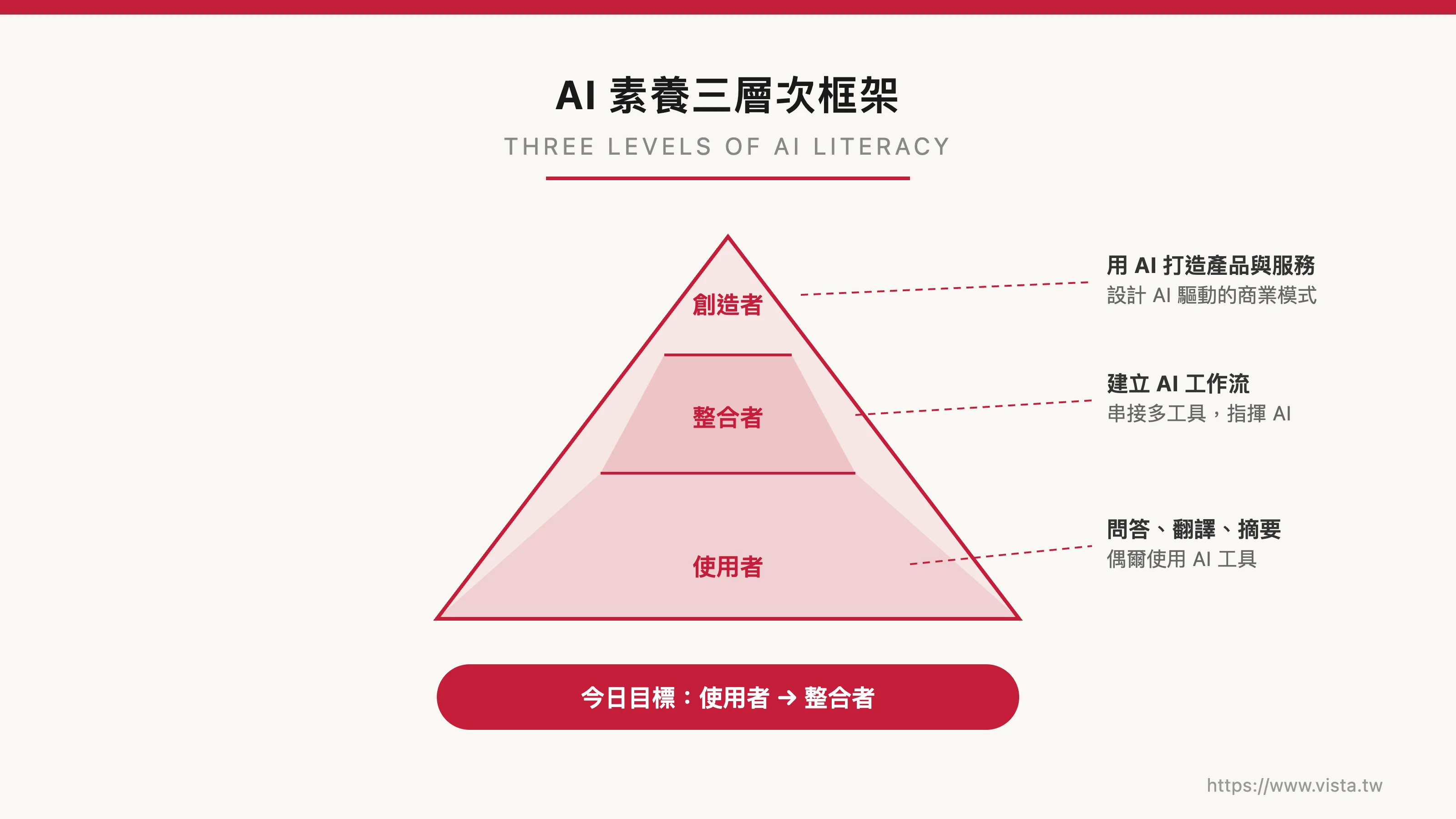 ▲Three levels of AI literacy: user, integrator, creator
**The first level is the user. ** People at this level know how to talk to AI and can use it to translate, summarize, and answer questions. This is where most people are currently and where to start.
**The second level is the integrator. ** People at this level can build their own AI workflow, connect multiple tools together, and make AI truly embedded in every aspect of daily work. They’re not just using AI, they’re directing it.
**The third level is the creator. ** People at this level use AI to create new products and services and design AI-driven business models. They are not only users of tools, but also designers of tools.
The goal of this lecture is to help everyone present to evolve from a user to an integrator. And the road after that is left to everyone to walk on their own.
Every night, I use voice to talk to AI
Next, I will talk to you about AI partners in life. This is also the part I like to share the most, because those are real daily life.
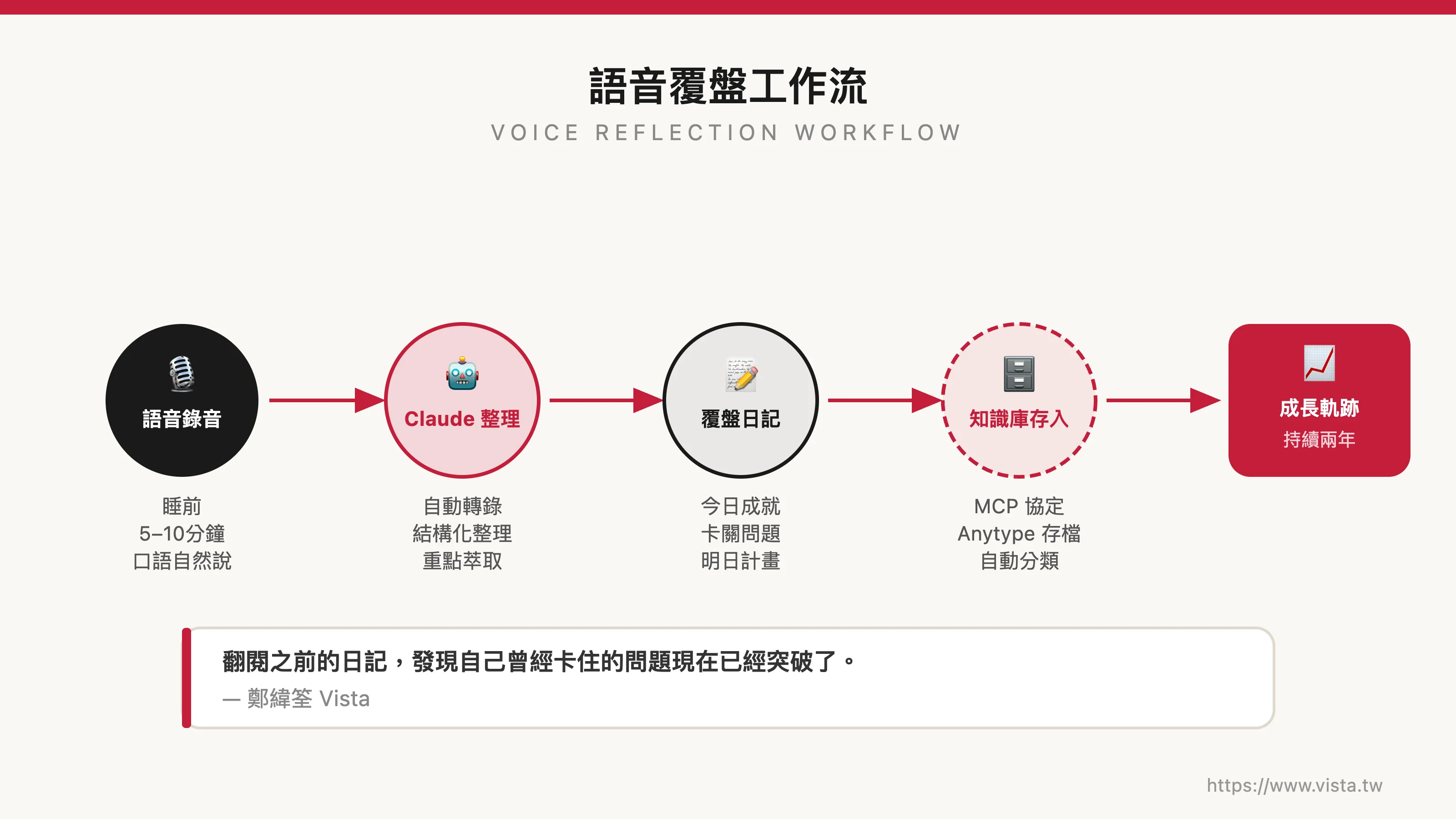 ▲ Voice review workflow: from speaking to structured daily reflection
Every night, at the end of the day, I record my reflections on the day by voice input. No need to type, just talk to the computer. What challenges did you encounter today, what decisions did you make, what inspirations did you have, and what did you fail to do well? Then, I asked Claude to help me organize this speech into a structured review diary, and then automatically stored it in my Anytype knowledge base through the MCP protocol.
I have been doing this habit for quite some time.
To be honest, when I first started, I also doubted: “Is this really useful? I feel like I’m just talking to myself.” But one day I went back and looked at my previous diary, and suddenly I found: the problem that made me stuck at that time has now been solved; a small inspiration at that time actually turned into an article or even a course.
That feeling is very solid. It’s not about how powerful the AI is, but that you clearly see yourself growing.
The threshold for voice review is extremely low, and I want to say this in particular. You don’t need to be a wordsmith, have a diary habit, or even type. Just use it before going to bed and AI will sort it out for you. The recorded self will give you an unexpected reward one day in the future.
AI in the workplace: not laziness, but precise division of labor
In discussions about workplace situations, I came up with a principle that I practice over and over: the 70/30 rule.
70% are manual and 30% are AI.
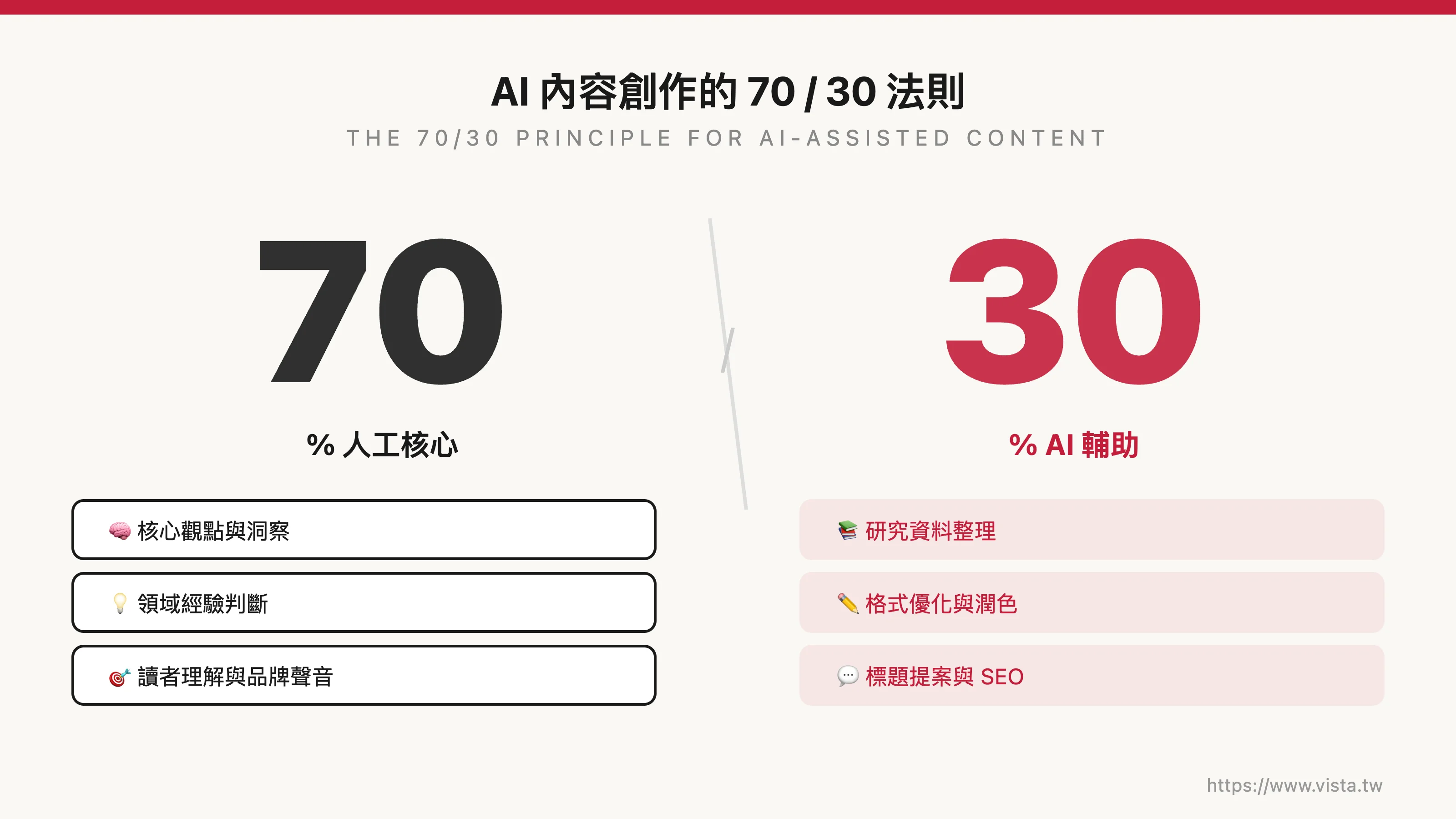 ▲The 70/30 rule for AI content creation
The core idea must come from you - your experience in the field, your judgment, and your understanding of the reader. What AI handles is the organization of research materials, optimization of format, polishing of paragraphs, and proposal of titles. Such a division of labor is not about being lazy, but about focusing your most valuable cognitive resources on areas that really require human judgment.
**Want to evolve from an AI user to an integrator? ** In the course “Build your personal command center with AI”, I will take you step by step to build your own AI workflow - from voice review, knowledge management to content production, to create a personal command system that is truly customized for you. Start now and let AI become your super amplifier.
 ▲ Use AI to build your personal command center and create your own AI workflow
Vibe Coding: Building tools with natural language
When it comes to AI applications, I also spend a lot of time talking about Vibe Coding - this is something that I am very excited about. To put it simply, use natural language to describe the functions you want, and AI can help you write the program.
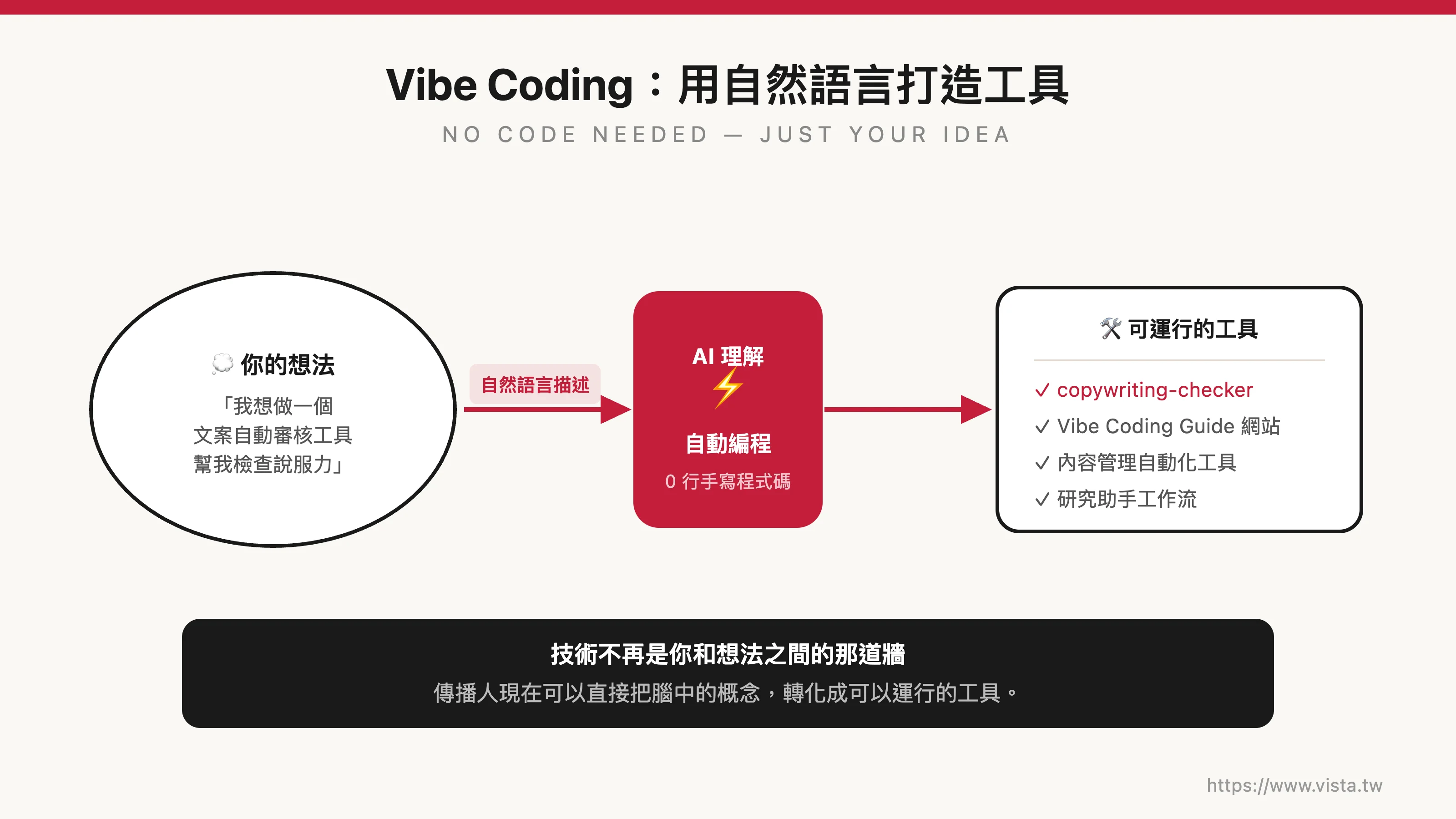 ▲ Vibe Coding: Creating tools with natural language
Recently, I used this method to make a Copywriting Health Check Tool, and I also made a Vibe Coding Guide website and event registration system. Throughout the entire process, I didn’t write a single line of traditional code.
What does this mean for communicators? It means that technology is no longer the wall between you and your ideas. You can now turn the concepts in your head directly into tools that you can run. This is a very profound change.
I also introduced the five core applications of Claude Code: batch file processing, data analysis, content management, automated workflows, and research assistants. These abilities are not just for engineers, knowledge workers can also benefit greatly.
Essay Writing: AI is your research assistant, not your gunner
For students who are currently studying in master’s classes in a working capacity, this may be the most immediately valuable part of the entire lecture.
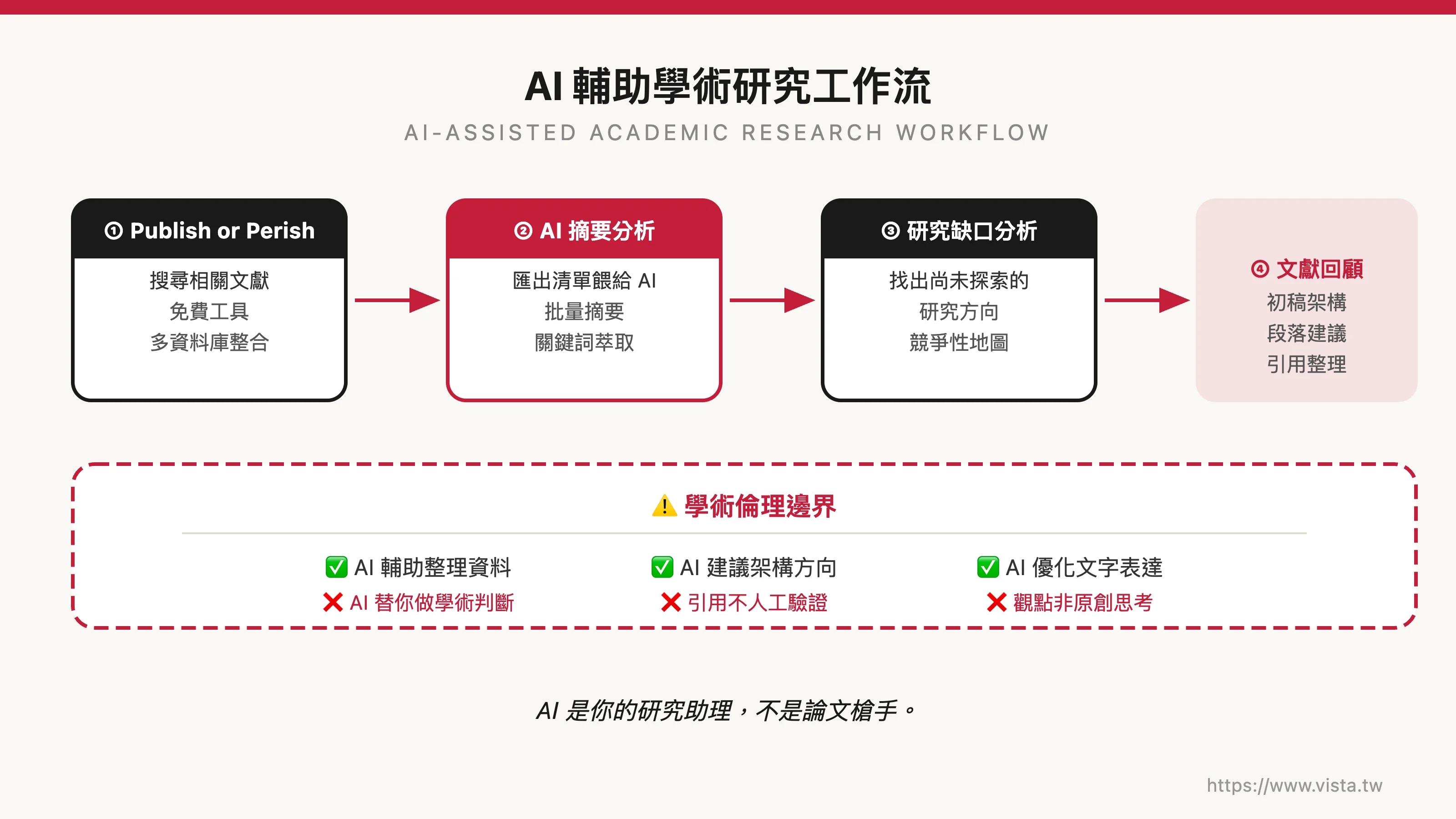 ▲AI-assisted academic research workflow
I introduced Publish or Perish, a completely free academic literature search tool that can quickly find relevant research on a specific topic and organize the literature list in multiple sorting ways. Paired with AI, a complete literature research process can be greatly accelerated: first use PoP to search for relevant literature, export the list and give it to AI for summary analysis, let AI help you find research gaps, and then assist in drafting the paragraph structure of the literature review.
But what I want to say in particular is: this process has a clear ethical boundary.
AI is your research assistant, not your paper shooter. Every citation must be manually verified by you; every academic judgment must be made by you; every opinion must be original thinking.
AI can help you organize known knowledge, but the new contribution that belongs to you must truly come from your research and thinking. Academic integrity is a non-negotiable bottom line, and the existence of AI cannot change this.
Find that moment that makes you say “Wow!”
Finally, I share with you how to create your own personal AI workflow. When many people are learning AI tools, they are used to chasing the latest features and the most popular tools, but they forget to ask themselves the most fundamental question: “What is the most time-consuming and repetitive task in my daily life?”
That mission is your entrance. Find it, solve it, and you’ll experience your first “Wow!” moment. And that moment is when you really start.
For those who are new to AI, my advice is simple: you don’t need to learn all the tools at once, you don’t need to catch up with every new large language model, and you don’t need to make yourself nervous. You might as well start with a usage that surprises you, slowly expand, slowly accumulate, and slowly become your own unique way of working.
Three things I want to convey most
 ▲ Three core messages of this lecture
To sort out the core of this lecture, I want to say three things:
**First, use it first and then slowly get better. **The learning curve of AI tools is much lower than you think. 10 minutes of trying it out is worth 10 hours of watching. Perfectionism is the biggest enemy of action, especially when it comes to new tools.
**Second, your professional knowledge plus AI equals irreplaceable competitiveness. ** AI is very powerful, but it does not have your field experience, your understanding of the industry context, the network you have established for many years, or the details you have observed on the front line. Those are your real moats. AI makes your moat wider, not digs a new one for you.
**Third, start now. ** The best time to plant a tree was twenty years ago, the second best time is now. Learning AI is exactly the same.
Use it first, then get better over time. 10 minutes of trying it out is worth 10 hours of watching.
Epilogue: Will AI make us stupid?
After the lecture, a classmate asked me: “Teacher, writing through AI is very convenient, but how can I write with my own taste?”
 ▲ When AI meets communicator
I thought about it, and if I just relied on AI tools, it would indeed be possible to write an article with a strong sense of AI. AI is indeed an amplifier. It will amplify your efficiency, the boundaries of your abilities, and your voice. But in the end, what you magnify must be something that really exists. Your judgment, your opinions, your creativity, and your experience—those things, AI cannot help you produce, it can only help you deliver them.
Therefore, I encourage everyone to listen more, read more, write more, and think more. AI 赋能的时代已经来临。 Not everyone needs to be an AI expert, but someone who uses AI well.
In this era, the most important thing is not what tools you use, but that you know who you are, who you are speaking for, and what value you want to convey. On that basis, AI can become a true amplifier.
 ▲The era of AI empowerment has arrived
Let us bring our own expertise and unique perspectives into the era of AI.
I am sure that there is a place for you and me there.
Further reading
- Action Guide to Learning and Application in the AI Era
- AI collaboration for knowledge workers
- Vibe Coding: Creation with natural language
- Build event registration system with Vibe Coding
- Nine major trends in content marketing
External resources
- EMA Master’s On-the-job Course at the School of Communication, National Chengchi University
- Publish or Perish academic literature search tool
- Copywriting health check tool
- Vibe Coding Guide
- Build your personal command center with AI
📖 深入探索相關主題